
Kiddipedia
What the Science Really Says About Early Childhood Learning, Brain Development and the Digital World
Screens are now woven into everyday family life.
From video calls with grandparents and educational apps to cartoons during dinner preparation and toddler games on tablets, technology has become part of modern parenting in ways few families could have imagined a generation ago.
For many parents, screens can feel both incredibly helpful and deeply confusing.
One minute, you hear that educational programs can teach your child letters and numbers earlier than ever before. The next, you hear warnings about screen time affecting speech, attention spans, sleep, emotional regulation and even brain development.
So what does the actual science say?
The truth is far more nuanced than simply saying screens are “good” or “bad.”
What decades of developmental neuroscience, pediatric research, psychology and early childhood education consistently show is this:
Young children do not learn from screens in the same way they learn from real-world, embodied, emotionally connected experiences.
That does not mean all screen use is harmful.
It does mean that screens cannot fully replicate the extraordinary developmental richness of:
- responsive human interaction
- movement
- sensory exploration
- outdoor play
- emotional connection
- imaginative play
- hands-on discovery
- real-life social experiences
Especially in the first five years of life, children’s brains are biologically designed to learn through human relationships and physical interaction with the world around them.
And understanding why can completely change the way we think about early learning.
The First Five Years: A Period of Extraordinary Brain Development
During early childhood, the brain develops faster than at any other time in life.
By the age of five, approximately 90% of a child’s brain architecture has already formed.
In these early years:
- millions of neural connections form every second
- sensory experiences shape brain wiring
- emotional relationships influence stress regulation systems
- movement builds cognitive pathways
- language exposure strengthens communication networks
- play builds executive function and social understanding
Australian early childhood researchers consistently emphasise that the developing brain is highly “experience-dependent.”
In simple terms, repeated experiences physically shape the brain.
The experiences children have most often become the foundations their brains build upon.
This is why the quality of early experiences matters so profoundly.
Babies are not passive observers of the world.
They are active learners constantly absorbing information through:
- touch
- movement
- sound
- smell
- eye contact
- imitation
- emotional interaction
- experimentation
- sensory exploration
- trial and error
A baby dropping a spoon repeatedly from a highchair is not “being naughty.”
They are conducting a scientific experiment.
They are learning:
- gravity
- cause and effect
- sound differences
- motor control
- timing
- social response
- object permanence
And they are learning it through full-body, real-world interaction.
That process is neurologically very different from watching an object fall on a screen.
Why Human Interaction Is the Foundation of Learning
One of the most important findings in developmental science is that babies learn best through responsive human interaction.
Researchers often call this “serve-and-return” interaction.
This happens when:
- a baby babbles and a parent responds
- a toddler points and an adult labels the object
- a child smiles and someone smiles back
- a baby cries and is comforted
- a child asks a question and receives an answer
These tiny back-and-forth interactions may seem simple, but they are incredibly powerful for brain development.
Through these exchanges, babies learn:
- language
- emotional regulation
- communication
- social understanding
- trust
- attention
- memory
- prediction
- relationship building
Live human interaction is dynamic.
Parents naturally adjust:
- tone of voice
- pace
- facial expression
- emotional energy
- wording
- timing
- complexity
In response to the child.
Screens generally cannot replicate this level of emotional attunement and responsiveness.
Australian parenting and developmental organisations, including the Australian Institute of Family Studies and Raising Children Network, consistently highlight the importance of responsive relationships in healthy child development.
Researchers have also found that infants show stronger language learning and engagement during live interaction compared with passive screen viewing.
Even highly engaging digital content cannot fully replicate the neurological benefits of a real human connection.
The “Video Deficit Effect”: Why Screens Teach Differently
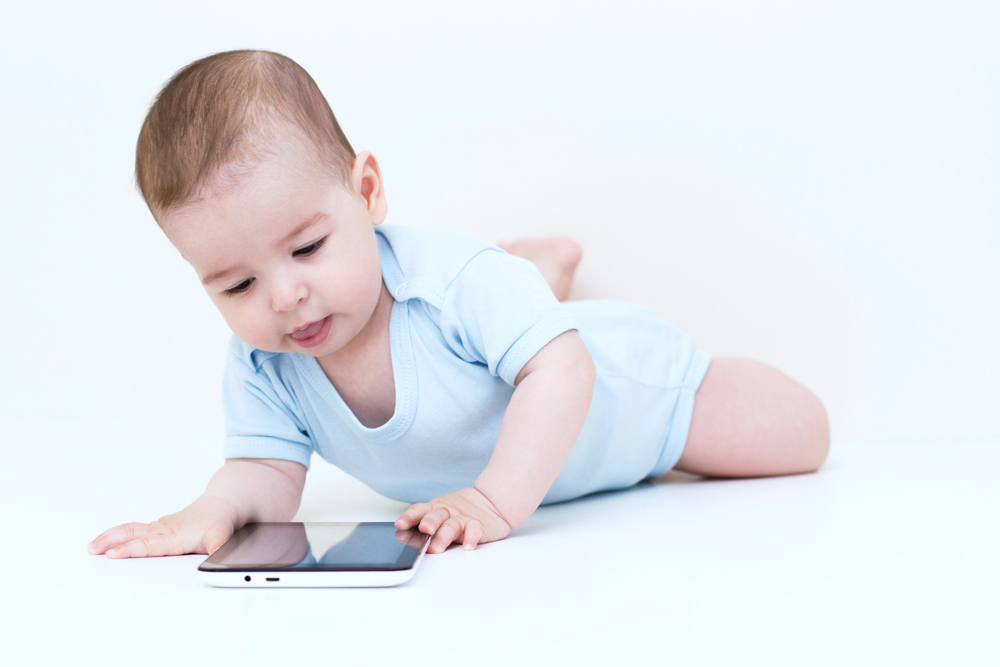
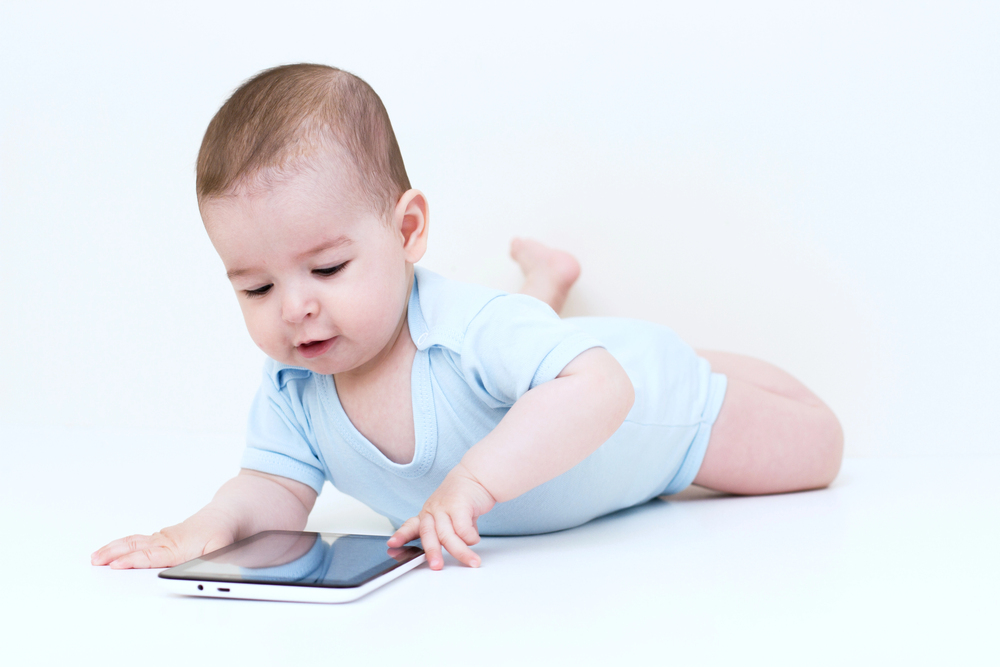
One of the most well-established concepts in developmental psychology is something called the “video deficit effect.”
This refers to the finding that babies and toddlers learn less effectively from screens than they do from real-life experiences.
Researchers have repeatedly found that infants and toddlers struggle to:
- imitate actions from screens as effectively
- transfer information from 2D to 3D environments
- apply screen-based learning in real life
- retain information learned passively
- generalise concepts from videos into the real world
Even when children appear highly focused on a screen, the depth of learning is often weaker than during real-world experiences.
For example, a toddler may watch someone stack blocks on a screen.
But when handed real blocks, they may struggle to recreate the same actions.
Why?
Because young children’s brains are still developing the ability to translate flat, symbolic screen information into real-world understanding.
Real-world experiences provide:
- depth perception
- sensory feedback
- physical interaction
- emotional context
- spatial awareness
- tactile information
- body movement
- social reinforcement
A screen simply cannot provide the same level of neurological input.
Real Learning Is Multi-Sensory
Babies and young children learn through their entire bodies.
Developmental scientists describe early learning as “embodied learning,” meaning children think and learn through physical interaction with their environment.
When a child plays outside in mud, for example, they are not simply “getting dirty.”
They are simultaneously developing:
- sensory processing
- fine motor skills
- hand strength
- creativity
- emotional regulation
- problem solving
- spatial awareness
- language development
- curiosity
- resilience
When a child climbs, balances, pours water, squishes playdough or builds a cubby house, multiple brain systems activate together.
These experiences strengthen:
- neural pathways
- coordination systems
- vestibular processing
- body awareness
- cognitive flexibility
- executive functioning
Screens mainly stimulate:
- vision
- hearing
But they cannot fully replicate:
- texture
- weight
- resistance
- smell
- temperature
- depth
- physical cause and effect
- proprioception
- vestibular movement
This matters because early childhood learning is fundamentally sensory.
Children are biologically designed to learn by physically interacting with the world.
Why Attention on Screens Is Not Always the Same as Deep Learning
Many digital programs are intentionally designed to capture attention.
They use:
- bright colours
- rapid scene changes
- movement
- sound effects
- novelty
- music
- quick rewards
Children may appear mesmerised.
But captured attention is not necessarily the same as meaningful, deep learning.
Research suggests fast-paced screen content can encourage more reactive forms of attention rather than sustained, internally driven focus.
Real-world play develops:
- concentration
- persistence
- patience
- frustration tolerance
- problem solving
- self-directed curiosity
A child building a tower repeatedly after it collapses is developing powerful cognitive skills.
They are learning:
- planning
- trial and error
- emotional resilience
- spatial reasoning
- perseverance
This type of deep, internally motivated learning develops differently from passively consuming fast-moving digital content.
Australian educational experts increasingly emphasise the importance of boredom, free play and uninterrupted exploration for healthy attention development.
Language Development Happens Best Through Real Interaction
One of the clearest findings in early childhood research is that babies learn language most effectively through live human interaction.
Children do not simply learn words.
They learn communication through:
- facial expressions
- eye contact
- emotional tone
- pauses
- gestures
- shared attention
- social context
- mouth movements
- body language
For example, when a parent says:
“Look at the dog!”
while pointing to a real dog, the child receives:
- visual information
- social information
- emotional meaning
- contextual understanding
- sensory association
- shared attention cues
That experience becomes neurologically rich.
In contrast, hearing the word “dog” on a screen without meaningful interaction often creates weaker learning pathways.
Research has shown that children under two learn significantly fewer words from passive video exposure compared with real-life interaction.
Australian speech pathologists and pediatric developmental experts consistently encourage:
- talking with children frequently
- reading aloud daily
- singing songs together
- engaging in back-and-forth conversation
- limiting passive screen exposure during early language development
Importantly, children learn language best when adults are emotionally engaged and responsive.
Physical Play Builds the Brain
Physical movement is not separate from learning.
Movement is learning.
Research in developmental neuroscience shows that active movement helps build pathways linked to:
- memory
- attention
- literacy readiness
- emotional regulation
- coordination
- spatial reasoning
- executive function
When babies crawl, they are developing:
- bilateral coordination
- depth perception
- body awareness
- spatial mapping
- motor planning
When children run, jump, spin, climb and balance, they strengthen systems connected to both physical and cognitive development.
Outdoor play is particularly powerful.
Australian child development research increasingly highlights the benefits of nature-based play for:
- stress reduction
- creativity
- emotional wellbeing
- sensory integration
- resilience
- cognitive development
Researchers from Australian universities and pediatric health organisations have repeatedly found that outdoor, unstructured play supports healthier emotional, social and neurological development in young children.
Natural environments provide constantly changing sensory experiences that stimulate the developing brain in ways artificial digital environments cannot fully reproduce.
A child climbing a tree, for example, is not simply “playing.”
They are simultaneously developing:
- risk assessment
- balance
- coordination
- confidence
- problem solving
- body awareness
- motor sequencing
- spatial judgement
- emotional resilience
When children build cubbies, dig in sand, collect sticks, jump across rocks or invent imaginary outdoor adventures, they are strengthening multiple brain systems at once.
These experiences activate:
- sensory systems
- motor pathways
- executive functioning networks
- emotional regulation systems
- creative thinking pathways
Importantly, this type of play is often self-directed.
That matters enormously for brain development.
Unlike many digital experiences that guide children step-by-step with immediate rewards and stimulation, free physical play encourages children to:
- initiate ideas
- tolerate frustration
- experiment
- problem solve independently
- assess consequences
- adapt flexibly
- persist through challenges
This kind of internally motivated learning is deeply important for long-term cognitive and emotional development.
Australian early childhood educators increasingly warn that modern childhood has become more sedentary and screen-oriented, reducing opportunities for the kind of movement-rich experiences children’s brains evolved to expect.
The concern is not simply that children are using screens.
It is that screens can unintentionally replace vital developmental experiences involving:
- movement
- touch
- exploration
- social interaction
- imaginative play
- sensory discovery
And these experiences are biologically foundational during the early years.
Research also shows strong links between physical movement and later academic readiness.
Children who engage in active play often demonstrate stronger:
- concentration
- emotional regulation
- classroom readiness
- working memory
- self-control
- social skills
This is one reason many Australian developmental experts advocate for protecting active play during the early childhood years rather than overscheduling children with excessive structured or screen-based activities.
For babies and young children especially, the body is one of the brain’s greatest teachers.
They learn through movement.
Through experimentation.
Through touching, climbing, falling, balancing, carrying, throwing, spinning and exploring.
And no digital experience can fully replicate the neurological richness of learning that happens through real-world physical play.
Bringing It Back to What Matters Most
As parents, it is easy to feel overwhelmed by modern advice around screens.
One article tells you screens are educational.
Another tells you they are harmful.
One expert says moderation is key.
Another says children should avoid screens entirely.
Some days, screens genuinely help families survive.
They allow parents to:
- cook dinner
- answer work emails
- calm an overtired toddler
- connect with distant family members
- take a much-needed moment to breathe
And that reality matters too.
Modern parenting is complex.
But perhaps one of the most reassuring things the science tells us is this:
The experiences that matter most for young children are often the simplest.
Not expensive.
Not perfectly curated.
Not Pinterest-worthy.
Not technologically advanced.
What shapes children most powerfully are the everyday moments of real human connection.
- reading books together before bed
- cuddling on the couch
- making eye contact during conversation
- laughing together at the dinner table
- splashing in puddles
- digging in sand
- dancing in the kitchen
- climbing trees
- making cubby houses
- building block towers
- comforting tears
- singing songs in the car
- asking questions
- listening closely
- simply being present
These moments are not “small.”
From a developmental neuroscience perspective, they are literally helping build the architecture of the growing brain.
That does not mean screens have no place.
Technology is part of modern life.
Used intentionally, thoughtfully and in balance, screens can:
- entertain
- educate
- connect
- support learning
- expose children to ideas and experiences
But the research consistently shows that screens work best when they support — rather than replace — the experiences children’s developing brains need most.
Because no screen, no matter how educational or interactive, can fully replicate:
- touch
- eye contact
- emotional attunement
- physical exploration
- sensory discovery
- imaginative free play
- movement
- human connection
And in the earliest years of life, those experiences remain the true foundations of learning.
Key Notes:
Children Learn Best Through Real Human Interaction
Responsive, emotionally connected interactions remain the most powerful drivers of healthy brain development, language learning and emotional regulation.
Screens Do Not Replicate Real-World Learning
Young children process information differently from screens compared with hands-on, sensory-rich experiences.
Play Is Not “Just Play”
Play is one of the most important ways children build:
- creativity
- executive function
- resilience
- communication skills
- emotional intelligence
- problem-solving abilities
Physical Movement Supports Cognitive Development
Movement and learning are deeply connected during early childhood.
Quality and Context Matter
Not all screen use is equal.
Co-viewing, high-quality content and balanced use are associated with better outcomes than passive or excessive exposure.
Balance Matters More Than Perfection
Healthy child development is not about eliminating screens entirely.
It is about ensuring children also receive abundant opportunities for:
- movement
- conversation
- creativity
- outdoor play
- emotional connection
- sensory exploration
Expert Insight: Why This Conversation Matters More Than Ever
Today’s children are growing up in the most technologically immersive environment in human history.
Many babies now encounter screens within the first months of life.
At the same time, researchers are increasingly recognising that early childhood development depends heavily on experiences that technology cannot fully reproduce.
This is why developmental experts across Australia continue to advocate for protecting the foundations of childhood:
- play
- connection
- movement
- nature
- imagination
- conversation
- emotional safety
These are not outdated ideas.
They are biologically essential experiences for the developing brain.
And while technology will continue evolving rapidly, the core developmental needs of young children remain remarkably unchanged.
Children still learn best through relationships.
They still need responsive adults.
They still need opportunities to move, explore, create, fail, try again and discover the world with all of their senses.
That is how young brains are built.
In Summary
The science is becoming increasingly clear.
Young children do not learn from screens in the same way they learn from real-world experiences.
Their brains are biologically designed for:
- human connection
- movement
- sensory exploration
- emotional interaction
- imaginative play
- hands-on learning
- responsive communication
Screens may support learning in some situations.
But they cannot fully replace the developmental richness of real life.
And ultimately, that is incredibly reassuring.
Because the experiences children need most are often already within reach.
A conversation.
A cuddle.
A walk outside.
A story before bed.
A muddy backyard.
A cardboard box turned spaceship.
A parent who is emotionally present.
These ordinary moments are doing extraordinary work inside the developing brain.
And long after the screens are turned off, those are often the experiences children remember most.
References and Sources
Australian Government and Health Sources
- Australian Government Department of Health and Aged Care. Physical Activity and Sedentary Behaviour Guidelines for Children
https://www.health.gov.au - Raising Children Network (Australia). Screen time and young children
https://raisingchildren.net.au - Australian Institute of Family Studies. Too much time on screens? Screen time effects and guidelines for children and young people
https://aifs.gov.au - The Royal Children’s Hospital Melbourne. Kids Health Information: Screen time
https://www.rch.org.au - Murdoch Children’s Research Institute. Early childhood development and screen exposure research
https://www.mcri.edu.au - Queensland Brain Institute. Early brain development and learning
https://qbi.uq.edu.au - Australian Psychological Society. Managing children’s screen time
https://psychology.org.au - Sleep Health Foundation Australia. Children, sleep and screen exposure
https://www.sleephealthfoundation.org.au - Australian Early Development Census (AEDC). Early childhood development data and research
https://www.aedc.gov.au
Supporting Peer-Reviewed Research
- Barr, R. (2013). Memory constraints on infant learning from picture books, television and touchscreens.
- Anderson, D. R., & Pempek, T. A. Television and very young children.
- Christakis, D. A. Interactive media use at younger than the age of 2 years.
- Madigan, S., et al. Association Between Screen Time and Children’s Performance on a Developmental Screening Test.
- American Academy of Pediatrics. Media and Young Minds.
- Center on the Developing Child, Harvard University. Serve and Return Interaction Shapes Brain Circuitry.
- Hutton, J. S., et al. Home Reading Environment and Brain Activation in Preschool Children.
- World Health Organization. Guidelines on Physical Activity, Sedentary Behaviour and Sleep for Children Under 5 Years of Age.