

Ever feel like your family’s healthy habits disappear the moment life gets busy? ❤️
You start with the best intentions… then school runs, work, activities, sickness and those exhausting evenings get in the way.
The good news? It may not be a lack of willpower.
New Australian research reveals just how common it is for health and wellbeing changes to fall by the wayside, while habit expert Dr Gina Cleo explains why small, realistic changes may be far more effective than an all-or-nothing approach.
From recognising the cues behind automatic sugar habits to making healthier choices easier to repeat, discover 5 simple ways to help healthy family habits actually stick.
Because healthy living doesn’t have to mean being perfect every day. 💛

🎩❤️ The Cat in the Hat has met Elmo, Cookie Monster and Abby Cadabby… and your preschooler is going to LOVE it!
But here’s the part parents might not expect…
Behind the songs, silliness and screen time are opportunities to build early literacy, language, problem-solving, movement and creativity — simply by joining in.
And you don’t need to turn it into a lesson. A song, a missing letter, getting dressed or a silly conversation can be enough to get little minds thinking.
Because sometimes the best learning happens after the screen goes off.
👉 Discover how to turn this fun new crossover into playful learning for your preschooler.
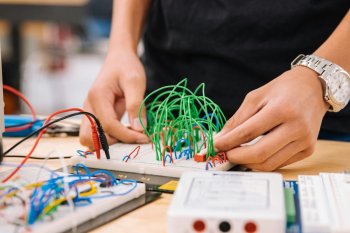
🧪✨ Who says learning has to feel like schoolwork?
You don’t need expensive STEM kits or complicated experiments to spark your child’s curiosity. In fact, some of the best learning opportunities can be found in the things you already have at home! 🏠
From building a paper bridge and creating a balloon-powered car to exploring what floats and sinks or growing a seed, these simple activities turn an ordinary afternoon into an opportunity to experiment, create, problem-solve and ask questions.
And the best part? You can explore them together. ❤️
👉 Discover 5 easy at-home STEM activities that can turn an ordinary afternoon into something your child will be excited to explore.

💛 Not all secrets are meant to be kept.
Teaching our children to be honest is important — but so is teaching them that there are different kinds of secrets.
🎂 A surprise birthday present? That can be a fun secret.
😟 A secret that makes them feel scared, uncomfortable, confused or “yukky”? That’s a secret they should always tell.
Knowing the difference can give children the confidence to recognise when something doesn’t feel right — and, importantly, to know who they can turn to for help.
These conversations can feel uncomfortable, but they are an important part of helping children understand boundaries, trusted adults and staying safe.
💛 Because giving children the words to speak up can be one of the most powerful things we can give them.
👉 Read the full article to learn how to introduce the conversation about secrets with your child.

⏰ Daylight saving is coming — is your family ready for the lost hour?
With daylight saving beginning on Sunday 4 October 2026, your clocks may change in an instant, but your body clock needs time to catch up.
That one-hour shift can temporarily disrupt your circadian rhythm, affecting sleep, wake times, energy and mood. For children, parents and anyone already struggling with sleep, the adjustment can be even harder.
So how can you prepare your family and avoid those exhausting bedtime battles?
We spoke with sleep expert Olivia Arezzolo for practical, science-based strategies to help you adjust your sleep routine, reset your body clock and make the most of those longer, lighter evenings.
Find out what you can do before and after the clocks change to help your family sleep better.

“How many times do I have to ask you?!” 😩
Shoes on. Teeth brushed. Time to leave. And somehow you’ve asked 17 times… with absolutely no response.
But what if your child isn’t deliberately ignoring you?
Sometimes children are so absorbed in play, emotions or what’s happening around them that they need us to communicate differently before they can truly hear and process what we’re saying. ❤️
From connection and touch to lowering your voice, using gestures and noticing the emotions underneath their behaviour, there are simple ways to help your child tune in — without turning every request into a battle.
Because sometimes, they don’t need us to say it louder. They need us to connect differently
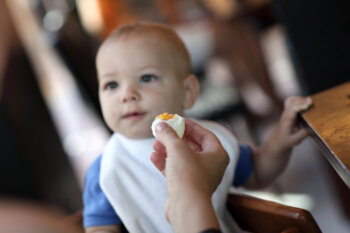
Introducing your baby to solids can feel exciting… and a little scary. ❤️
Especially when it comes to peanuts, eggs, dairy, wheat, sesame and other common allergens.
But did you know that delaying allergenic foods may actually increase the risk of food allergy?
Knowing when and how to introduce allergens safely, what reactions to look for, and what to do if your baby reacts can give you much more confidence at mealtimes.
👶🥜🥚 From first tastes to recognising the difference between an allergy and an intolerance, this practical guide from Paediatric Dietitian & Nutritionist Skye Swaney walks you through what parents need to know.
Because introducing solids shouldn’t be filled with fear — it should be about helping your baby explore food safely and confidently. ❤️
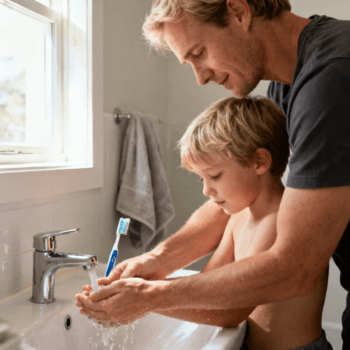
We spend so much time watching sleep, behaviour, food and screen time… but there’s one daily habit that quietly tells us more about our child’s health than we realise.
The toilet.
Not in a gross way—but in a real, science-backed, often-overlooked way that can reveal clues about hydration, gut health, diet, stress, and even how a child is coping emotionally.
Most parents aren’t taught to look here. But once you understand what to notice, you start to see a different layer of your child’s wellbeing that’s been there all along.
👉 This might just change how you read your child’s health every single day.
Read the full article

📦🏡 For you, it’s moving house. For your child, it can feel like their whole world is changing.
Their bedroom is packed into boxes. Their familiar routines disappear. Their friends are left behind. And suddenly, they’re expected to feel excited about a new home, a new school and a whole new world.
But here’s the thing…
💛 You can make moving feel very different for your child.
From knowing when to tell them about the move, to giving them a real job on moving day, keeping their favourite things close and making sure their bedroom is ready first — the small things can make a surprisingly big difference.
And one of the most important parts happens AFTER the removal truck leaves…
Because settling into a new home, finding friends and feeling like they belong takes time.
If you’re moving with kids, or planning a move soon, this is one article you’ll want to read before the boxes are packed.
👉 Discover what actually helps children feel safe, involved and at home after a move.

You check the nursery temperature. Then you check your baby. Then you wonder if you’ve got it right. ❤️
Too hot? Too cold? Another layer? Less bedding? Heater on? Air conditioning off?
For new parents especially, keeping a baby comfortable at night can feel like a constant guessing game.
But here’s something reassuring: there isn’t one perfect room temperature every baby needs.
What matters is understanding how to recognise when your baby is too hot or too cold, what they wear to bed, how the room behaves overnight, and how things like sunlight, insulation, airflow, heating and air conditioning can all affect their comfort.
And if you’re planning a nursery, there’s more to think about than where the cot looks best.
🌙 Because the most beautiful nursery in the world means very little if your baby can’t sleep comfortably in it.
Our latest guide looks at the Australian evidence behind nursery temperature, safe sleep and thermal comfort, with practical advice for creating a room that works through Australia’s changing seasons, from those scorching summer nights to chilly winter mornings.
Before you turn the thermostat up or reach for another blanket, this is worth a read. ❤️
Get parenting advice and support delivered right to your inbox
We'd love to hear what you think of the website, so we can continue to improve it . . . GIVE YOUR FEEDBACK >