

🎩❤️ The Cat in the Hat has met Elmo, Cookie Monster and Abby Cadabby… and your preschooler is going to LOVE it!
But here’s the part parents might not expect…
Behind the songs, silliness and screen time are opportunities to build early literacy, language, problem-solving, movement and creativity — simply by joining in.
And you don’t need to turn it into a lesson. A song, a missing letter, getting dressed or a silly conversation can be enough to get little minds thinking.
Because sometimes the best learning happens after the screen goes off.
👉 Discover how to turn this fun new crossover into playful learning for your preschooler.
🧪✨ Who says learning has to feel like schoolwork?
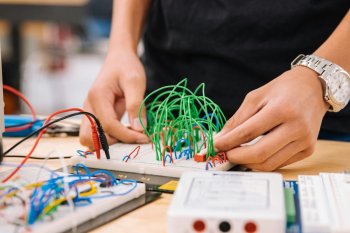
You don’t need expensive STEM kits or complicated experiments to spark your child’s curiosity. In fact, some of the best learning opportunities can be found in the things you already have at home! 🏠
From building a paper bridge and creating a balloon-powered car to exploring what floats and sinks or growing a seed, these simple activities turn an ordinary afternoon into an opportunity to experiment, create, problem-solve and ask questions.
And the best part? You can explore them together. ❤️
👉 Discover 5 easy at-home STEM activities that can turn an ordinary afternoon into something your child will be excited to explore.
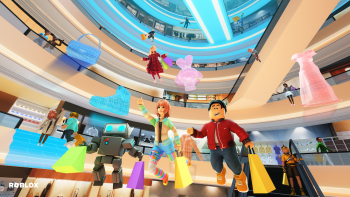
🎮 Could your child’s favourite game actually be helping them learn?
Learning doesn’t always look like sitting at a desk. Sometimes it looks like creating, experimenting, solving problems, making mistakes and trying again — and interactive play can bring all of these skills to life.
From coding and maths to science, creativity and engineering, digital games can give children opportunities to explore STEAM concepts in ways that feel more like play than learning. 🧠🔬🚀
With National Science Week approaching, it’s a great time to look at how we can turn children’s natural curiosity into meaningful learning — both on and off the screen.
👨👩👧👦 And when parents join in, gaming can become more than screen time. It can be a chance to connect, explore together and better understand the digital worlds our children enjoy.
Discover five games that can help spark curiosity and bring STEAM learning to life.
✍️ Written by Dr Adam Seldow, Senior Director, Education Policy at Roblox, drawing on his experience in education policy, mathematics and technology in schools.

We’re raising the first generation of children whose early brain development is unfolding alongside constant screens.
And most parents are left wondering:
“If my child is watching and interacting with screens every day… what is it actually doing to how they learn, feel, and grow?”
Here’s what the science quietly keeps showing us:
Young children don’t just “learn differently” from screens…
they learn less deeply than they do from real-world, human, sensory-rich experiences.
Not because screens are “bad.”
But because a developing brain is built for something screens can’t fully replicate:
messy, unpredictable real life
emotional back-and-forth with humans
touch, movement, and physical discovery
boredom that turns into imagination
failure that turns into resilience
A toddler isn’t just “playing” when they stack blocks or dig in dirt.
They’re building the architecture of attention, language, emotional regulation, and thinking itself.
Screens can entertain. They can even teach.
But they don’t replace the developmental power of a child:
falling, trying again, being comforted, exploring, moving, and connecting with real people.
If you’ve ever felt unsure about screen time—not guilty, just unsure—this piece is for you.
It breaks down what research actually says… in a way that makes sense in real family life.
👉 Read the full article here

How do you explain ANZAC Day to a child when words don’t feel like enough?
For many parents, it’s not something that can be neatly explained. It’s felt. In the early morning stillness. In a dawn service where even silence feels shared. In the small gesture of a poppy being pinned with care, while a child stands beside you, quietly absorbing a moment they don’t yet have words for.
They may not understand it fully. But they feel it.
And maybe that’s where meaning begins.
This article explores how children actually come to understand ANZAC Day—through different ages, stages, and emotional awareness—and how respect, remembrance, and understanding are not taught in a single conversation, but built slowly across childhood.
Because perhaps the goal isn’t for them to fully understand ANZAC Day right now…
but to grow up in a world where it is never forgotten.
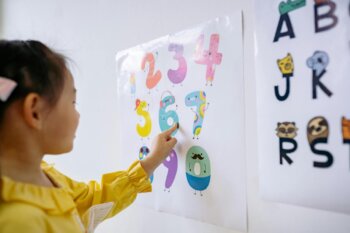
🧠✨ Did you know kids remember more when they can see what they’re learning?
From flashcards to diagrams, visual learning helps children understand faster, feel more confident, and retain information with less stress.
If homework feels like a battle, this might be the game-changer you’ve been looking for. This guide breaks down why visuals work and how parents can use them easily at home. 💡
Discover simple, practical ways to help learning really stick. 💛
Get parenting advice and support delivered right to your inbox
We'd love to hear what you think of the website, so we can continue to improve it . . . GIVE YOUR FEEDBACK >