
Connected Parenting
There are some parenting moments no one really prepares you for… and this is one of them.
Your child comes home from school, a little quieter than usual. You ask how their day was. You unpack their bag. And somewhere in the back of your mind, there’s that small, nagging thought:
“Did they go to the toilet today?”
If you’ve ever worried about this, you are so far from alone.
New research has found almost half (44%) of Australian children aged 3–8 are not answering the call of nature at school due to stress (25%) or hesitancy (24%) of using a public toilet.¹²
As a result, two in five parents (42%) are concerned this may be affecting their child’s physical wellbeing.¹
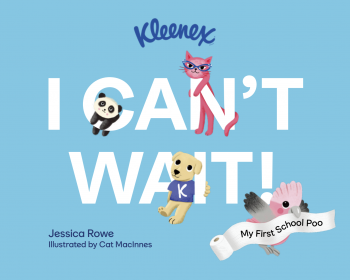
For the three-quarters (74%) of Aussie teachers who want more resources to learn how to support children with toilet struggles, Kleenex has launched I Can’t Wait! My First School Poo – a first-of-its-kind children’s book for parents and educators designed to normalise one of childhood’s most avoided experiences.
For many kids, this is simply about safety. Pooing is a biological process, and like sleep and eating, the body needs to feel calm and secure in order to do it. School is a different environment, and for some children, it takes time to feel comfortable enough.
Aussie parenting expert Genevieve Muir, alongside Jessica Rowe and Kleenex, has contributed expert insights to I Can’t Wait! My First School Poo, supporting families to understand emotional readiness and toileting anxiety in early childhood. The resource helps parents, educators and children share a common language around one of childhood’s most avoided developmental milestones.
Genevieve Muir also recently offered her insights to a new free educational resource aimed at assisting time-poor parents with a growing problem, helping families better understand emotional regulation, anxiety, and toileting avoidance in early childhood.
Why This Happens (And Why It Makes So Much Sense)
If a child is holding on all day, it can feel confusing — even worrying. But through a child’s lens, it makes a lot of sense.
Using a school toilet can feel overwhelming:
It’s loud
It smells unfamiliar
There’s less privacy
There’s time pressure
And other children are nearby
From a biological perspective, the body needs to feel safe to poo.
The digestive system is closely linked to what’s known as the “rest and digest” response — part of the parasympathetic nervous system. When a child feels anxious, rushed, or unsure, the body shifts into a stress state. Muscles tighten. The urge disappears. The body quite literally signals: “Not now.”
Australian guidance from the Continence Foundation of Australia confirms that stool withholding is common in early childhood and often linked to unfamiliar environments, lack of privacy, and emotional discomfort around toileting.
From a child’s perspective, this is not defiance. It is protection.
What Happens If They Keep Holding On?
Holding on occasionally is common. But when it becomes a pattern, it can create a cycle:
The poo becomes harder and more difficult to pass
Passing it can feel uncomfortable or even painful
The child begins to avoid going even more
The body’s natural signals become weaker over time
The Royal Children’s Hospital Melbourne notes that this cycle can lead to constipation and increased anxiety around toileting if not gently supported.
This is why early understanding — not pressure — is so important.
Here are Genevieve Muir’s five simple ways you can support your child:
1. Start with safety and connection
When a child is at school, they are separated from their primary safe base. That sense of distance can impact how safe their body feels.
Look for small ways to maintain connection while apart:
a felt heart in their pocket to remind them of you
a familiar toy in their backpack they can check in on
a heart on each wrist as a shared “love button”
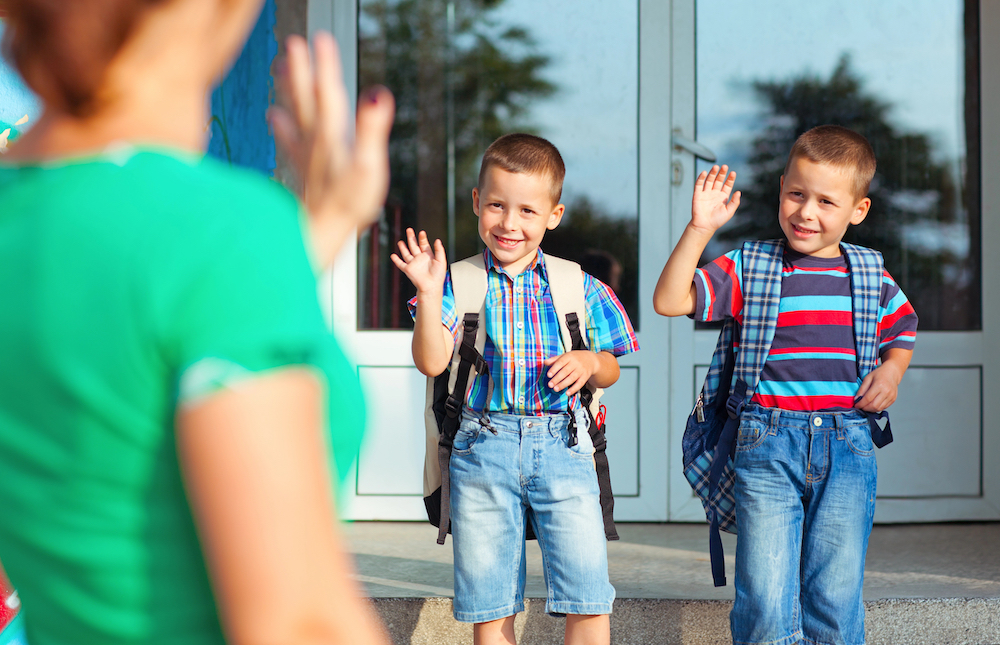
Drop-off rituals can also help, such as repeating the same reassuring phrase each day.
The last page of I Can’t Wait! My First School Poo includes illustrations children can choose as a symbolic connection to home.
Secure attachment supports nervous system regulation and helps the body feel safe enough to relax.
2. Be mindful of pressure, bribes, and rewards
It’s tempting to encourage children with rewards or questions like “Did you do a poo at school today?” However, this can unintentionally increase pressure.
When the body feels stressed, muscles tighten — making it physically harder to poo.
Instead, support calm and safety:
“Lots of kids take time to feel comfortable, and that’s okay.”
“Your body will know when it’s ready.”
The Raising Children Network highlights that pressure-based toileting approaches can increase resistance and delay progress.
3. Talk about poo like it’s normal (because it is)
A quarter of parents (25%) report feeling embarrassed discussing toileting challenges, which can reinforce stigma.¹
Children take emotional cues from adults.
Neutral language helps:
“Poo is how the body gets rid of waste after using what it needs from food.”
Even sharing simple lived experiences helps normalise it:
“Oops, my body is telling me I need the toilet.”
Reading I Can’t Wait! My First School Poo together provides a shared, low-pressure way to build comfort.
4. Use humour to reduce tension
Laughter supports relaxation in the body and helps reduce stress hormones.
Silly songs, playful comments, and lightness around accidents can all help children feel safer.
When the nervous system is calm, the body is far more likely to respond naturally.
Laughter is not distraction — it is regulation.
5. Trust the process and stay calm
This is a common developmental stage. Children move through it at their own pace.
Calm adult regulation is one of the strongest predictors of child emotional regulation. Children borrow their sense of safety from the adults around them.
Reassurance such as “This will get easier over time” supports long-term confidence.
A Quick Note From Your Child’s Perspective
“It’s loud in there.”
“What if someone hears me?”
“What if I can’t wipe properly?”
“What if I need help and you’re not there?”
When viewed this way, hesitation becomes understandable rather than behavioural.
When to Seek Extra Support
Support from a GP or child health nurse is recommended if:
Ongoing constipation is present
Pain occurs when passing stools
Soiling or leakage occurs
Avoidance continues over several months
Early support helps prevent physical and emotional escalation.
You’re Not Alone in This
New research from Kleenex has found that 44% of Australian children aged 3–8 are holding in their poo at school.¹²
This does not mean anything is wrong.
It often reflects a developing sense of safety in unfamiliar environments.
A Simple Checklist to Support Your Child
✔ Build connection and safety
✔ Reduce pressure and expectations
✔ Normalise conversations about poo
✔ Use humour to lower stress
✔ Trust your child’s timeline
The Bigger Picture
With time, support, and a growing sense of safety, most children move through this stage and one day proudly announce:
“Today I did my first school poo!!”
Kleenex is on a mission to help raise the first unembarrassed generation, supporting children to feel confident and safe in their own bodies.
With supportive adults around them, children get there in their own time.
Methodology
This article references commissioned Australian consumer research conducted for Kleenex.
Two complementary datasets were used:
- Savanta Research (2025)¹
A nationally representative survey of 530 Australian adults aged 18+ with children. Fieldwork was conducted between 3–10 July 2025. This study explored parental perceptions of children’s toileting behaviour and school-related withholding patterns. - Pureprofile Research (2026)²
A nationally representative survey of 1,000 Australian adults aged 18+, including parents, guardians, grandparents and teachers of children aged 3–8 years. Fieldwork was conducted between 13–24 February 2026. This research measured children’s comfort levels with school toileting, parental concern, and stress-related avoidance behaviours.
References
¹ Savanta (2025) – Kleenex commissioned research, Australian parents (n=530)
² Pureprofile (2026) – Kleenex commissioned research, Australian adults (n=1,000)
Continence Foundation of Australia – Childhood continence guidance
Raising Children Network – Toilet training and behaviour support
Royal Children’s Hospital Melbourne – Constipation and stool withholding guidance