

What if your child’s favourite “screen time” song was actually building language skills, emotional regulation, and early learning foundations?
Sesame Workshop has just released a new music album made entirely of playful pop parodies — and while it sounds like fun (it is), there’s something deeper happening here.
From potty training anthems to sharing, self-control, and teamwork songs, this isn’t just entertainment — it’s learning disguised as music.
We’ve broken down what parents need to know (and what the research says about music and brain development in early childhood) in a new Kiddipedia feature.
🎧 Read the full article here and see why this matters more than you think.

The first five years shape a lifetime. 💛
Did you know that by age five, around 90% of a child’s brain development has already taken place? The relationships, care, and everyday interactions children experience during these early years help build the foundations for learning, confidence, resilience, emotional wellbeing, and future success.
Choosing childcare isn’t just about convenience — it’s about finding caring adults who help children feel safe, seen, heard, and understood.
Discover why childcare quality matters far more than many parents realise, and how the right support can make a lasting difference in a child’s development.
Read the full article now.

We’re raising the first generation of children whose early brain development is unfolding alongside constant screens.
And most parents are left wondering:
“If my child is watching and interacting with screens every day… what is it actually doing to how they learn, feel, and grow?”
Here’s what the science quietly keeps showing us:
Young children don’t just “learn differently” from screens…
they learn less deeply than they do from real-world, human, sensory-rich experiences.
Not because screens are “bad.”
But because a developing brain is built for something screens can’t fully replicate:
messy, unpredictable real life
emotional back-and-forth with humans
touch, movement, and physical discovery
boredom that turns into imagination
failure that turns into resilience
A toddler isn’t just “playing” when they stack blocks or dig in dirt.
They’re building the architecture of attention, language, emotional regulation, and thinking itself.
Screens can entertain. They can even teach.
But they don’t replace the developmental power of a child:
falling, trying again, being comforted, exploring, moving, and connecting with real people.
If you’ve ever felt unsure about screen time—not guilty, just unsure—this piece is for you.
It breaks down what research actually says… in a way that makes sense in real family life.
👉 Read the full article here
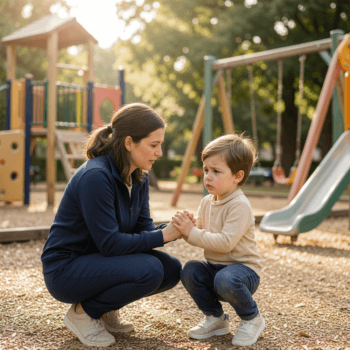
Ever had one of those moments where your child completely falls apart… and nothing you say seems to help?
The truth is, most children aren’t “misbehaving” in those moments—they’re overwhelmed and still learning how to regulate what they feel inside.
What they don’t need is “calm down.”
What they do need is you.
We’ve put together a practical, science-backed guide to emotional regulation—along with simple, powerful phrases you can use in real moments of big feelings, from toddler meltdowns to tween overwhelm.
Because the words we use don’t just soothe the moment… they help shape how children learn to understand, express, and manage their emotions for life.
💛 Read the full article: Phrases to Help Kids With Self-Regulation Every Parent Should Know (Backed by Science)

🎶 Did you know that music is a powerhouse for your little one’s brain? From improving motor skills to boosting emotional intelligence and enhancing language and math abilities, music stimulates every part of the brain! 🎤🎹
Starting early can spark a love for music and set the stage for lifelong benefits! 🌟 The earlier your child connects with music, the stronger their brain development in key areas like memory, motor skills, and emotional growth.
Ready to unlock the magic of music for your child? 🎧🎶
👇 Tap to read more and discover why music should be a part of your child’s daily life.

For decades, Playmobil has been a beloved fixture in children’s rooms worldwide, known for its ability to ignite creativity and foster imaginative play. Role-playing, where children step into different characters and scenarios, offers profound benefits for cognitive development across various… Continue Reading >

There’s no doubt moving through the tantrum phase of early childhood is tough on parents. Waiting out it out until the emotions pass, trying to support your child to find the words to express how they’re feeling. But getting through… Continue Reading >

I grew up on a farm as a young boy so animals were just part of my daily ritual. My step father insisted that the animals eat before we did in the morning, and this job fell in my hands…. Continue Reading >

Celebrating a birthday is a highlight of the year for most kids, but COVID-19 has meant that many haven’t had the big party they may have wanted. According to data from the ABS, over 700,000 Aussie children under six have… Continue Reading >

Messy play fosters a child’s imagination, curiosity, experimentation and encourages good concentration. It allows young children to make their own discoveries using all their senses and is an essential part of childhood. Parents may be unaware by sending little Johnny off… Continue Reading >
Get parenting advice and support delivered right to your inbox
We'd love to hear what you think of the website, so we can continue to improve it . . . GIVE YOUR FEEDBACK >