

Another week. Another packed calendar. Another “quick” dash from school to sport, then home for dinner, homework and bedtime. 😮💨
If your family is constantly rushing from one thing to the next, you’re definitely not the only one.
The tricky part is that most of us aren’t trying to over-schedule our kids. We’re just saying yes to the things they enjoy, the things they need, the things their friends are doing… and suddenly there’s barely a free night left.
So how do you know what to keep, what to let go and when your child simply needs some time to do absolutely nothing?
Our latest article shares realistic ways to take the pressure off the family calendar, protect downtime and make room for more connection and joy — without giving up everything your kids love.
Because sometimes, the best thing you can put in the calendar is nothing at all. ❤️

Have you ever felt like becoming a parent meant losing a part of yourself? 💛
You’re not alone.
Many parents spend so much time caring for everyone else that their own happiness quietly slips away. But here’s the surprising truth: one of the most powerful ways to raise happy, emotionally resilient children is to nurture your own wellbeing first.
In this honest and deeply personal article, happiness researcher and first-time dad Declan Edwards shares the reality of navigating sleep deprivation, postnatal mental health challenges, and the unexpected “parenting paradox”—along with three simple, science-backed strategies that helped him rediscover joy in parenthood.
✨ Learn why protecting your own happiness isn’t selfish—it’s one of the greatest gifts you can give your child.
If you’ve ever felt exhausted, overwhelmed, or like you’re simply trying to survive the day, this article is for you.
Read the full story
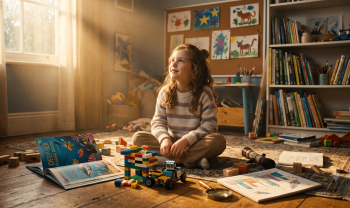
“So… what do you want to be when you grow up?”
It’s a question almost every child hears.
We ask it with the best intentions — hoping to inspire dreams, encourage ambition and help our children imagine an exciting future.
But what if this simple question is asking children to decide who they will become before they have had enough time to discover who they are?
In a world that is changing faster than ever, the future won’t belong to children who have every answer early.
It will belong to children who are curious, adaptable, resilient and confident enough to keep learning, growing and embracing new possibilities.
✨ The truth is, children don’t need to choose the “perfect” path from a young age.
They need the freedom to explore, make mistakes, follow their interests and discover their strengths without the pressure of having everything figured out.
Because changing their mind isn’t failure.
It’s learning.
And the greatest gift we can give our children isn’t choosing their future for them…
❤️ It’s helping them become confident enough to create their own.
Discover why we need to rethink the way we talk about careers, success and the future, and how we can support our children to explore possibilities with curiosity rather than pressure.

We’re raising the first generation of children whose early brain development is unfolding alongside constant screens.
And most parents are left wondering:
“If my child is watching and interacting with screens every day… what is it actually doing to how they learn, feel, and grow?”
Here’s what the science quietly keeps showing us:
Young children don’t just “learn differently” from screens…
they learn less deeply than they do from real-world, human, sensory-rich experiences.
Not because screens are “bad.”
But because a developing brain is built for something screens can’t fully replicate:
messy, unpredictable real life
emotional back-and-forth with humans
touch, movement, and physical discovery
boredom that turns into imagination
failure that turns into resilience
A toddler isn’t just “playing” when they stack blocks or dig in dirt.
They’re building the architecture of attention, language, emotional regulation, and thinking itself.
Screens can entertain. They can even teach.
But they don’t replace the developmental power of a child:
falling, trying again, being comforted, exploring, moving, and connecting with real people.
If you’ve ever felt unsure about screen time—not guilty, just unsure—this piece is for you.
It breaks down what research actually says… in a way that makes sense in real family life.
👉 Read the full article here

How do you explain ANZAC Day to a child when words don’t feel like enough?
For many parents, it’s not something that can be neatly explained. It’s felt. In the early morning stillness. In a dawn service where even silence feels shared. In the small gesture of a poppy being pinned with care, while a child stands beside you, quietly absorbing a moment they don’t yet have words for.
They may not understand it fully. But they feel it.
And maybe that’s where meaning begins.
This article explores how children actually come to understand ANZAC Day—through different ages, stages, and emotional awareness—and how respect, remembrance, and understanding are not taught in a single conversation, but built slowly across childhood.
Because perhaps the goal isn’t for them to fully understand ANZAC Day right now…
but to grow up in a world where it is never forgotten.

In a world of screens, emojis, and constant noise… are we still raising children who feel deeply for others?
Compassion isn’t automatic in today’s digital age — it’s something we must gently, intentionally nurture.
From noticing a friend in tears to helping a sibling who’s hurt, these small human moments matter more than ever.
Here are 15 simple, powerful ways to raise compassionate children — and help them grow into kind, emotionally aware humans who truly see others.
Because empathy isn’t just a trait… it’s a lifelong superpower. 💛
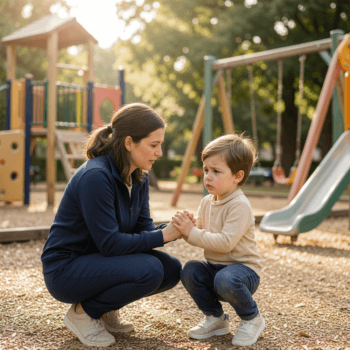
Ever had one of those moments where your child completely falls apart… and nothing you say seems to help?
The truth is, most children aren’t “misbehaving” in those moments—they’re overwhelmed and still learning how to regulate what they feel inside.
What they don’t need is “calm down.”
What they do need is you.
We’ve put together a practical, science-backed guide to emotional regulation—along with simple, powerful phrases you can use in real moments of big feelings, from toddler meltdowns to tween overwhelm.
Because the words we use don’t just soothe the moment… they help shape how children learn to understand, express, and manage their emotions for life.
💛 Read the full article: Phrases to Help Kids With Self-Regulation Every Parent Should Know (Backed by Science)

When was the last time you really talked with your child… not just asked how their day was, but actually connected to what they’re thinking and feeling?
In a world full of screens, noise, and constant stimulation, its easy to lose the art of initiating conversation and really talking with our kids. Those quiet, heart-to-heart conversations are becoming more powerful than ever.
To help, we’ve created a collection of age-specific, thought-provoking questions designed to open up real conversations, helping children feel seen, heard, and deeply connected.
From laughter at the dinner table to those unexpected “wow, I never knew that about you” moments… this is about slowing down and truly tuning in.
💛 Because connection isn’t built in big moments.
It’s built in the small questions we ask every day.
👉 Read the full article and discover 200 conversation starters that bring families closer.
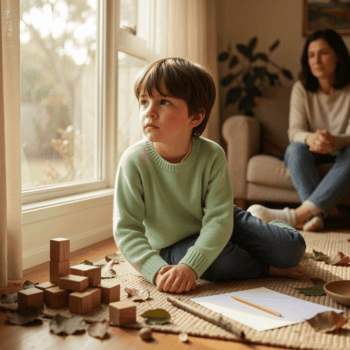
Term 1 school holidays are here…
And so is the familiar pressure:
“How do I keep them entertained?”
But in 2026, it’s louder than ever—
with screens, streaming, gaming, and constant stimulation competing for every quiet moment.
And somewhere in all of this… we’ve lost something important.
Boredom.
But what if boredom isn’t the problem—what if it’s essential?
Because science shows boredom is where children actually develop:
🧠 creativity
🧠 emotional regulation
🧠 independence
🧠 problem-solving
From toddlers to tweens, boredom is the space where the brain learns to think, imagine, and self-direct.
In an overstimulated world, maybe the most powerful thing we can give our kids isn’t more entertainment…
It’s space.
✨ Let them be bored. Something important is happening.
👉 Read more in the article.

🌱 New parents, this one’s for you! 🌱
Parenting is a beautiful rollercoaster, but no book or podcast can truly prepare you for the wild ride. In our latest article, we dive into the essential things your baby’s brain needs to grow strong, confident, and resilient. 💖
From the power of cuddles and play to the importance of being present (and putting down that phone!), we’ve got the science-backed tips to guide you. ✨
Your baby is unique. Read on for simple, yet powerful ways to support their development today. 👶💕
Get parenting advice and support delivered right to your inbox
We'd love to hear what you think of the website, so we can continue to improve it . . . GIVE YOUR FEEDBACK >