
Kiddipedia
Have you ever yelled at your child and immediately regretted it? Or snapped at them, then lay awake at 2 am replaying it and wondering what went wrong and whether you’re the worst parent ever? You can manage work, relationships, friendships, life. So why is parenting the one place that feels so hard? You’re not alone. Parenting today feels heavier than it used to. Not because we are failing, but because we’re surrounded by noise, constant messages about what a “good parent” should be doing. But here’s the part we don’t talk about enough: we don’t just parent from today’s stress and exhaustion. We parent from everything that happened to us.
The ‘perfect parent’ trap
There’s a pattern I see, something I call the “perfect parent trap”. It isn’t about making mistakes. It’s about something quieter and more confusing. It’s trying harder than ever yet feeling less confident than you expected to feel. It’s trying harder than ever and still ending the day wondering if you’re getting it wrong. Slowly, almost without noticing, you begin to doubt yourself, looking outward for answers instead of inward for steadiness. You lose trust in your own instincts. I see this every day in my work with families. And I’ve felt it myself, that moment of wondering, “Why did I react like that?” Here are five signs you might be caught in it.
Sign 1: You’re more reactive than you want to be
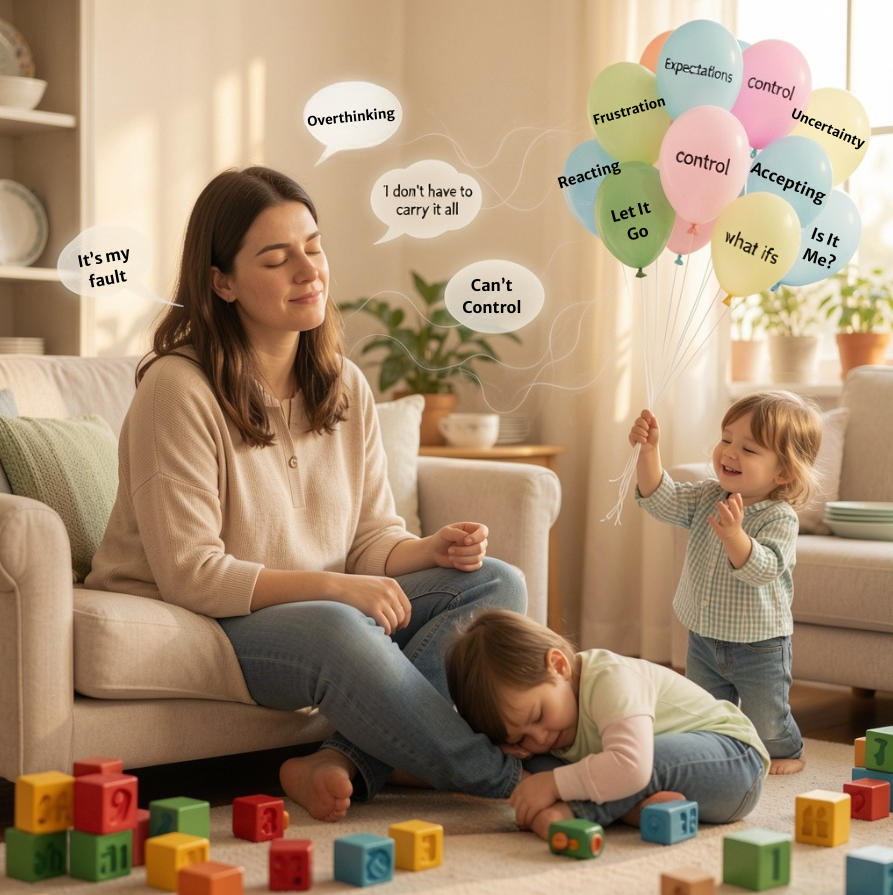
You snap when you meant to respond calmly. You raise your voice and instantly wish you could pull the words back, sometimes catching the look on your child’s face as you do. And what hurts most isn’t the behaviour, it’s the feeling that you weren’t the parent you wanted to be in that moment. Stress doesn’t create something new in us. It reveals what’s already there. Often, we’re not just responding to our child, we’re reacting from something older. A familiar feeling of not being heard, not being seen, not being enough.A question that gently shifts everything is this:
Am I responding to the child in front of me, or reacting from the child within me? Your reactivity isn’t a character flaw. It’s information.
Sign 2: You feel disconnected, even though you’re trying so hard
You’re doing more than ever, organising, reminding, negotiating and yet something feels further away. The power struggles are real and there’s a quiet grief in missing your child while living under the same roof. For many of us, that disconnection feels strangely familiar. It doesn’t mean you’ve ruined the relationship. It simply means something needs attention.
Sign 3: You’re your own harshest critic
You know that voice. The one that says you should know better. That you’re overreacting. That other parents seem to cope more calmly. That voice didn’t appear out of nowhere. For most of us, it was shaped by how we were spoken to, corrected, or measured growing up. Self-criticism might feel motivating, but it rarely leads to lasting change. It usually keeps us stuck in shame. Self-compassion, on the other hand, creates the safety we need to pause, reflect, and try again.
Sign 4: You’re exhausted
Not just physically tired – emotionally tired. You’re carrying the invisible load of parenting: the planning, the anticipating, the emotional temperature-taking, the constant holding of everyone else’s needs. You tell yourself you should be coping better. After all, everyone is busy. But exhaustion changes everything. It’s hard to be patient when you haven’t had five minutes to breathe. It makes small problems feel enormous. It blurs your perspective. Sometimes what looks like a parenting failure is simply a nervous system that hasn’t had enough rest.
Sign 5: You’re meeting everyone’s needs except your own
You say yes when you’re depleted. You push through when you need a break. You tell yourself that’s what loving parents do. But if you grew up believing that putting yourself first was selfish, it can feel uncomfortable to even consider your own needs. You disappear quietly from the equation. And when you shrink to keep everyone else steady, the whole family feels it. The parent you want to be doesn’t need to be perfect. They need to exist in the relationship too.
Breaking free doesn’t begin with a new strategy. It begins with a pause. A small, honest moment before you react. A willingness to gently ask yourself: What’s being stirred in me right now? In my work, I call these inherited emotional patterns Heartprints – the invisible imprints left by how we were loved, soothed, corrected or misunderstood growing up. They quietly shape how we respond under pressure. When we begin to notice our Heartprints, something shifts. We move from reacting on autopilot to responding with intention. From blaming ourselves to understanding ourselves. From striving to be perfect to choosing to be present. Our children don’t need flawless parents. They need parents who are willing to pause, repair when things go wrong, and keep choosing connection, even on the days it feels hard. Parenting was never meant to be a performance. It’s a relationship. And you are allowed to grow inside it too.
Lisa Taylor, author of The Perfect Parent Trap (Amba Press, $39.95), is a family therapist, relationships consultant, speaker and founder of Strengthening Families Australia. With over twenty-five years of experience walking alongside thousands of families, schools and organisations across Australia, Lisa’s heart-centred approach helps parents, educators and leaders strengthen relationships, heal generational patterns and transform how they connect with one another. Visit https://strengtheningfamiliesaustralia.com.au/