

Kiddipedia
The wrong snack. The wrong coloured cup. The screen turning off. Shoes that suddenly feel “not right.” And before you know it, your child is overwhelmed, crying, yelling, completely beside themselves. And then, almost just as quickly, something shifts in you. Your body tightens. Your patience disappears. Your voice changes. You hear yourself saying things you didn’t plan to say. And later, when it’s all settled, there’s often a quiet question sitting underneath it all: Why did that affect me so much?
I sit with parents in this space all the time. Parents who care deeply, who are trying so hard to get it right, and who still find themselves reacting in ways that don’t feel like who they want to be. This isn’t happening because you’re doing something wrong. It’s happening because something in you is being stirred.
When your child’s emotions meet your history
When children have meltdowns, they’re not trying to be difficult. They’re overwhelmed. Their nervous system is flooded, and they don’t yet have the capacity to bring themselves back to calm on their own. They need you to help them find their way back.
But what often gets missed is this. Their overwhelm meets your nervous system. And in that moment, something in you can get pressed. Sometimes it’s the exhaustion of a long day. Sometimes it’s the pressure you’re already carrying. And sometimes, it’s something older, the emotional patterns you’ve lived through, the experiences that have shaped how you feel about big emotions, what I often think of as your own heartprints. So in those moments, it’s not just your child’s meltdown in the room. It’s your child’s emotion… meeting everything you’ve learned about emotion.
Why it feels so intense
For many of us, big feelings weren’t handled with calm and connection when we were children. We were told to stop crying. Calm down. Don’t overreact. Be good. Even in loving homes, there was often an unspoken message that big emotions were something to move through quickly, or to keep contained. So when your child expresses those same big feelings, your body reacts. Fast.
There can be a strong pull to shut it down, to fix it, to make it stop. Or a wave of frustration that it all feels like too much. And it happens before you’ve had time to think it through. This is the moment so many parents get stuck in, not because they don’t understand their child, but because they get swept up in what’s happening inside them without realising it.
A simple question that can shift everything
There’s a question I often come back to in these moments: Am I responding to the child in front of me, or reacting from something within me?
Not as a way to judge yourself, but as a way to pause and become curious. Because when we begin to look at these moments a little differently, something starts to soften. Instead of asking, “How do I stop this?” we can gently begin to wonder, “What’s actually happening here?” For your child… and for you.
What can help in the moment
In the middle of it all, you don’t need the perfect response. You just need a small amount of space. Sometimes that starts with a breath. Noticing what’s happening in your body – the tension, the urgency, the pull to react quickly. And quietly reminding yourself, my child is struggling right now.
That shift alone can change how you show up. You might find yourself softening a little. Getting down to their level. Staying close instead of pulling away. You might say something simple like, “I’m here,” or “this feels really big.” Not to fix it straight away. But to help them feel safe inside it. And often, that’s what helps things begin to settle.
When it doesn’t go how you hoped
There will still be moments where you react. Where your voice is sharper than you’d like. Where you walk away and wish you had handled it differently. That doesn’t undo the relationship. What matters most is what happens next. Coming back. Reconnecting. Letting your child know you’re still there. Those moments of coming back together are incredibly powerful.
Where change really happens
These situations that feel so hard are not interruptions to parenting. They are parenting. Not because we handle them perfectly, but because over time, we begin to understand what’s happening underneath them. In our children. And in ourselves. And as that understanding grows, something begins to shift. Not all at once. Not every time. But slowly, in the middle of real life, in the messy, everyday moments, we find ourselves responding a little differently.
And that’s where real change begins.
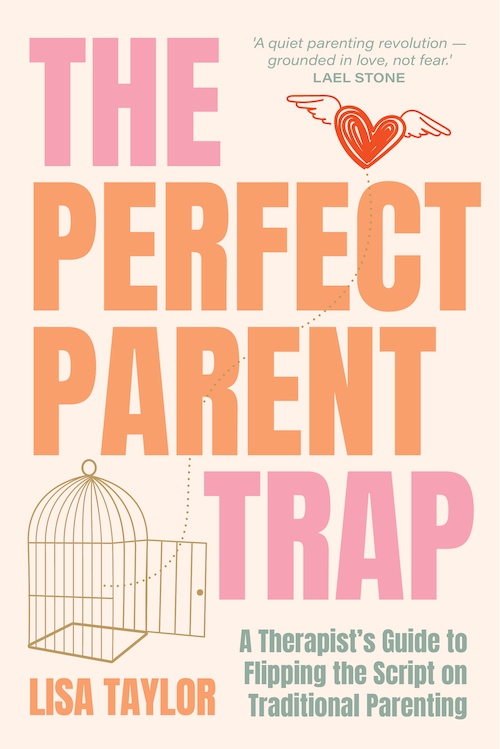
 Lisa Taylor is a family therapist, speaker and author of The Perfect Parent Trap. She works with parents, schools and organisations across Australia, helping people build strong, connected relationships and better understand themselves and their children. Through her warm and practical approach, Lisa supports parents to move away from pressure and perfection, and towards more calm, confident and connected parenting. She lives on the Bellarine Peninsula with her husband Chris, their three children and Faith, their golden retriever.
For more information visit:
strengtheningfamiliesaustralia.com.au
Facebook: https://www.facebook.com/SFACounsellingService
Instagram: https://www.instagram.com/lisataylor.au/