

“How many times do I have to ask you?!” 😩
Shoes on. Teeth brushed. Time to leave. And somehow you’ve asked 17 times… with absolutely no response.
But what if your child isn’t deliberately ignoring you?
Sometimes children are so absorbed in play, emotions or what’s happening around them that they need us to communicate differently before they can truly hear and process what we’re saying. ❤️
From connection and touch to lowering your voice, using gestures and noticing the emotions underneath their behaviour, there are simple ways to help your child tune in — without turning every request into a battle.
Because sometimes, they don’t need us to say it louder. They need us to connect differently

When a family changes, children can feel it in ways they don’t always have the words to explain. 💔
Separation can bring big emotions, uncertainty, two homes, changing routines and questions that are sometimes hard for parents to answer.
But you don’t have to make separation painless to help your child feel safe, loved and secure.
From what to say — and what not to say — to managing routines, conflict, parenting arrangements and those moments when your child says, “I don’t want to go”, this guide offers practical, compassionate advice for parents trying to navigate one of life’s hardest transitions.
Because sometimes, the most important thing your child needs isn’t a perfect parent or a perfect arrangement.
They just need to know: “I’m loved. This isn’t my fault. And I’m going to be okay.” ❤️

🏠 I don’t want to move…”
For adults, moving house might mean a fresh start, a better home or simply doing what needs to be done.
But for a child, it can mean saying goodbye to their bedroom, their friends, their school, their favourite places and the little routines that make life feel safe. 💔
And when families are forced to move more often because of Australia’s housing and rental crisis, what does that mean for our children?
New research reveals that children who move frequently can experience changes in their emotions, sleep, eating, routines, concentration and sense of belonging.
The good news? There are things parents can do to help. ❤️
From how you first tell your child about the move, to using stories, play, photos and familiar connections to help them understand and process the change.
If your family is preparing for a move, don’t just pack the boxes — prepare your child’s heart, too.
👉 Read the article to discover how you can help your child feel safer, supported and connected through a big move.

👶 Is your baby “behind”… or are we putting too much pressure on the milestones?
If you’ve ever looked at a milestone chart and wondered, “Should my child be doing this by now?” — you’re not alone. ❤️
In a world of parenting comparisons, milestone checklists and endless advice, it’s easy to focus on what your child hasn’t done yet instead of noticing how far they’ve already come.
🌿 But what if the little things matter more than we realise?
The reaching. The grasping. The babbling. The exploring. The tiny moments of progress that happen quietly between the big milestones.
These “inchstones” can reveal so much about a child’s development — and may help parents see progress in a completely different way.
In this insightful article, Dr. Maral Amani, paediatric physical therapist and Child Development Expert, explains what milestones really mean, why comparing children can create unnecessary stress, and why play, connection and celebrating the small steps may be one of the most valuable things parents can do.
💚 Because your child doesn’t need to race to the next milestone. They need the space to grow, explore and develop in their own time.
👉 Read the full article and discover why the little steps deserve more attention.

When is the RIGHT time to start toilet training? 🚽💛
Forget the pressure, comparisons and “they should be doing it by now” comments. Toilet training is a big milestone — and there’s no one-size-fits-all timeline.
But how do you know when you and your child are actually ready? From recognising the signs of readiness to choosing the right approach, a little preparation can make the journey feel much less overwhelming.
👉 Find out what to look for before you begin — and how to make toilet training a more positive experience for everyone.

What if your child isn’t “too much”… but simply misunderstood?
“Why can’t they just focus?”
If you’ve ever asked this, quietly or in frustration, you’re not alone.
ADHD can look like distraction, restlessness, big emotions, or constant movement — but underneath it is something far more complex and far more powerful: a brain that feels deeply, thinks quickly, and locks into interest with incredible intensity.
For many parents, an ADHD diagnosis brings relief and understanding. For others, it can bring guilt, confusion, or worry. But one truth remains steady: your child is not broken — they are wired differently.
In this honest and deeply personal reflection, Elly Both shares her lived experience of ADHD and how shifting the way we see it can change everything. Instead of trying to fit kids into a box, we can start recognising what’s already there — creativity, curiosity, hyperfocus, and unique strengths waiting to be supported.
ADHD is not a lack of attention. It’s an interest-based nervous system. And when we learn to work with it instead of against it, something powerful happens — shame softens, confidence grows, and strengths begin to shine.
This is not about ignoring the challenges. It’s about holding them alongside understanding, honesty, and compassion — so children feel seen, supported, and capable of becoming who they already are.
Because when we stop trying to shrink our kids… we finally start seeing their superpowers.
👉 Read the full article by Elly Both

Starting therapy can feel like a big step… but the conversation you have with your child can make all the difference. 💛🌱
Many parents worry about saying the wrong thing.
Will my child think something is wrong with them? Will they feel scared? Will they refuse to go? 🤔
And sometimes the question children quietly carry is:
“Are we going to therapy because something is wrong with me?” 💭
The truth is, therapy isn’t about fixing a child — it’s about helping them understand their feelings, build confidence and learn skills that support them for life. 💛✨
With the right words, parents can help children see therapy as a positive step — a safe place to learn, grow and better understand themselves. 🌈
From what to say, what to avoid, and how to answer those tricky questions, this guide helps parents navigate one of the most important conversations they may have. 💬❤️
Discover how to introduce therapy in a way that feels safe, positive and reassuring — because sometimes the most powerful thing a child can hear is:
“You’re not in trouble. Nothing is wrong with you. We’re doing this together.” 🤗❤️

Have you ever felt like becoming a parent meant losing a part of yourself? 💛
You’re not alone.
Many parents spend so much time caring for everyone else that their own happiness quietly slips away. But here’s the surprising truth: one of the most powerful ways to raise happy, emotionally resilient children is to nurture your own wellbeing first.
In this honest and deeply personal article, happiness researcher and first-time dad Declan Edwards shares the reality of navigating sleep deprivation, postnatal mental health challenges, and the unexpected “parenting paradox”—along with three simple, science-backed strategies that helped him rediscover joy in parenthood.
✨ Learn why protecting your own happiness isn’t selfish—it’s one of the greatest gifts you can give your child.
If you’ve ever felt exhausted, overwhelmed, or like you’re simply trying to survive the day, this article is for you.
Read the full story
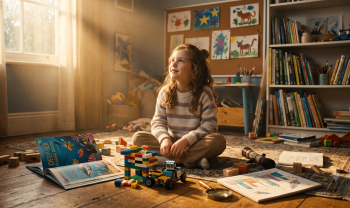
“So… what do you want to be when you grow up?”
It’s a question almost every child hears.
We ask it with the best intentions — hoping to inspire dreams, encourage ambition and help our children imagine an exciting future.
But what if this simple question is asking children to decide who they will become before they have had enough time to discover who they are?
In a world that is changing faster than ever, the future won’t belong to children who have every answer early.
It will belong to children who are curious, adaptable, resilient and confident enough to keep learning, growing and embracing new possibilities.
✨ The truth is, children don’t need to choose the “perfect” path from a young age.
They need the freedom to explore, make mistakes, follow their interests and discover their strengths without the pressure of having everything figured out.
Because changing their mind isn’t failure.
It’s learning.
And the greatest gift we can give our children isn’t choosing their future for them…
❤️ It’s helping them become confident enough to create their own.
Discover why we need to rethink the way we talk about careers, success and the future, and how we can support our children to explore possibilities with curiosity rather than pressure.

Could your child’s ability to focus have less to do with trying harder… and more to do with what happens long before they walk into the classroom?
Every parent wants to help their child learn, concentrate and feel confident at school. But supporting a growing brain isn’t about finding a miracle food or the latest trend. It’s about understanding the powerful role that nutrition, sleep, movement and everyday family habits play in helping children thrive.
Backed by research, this article explores the key nutrients that support healthy brain development, why sleep may be one of the most overlooked learning tools, and the simple, realistic changes that can make a lasting difference.
Because when children are given the right foundations, they’re better equipped to learn, grow and reach their full potential.
Read the full article now
Get parenting advice and support delivered right to your inbox
We'd love to hear what you think of the website, so we can continue to improve it . . . GIVE YOUR FEEDBACK >