
Breanna Jayne Sada
By Breanna Jayne Sada
As a psychologist working across the lifespan, one of the most common concerns I hear from parents is about their children’s mood, behaviour, motivation and screen use. But there is something sitting quietly underneath many of these struggles that often gets overlooked. Sleep.
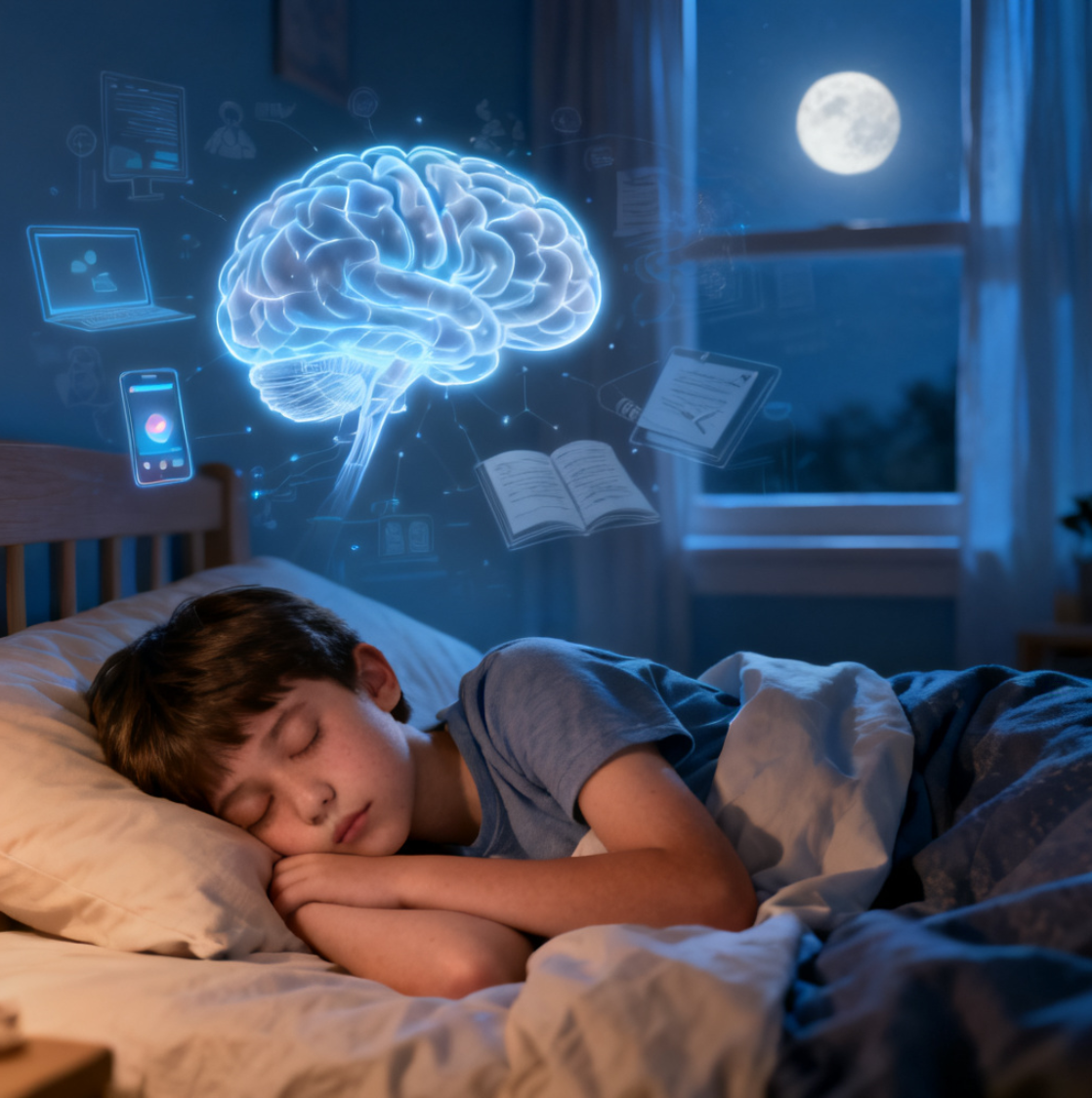
Sleep is not just rest. It is one of the most important biological processes for a child’s development. It is when the brain and body do some of their most critical work. During sleep, children and teens release growth hormones, consolidate learning and memories, and regulate emotions. There is also increasing research into the brain’s “clean up system”, known as the glymphatic system, which is most active during deep sleep. This system helps clear out waste products from the brain that build up during the day.
When our kids are not getting enough sleep, we are not just dealing with tiredness. We are impacting their development, their learning and their mental health.
Why teenagers are not just being “lazy”
One of the biggest misconceptions I see in families is labelling teenagers as lazy, particularly when they struggle to wake up in the morning or want to sleep in on weekends. From a biological perspective, this is not laziness at all.
During adolescence, there is a natural shift in the body’s circadian rhythm. The hormone melatonin, which helps us feel sleepy, is released later at night in teenagers compared to younger children and adults. This means teens genuinely do not feel tired until later in the evening. At the same time, their brains are undergoing significant development, particularly in areas responsible for emotional regulation, decision making and impulse control. This development increases their need for sleep.
Research suggests teenagers need around 8 to 10 hours of sleep per night, yet many are getting far less. Early school start times, homework demands, social commitments and screen use all compete with this biological need. So when a teenager sleeps in on the weekend, it is often their body trying to recover from a sleep debt built up during the week.
Rather than seeing this as a behaviour problem, it can be helpful for parents to understand it as a biological mismatch between a teen’s internal clock and the external demands placed on them.
The link between sleep and mental health
Sleep and mental health are deeply connected. Poor sleep can both contribute to and worsen mental health difficulties.
In my clinical work, I often see young people presenting with anxiety, low mood, irritability and difficulty concentrating. While these can have many causes, sleep is frequently a key factor. When we are sleep deprived, the brain’s ability to regulate emotions is reduced. The amygdala, which is responsible for detecting threat, becomes more reactive, while the prefrontal cortex, which helps us think clearly and respond calmly, becomes less effective.
This means that small problems can feel overwhelming, emotions can feel more intense, and coping becomes harder.
There is also strong evidence linking insufficient sleep with increased risk of depression and anxiety in adolescents. Poor sleep is associated with lower academic performance, reduced attention, and difficulties with memory. It can also impact relationships, with tired children and teens more likely to be irritable or withdrawn.
Sleep is not a “nice to have” when it comes to mental health. It is a foundation.
What the data is telling us
The concern around children and teen sleep is not just anecdotal. It is reflected in national and international data.
In Australia, studies suggest that a significant proportion of adolescents are not meeting recommended sleep guidelines. Some estimates indicate that up to 70 percent of teenagers are not getting enough sleep on school nights.
Many families have access to sleep tracking through watches, phones and apps. While not perfect, this data often shows consistent patterns of late bedtimes, interrupted sleep and shortened sleep duration across the week.
When families look at this information together, it can be a powerful and non confrontational way to understand what is happening. It moves the conversation away from blame and towards curiosity and problem solving.
What parents can do
The goal is not perfection. It is awareness and small, sustainable changes.
One of the most helpful starting points is to track sleep for a week. This can be done using a simple diary or by looking at data from a device if your child uses one. Record bedtimes, wake times, and how your child feels during the day. Often, patterns quickly emerge.
From there, families can begin to experiment with small adjustments. This might include:
- Creating a consistent wind down routine at night, even if bedtime shifts slightly later for teens
- Reducing stimulating activities, including intense screen use, in the hour before bed
- Encouraging exposure to natural light in the morning to help regulate the body clock
- Protecting sleep in the same way we protect school, sport or other commitments
It is also important to have open conversations with teenagers about sleep. When they understand the “why” behind sleep, rather than just being told to go to bed, they are more likely to engage.
Finally, it may mean rethinking some of our expectations. If a teenager is sleeping in on weekends, it may not be something to immediately correct. It may be their body trying to catch up.
Before we focus on behaviour or attitude, it is worth asking a simple question, are they getting enough sleep?