
kiddi
As a parent, I’ve realised something that changed the way I see home life altogether:
A chaotic household usually isn’t caused by “mess”; it’s caused by too many decisions, too many moving parts, and not enough systems holding it all together.
Between school schedules, sports, lunches, forgotten permission slips, laundry that never quite ends, and the invisible mental load most parents carry daily, it’s easy for home life to feel like it’s running you instead of the other way around.
According to the Australian Psychological Society (APS), ongoing decision fatigue reduces our ability to focus, regulate emotions, and stay organised — especially in high-demand family environments.
So the goal isn’t perfection.
It’s creating simple, repeatable systems that make everyday life easier to run.
This article blends real parenting experience with Australian research and practical strategies to help bring more calm, clarity, and structure into busy family life.
🧠 Why Family Life Feels Overwhelming (And Why That’s Normal)
Keeping a household running smoothly requires a lot more mental effort than most people realise.
Research from the Australian Institute of Family Studies (AIFS) shows that families function best when routines are predictable and decision-making is reduced. When everything feels urgent, the brain becomes overloaded — even simple tasks start to feel heavy.
This is known as cognitive overload and decision fatigue, where constant micro-decisions drain energy and patience throughout the day.
In real terms, it looks like:
- forgetting school forms
- feeling overwhelmed by dinner decisions
- constantly searching for items
- reacting instead of planning
Nothing is wrong with you — the system is simply overloaded.
📅 Managing the Daily Family Schedule (Reducing Mental Load)
Shared family calendars help keep everyone aligned with school, sports, and appointments.
From my own experience, one of the biggest reliefs came from accepting we cannot say yes to everything. Fewer commitments create more space for calm evenings, rest, and connection.
Some families also use external storage options such as Self Storage in Lidcombe and Chiswick to temporarily manage seasonal items, sports gear, or excess household belongings during busy periods.
The Raising Children Network (Australian Government) highlights that children thrive when routines are predictable and family schedules are consistent.
✔ Fewer activities
✔ Clearer evenings
✔ Less rushing
✔ More connection time
A calmer schedule doesn’t limit children — it supports them.
🏡 Setting Up a Central Home Hub (The Brain of the Home)
Paperwork has a way of multiplying on kitchen benches within hours.
A central home hub (or command centre) acts as the organisational “brain” of the household — a single place for everything important.
According to AIFS, reducing environmental clutter and improving structure supports better daily functioning and reduces cognitive load for both parents and children.
A functional hub might include:
- school notices and permission slips
- family calendar
- keys and essentials
- labelled baskets for each child
Hooks, baskets, and clear zones help transform chaos into structure.
👉 When everything has a place, your brain doesn’t need to hold it all.
⏰ Smart Time Management Strategies (Less Doing, More Focus)
Morning routines often set the emotional tone for the entire day.
Instead of trying to do everything at once, focusing on the top three priorities each morning helps reduce overwhelm and increase completion.
The Australian Psychological Society (APS) notes that limiting working memory load improves focus and reduces stress in high-demand environments.
Time blocking can also help separate:
- work time
- home tasks
- family time
Multitasking may feel productive, but research consistently shows it reduces efficiency and increases unfinished tasks.
👉 Focus creates calm. Multitasking creates noise.
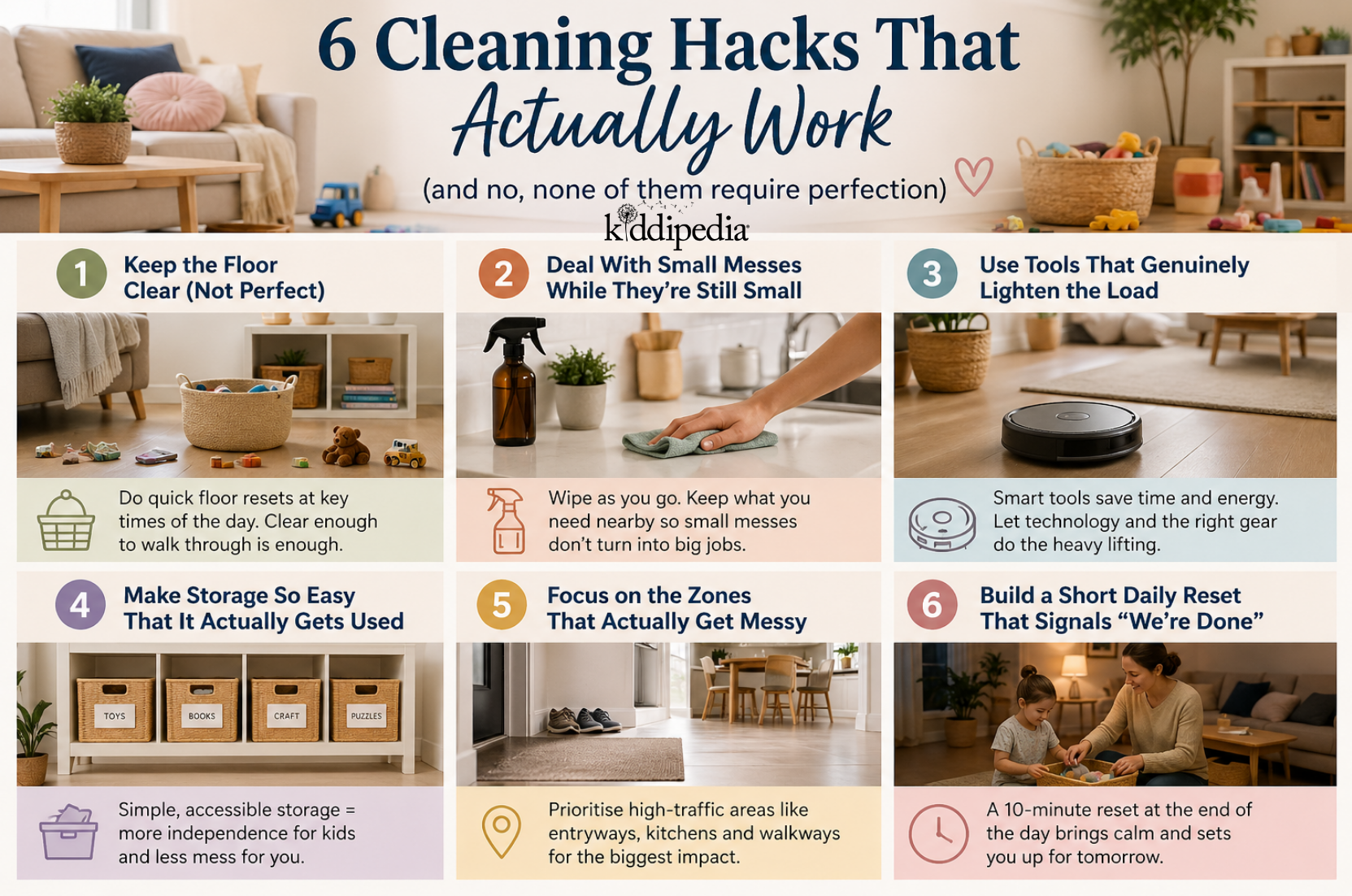
🧹 Daily Decluttering Habits (The 10-Minute Reset Effect)
Clutter rarely appears overnight — it builds quietly over time.
A simple 10-minute daily reset can significantly change how a home feels.
Research-informed wellbeing approaches from Beyond Blue Australia highlight that small, achievable actions are more effective for reducing overwhelm than large, irregular clean-ups.
Ten minutes a day becomes:
- 70 minutes per week
- nearly 5 hours per month
👉 Consistency creates visible change without burnout.
A donation box kept in a hallway or cupboard also makes it easy to immediately remove outgrown or unused items.
👕 Streamlining the Weekly Wardrobe (Reducing Morning Stress)

Morning stress often comes from too many decisions at once.
Planning outfits in advance removes one of the most common early-day pressure points.
The Sleep Health Foundation (Australia) links consistent routines with improved morning behaviour, reduced stress, and better sleep outcomes in children.
Simple systems include:
- weekday outfit planning
- labelled clothing sections
- shoes stored in one place
👉 Fewer morning decisions = smoother starts to the day.
👨👩👧 Involving the Family in Cleanup (Shared Responsibility)
Household organisation should not fall on one person.
A short 10-minute family reset at the end of the day builds shared responsibility and teamwork.
According to the Raising Children Network, children benefit from chores because they build:
- independence
- responsibility
- confidence
- belonging
This isn’t about perfect cleaning — it’s about shared ownership of the home environment.
🧸 Managing Toys and Clutter (Why Less Often Feels Like More)
The “one-in, one-out” rule helps maintain balance in household items and prevents gradual overwhelm.
Interestingly, research-informed parenting approaches suggest that children often engage more deeply in play when there are fewer toys available at once.
Rotating toys every few weeks:
- refreshes interest
- reduces overwhelm
- keeps spaces calmer
- avoids constant clutter buildup
👉 Less stimulation often leads to better focus and creativity.
📦 Creating Functional Storage Zones (Making Tidying Automatic)
Storage systems work best when they are:
- visible
- easy to access
- clearly labelled
When children can see where things belong, they are more likely to maintain the system independently.
This builds long-term habits rather than constant correction from parents.
👉 Organisation should guide behaviour — not rely on reminders.
🍽 Meal Planning and Kitchen Organisation (Reducing Daily Pressure)
The kitchen is often the busiest decision-making zone in the home.
Planning meals ahead reduces stress, saves time, and minimises last-minute food decisions.
The Victorian Government Healthy Eating Advisory Service supports meal planning as a strategy that improves:
- nutrition outcomes
- food budgeting
- time efficiency
Practical supports include:
- prepping vegetables ahead of time
- storing lunches in portioned containers
- maintaining a visible grocery list
👉 A planned kitchen creates calmer afternoons and evenings.
🌙 Preparing for Smooth School Mornings (The Night Before Matters Most)
Mornings are significantly easier when preparation happens the night before.
Setting out uniforms, packing bags, and checking schedules removes unnecessary morning pressure.
The Sleep Health Foundation also highlights that consistent bedtime routines improve sleep quality and emotional regulation in children.
Better evenings create better mornings.
👉 Calm nights build calm starts.
🌿 Final Thoughts
Creating an organised home isn’t about doing more.
It’s about removing unnecessary friction from daily life so the household can run more smoothly.
When systems are simple, consistent, and shared, everything becomes lighter — not perfect, but easier.
And in parenting, easier often means everything.
📚 Australian References
- Australian Psychological Society (APS) – https://psychology.org.au
- Australian Institute of Family Studies (AIFS) – https://aifs.gov.au
- Raising Children Network (Australian Government) – https://raisingchildren.net.au
- Beyond Blue Australia – https://beyondblue.org.au
- Sleep Health Foundation Australia – https://www.sleephealthfoundation.org.au
- Healthy Eating Advisory Service (Vic Government) – https://heas.health.vic.gov.au
- Kids Helpline Australia – https://kidshelpline.com.au