
Kiddipedia
“So… what do you want to be when you grow up?”
It’s a question almost every child hears.
It happens at family gatherings, during school conversations, on car rides and around the dinner table.
Most of the time, it is asked with love. We ask because we want to encourage our children to dream, imagine and believe anything is possible.
But beneath this seemingly simple question sits a much bigger idea:
Are we asking children to decide their future before they’ve had enough time to discover themselves?
Article Key Takeaways
Before we dive in, here are the key things every parent should know:
✓ Children do not need to have their future career mapped out early. Childhood is a time for exploration, curiosity and discovering strengths—not making lifelong decisions.
✓ The question “What do you want to be when you grow up?” can unintentionally create pressure by making children feel they need to find one perfect answer.
✓ Curiosity is more valuable than certainty. Helping children explore interests, ask questions and try new experiences prepares them for an ever-changing world.
✓ Career exploration should focus on strengths, interests and values—not just job titles.
✓ Children need opportunities to experience different possibilities so they can discover what inspires and motivates them.
✓ Changing their mind is a sign of learning—not failure. Every new interest helps children understand themselves better.
✓ The skills that will matter most in the future are adaptability, resilience, creativity, communication and lifelong learning.
✓ Our role as parents is not to choose our children’s future.
It is to help them become confident, capable and curious enough to create it.
Why This Conversation Matters More Than Ever
Today’s children are growing up in a world that looks dramatically different from the one many of us entered.
Entire industries are transforming through artificial intelligence, automation, renewable energy, digital technologies and global connectivity. New occupations are emerging every year, while others continue to evolve in ways we could never have imagined.
Rather than following one predictable career path for life, many young Australians are expected to move between multiple occupations, industries and learning opportunities throughout adulthood. Australia’s National Careers Institute highlights that career development is no longer about choosing one job for life—it is about developing the adaptability, curiosity and transferable skills needed to navigate lifelong change (National Careers Institute, n.d.).
This changes the conversation entirely.
Our children don’t simply need help deciding what they want to be.
They need support discovering who they are, what motivates them, what strengths they possess, and how they can continue learning throughout life.
Those qualities are likely to serve them far longer than any single job title ever will.
“Children don’t need certainty about their future—they need confidence that they can adapt to whatever their future becomes.”
Research Snapshot
Australian research consistently shows that career development is a lifelong process—not a single decision made during childhood or adolescence.
According to the National Careers Institute, career development involves building self-awareness, exploring opportunities, developing decision-making skills and learning to adapt as circumstances change. These capabilities begin developing during childhood and continue throughout adulthood (National Careers Institute, n.d.).
Similarly, Australia’s myfuture career education framework encourages young people to develop skills such as curiosity, resilience, self-awareness and informed decision-making rather than focusing solely on selecting a future occupation (Education Services Australia, n.d.).
In other words…
The goal isn’t helping children choose a career.
The goal is helping them become adaptable learners.
The Problem with Asking “What Do You Want to Be When You Grow Up?”
(Original article begins below—kept intact.)
“What do you want to be when you’re older?” It’s a common question that we hear time and time again throughout our childhoods. Adults are prone to asking it to children of any age, at any time – from birthdays to dinner times to car rides.
The question is a big one, but one that’s often disguised as small talk. It might seem innocent enough at first glance, but there’s a reason why the question is dreaded by so many children.
A constant focus on choosing one singular role – one that will determine what a child is going to ‘be’ – is a huge pressure to put on children. It’s not only stressful, but it’s the wrong question to ask. It implies that a job is the most important part of a person, and will define who they are when they get older.
More Than a Job Title: Children Are Building Their Identity
One of the most important developmental tasks of childhood isn’t deciding on a career—it’s discovering who they are.
Long before children understand university pathways or occupations, they’re learning about themselves.
They begin asking questions such as:
- What am I good at?
- What do I enjoy?
- Where do I belong?
- What kind of person do I want to become?
When conversations repeatedly centre on future jobs, children can unintentionally begin linking their identity with external achievement.
Instead of thinking:
“I’m a curious person who loves solving problems.”
They may begin thinking:
“I need to figure out what I should become.”
While subtle, this shift matters.
Research discussed by the Australian Institute of Family Studies highlights that children’s confidence and wellbeing are strengthened when adults nurture competence, belonging and autonomy—rather than placing excessive emphasis on performance or external outcomes (Australian Institute of Family Studies, n.d.).
Parents play a powerful role in shaping these beliefs.
What Happens Inside a Child’s Brain?
Children’s brains are still under construction.
The area responsible for planning ahead, weighing consequences, managing uncertainty and making complex long-term decisions—the prefrontal cortex—continues developing well into early adulthood.
Expecting a seven-year-old—or even a teenager—to confidently identify a lifelong career overlooks an important reality:
Their brains are designed to explore before they specialise.
Exploration isn’t indecision.
It’s healthy development.
Children often change their minds because every new experience expands their understanding of the world.
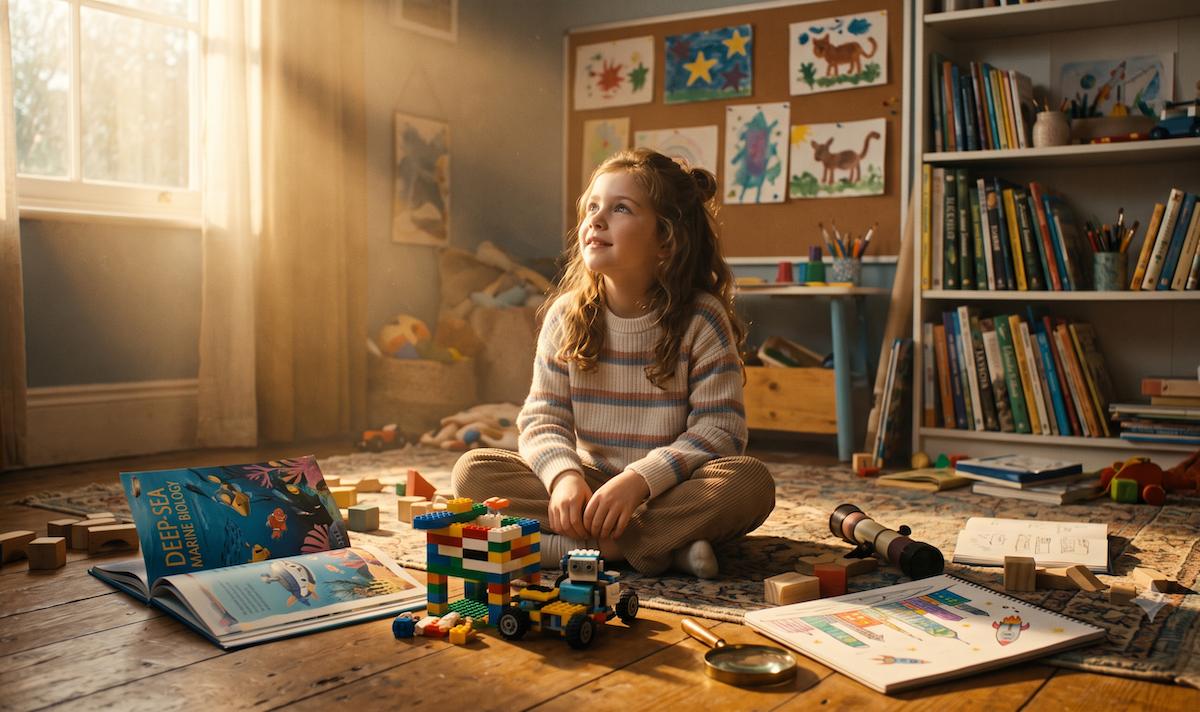
Today they may want to become a marine biologist after visiting an aquarium.
Next month, they may discover musical theatre.
A year later, coding.
This isn’t inconsistency.
It’s learning.
Tip
Celebrate changing minds.
When your child announces a different dream every few weeks, resist the temptation to say:
“Last week you wanted to be a vet!”
Instead, try:
“That’s really interesting. Tell me what you like about that.”
You’re encouraging curiosity rather than commitment.
Children Learn More From Our Reactions Than Our Questions
The original article touches on an important point:
Children absorb ideas about different job roles from an early age.
This process often happens without us even noticing.
Children are constantly watching how adults respond.
If a child says they want to become a surgeon, they may receive enthusiastic praise.
If another says they want to become a cleaner, artist, YouTuber or childcare educator, the reaction can be noticeably different.
These tiny responses accumulate over time.
Without intending to, adults may communicate which occupations are considered prestigious, successful or worthy of admiration.
Australian career education research encourages exposing children to a broad range of occupations and helping them understand the value that different roles contribute to society, rather than ranking careers by income or status (Education Services Australia, n.d.).
Every occupation contributes something meaningful.
Helping children appreciate this broadens both their opportunities and their empathy.
From Fixed Mindset to Growth Mindset
Instead of encouraging children to search for one permanent answer, we can encourage something far more valuable:
A growth mindset.
Children with a growth mindset learn that abilities develop through effort, learning and experience.
Rather than believing they must “find” the perfect future, they begin believing they can continue growing throughout life.
That changes everything.
Instead of asking:
“What do you want to be?”
We might ask:
- What are you enjoying learning lately?
- What problems would you love solving?
- What makes you lose track of time?
- Who inspires you—and why?
- What would you love to learn more about this year?
Notice the difference.
One conversation asks children to predict their future.
The other helps them understand themselves.
That self-awareness becomes the foundation for lifelong career development.
“Children don’t need to have all the answers. They simply need adults who make it safe to keep asking questions.”
PART 2: Raising Children for a Future That Doesn’t Yet Exist
Identity Isn’t Something Children Find — It’s Something They Build
As parents, it’s natural to want our children to feel confident about their future. We celebrate their interests, encourage their talents and look for signs that might point them towards a fulfilling career one day.
But here’s something reassuring to remember:
Identity isn’t a destination. It’s an ongoing process of discovery.
Children aren’t born knowing exactly who they are or what they want to do. Instead, they gradually build a sense of self through thousands of everyday experiences—playing, asking questions, trying new activities, making mistakes, solving problems, forming friendships and discovering what brings them joy.
Developmental research consistently shows that childhood and adolescence are periods of exploration. During these years, children naturally experiment with different interests, abilities and social roles as they begin answering life’s bigger questions:
- What do I enjoy?
- What am I good at?
- What matters to me?
- How do I like to learn?
- Where do I feel like I belong?
The answers rarely appear all at once.
Instead, they evolve over many years.
That’s exactly how healthy development is meant to look.
Research Snapshot
Australia’s myfuture career development framework describes career development as an ongoing process of building self-awareness, exploring opportunities, making informed decisions and learning to adapt throughout life—not selecting one lifelong occupation during childhood (Education Services Australia, n.d.).
The Careers Our Children Will Have May Not Even Exist Yet
One of the greatest challenges facing today’s parents is this:
We’re preparing children for a world we cannot fully predict.
Think about the careers that barely existed twenty years ago:
- App Developer
- Drone Operator
- Cyber Security Analyst
- Renewable Energy Engineer
- Digital Content Creator
- User Experience (UX) Designer
- Virtual Reality Developer
- Data Scientist
- Social Media Strategist
- AI Solutions Specialist
Many of these occupations would have sounded like science fiction when today’s parents were at school.
Now imagine twenty years into the future.
Today’s preschoolers may eventually work in industries that haven’t yet been invented.
They may solve problems we haven’t identified.
They may use technologies we can’t yet imagine.
According to Jobs and Skills Australia, Australia’s workforce continues to evolve rapidly as technological advancement, demographic change, digital transformation and the transition to a cleaner economy reshape employment opportunities (Jobs and Skills Australia, n.d.).
That means the most valuable skills our children develop may not be technical knowledge alone.
Instead, they’ll need to become:
- Curious learners
- Creative thinkers
- Adaptable problem-solvers
- Strong communicators
- Emotionally intelligent collaborators
- Confident decision-makers
- Lifelong learners
These qualities are remarkably transferable across almost every occupation.
The future belongs less to children who know exactly what they want to be—and more to those who know how to keep learning.
Why One Career for Life Is No Longer the Norm
Many of us grew up believing success looked something like this:
Finish school.
Choose a career.
Get qualified.
Stay with the same employer.
Retire decades later.
For previous generations, that pathway often reflected reality.
Today’s children are growing up in a very different employment landscape.
Careers have become increasingly dynamic, flexible and non-linear.
People now commonly:
- change careers multiple times
- return to study later in life
- start businesses
- freelance
- work remotely
- combine multiple occupations
- take career breaks to raise children or care for family
- pursue portfolio careers with several income streams
Rather than viewing career changes as failures, they’re increasingly recognised as opportunities for growth, reinvention and lifelong learning.
Australia’s National Careers Institute encourages young people to think about career development as a journey rather than a single decision, highlighting that career pathways often involve many transitions across education, employment and life stages (National Careers Institute, n.d.).
Lifestyle First, Occupation Second
The original article introduces a particularly important idea:
Careers aren’t just about the role itself—they’re about the life built around that role.
This is perhaps one of the healthiest conversations we can have with our children.
Instead of asking,
“What job do you want?”
Try helping them imagine the kind of life they’d like to create.
For example:
- Do you enjoy being outdoors?
- Do you like helping people?
- Do you enjoy creating things?
- Would you love travelling?
- Do you enjoy solving puzzles?
- Would you rather work with animals, people, ideas or technology?
- Do you like routine or variety?
- Do you prefer working independently or as part of a team?
These questions encourage children to think about values, not simply occupations.
Because ultimately, careers are only one part of a fulfilling life.
Parents often focus on helping children choose a job.
Perhaps we should spend more time helping them design a life.
Parent Tip
Rather than asking:
“What do you want to be?”
Try asking:
“What would make a really happy day at work for you?”
Children often describe experiences rather than occupations.
Those experiences reveal far more about their interests.
Our Children Are Watching More Than They’re Listening
The original article wisely encourages parents to share their own career journeys—including the twists, setbacks and unexpected changes.
That advice deserves even greater attention.
Children learn as much from what we model as what we teach.
Every day they’re quietly observing:
- how we speak about work
- whether we enjoy what we do
- how we handle stress
- whether we value weekends more than weekdays
- how we respond to setbacks
- whether we continue learning ourselves
Even seemingly harmless comments can shape children’s beliefs.
For example:
“I’m stuck in this job.”
“I hate Mondays.”
“I wish I’d done something different.”
“You’ll never make money doing that.”
These messages can unintentionally teach children that work is something to endure rather than something that can provide purpose, challenge, creativity or contribution.
On the other hand, children also notice when adults say things like:
“I learnt something new today.”
“That project was difficult, but I figured it out.”
“I’m nervous about changing jobs—but excited too.”
“I’m taking a course because I want to keep learning.”
Those moments demonstrate resilience, adaptability and lifelong learning in action.
Role Models Don’t Need Perfect Careers
Sometimes we think role models need extraordinary achievements.
Children disagree.
Their role models are often ordinary people living meaningful lives.
The local firefighter.
The childcare educator who remembers everyone’s name.
A nurse.
A mechanic.
A small business owner.
A scientist.
A dance teacher.
A grandparent who volunteers every week.
What children admire isn’t always status.
It’s enthusiasm.
Passion.
Kindness.
Purpose.
Commitment.
Helping children meet people from many walks of life broadens their understanding of success.
Every career has dignity.
Every occupation contributes to society.
Research Snapshot
Career education research used within Australia’s myfuture framework encourages exposing children to a diverse range of occupations, workplaces and industries to challenge stereotypes and broaden aspirations (Education Services Australia, n.d.).
Teaching Career Adaptability Starts Long Before High School
Career adaptability isn’t something children suddenly develop in Year 12.
It begins much earlier.
Every time children:
- try a new activity
- solve a difficult problem
- recover from disappointment
- learn a new skill
- meet different people
- ask thoughtful questions
- persist after failure
they’re developing the very capabilities they’ll rely on throughout adulthood.
The beauty is that these experiences don’t require expensive programs or specialised career coaching.
They happen through everyday family life.
Cooking dinner.
Building cubby houses.
Joining sporting teams.
Performing in school concerts.
Visiting museums.
Camping.
Helping neighbours.
Reading books together.
Exploring new hobbies.
Each experience expands a child’s understanding of both themselves and the wider world.
Conversation Starters That Build Self-Awareness
Instead of asking one big question about the future, try lots of smaller conversations over many years.
You might ask:
- What made you smile today?
- What challenged you today?
- What are you becoming really good at?
- What would you love to learn more about?
- What problem would you like to solve?
- What kind of people do you enjoy working with?
- What have you discovered about yourself lately?
- What would you like to try next?
Notice that none of these questions require children to know their future.
They simply encourage reflection.
And reflection builds self-awareness.
Reflection
Before asking your child about their future, take a moment to ask yourself:
- Do I unintentionally praise certain careers more than others?
- What messages do my children hear when I talk about my own work?
- Do I celebrate curiosity as much as achievement?
- Have I ever discouraged an interest because it seemed unrealistic?
- Do I value happiness, contribution and wellbeing as much as income and status?
- Am I helping my child discover themselves—or encouraging them to decide too soon?
Sometimes the biggest shift isn’t changing our children’s answers.
It’s changing our questions.
Every conversation about the future is also a conversation about what we believe success looks like. Our children are listening carefully.
PART 3: Helping Children Explore Their Future Without Pressure
Career Exploration Should Begin With Curiosity, Not Commitment
One of the biggest misconceptions about career development is that children need to start planning their future early.
The reality is much simpler.
Children do not need to choose a career.
They need opportunities to explore, experiment, discover their strengths and develop confidence in their ability to learn.
Career exploration during childhood should not feel like a test.
It should feel like play.
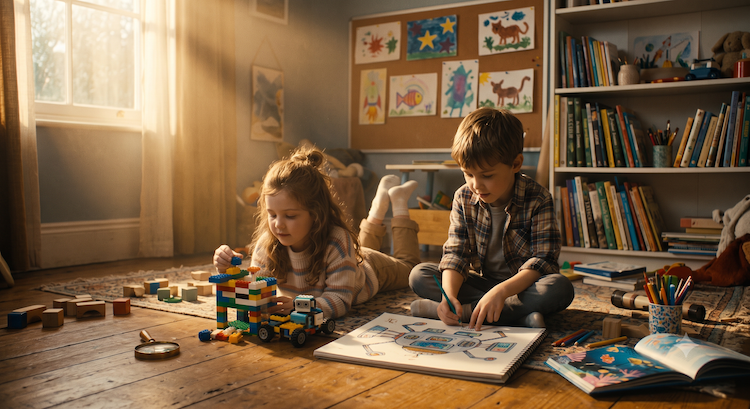
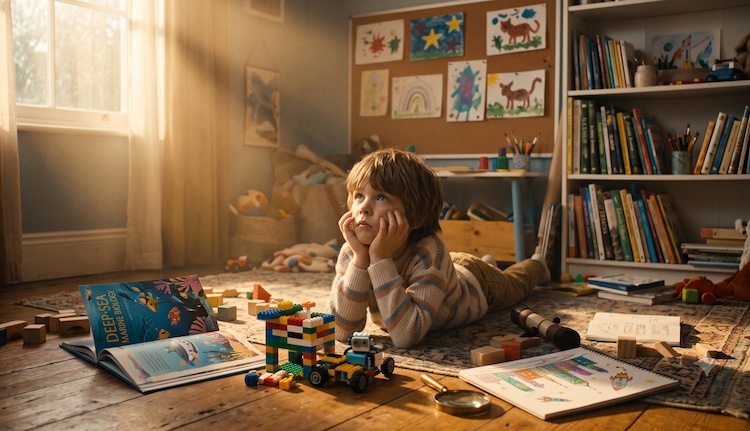
A child who spends an afternoon building a Lego city is exploring engineering, design, planning and problem-solving.
A child who creates videos with friends is developing communication, storytelling, creativity and digital skills.
A child who cares for animals is exploring responsibility, empathy and science.
The goal is not to predict their future.
The goal is to help them understand themselves.
Career Exploration Activities for Different Ages
Preschool Years (Ages 3–5): Focus on Imagination and Possibility
At this age, children are naturally curious and imaginative.
They don’t need career lessons.
They need exposure to the world around them.
Try:
Dress-Up and Role Play
Encourage children to explore different roles:
- Doctor
- Builder
- Chef
- Scientist
- Teacher
- Artist
- Farmer
- Engineer
- Pilot
Role play helps children practise empathy, communication and problem-solving.
Talk About People Who Help Our Community
During everyday conversations, point out different roles:
“The person who designed this playground used creativity and problem-solving.”
“The person who grows our food helps families every day.”
“The person who built this house used maths and planning.”
Follow Their Curiosity
If your child loves dinosaurs, explore:
- palaeontology
- museums
- biology
- conservation
- science
A child’s interest does not need to become their career.
The interest itself is valuable.
Primary School Years (Ages 6–12): Explore Strengths and Interests
Primary school is the perfect time for children to discover different possibilities.
Try:
The “What Are You Curious About?” Activity
Create three lists together:
Things I Love
Examples:
- drawing
- animals
- helping people
- building
- sport
- technology
Things I’m Good At
Examples:
- explaining ideas
- solving puzzles
- teamwork
- creativity
- organisation
Things I Want To Learn More About
Examples:
- space
- nature
- inventions
- cooking
- music
Look for patterns.
These patterns reveal interests and strengths.
Meet People With Different Careers
Children often only know careers they see around them.
Expand their world.
Encourage conversations with:
- grandparents
- family friends
- community members
- local business owners
- coaches
- artists
- tradespeople
- healthcare workers
Ask:
“What do you enjoy about your work?”
“What was difficult when you started?”
“Did you always know you wanted to do this?”
Children quickly discover that most adults did not follow a straight path.
Teenagers: Support Exploration Without Taking Over
Teenagers need guidance—but they also need ownership.
Parents can support by helping them:
- understand their strengths
- explore subjects
- research options
- meet mentors
- gain experiences
- reflect on values
Avoid turning every conversation into:
“Have you decided what you’re doing after school?”
Instead try:
“What are you discovering about yourself?”
“What kind of environment helps you thrive?”
“What experiences would you like to try?”
Instead of Saying This… Try This
| Instead of saying… | Try saying… |
|---|---|
| “What do you want to be when you grow up?” | “What are you curious about right now?” |
| “You should become a doctor/lawyer/engineer.” | “What kind of problems would you enjoy solving?” |
| “Are you sure that’s a realistic career?” | “Tell me what interests you about that.” |
| “You always change your mind.” | “I love that you’re exploring different possibilities.” |
| “That job doesn’t make much money.” | “What do you think makes a career meaningful?” |
| “You need to decide soon.” | “Let’s explore your options together.” |
| “That’s not a proper job.” | “Tell me more about what that involves.” |
Myth vs Fact
Myth: Children should know what career they want early.
Fact:
Career development is a lifelong process. Exploration and changing interests are normal parts of healthy development.
Myth: Good grades are the only pathway to success.
Fact:
While education matters, future workplaces increasingly value transferable skills such as communication, creativity, resilience and adaptability.
Myth: Children’s career dreams are unrealistic.
Fact:
A child’s imagination often reveals their interests.
A child wanting to become a YouTuber may actually be interested in:
- storytelling
- technology
- communication
- creativity
- entrepreneurship
The role may change, but the underlying strengths are valuable.
Myth: Success means having a high-paying career.
Fact:
A fulfilling life involves far more than income.
Children also need to consider:
- purpose
- relationships
- wellbeing
- contribution
- personal values
Expert Insight
“The most important career skill children can develop is not choosing the right job—it is learning how to navigate change.”
Modern career education increasingly focuses on career adaptability, which includes:
- curiosity
- confidence
- resilience
- decision-making
- flexibility
These skills help children respond positively when opportunities, interests and circumstances change.
Reflection Activity
Take a moment to consider:
What messages about success did I grow up with?
Did you hear:
“Choose something stable.”
“Follow your passion.”
“Make lots of money.”
“Get a secure job.”
None of these messages are necessarily wrong—but being aware of them helps us avoid unconsciously placing our own expectations onto our children.
Our children are growing up in a different world.
They need support building their future, not repeating ours.
Australian Resources for Parents
National Careers Institute
Provides Australian career information and resources supporting lifelong career development.
myfuture
Australia’s national career exploration platform helping young people understand their interests, skills and future possibilities.
Jobs and Skills Australia
Provides research and information about Australia’s changing workforce, emerging industries and future employment trends.
https://www.jobsandskills.gov.au
Australian Institute of Family Studies
Provides evidence-based research relating to children’s development, families and wellbeing.
Frequently Asked Questions
What age should children start thinking about careers?
Children can explore interests from a young age, but formal career decision-making does not need to happen during childhood. Early experiences should focus on curiosity, confidence and discovering strengths.
What if my child has no idea what they want to do?
This is completely normal.
Many adults change careers multiple times. Encourage exploration rather than pressure.
Should I encourage my child’s dream career?
Yes—but focus on the skills and interests behind the dream.
A child who wants to become a professional athlete may love teamwork, discipline and competition. Those qualities can transfer into many areas of life.
How can I help my child discover their strengths?
Pay attention to:
- activities they naturally choose
- problems they enjoy solving
- compliments they receive
- moments when they become deeply engaged
Children often reveal their strengths through everyday behaviour.
Australian References (APA 7th Edition)
Australian Institute of Family Studies. (n.d.). Child development and wellbeing research. Australian Institute of Family Studies. https://aifs.gov.au
Education Services Australia. (n.d.). myfuture: Australia’s career exploration and education resource. https://myfuture.edu.au
Jobs and Skills Australia. (n.d.). Labour market insights and employment trends. Australian Government. https://www.jobsandskills.gov.au
National Careers Institute. (n.d.). Career development resources. Australian Government. https://www.nci.edu.au
Australian Curriculum, Assessment and Reporting Authority. (n.d.). Australian Curriculum: General capabilities. https://www.australiancurriculum.edu.au