
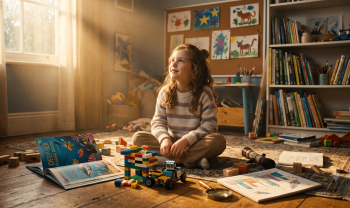
“So… what do you want to be when you grow up?”
It’s a question almost every child hears.
We ask it with the best intentions — hoping to inspire dreams, encourage ambition and help our children imagine an exciting future.
But what if this simple question is asking children to decide who they will become before they have had enough time to discover who they are?
In a world that is changing faster than ever, the future won’t belong to children who have every answer early.
It will belong to children who are curious, adaptable, resilient and confident enough to keep learning, growing and embracing new possibilities.
✨ The truth is, children don’t need to choose the “perfect” path from a young age.
They need the freedom to explore, make mistakes, follow their interests and discover their strengths without the pressure of having everything figured out.
Because changing their mind isn’t failure.
It’s learning.
And the greatest gift we can give our children isn’t choosing their future for them…
❤️ It’s helping them become confident enough to create their own.
Discover why we need to rethink the way we talk about careers, success and the future, and how we can support our children to explore possibilities with curiosity rather than pressure.

How do you explain ANZAC Day to a child when words don’t feel like enough?
For many parents, it’s not something that can be neatly explained. It’s felt. In the early morning stillness. In a dawn service where even silence feels shared. In the small gesture of a poppy being pinned with care, while a child stands beside you, quietly absorbing a moment they don’t yet have words for.
They may not understand it fully. But they feel it.
And maybe that’s where meaning begins.
This article explores how children actually come to understand ANZAC Day—through different ages, stages, and emotional awareness—and how respect, remembrance, and understanding are not taught in a single conversation, but built slowly across childhood.
Because perhaps the goal isn’t for them to fully understand ANZAC Day right now…
but to grow up in a world where it is never forgotten.

In a world of screens, emojis, and constant noise… are we still raising children who feel deeply for others?
Compassion isn’t automatic in today’s digital age — it’s something we must gently, intentionally nurture.
From noticing a friend in tears to helping a sibling who’s hurt, these small human moments matter more than ever.
Here are 15 simple, powerful ways to raise compassionate children — and help them grow into kind, emotionally aware humans who truly see others.
Because empathy isn’t just a trait… it’s a lifelong superpower. 💛
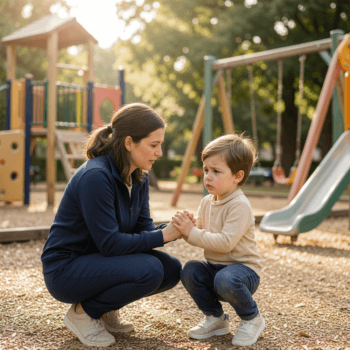
Ever had one of those moments where your child completely falls apart… and nothing you say seems to help?
The truth is, most children aren’t “misbehaving” in those moments—they’re overwhelmed and still learning how to regulate what they feel inside.
What they don’t need is “calm down.”
What they do need is you.
We’ve put together a practical, science-backed guide to emotional regulation—along with simple, powerful phrases you can use in real moments of big feelings, from toddler meltdowns to tween overwhelm.
Because the words we use don’t just soothe the moment… they help shape how children learn to understand, express, and manage their emotions for life.
💛 Read the full article: Phrases to Help Kids With Self-Regulation Every Parent Should Know (Backed by Science)

When was the last time you really talked with your child… not just asked how their day was, but actually connected to what they’re thinking and feeling?
In a world full of screens, noise, and constant stimulation, its easy to lose the art of initiating conversation and really talking with our kids. Those quiet, heart-to-heart conversations are becoming more powerful than ever.
To help, we’ve created a collection of age-specific, thought-provoking questions designed to open up real conversations, helping children feel seen, heard, and deeply connected.
From laughter at the dinner table to those unexpected “wow, I never knew that about you” moments… this is about slowing down and truly tuning in.
💛 Because connection isn’t built in big moments.
It’s built in the small questions we ask every day.
👉 Read the full article and discover 200 conversation starters that bring families closer.

Valentine’s Day ❤️ isn’t just about romance—it’s a chance to show kids what love really looks like. From small acts of kindness 🤲 to the way we treat our partners, friends, and family 👨👩👧👦, children learn about love by watching us. This day is the perfect opportunity to model what it means to care for others 💖, build strong relationships 🤝, and express appreciation in meaningful ways.
In this collection of expert-backed articles 📖✨, we explore how parents can turn Valentine’s Day into a powerful teaching moment. From fun, kid-friendly activities 🎨🎈 to everyday ways to model healthy relationships 💬❤️, these insights will help you create special moments that leave a lasting impact.
Because the best lesson we can teach our children is that love isn’t just a feeling—it’s something we show through our actions every day. 💕🌟
In this collection of expert-backed articles, we explore how parents can turn Valentine’s Day into a powerful teaching moment. From fun, kid-friendly activities to everyday ways to model healthy relationships, these insights will help you create special moments that leave a lasting impact.
Because the best lesson we can teach our children is that love isn’t just a feeling—it’s something we show through our actions every day.

Every parent knows the stress of the “hard talks” 😔
Parenting, money, chores… the tricky conversations that feel impossible.
Small shifts in timing, curiosity, and clarity can turn tension into calm, kindness, and connection with your partner

🧠 What if the key to your child’s success wasn’t their IQ, but their emotional intelligence? 💡✨
📚 Research shows that grades and test scores only predict a small fraction of success—while skills like resilience 💪, self-regulation 🧘♂️, and emotional awareness ❤️ shape their future far more.
Yet, we still don’t teach kids how to handle stress, failure, and life’s challenges. That needs to change. 🚀
Discover why EQ is the missing piece in education—and how you can start building it in your child’s life today. 🌱
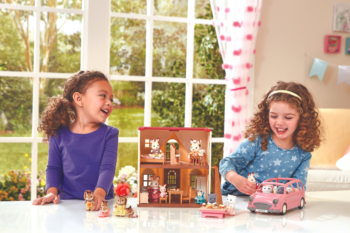
The simple joys of childhood—days spent in play and wonder—bring an enduring magic where imagination whisks children away into their whimsical little worlds. As parents, observing these moments is one of life’s most precious experiences. Watching our children quietly engage… Continue Reading >

Identifying emotions can be challenging for adults. Let alone for kids. All the more reasons why parents need to start talking and teaching their children about emotional intelligence at an early age. Basic emotions such as being happy, sad, scared,… Continue Reading >
Get parenting advice and support delivered right to your inbox
We'd love to hear what you think of the website, so we can continue to improve it . . . GIVE YOUR FEEDBACK >