

When a family changes, children can feel it in ways they don’t always have the words to explain. 💔
Separation can bring big emotions, uncertainty, two homes, changing routines and questions that are sometimes hard for parents to answer.
But you don’t have to make separation painless to help your child feel safe, loved and secure.
From what to say — and what not to say — to managing routines, conflict, parenting arrangements and those moments when your child says, “I don’t want to go”, this guide offers practical, compassionate advice for parents trying to navigate one of life’s hardest transitions.
Because sometimes, the most important thing your child needs isn’t a perfect parent or a perfect arrangement.
They just need to know: “I’m loved. This isn’t my fault. And I’m going to be okay.” ❤️

🏠 I don’t want to move…”
For adults, moving house might mean a fresh start, a better home or simply doing what needs to be done.
But for a child, it can mean saying goodbye to their bedroom, their friends, their school, their favourite places and the little routines that make life feel safe. 💔
And when families are forced to move more often because of Australia’s housing and rental crisis, what does that mean for our children?
New research reveals that children who move frequently can experience changes in their emotions, sleep, eating, routines, concentration and sense of belonging.
The good news? There are things parents can do to help. ❤️
From how you first tell your child about the move, to using stories, play, photos and familiar connections to help them understand and process the change.
If your family is preparing for a move, don’t just pack the boxes — prepare your child’s heart, too.
👉 Read the article to discover how you can help your child feel safer, supported and connected through a big move.
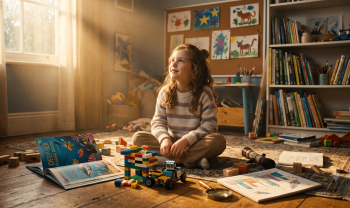
“So… what do you want to be when you grow up?”
It’s a question almost every child hears.
We ask it with the best intentions — hoping to inspire dreams, encourage ambition and help our children imagine an exciting future.
But what if this simple question is asking children to decide who they will become before they have had enough time to discover who they are?
In a world that is changing faster than ever, the future won’t belong to children who have every answer early.
It will belong to children who are curious, adaptable, resilient and confident enough to keep learning, growing and embracing new possibilities.
✨ The truth is, children don’t need to choose the “perfect” path from a young age.
They need the freedom to explore, make mistakes, follow their interests and discover their strengths without the pressure of having everything figured out.
Because changing their mind isn’t failure.
It’s learning.
And the greatest gift we can give our children isn’t choosing their future for them…
❤️ It’s helping them become confident enough to create their own.
Discover why we need to rethink the way we talk about careers, success and the future, and how we can support our children to explore possibilities with curiosity rather than pressure.

📢 Parents, does your child struggle with focus, organization, or emotional regulation? ADHD can present challenges, but with the right support, kids can thrive! 🌟 A psychologist can provide expert strategies to help with study skills 📚, emotional regulation 💖, peer relationships 👫, and more.
🔎 Discover 10 powerful ways a psychologist can support children with ADHD—because every child deserves to feel confident, understood, and empowered! 💪✨
Get parenting advice and support delivered right to your inbox
We'd love to hear what you think of the website, so we can continue to improve it . . . GIVE YOUR FEEDBACK >