
Kiddipedia
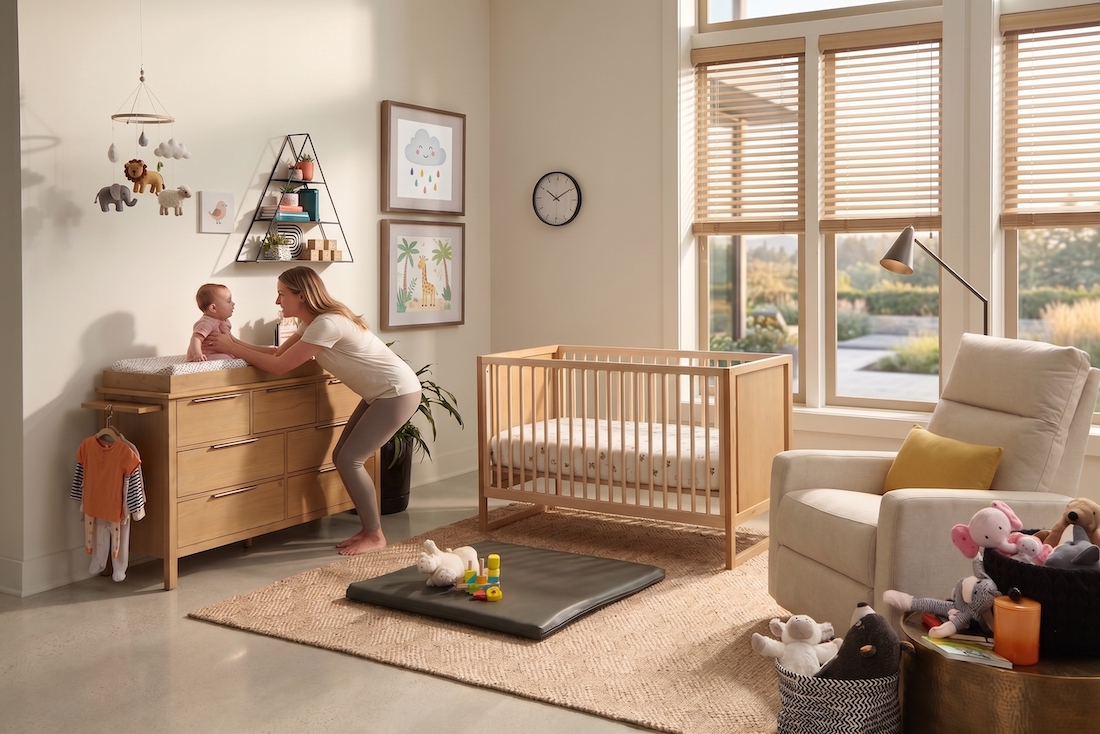
Preparing for a baby isn’t really about creating a picture-perfect nursery. It’s about making your home work better for real life.
Because while babies themselves are tiny, the amount of clothing, nappies, wraps, bedding, feeding equipment, prams, toys and baby gear that can suddenly appear in your home is anything but.
And then there is the reality nobody quite captures in those beautifully styled nursery photos: you’re likely to be tired, carrying a baby, doing things one-handed and trying to remember where you put the spare sheets.
A good storage system can make those ordinary moments easier.
But smart baby storage isn’t really about owning more baskets, boxes or matching containers. It is about reducing friction in your day.
What do you reach for at 2am? What do you need while holding your baby? What can wait until tomorrow? What will become dangerous once your baby starts crawling? And what have you bought that your baby may never actually need?
There is another important reality many first-time parents don’t realise until they are home with a newborn: the nursery may not be where most of the action happens.
Red Nose recommends that babies sleep in their own safe sleep space in the same room as a parent or caregiver for at least the first six months. That means your bedroom, rather than the beautifully prepared nursery, may become the most-used baby space during those early months.
So before you start buying baskets, boxes and shelves, take a breath.
You don’t need to organise your entire house perfectly before your baby arrives. You need to make it safe, practical and easier to live in.
And perhaps most importantly, build a storage system that can change as quickly as your baby does.
Before You Buy Another Storage Box, Start With a Clear-Out
Welcoming a new family member brings immense joy – and a sudden need for room.
Before buying additional storage, look around your home and ask a slightly more useful question than “Where can I put this?”
Ask:
“Why am I keeping this, and when will I realistically use it?”
That shift can save you from spending money organising things you don’t actually need.
Work through cupboards, wardrobes, spare rooms, hallways and those mysterious corners where things seem to accumulate.
Ask yourself:
- Do we actually use this?
- How often do we use it?
- Does it need to be within easy reach?
- Could something we already own do the same job?
- Will we still need it in six months?
- Could a crawling baby eventually reach it?
- Could it become a climbing aid?
- Is it worth storing, or are we simply reluctant to let it go?
This is particularly useful if you live in an apartment, townhouse or smaller home where every cupboard, shelf and square metre of floor space matters.
The aim isn’t to throw everything away.
It is to create breathing room before baby arrives.
A simple way to think about it
Use every day: Keep these close and easy to access.
Use occasionally: Store these nearby but out of the way.
Seasonal or rarely used: Consider higher, less accessible or off-site storage.
No longer needed: Donate, sell, pass on, repair or responsibly recycle where possible.
That simple distinction can stop your nursery becoming a storage room for everything else in the house.
1. Clear Out Space Before the Arrival
Turning a spare bedroom or corner of your home into a nursery is much easier when you aren’t trying to work around furniture and belongings that have accumulated there for years.
Clear the room before the baby furniture arrives.
Bulky items such as spare mattresses, workout equipment, unused furniture, boxes and seasonal belongings can quickly make a small room feel impossible to navigate.
Moving rarely used items elsewhere – including secure off-site storage if appropriate – can give you the breathing room to:
- accurately measure the room
- decide where furniture will go
- assemble baby equipment safely
- create clear walking paths
- work out where clothing and supplies will live
- avoid buying furniture simply because the room feels crowded
There is also something psychologically helpful about starting with a clean slate.
You don’t need a magazine-worthy nursery.
You need enough room for the things you will genuinely use.
And there is a practical reason to think beyond aesthetics. Once your baby becomes mobile, furniture placement, accessible storage, cords and objects within reach all become part of the safety picture. Australian guidance recommends adapting the home as babies develop new physical skills.
2. Stash Away Seasonal Items and Off-Season Gear
Living rooms, bedrooms, corridors and entryways can become surprisingly difficult to navigate once a pram, baby carrier, play mat and other equipment enter the picture.
Seasonal belongings such as:
- winter coats
- beach equipment
- camping gear
- bulky Christmas decorations
- seasonal sports equipment
- rarely used suitcases
can take up valuable everyday storage space.
Relocating seasonal items into secure off-site storage can create valuable breathing room for the things your family actually uses every day. For families managing limited space in Melbourne homes, Melbourne self storage can be a practical option for keeping seasonal belongings safely out of the way while freeing up cupboards and wardrobes for everyday baby essentials.
That might mean using the newly cleared space for nappies, wipes, muslins, feeding supplies or spare baby clothing, rather than having those everyday essentials competing for room with Christmas decorations or camping gear.
If you choose this route, make sure the facility is reputable and that stored belongings are appropriately protected.
The goal is not to make your house look emptier.
It is to make the things you use every day easier to reach.
That could mean freeing a wardrobe for baby clothes, a cupboard for nappies or a hallway area for the pram.
3. Don’t Organise Only the Nursery
One of the easiest mistakes new parents make is trying to put everything baby-related into one room.
But babies don’t stay in one room.
You may feed in the lounge room, change nappies in the bedroom, bathe the baby in the bathroom, wash bottles in the kitchen and spend half the night beside the bassinet.
Your storage should follow your actual life, not the floor plan in a nursery catalogue.
Raising Children Network’s Australian safety guidance emphasises adapting the home environment as babies become more mobile and able to reach, pull and explore.
Think in zones instead
Sleep zone: Bedroom or nursery.
Change zone: Wherever you actually change nappies.
Feed zone: Wherever you and your baby are most comfortable.
Play zone: Living area or another safe floor space.
Out-the-door zone: Entryway or hallway.
This can be much more effective than trying to make one room contain everything.
4. Create a Nappy Station Where You Actually Use It
You may have carefully designed a beautiful change table in the nursery – only to discover that you spend most of your day changing nappies somewhere else.
A small, portable nappy caddy can be useful for keeping everyday supplies together.
Depending on your family’s needs, it might contain:
- nappies
- wipes
- clean cloths
- barrier cream
- spare baby clothes
- a change mat
- small rubbish bags
Keep the caddy where you actually use it, rather than where you think you should use it.
And there is an important distinction here: storage within arm’s reach does not mean leaving everything within your baby’s reach.
CHOICE recommends keeping everything needed for a nappy change close at hand but out of the baby’s reach, and never leaving a baby unattended on a change table.
Safety first
The safest option is to change your baby on a mat on the floor, because there is no elevated surface for them to fall from.
If you use a raised change table, stay within arm’s reach and keep your attention on your baby. CHOICE recommends choosing a change table that is strong and stable, has appropriate roll-off protection and is free from hazards such as sharp edges and finger or limb traps.
Babies can begin rolling unexpectedly.
Don’t wait for the first roll to start treating them like they can move.
5. Managing Nursery Furniture and Gear
Bulky infant equipment presents an immediate physical challenge in smaller living quarters.
Prams, cots, changing tables, clothing, bassinets, play equipment and feeding equipment can rapidly crowd living areas before the baby has even arrived.
One of the better strategies is not unpacking everything simply because you have bought it.
If your baby will initially sleep in a bassinet beside your bed, there may be no reason to have every piece of nursery furniture assembled and occupying valuable floor space from day one.
Red Nose notes that bassinets are intended for short-term use and that babies should move to a safe cot when they show signs of being able to roll.
Think six months ahead – but don’t live six months ahead
It is useful to have a plan for larger items.
But you don’t need to fill your home with equipment your newborn won’t use for months.
Store future-stage equipment safely until it is actually needed.
And always follow the manufacturer’s instructions for assembly, use, weight limits, developmental stages and storage.
6. Choose Smart Multi-Functional Furniture – But Put Safety First
Selecting versatile furniture can preserve valuable space in compact homes.
A single piece that provides useful storage and another function can be more practical than several separate pieces.
Dual-purpose pieces
Dual-purpose pieces can be particularly useful when space is tight – but the second function needs to be genuinely useful, safe and appropriate for the stage your child is at.
For example, a sturdy chest of drawers can provide clothing storage while also supporting a carefully considered changing setup.
But multi-functional does not automatically mean safe.
If you use a dresser or chest of drawers as part of a changing station, it needs to be stable, secure and appropriate for the setup. A padded change mat alone does not turn an ordinary piece of furniture into a safe change table.
CHOICE recommends looking for a change table that is strong and stable, with roll-off protection and no sharp edges or finger and limb traps.
The cleverest storage solution is never cleverer than the safety requirement.
And don’t forget that a dresser has a second life you may not have considered yet: as a climbing challenge for a toddler.
7. Make the Most of Drawers
Deep drawers can be particularly useful in a nursery because they allow you to store a surprising amount without filling the room with additional furniture.
Use them for:
- everyday nappies
- wipes
- muslin wraps
- bibs
- everyday clothing
- extra bedding
- sleepwear
Keep the things you use most frequently at the easiest-to-reach height.
A good rule is:
The more often you use something, the easier it should be to reach.
But think ahead.
A bottom drawer that is perfectly harmless when your baby is three weeks old can become irresistible once they are crawling and pulling themselves upright.
Storage needs to be reassessed when your baby’s abilities change – not just when the season changes.
8. Make Baby Clothes Easy to Find
Infant clothing accumulates fast.
There are gifts, hand-me-downs, impulse purchases, clothes bought before birth and those adorable outfits you simply couldn’t resist.
Suddenly, you have enough clothes for several babies – many of them in sizes your baby won’t wear for months.
And then comes the moment every parent eventually knows:
“Where is that one outfit that actually fits?”
A simple sorting system can prevent the wardrobe from becoming overwhelming.
Try five categories
Keep now: Clothes that fit and are being used.
Keep for the next size: Clothes your baby will soon grow into.
Save for a future sibling or friend: Pieces you genuinely want to keep.
Pass on: Good-quality clothes your family no longer needs.
Repair, repurpose or recycle: Items that are stained, damaged or unsuitable for reuse.
Then divide clothes by size:
Newborn | 0–3 months | 3–6 months | 6–12 months | 12–18 months
Use clearly labelled boxes or drawers so you can see what is coming next without opening every container.
9. Don’t Let Baby Clothes Take Over the Wardrobe
A clever trick for smaller wardrobes is to use the available vertical space.
Double hanging rails can increase usable hanging space, allowing current-size clothes to remain separate from larger sizes.
You can also use:
- drawer dividers
- labelled fabric boxes
- shelf baskets
- a dedicated “next size” container
For clothes that are going into longer-term storage, make sure they are clean and completely dry before packing them away.
But don’t overcomplicate it.
If finding a singlet requires opening three boxes and moving two baskets, the storage system is probably working harder than you are.
Simple beats perfect.
10. Store Future Sizes Separately
There is little point having six months’ worth of clothing competing with the clothes your baby actually wears today.
Keep future sizes together in labelled containers.
When your baby moves up a size, move the next box into the wardrobe and use the opportunity to remove clothes that no longer fit.
This creates a simple cycle:
Current → Next size → Outgrown → Pass on
It also stops the classic new-parent problem:
“I know we have 6–12 month clothes somewhere…”
The less time you spend searching for things, the better.
Unused Spaces Under Beds Can Become Valuable Storage
Unused spaces under beds can become some of the most useful storage in a small home – particularly for things you want to keep but don’t need every day.
Think future-size clothing, spare linen, seasonal clothing, keepsakes and larger baby equipment that would otherwise take up valuable wardrobe or cupboard space.
Shallow storage boxes or rolling containers can make these spaces much easier to use, particularly when they can be pulled out without having to move the bed.
Just remember that not all under-bed storage is equally suitable. Keep anything that needs to remain clean, dry and protected appropriately, and avoid turning inaccessible spaces into places where forgotten items simply accumulate.
Most importantly, keep this type of storage separate from your baby’s sleep environment. A cot or bassinet isn’t an extension of your storage system, and the baby’s sleep space should remain clear.
11. Use Hidden Storage – Safely
Unused spaces under beds, inside wardrobes and on higher shelves can provide valuable storage for belongings that aren’t needed every day.
Shallow rolling containers can work well under an adult bed for things such as:
- spare linen
- future-size clothing
- seasonal clothing
- keepsakes
- larger baby equipment
But be careful about using hidden spaces around a baby’s sleep area.
Keep storage out of the cot
A baby’s sleep space should remain clear and uncluttered.
Red Nose recommends a safe sleep environment with nothing in the cot, including toys, pillows, padded sides and cot bumpers. It also advises keeping the cot away from cords, curtains and other objects that could fall into or be reached from the sleep space.
Raising Children Network recommends a 30 cm clear space around a cot or portacot, including keeping items such as electrical cords and blind cords out of reach.
So while under-cot storage might sound like a clever use of space, don’t turn the area around your baby’s sleep space into a storage zone.
Store spare sheets, blankets and supplies somewhere separate.
12. Keep the Cot Clear
SAFETY FIRST
A beautiful nursery does not need a beautifully decorated cot.
For sleep, less really is safer.
Red Nose recommends that babies:
- sleep on their back
- have their face and head uncovered
- sleep in their own safe sleep space
- use a firm, flat mattress
- sleep in a smoke-free environment
- sleep in the same room as a parent or caregiver for at least the first six months
Red Nose also recommends keeping the cot free from toys, pillows, cot bumpers and other loose items.
A safe cot may look surprisingly boring.
That’s a good thing.
13. An Important Australian Safety Update for 2026
If you’re buying a cot, bassinet or other infant sleep product now, don’t rely on a product description written years ago or an old parenting forum.
Australia’s mandatory infant sleep product standards fully commenced on 19 January 2026.
The standards cover infant sleep products including household cots, portable folding cots, bassinets, cradles and other products designed or marketed for infant sleep. They address hazards including entrapment, strangulation, suffocation, falls and structural failure.
For household cots specifically, the current requirements include provisions relating to stability, strength, entrapment, footholds and mattress dimensions.
Before buying a cot, ask:
Does it comply with the current Australian requirements?
Is it complete and undamaged?
Are the instructions available?
Has it been recalled?
Is the mattress the correct size and thickness?
Are all components present and functioning correctly?
The ACCC advises using only the mattress size and thickness designed specifically for the cot.
And if you’re buying second-hand, be particularly careful about the condition, history and safety of the product.
A bargain is not a bargain if you’re compromising your baby’s sleep safety.
14. Anchor Furniture Before Your Baby Becomes Mobile
One of the easiest things to overlook while preparing a nursery is furniture that seems completely harmless when your baby is lying on their back.
That changes quickly.
Before long, your baby will be:
rolling → sitting → crawling → pulling up → climbing
A chest of drawers that looked safe six months earlier can become a completely different proposition when a toddler starts using the drawers as steps.
Australia’s mandatory information standard for toppling furniture came into effect on 4 May 2025. The ACCC says children aged up to four years are particularly at risk, and reports that at least 28 people, including 17 children under five, have died in Australia from toppling furniture and televisions since 2000.
The ACCC recommends that furniture be anchored to the wall or floor, with heavy items kept low and drawers secured where appropriate.
Pay particular attention to:
- tallboys
- wardrobes
- bookcases
- dressers
- shelving
- entertainment units
- large storage cabinets
Furniture that looks stable to an adult may become a ladder to a toddler.
15. Remember: Drawers Can Become Climbing Steps
That beautiful nursery dresser may eventually become your toddler’s climbing frame.
And this is where good storage design becomes child safety.
As your child becomes mobile:
- reassess accessible drawers
- consider appropriate child-resistant drawer locks
- remove tempting objects from the top
- keep heavy objects low
- make sure the furniture remains securely anchored
The ACCC specifically recommends drawer locks to help prevent children opening drawers and using them as steps.
Your storage system needs to grow up with your child.
16. Think About Storage From Your Baby’s Future Perspective
When you’re preparing for a newborn, it is easy to look at a room from an adult’s height.
Get down on the floor.
Literally.
Crawl around the room and look at what your baby will eventually see.
Ask:
What can they pull?
What can they reach?
What can they put in their mouth?
What can they climb?
What can fall?
What cords can they grab?
What can they open?
This simple exercise can reveal hazards that are almost invisible from standing height.
Australian guidance recommends adapting the home as babies become more mobile and able to reach new areas.
And remember: development doesn’t follow your decluttering schedule.
A baby can go from sitting happily on the floor to pulling themselves up on furniture much sooner than you expected.
17. Don’t Forget Cords and Cables
Storage isn’t only about boxes and cupboards.
Baby monitors, lamps, chargers, blinds and other household items can introduce cord and strangulation hazards.
Raising Children Network identifies blind cords and other cords as potential strangulation hazards and recommends keeping them safely out of children’s reach.
Red Nose also recommends keeping a cot away from blind cords, electrical cords, curtains and other hazards.
So when you are deciding where something should live, don’t just ask:
“Does it fit here?”
Ask:
“What happens when my baby can reach it?”
If a crawling baby can grab it, move it, secure it or rethink where it lives.
18. Keep Dangerous Products Out of Storage Areas Children Can Access
As you organise your home, don’t forget about the things you don’t want your baby finding later.
This includes:
- medicines
- cleaning products
- detergents
- toiletries
- chemicals
- button batteries
- garden products
- other household poisons
Raising Children Network recommends storing household poisons up high in locked cupboards, safely out of sight and reach.
Healthdirect recommends storing dangerous substances in childproof locked cupboards 1.5 metres above the ground, keeping them in their original containers and putting them away immediately after use.
And don’t move dangerous products into attractive storage containers.
Keep household chemicals in their original containers.
A clear, labelled jar might look beautifully organised on Pinterest.
It is not a good idea for household chemicals.
19. Create a One-Handed Storage System
This is one of those things you may not appreciate until you’re actually holding a newborn.
Try opening a complicated cupboard with:
- a baby in one arm
- a hungry baby
- a sleeping baby
- a baby who has just vomited on your shoulder
Suddenly, “easy access” has a very different meaning.
For frequently used supplies, choose storage that is:
easy to open, easy to identify and easy to reach.
Keep everyday items at comfortable heights rather than putting everything in the hardest-to-reach cupboard simply because it looks tidy.
A useful rule
If you use it several times a day, make it easy to grab with one hand.
That might mean a nappy caddy beside the couch, muslins in a basket near the feeding chair or spare clothes in the bedroom rather than insisting everything live in the nursery.
Convenience isn’t laziness when you’re caring for a newborn. It’s good design.
20. Create a Night-Time Storage Station
The first few weeks can involve a lot of overnight feeding, settling and nappy changes.
A small, practical bedside basket or nearby storage area can save you from repeatedly walking around the house in the dark.
Depending on your routine, it might hold:
- spare muslins
- clean baby clothes
- nappies
- wipes
- a spare wrap
- essentials for the parent
But remember the distinction:
Store supplies beside you – not inside the baby’s sleep space.
Red Nose recommends keeping the cot free of loose items and away from hazards such as cords and objects that could fall into the sleep space.
21. Create a Landing Zone by the Front Door
Once you have a baby, leaving the house can feel like a military operation.
There is suddenly:
baby + nappy bag + pram + carrier + keys + bottles + hats + spare clothes + your own bag.
A dedicated entryway zone can make the process much easier.
Consider keeping together:
- the nappy bag
- pram accessories
- baby carrier
- rain cover
- spare muslin
- sun protection
- hats
- a spare change of clothes
Keep the area organised without blocking doorways or creating trip hazards.
And if your home is small, don’t underestimate the value of one dedicated hook, basket or shelf.
The best place for an item is often the place you reach for it immediately before or after using it.
22. Give the Pram a Proper Home
Prams are large.
They are also used constantly.
Before your baby arrives, decide exactly where yours will live.
Consider:
- Is it blocking the hallway?
- Can you get it outside without moving five other things?
- Where will the rain cover dry?
- Where will accessories live?
- Is it secure?
- Does it interfere with an exit?
A designated pram parking spot can make a surprisingly big difference to how calm the house feels.
And if the answer is “It lives wherever we last put it”, you’re probably going to want a better system.
23. Make Storage Work Across the Whole House
Baby equipment has a habit of migrating.
The pram lives by the door.
The nappies end up beside the couch.
The muslins are everywhere.
The feeding equipment takes over the kitchen.
The toys slowly spread across the living room.
Rather than constantly fighting this reality, design for it.
You might have:
Bedroom
Bassinet, nappies, night-time supplies and a small amount of clothing.
Bathroom
Towels, bath products and appropriate baby-care supplies.
Kitchen
Feeding equipment, bottles and cleaning supplies.
Living room
A small play basket, books and frequently used baby items.
Entryway
Pram, nappy bag and outdoor equipment.
This isn’t failure.
It’s a home adapting to a new family member.
The trick is giving the inevitable stuff a place to return to.
24. Don’t Spend a Fortune on Storage Before You Know What You Need
It is incredibly easy to spend money preparing for a baby.
There are baskets for baskets, matching acrylic organisers, nursery boxes, labels, shelving systems and beautifully coordinated containers.
But before you spend hundreds of dollars organising things you haven’t even used yet, live in the space for a little while.
Use inexpensive baskets or boxes temporarily.
Notice what constantly gets in the way.
Notice what you reach for repeatedly.
Notice what you never touch.
Then invest in the storage solution that actually solves the problem.
This approach can also help reduce unnecessary consumption.
You don’t need an Instagram-worthy nursery. You need a nursery that works at 3am.
25. Use Multi-Functional Furniture Carefully
Single-use items can take up valuable floor space.
Where appropriate, choose furniture that can evolve with your family.
For example:
- a chest of drawers that can continue to store clothing for years
- a bookshelf that can later hold school books
- a wardrobe that grows with your child’s clothing needs
- baskets that can move from nursery storage to toy storage
But avoid buying something simply because it is described as “multi-functional”.
Ask:
Will we genuinely use both functions?
Is it stable?
Can it be securely anchored?
Will it remain safe when our child becomes mobile?
Will it still be useful in two years?
Good furniture earns its place in your home.
And Australian safety guidance increasingly makes one point clear: longevity is useful, but safety has to evolve with the child using the furniture.
26. Rotate Toys Without Creating More Clutter
Babies don’t need a room overflowing with toys.
A manageable selection of age-appropriate toys can be easier to maintain and gives your child room to explore without the play area becoming overwhelmed.
Rather than keeping every toy permanently available, rotate some toys when:
- the room starts feeling cluttered
- your child seems bored with the current selection
- you want to reintroduce something they haven’t seen for a while
The goal isn’t a magic number of toys.
The goal is a play space that remains manageable and inviting.
As your baby grows, make sure toy storage is also appropriate for their developmental stage.
Raising Children Network warns that small objects can become choking hazards and recommends keeping potential choking hazards away from young children.
27. Store for the Stage You’re In – Not Every Stage at Once
Equipment that is useful in month one may be irrelevant by month six.
Your storage system should change too.
Newborn stage
Prioritise easy access to:
- nappies
- wipes
- muslins
- wraps
- everyday clothes
- feeding supplies
- spare bedding
Rolling and sitting
Reassess:
- floor-level baskets
- cords
- loose objects
- accessible drawers
- anything within grabbing distance
Crawling
Now think about:
- cupboards
- drawers
- furniture stability
- small objects
- electrical cords
- household poisons
Pulling to stand
Reassess furniture again.
If your baby can reach it, assume it is now part of their environment.
Raising Children Network emphasises that new poisoning and household safety risks emerge as children develop new skills and become able to reach and move around more independently.
28. Don’t Store Everything in the Nursery
Some of your baby’s most important belongings may never belong in the nursery.
If you are room-sharing, organise your bedroom for newborn life too.
A small bedside station can be more useful than a perfectly organised nursery that you barely use.
And remember:
Your baby doesn’t care whether the nursery is finished.
They need a safe place to sleep, somewhere practical for changing, clothing, feeding supplies and a parent who can function.
That’s it.
Red Nose’s newborn guidance makes a similar point in a different way: a safe sleep space is one of the genuinely important essentials; many other baby products are simply nice to have.
29. Create Systems That Other People Can Understand
Visitors, grandparents, partners and babysitters may all need to find things.
Labels can help.
Try simple labels such as:
Nappies
Muslins
0–3 MONTHS
NEXT SIZE
SPARE BEDDING
BATH
FEEDING
Clear labels can save you from answering the same question twenty times:
“Where are the wipes?”
And when you’re exhausted, that matters.
But don’t turn labelling into another project that takes three weekends.
If everyone can understand the system, it is working.
30. Don’t Over-Organise Newborn Clothes
It is tempting to create a beautifully colour-coded wardrobe before your baby arrives.
But newborn life is unpredictable.
Some clothes will never be worn.
Some will be worn once.
Some will become favourites.
Some will fit for about three minutes.
And some beautiful outfit will sit untouched because your baby was happier wearing the same three soft onesies on repeat.
Give yourself permission to keep the system flexible.
You are organising a baby wardrobe, not a museum exhibit.
31. Give Outgrown Baby Things a Second Life
Babies have a remarkable talent for outgrowing things almost as soon as you’ve finished buying them.
That tiny outfit you carefully folded away may only have been worn twice. The pram that felt like such a big purchase may suddenly be sitting unused in the garage. And before you know it, there is a cupboard full of clothes, toys, books and baby equipment that your family simply doesn’t need anymore.
Before putting those things in the bin, pause.
Could another family use them?
Passing on good-quality baby and children’s belongings is not only a practical way to declutter your home – it can also keep useful items in circulation, reduce waste and provide another family with something they may genuinely need.
Depending on the item and its condition, you could:
- Pass it on to a friend, family member or another parent
- Donate it to a local charity or community organisation
- Sell it and put the money towards the next stage of your child’s needs
- Give it away through a local community group or Buy Nothing group
- Repair it rather than replacing it
- Repurpose it where appropriate
- Recycle it through an appropriate textile or recycling service when it can no longer be reused
And if you are fortunate enough to have more than you need, there is something particularly lovely about knowing that the baby clothes your child has finished with could become another baby’s first wardrobe.
Look for a Baby and Family Charity in Your State
Australia has some wonderful community organisations specifically focused on rehoming baby and children’s essentials to families experiencing hardship.
Victoria – Our Village
Victorian parents may know the organisation by its former names, St Kilda Mums, Geelong Mums and Eureka Mums. Today, the organisations have come together as Our Village, which collects quality pre-loved nursery and children’s items and works with social workers and maternal and child health nurses to get them to vulnerable babies and children.
Our Village says it supports more than 20,000 babies and children across Victoria each year and accepts a range of new and pre-loved children’s goods, subject to its donation guidelines.
New South Wales – Cuddle Bundles
For families in NSW, Cuddle Bundles supports mums with newborns and limited means, particularly in Sydney and through referral and aid organisations. It accepts clean, excellent-condition new and pre-loved baby items, including clothing, linen, toys, books, feeding equipment, bassinets, carriers and prams.
Cuddle Bundles – Donate Baby Items
Another option is Lilyrose Pregnancy Support Clinic in Coffs Harbour, which accepts selected pre-loved baby items including baby clothing, cots, prams, car seats, toys and children’s books.
Queensland – Baby Give Back
Baby Give Back is a Queensland charity dedicated to providing safe, essential baby items to vulnerable families. It collects, cleans and safety-checks donated baby essentials before they are distributed through social service caseworkers to families experiencing hardship.
South Australia – Treasure Boxes
In South Australia, Treasure Boxes specialises in redistributing quality new and pre-loved children’s essentials to families who need them. Its accepted donations can include children’s clothing and other suitable items, with specific guidelines applying to what can be rehomed.
Western Australia – Little Things for Tiny Tots
Little Things for Tiny Tots supports WA families experiencing hardship by using new and pre-loved donations to create essential baby packages containing items such as clothing, blankets and books. The organisation works with community welfare and social-service agencies to distribute these goods to families who need them.
Tasmania – Tassie Mums
In Tasmania, Tassie Mums collects new and pre-loved baby and children’s clothing and other small items through community donation points. Volunteers sort and bundle the donations before they are rehomed through social-service organisations to Tasmanian families.
Australian Capital Territory – Roundabout Canberra
Roundabout Canberra is a particularly useful option for families in the ACT. It accepts quality pre-loved and new children’s goods, from clothing and books to prams, cots and other baby equipment, subject to its safety and condition requirements. Donations are cleaned, checked and prepared before being provided through trusted local services to families in need.
Roundabout Canberra – Donate Goods
Northern Territory – Vinnies NT
For families in the Northern Territory, Vinnies has retail stores across Darwin, Palmerston, Katherine, Tennant Creek and Alice Springs where reusable pre-loved goods can be donated. Accepted items vary by location, but children’s clothing, toys, linen and other reusable goods can provide another family with affordable essentials while supporting Vinnies’ community programs.
Before You Donate Baby Equipment, Check the Safety Rules
This is particularly important.
Not every baby item should simply be passed on because it looks clean and usable.
Safety-critical products such as car seats, cots, mattresses, bassinets, highchairs and some sleep products can have strict requirements around their age, condition, history and compliance with Australian standards.
For example, Roundabout Canberra has specific criteria for donated car seats, cots, prams and other equipment, including requirements around age, condition and Australian safety standards.
So before loading the car with a pile of baby gear, check the charity’s current donation list first.
If an organisation cannot safely rehome an item, don’t be offended – its decision is ultimately about protecting the family who may receive it.
What About Clothes That Are Too Damaged to Donate?
If clothing is stained, torn, badly worn or otherwise unsuitable for another child, it doesn’t necessarily have to go straight into general waste.
Depending on the fabric and condition, you might be able to:
Turn cotton clothing into cleaning cloths.
Use fabric for craft projects.
Repair it and keep it for messy play.
Find a local textile-recycling service that accepts the material.
Just remember that textiles generally should not go into household kerbside recycling bins unless your local council specifically says they are accepted.
For clothing that is still wearable, Australia’s charity clothing networks can provide another pathway. Red Nose, for example, accepts pre-loved clothing and household goods through its clothing collection program in NSW, Victoria and South Australia, with donated goods either resold or recycled to help divert material from landfill.
The Parent-to-Parent Rule
Before donating something, ask yourself:
“Would I be happy to give this to a friend with a new baby?”
If the answer is yes, you’re probably on the right track.
Clean. Complete. Safe. Usable.
Those four words are a much better guide than simply asking whether something is technically “still good”.
Because the beautiful thing about baby gear is that one family’s outgrown essentials can become another family’s much-needed beginning.
And sometimes, the best way to declutter your home is knowing that what you no longer need can make a real difference somewhere else.
32. Don’t Let “Storage” Become a Reason to Keep Everything
One of the biggest traps in preparing for a baby is becoming very good at finding places to hide things.
A large storage tub can make almost anything disappear.
But out of sight isn’t the same as useful.
If you have a box labelled:
“BABY – MISC”
and you have no idea what is inside it, that’s probably not a storage solution.
It’s a future problem.
Every few months, reassess what you’re keeping.
Ask:
Would I buy this again today?
Would I recommend it to another parent?
Has my child used it in the past six months?
Is it still safe?
Would someone else get more use from it?
Am I keeping it because I genuinely need it – or because I feel guilty throwing it away?
You don’t have to become minimalist.
You just need to stop your storage cupboards becoming a retirement home for things your family has outgrown.
33. The Best Baby Storage System Is the One You Can Maintain When You’re Exhausted
You don’t need to spend an entire weekend reorganising your house.
Once your baby arrives, try a 10-minute reset when you have the energy.
Put away:
1. Clothes that have been outgrown.
2. Nappies and wipes that have migrated around the house.
3. Toys that have accumulated in the wrong room.
4. Feeding equipment that has been left on benches.
5. Muslins that have somehow multiplied.
6. Items that belong in another room.
7. Anything that has become a trip hazard.
8. Anything your newly mobile baby can suddenly reach.
Then stop.
You have a baby.
The house does not need to look finished.
The 10-Minute Baby Storage Reset
You don’t need to spend an entire weekend reorganising your house.
Once your baby arrives, try a 10-minute reset when you have the energy.
Put away:
1. Clothes that have been outgrown.
2. Nappies and wipes that have migrated around the house.
3. Toys that have accumulated in the wrong room.
4. Feeding equipment that has been left on benches.
5. Muslins that have somehow multiplied.
6. Items that belong in another room.
7. Anything that has become a trip hazard.
8. Anything your newly mobile baby can suddenly reach.
Then stop.
You have a baby.
The house does not need to look finished.
A Final Safety Check Before Baby Arrives
Before calling the nursery “done”, walk through the home once more with safety rather than aesthetics in mind.
Check that:
- the baby’s sleep space is clear
- the cot or bassinet is positioned away from cords, curtains, heaters and other hazards
- furniture is securely anchored
- heavy items are stored low
- drawers cannot become easy climbing steps
- medicines and household poisons are locked away
- button batteries are inaccessible
- blind and curtain cords are out of reach
- small choking hazards are removed
- walkways and exits are clear
- baby equipment is assembled according to manufacturer instructions
- you know where the essentials are
- someone else in the household can find them too
Australian guidance from Red Nose, Raising Children Network, Healthdirect and the ACCC provides a useful foundation for these checks.
The Bottom Line
Preparing your home for a baby isn’t about winning at organisation.
It is about making everyday life a little easier.
It is knowing where the nappies are when you’re half asleep. Having a clean muslin within reach when your baby decides to spit up all over your shirt. Not having to move three pieces of furniture to get the pram out. Knowing that the next size of clothes is already sorted. And, just as importantly, recognising when something that was safe yesterday needs to be reconsidered because your baby has learned to crawl, pull up or climb.
The nursery doesn’t need to be perfect.
Your house doesn’t need to be spotless.
You don’t need every baby product that exists.
What you need is a home that gives you a little more breathing room, a little less searching and a much safer environment for the tiny person who is about to completely change the way you use it.
And if there is one storage rule worth remembering, make it this:
Store what you need close. Store what you don’t need out of the way. Let go of what you no longer use. And keep anything unsafe completely out of your child’s reach.
That’s not perfect organisation.
That’s real-life parenting.
Safety Checklist: Before Baby Arrives
Sleep
- [ ] Baby has a safe, separate sleep space.
- [ ] The mattress is firm, flat and appropriately fitted.
- [ ] The baby’s face and head can remain uncovered.
- [ ] The cot or bassinet is kept clear of unnecessary items.
- [ ] You have checked the current Australian safety requirements.
- [ ] Any second-hand sleep product has been carefully checked.
Australian safe-sleep guidance is available from Red Nose, while the ACCC provides current product-safety information and mandatory-standard requirements.
Furniture
- [ ] Tall and freestanding furniture is securely anchored.
- [ ] Heavy items are stored low.
- [ ] Drawers cannot easily become climbing steps.
- [ ] Furniture doesn’t obstruct exits or walkways.
- [ ] Furniture is stable and free from obvious hazards.
The ACCC’s toppling-furniture information standard has applied to relevant furniture supplied in Australia since 4 May 2025.
Changing
- [ ] You have a safe place to change nappies.
- [ ] Everyday supplies are easy to reach.
- [ ] You know that floor-level changing is the safest option.
- [ ] If using a raised change table, you understand the fall risks.
- [ ] You never leave your baby unattended on an elevated surface.
General home safety
- [ ] Medicines and household chemicals are securely stored.
- [ ] Blind and curtain cords are out of reach.
- [ ] Electrical cords are managed safely.
- [ ] Small choking hazards are removed as your baby becomes mobile.
- [ ] Storage areas can be adapted as your baby develops.
- [ ] The pram has a designated storage area.
- [ ] Frequently used baby supplies are accessible without unnecessary effort.
Key Takeaways
Preparing your home for a baby isn’t about buying more storage.
It is about making better decisions about what deserves your space.
Clear out what you don’t use.
Keep everyday essentials within easy reach.
Store future-size clothing separately.
Create small storage zones around the home rather than forcing everything into the nursery.
Think about what your baby will be able to reach in six months, not just what they can reach today.
Anchor furniture.
Keep dangerous products inaccessible.
Keep cords away from babies.
Keep the cot clear.
Don’t buy expensive storage before you know what will actually make your life easier.
And perhaps most importantly:
Don’t confuse an organised home with a perfect home.
Your house is about to become a place where someone lives, learns, spills things, sleeps badly, grows quickly and leaves toys everywhere.
That’s family life.
The goal is not to stop the mess.
The goal is to make the mess easier to manage.
Frequently Asked Questions
How should I organise my home before having a baby?
Start by clearing unused belongings, creating practical storage zones and deciding where frequently used baby supplies will live. You don’t need to completely reorganise the house before your baby arrives. Focus on safety and the areas you will use most.
Do I need a fully furnished nursery before my baby arrives?
No. Many families initially have their baby sleep in their bedroom in a separate safe sleep space. Red Nose recommends room-sharing with baby in their own safe sleep space for at least the first six months.
What baby items should I keep within easy reach?
Think about the things you use repeatedly throughout the day: nappies, wipes, muslins, current-size clothing and feeding supplies. The exact list will depend on your family’s routine.
Is it safe to store things underneath a cot?
It is better not to use the baby’s cot or sleep environment as general storage. Keep the baby’s sleep space clear and follow current Australian safe-sleep guidance.
Should nursery furniture be anchored?
Yes, freestanding furniture that could topple should be securely anchored. This becomes particularly important as children begin pulling up and climbing. Australian requirements around toppling-furniture warnings have been in force since 4 May 2025.
How can I organise a small nursery?
Prioritise vertical storage, multi-purpose furniture, labelled containers and items that are genuinely used every day. Avoid filling valuable floor space with equipment you won’t use for months.
How many baby clothes do I need?
There is no universal number. Start with a manageable selection of everyday clothing and avoid buying large quantities in every size before you know what your baby will actually wear. Raising Children Network recommends considering what you genuinely expect to use rather than buying every possible extra.
When should I start baby-proofing storage?
You don’t need to wait until your baby is crawling. Think ahead before your baby becomes mobile. Anchor furniture early, manage cords and keep dangerous substances safely stored before your baby can reach them.
Is a dresser safe to use as a change table?
A dresser can potentially form part of a changing setup, but it should not automatically be considered a safe change table simply because a change mat fits on top. Stability, raised sides, fall protection and the overall setup matter. Floor-level changing is safest.
What should never be stored in a baby’s cot?
Avoid using the cot as a storage area for toys, cushions, cot bumpers, loose bedding or other unnecessary items. Red Nose recommends a clear, safe sleep environment.
What should I do with clothes my baby has outgrown?
If they are in good condition, consider passing them on, donating or selling them. Damaged items may be suitable for repair, repurposing or an appropriate textile-recycling pathway. Victoria is working to reduce textile waste through greater reuse, repair and recycling.
Australian References & Further Reading
- Australian Competition and Consumer Commission (ACCC) – Product Safety. Infant sleep products mandatory standards. The current Australian mandatory requirements for infant sleep products, including cots, bassinets and folding cots.
- Australian Competition and Consumer Commission (ACCC) – Product Safety. Household cots guide. Current Australian safety information for household cots, including mattress requirements, stability, entrapment and safe placement.
- Australian Competition and Consumer Commission (ACCC). Mandatory information standard for toppling furniture to reduce accidents and deaths. Includes current requirements and consumer advice on anchoring furniture.
- Red Nose Australia. Safe Sleeping: A Visual Guide for Parents. Australian evidence-based safe-sleep guidance, including room sharing and maintaining a clear sleep space.
- Red Nose Australia. Bassinets and Safe Sleep. Guidance on bassinets, safe mattresses, room sharing and when to transition from a bassinet.
- Raising Children Network. Safe cots, portacots & mattresses. Australian guidance on cot setup, mattress fit, clear space and safe use.
- Raising Children Network. Child safety at home. Australian Government-supported information covering household safety, furniture, poisons, cords and developmental changes.
- Raising Children Network. Household poisons: keeping children safe. Australian evidence-based advice on storing medicines, cleaning products and other household poisons.
- Healthdirect Australia. Poisoning. Australian health advice on preventing accidental poisoning and safely storing medicines and dangerous substances.
- CHOICE. What to know when buying a change table for your baby. Independent Australian consumer testing and safety guidance, updated January 2026.
- Sustainability Victoria. Textiles circular economy opportunities. Current Victorian data on textile waste, recovery and opportunities for reuse and recycling.
A final note for parents
There is a lot of pressure to have everything ready before a baby arrives.
The perfectly organised nursery.
The matching baskets.
The labelled drawers.
The beautiful wardrobe.
The equipment everyone says you absolutely need.
But when your baby finally arrives, what matters most is surprisingly simple.
A safe place to sleep. A home that is easy to move around. The things you need within reach. And a little less for you to think about when you’re already thinking about everything.
You don’t need a perfect home.
You need a home that works for your family.