
Kiddipedia
Getting your home ready for a baby often starts with making a little room for the things you’ll use every day.
Welcoming a newborn changes the way you use your home, and working out where everything will go can feel like one more big job on an already long list. A spare room might need to become a nursery, the hallway may suddenly seem too narrow for the pram, and cupboards you thought were roomy can fill up surprisingly quickly.
You don’t need to fill the house with baby gadgets or get rid of things that matter to you. A few thoughtful changes can make your home feel calmer and easier to move around in, without losing the things that make it yours.
And here’s something worth remembering: you don’t need an insta-perfect nursery to welcome your baby. What matters most is having a safe place for your little one to sleep, the essentials close at hand and enough room to move around without making everyday life harder than it needs to be.
Between preparing for birth, getting the house organised and trying to work out which baby products you actually need, it’s easy to feel that there’s always something else to buy or organise. The good news? You can prepare a practical home without filling every cupboard, purchasing an entire nursery suite or spending your final weeks of pregnancy decluttering every corner.
The aim is to create a home that works for your family now, during those first exhausting weeks and as your baby grows.
You might find that the setup you carefully planned before birth needs a few changes once you work out where you actually feed, change and settle your baby. That’s normal; you can adjust as you go.
At a glance: What matters most when preparing your home
- Start with the essentials: Prioritise a safe sleep space, basic clothing, nappies, feeding supplies and a suitable way to transport your baby.
- Make space before buying storage: Work out what you already own, what you genuinely need and what can be stored, donated or passed on.
- Keep everyday items within easy reach: Set up practical areas for changing, feeding, dressing and laundry.
- Put safety before styling: Check cot safety, furniture stability, cords, walkways and household hazards.
- Prepare for a small space: You don’t need a separate nursery to create a functional, welcoming environment for your baby.
- Keep it manageable: Prepare the essentials before birth and adjust your setup as you discover what works for your family.
Where should you put bulky furniture and seasonal boxes?
If you’re turning a guest room or home office into a nursery, you may suddenly be wondering where the desk, spare bed and all those boxes are meant to go. By reserving a secure unit to protect your valuable furniture and seasonal gear without cluttering your everyday living spaces. Using off-site storage can give you breathing room without making you part with family keepsakes or furniture you may want again.
It can also free up the spaces you’ll be walking through with a baby in your arms or pushing a pram through. Think about seasonal clothes, camping gear or a guest bed that rarely gets used.
Moving these pieces out of hallways and spare closets creates immediate room for bulky strollers and bassinet frames. When your child grows older, you can bring that furniture back home or adapt the space for new childhood milestones.
What should you keep, store, donate or let go?
Before hiring storage or buying another cupboard, take a walk through your home and look at what is taking up space. It can be surprising how much room is occupied by things we rarely use, particularly in spare bedrooms that have gradually become a place to put everything that doesn’t have a home.
Try sorting belongings into four groups:
- Keep: Items you use regularly, need for your baby’s arrival or genuinely want to have close by.
- Store: Seasonal equipment, sentimental possessions and furniture you expect to use again.
- Donate or pass on: Usable items that someone else could benefit from, provided they are safe and suitable for their intended use.
- Sell or recycle: Items you no longer need, where resale or recycling is appropriate.
You don’t have to make every decision at once. If you’re unsure about an item with sentimental value, put it aside rather than feeling pressured to part with it before the baby arrives.
There is no need to turn decluttering into another deadline. If you’re tired or finding decisions overwhelming, do one cupboard or one corner at a time.
Is external storage worth the cost?
Off-site storage can be helpful when you need to reclaim a room, particularly if you’re keeping furniture for a future move or another child. However, it’s worth comparing the cost of a storage unit with the alternatives.
Consider whether an existing wardrobe, a labelled storage box or a less frequently used cupboard could do the job. If you choose external storage, factor in the rental fees, transport costs, access arrangements and the length of time you’ll realistically need the unit.
Pack belongings in clean, dry containers appropriate to the items being stored. Keep important documents, valuable keepsakes and furniture components organised, and retain assembly instructions and hardware together where possible.
One more thing: don’t create space by stacking boxes in hallways or blocking exits. Clear access through your home is more important than finding a place for every last possession.
How do you separate everyday baby essentials from household clutter?
Before buying organisers, take a look around the room and be honest about what is actually using the space. Spare bedroom suites, old workout gear, and boxes of archived paperwork often dominate rooms destined for newborns. Sorting these items into distinct categories helps you decide what stays in the house and what needs to move elsewhere.
Try focusing first on what you’ll need in the early weeks. A safe sleep space, nappies, feeding supplies and a few comfortable outfits are a sensible starting point. Bigger toys, high chairs and other next-stage items can usually wait until you know when—or whether—you’ll use them. You can separate your belongings efficiently by applying a few practical sorting rules:
- Keep daily items close: Place nappies, wipes, burp cloths, and swaddles within arm’s reach of your changing table.
- Store next-stage gear away: Pack away larger clothing sizes, high chairs, and toddler toys in labelled storage bins.
- Donate duplicate goods: Pass along excess baby shower gifts or duplicate gadgets that you know you will never touch.
Sorting items before your baby arrives saves you from late-night frustration. When every drawer holds only what you actively use this week, tidy routines become second nature.
What do you actually need before your baby arrives?
Baby shops and online stores make it easy to feel as though you need a product for every possible situation. In reality, you can start with the essentials and add things as your family’s needs become clearer.
The Australian parenting resource Raising Children Network recommends thinking about what you need to buy, borrow or hire, while checking that both new and second-hand equipment are safe. Its new baby checklist is a useful place to start.
Here’s a practical starting point.
| Area | What to prepare |
|---|---|
| Sleeping | A suitable cot or bassinet, its correctly fitting mattress and appropriate fitted bedding |
| Nappy changes | Nappies, wipes or your preferred cleaning supplies, a changing mat and a safe disposal arrangement |
| Clothing | A manageable supply of comfortable newborn clothing and weather-appropriate layers |
| Feeding | Supplies suited to your feeding plans, with flexibility if those plans change |
| Bathing and care | Basic bathing supplies, towels and appropriate baby-care essentials |
| Transport | A suitable, correctly installed child restraint if travelling by car |
| Laundry | A place for clean clothing and a separate basket for used items |
| Health and emergencies | Essential contact details and any items recommended by your maternity or healthcare team |
Your own list may look different, and that’s completely fine. Feeding needs, family circumstances, climate, access to shops and whether you have other children can all influence what is useful.
Try to resist comparing your list with someone else’s. What works for a friend may not suit your home, budget or baby—and you can always add something later if you discover you need it.
What can wait? Extra toys, elaborate nursery decorations, large quantities of clothing in future sizes and duplicate gadgets can often be considered later. Some families love particular convenience products; others barely use them. There’s no need to buy everything before you know which items will suit your routine.
For second-hand equipment, don’t assume that a product is safe simply because it looks clean or has been used by someone you trust. Check for recalls, missing parts, damage, relevant safety requirements and the manufacturer’s instructions. For products used for baby sleep, be especially careful about condition, compatibility and current safety requirements.
Set up storage around the way you actually live
It helps to think about what you will do with an item immediately after using it.
For example, you might want nappies, wipes and spare clothing together in one accessible place, while clean laundry has a designated drawer and used laundry goes straight into a basket. Feeding supplies can be grouped according to your own routine rather than scattered throughout the house.
Try not to organise everything into a complicated system that only you understand. If your partner, a grandparent or another caregiver will be helping, make sure they can easily find what they need.
The best organisation system is one that still works when you’re tired, short on time and holding your baby.
If you have to move three things just to reach the nappies, the system probably needs simplifying. Easy to reach beats picture-perfect every time.
How can you make the most of floor space in a small nursery?
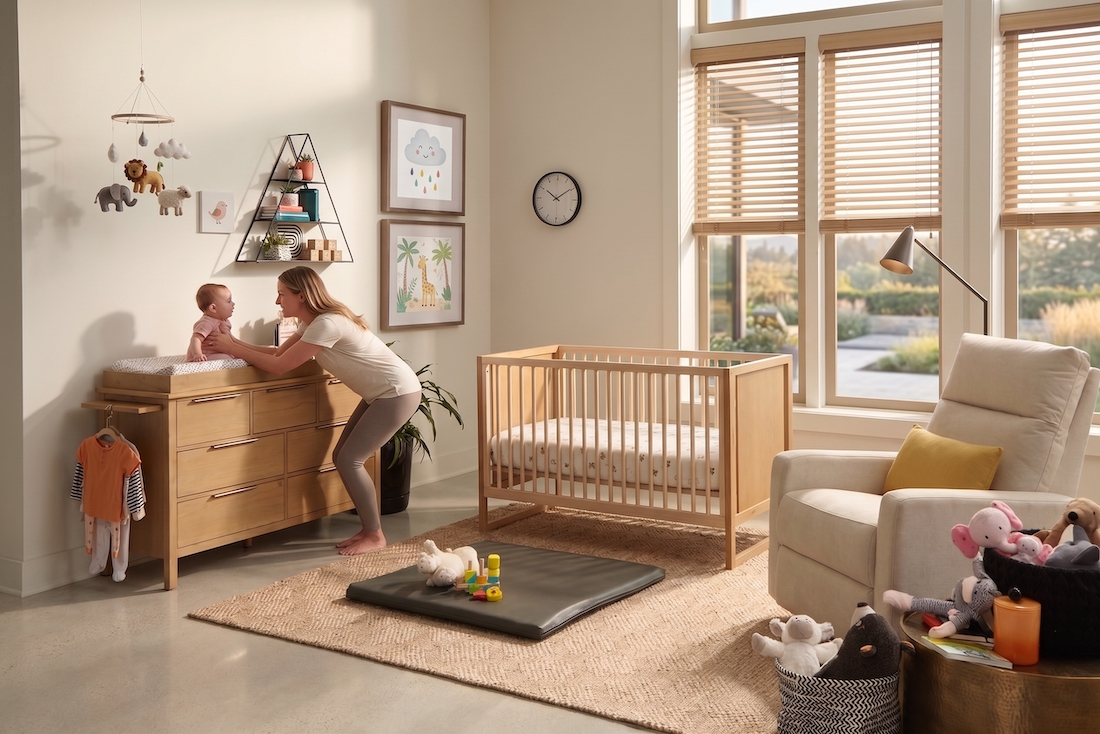
Even a room that looked spacious before the furniture arrived can feel crowded once the cot and changing area are in place. Wall-mounted shelving, hanging organisers behind doors, and shallow under-bed drawers draw items up off the floor. Utilizing vertical space preserves open walking room and keeps surfaces clear of small objects.
Dividing the nursery into distinct functional zones prevents clutter from spreading across the entire room. When every item belongs to a specific task, cleaning up takes only a few minutes each evening.
Keep wipes, creams, and fresh nappies arranged in stackable caddies within easy reach of your changing mat. You should never leave a baby unattended on a raised surface, so having everything in one spot protects your child while keeping clutter contained.
How to organise a small nursery without compromising safety
Whether you’re preparing a spare bedroom, a compact apartment or a shared room, a little planning can make the space much more functional.
Before purchasing furniture, measure the room and plan where each essential item will go. Allow for doors and drawers to open fully, and make sure you can reach the cot easily without squeezing past furniture.
A few practical ideas can help:
- Use existing storage first. Empty a drawer or cupboard before buying a new organiser.
- Choose furniture carefully. A suitable dresser may provide clothing storage and a changing surface, provided the furniture and changing arrangement are stable and safe.
- Use baskets selectively. Grouping smaller items can make them easier to find, but avoid filling every available surface with containers.
- Keep the floor accessible. Avoid placing storage boxes where they obstruct walking routes or make it difficult to reach the cot.
- Store items according to how often you use them. Keep everyday supplies close by and place occasional-use items elsewhere.
- Review what you have regularly. As your baby grows, some items will no longer be needed while others will become more useful.
Vertical storage can be helpful, but it needs careful planning. Tall furniture should be appropriately anchored, and heavy objects or shelves should not be positioned where they could fall onto the cot or changing area. Keep cords, chargers and hanging items out of your baby’s reach.
The Australian Competition and Consumer Commission (ACCC) provides guidance on toppling furniture and televisions, including the importance of securing unstable furniture.
Source: ACCC Product Safety
Remember: A small room doesn’t need to hold everything. Sometimes the best space-saving decision is to keep fewer things in it.
It can be tempting to squeeze in one more shelf or basket, but sometimes leaving a little empty space is what makes the room easier to use.
Does your baby need a separate nursery?
Not necessarily. If you don’t have a spare bedroom, you’re renting or you’re working with limited space, you can still create a comfortable and functional environment for your newborn.
A dedicated nursery can be lovely, but it isn’t a requirement for good parenting or safe baby care. What matters is having the appropriate equipment, a safe sleeping arrangement and an accessible place for everyday care.
Many Australian families begin with a cot or bassinet in their bedroom. Australian safe-sleep guidance recommends that babies sleep in their own safe sleep space in the same room as a parent or caregiver for at least the first six months. Source: healthdirect
If your bedroom needs to serve several purposes, consider:
- Setting aside a clearly defined area for the baby’s sleep space.
- Keeping clothes and nappies in an existing dresser or wardrobe.
- Using a small basket for frequently needed supplies rather than adding more furniture.
- Making sure the cot is away from blind cords, curtains, heaters and electrical appliances.
- Keeping the route to the cot clear, including during the night.
If you share your home with older children, you may also want to create a separate storage area for their toys and belongings. This can help keep small objects away from the baby’s sleep space without making the rest of the house feel off-limits to everyone else.
And if you’re renting, you can often improve storage and layout without making permanent changes. Check your rental agreement and seek permission where required before installing shelves or anchoring furniture to walls.
A safe, thoughtfully arranged corner of a room can be more useful than a beautifully decorated nursery that doesn’t suit your family’s everyday needs.
What makes night-time feeds and changes easier?
Newborns need feeding and changing around the clock, and when you’re tired, the last thing you need is to navigate an obstacle course to find what you’re looking for. Arrange your furniture so you can walk from the nursery doorway to the cot and feeding chair without bumping into obstacles. A straightforward path keeps you calm and reduces disturbances for your sleeping infant.
Where space is tight, furniture that serves more than one purpose can be useful—provided it’s stable and safe for the job. A sturdy dresser topped with a secure changing pad eliminates the need for a standalone nappy-changing table. Ottomans with hollow storage compartments hold extra swaddles and blankets right where you feed your baby, keeping textiles hidden from sight.
Create a practical night-time feeding station
Those first weeks can be a blur of feeding, settling, nappy changes and trying to get some rest whenever possible. Having a few essentials in predictable places can make those nights feel less chaotic.
Depending on how you feed your baby, you might find it helpful to prepare:
- A comfortable place to sit with enough space to get in and out safely.
- A dim, practical light that lets you see where you’re walking.
- A burp cloth and spare clothing within easy reach.
- Water for yourself and any personal essentials you need during a feed.
- A clear route back to the cot or bassinet without having to step over bags, baskets or furniture.
- A designated spot for used nappies and laundry, so they don’t accumulate on the floor.
Keep hot drinks, hot water, chargers and electrical appliances away from the baby and the edges of furniture. Avoid creating a station so crowded that you have to move things around while holding your newborn.
If you’re breastfeeding, expressing or formula feeding, your setup will naturally differ. Follow appropriate preparation, storage and hygiene advice for your chosen feeding method, and ask your midwife, child health nurse or other healthcare professional if you’re unsure about anything.
What if you become sleepy while feeding?
Newborn care can be exhausting, particularly during the night. If you feel yourself nodding off, think about how you can return your baby to their own safe sleep space.
A sofa or armchair is not a safe place to fall asleep with your baby. If you are feeding in bed, return your baby to their own cot or bassinet before you go to sleep.
The Australian Government’s health information service, healthdirect, provides guidance on reducing the risk of sudden baby death syndrome (SIDS).
You’re not trying to create a perfect night-time routine. You’re making the practical jobs a little easier, while keeping your baby’s safety front and centre.
Why is keeping nursery floors clear a safety priority?
When you’re carrying your baby through the house at night, even an ordinary object left on the floor can become a trip hazard. Piles of discarded packaging, extra nappy boxes, and stray toys create serious hazards when you walk across rooms in the dark. Child safety experts at Nationwide Children’s Hospital recommend keeping floors free from toys and domestic clutter to lower the risk of dangerous slips and falls.
Establishing clean floor habits early prepares your home for the crawling stage. When your baby begins exploring on hands and knees, loose cables and floor clutter quickly become hazards. Clearing out unnecessary furniture now gives your child a safer, wider environment to practice movement as mobility develops.
Look beyond the obvious trip hazards
Clear floors are a good start, but there’s more to making a home safer than picking things up.
As you work through each room, look for hazards that could become accessible as your baby starts rolling, reaching and crawling.
Check for:
- Loose electrical cables and charging cords that could be pulled, wrapped around a child or become accessible to curious hands.
- Blind and curtain cords within reach of the cot or areas where your baby may later play.
- Unstable furniture and televisions that could topple if pulled or climbed on.
- Small objects and choking hazards, including loose batteries and items left on low tables or floors.
- Cleaning products, laundry capsules and medicines that need to be securely stored out of children’s reach.
- Unsecured rugs and cluttered walkways that could cause an adult carrying a baby to trip.
- Blocked exits and hallways that could make it harder to move through the home quickly.
The ACCC’s Keep baby safe resources cover common product and household hazards, including button batteries, chemical risks and unstable furniture.
Some of these hazards may not be an immediate concern for a newborn, but preparing early can save you from having to reorganise the entire home when your baby becomes mobile.
Make home safety an ongoing habit
You don’t have to childproof every centimetre of the house before birth. Instead, start with the areas your baby will use most and review the rest as your child’s abilities change.
A quick check when you change a room’s layout, introduce new equipment or move furniture can help you spot problems before they become accidents.
Think of home safety as something that grows with your baby, not a one-off task to tick off during pregnancy.
How do you keep your baby’s sleep space safe and simple?
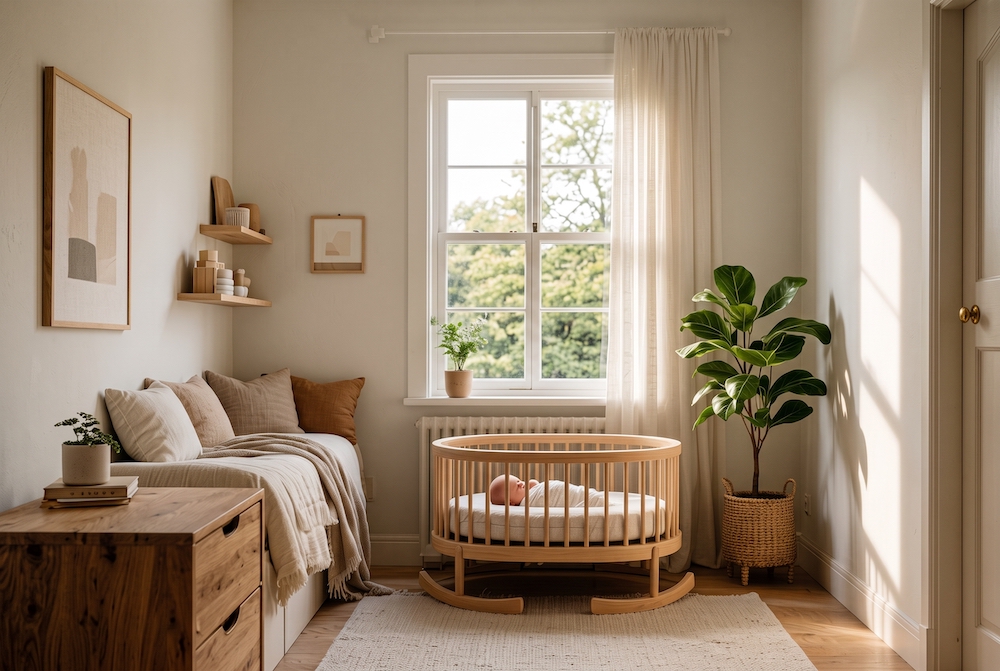
It’s easy to be drawn to beautiful nursery photos, complete with matching bedding, cushions and soft toys. But your baby’s sleep space needs to be much simpler than the pictures often suggest. Practical nursery care prioritizes safety over ornamental accessories inside the sleep zone. Safe sleep guidance from HealthyChildren.org, supported by the American Academy of Pediatrics, points out that loose blankets, bumpers, and plush toys present suffocation hazards and belong outside your baby’s sleep space.
You don’t need a perfect nursery to make your home ready for a baby. Focus on a safe place to sleep, clear pathways and the things you’ll reach for every day. If storing a few belongings elsewhere gives you the space you need, that can help; if rearranging what you already own does the job, that’s just as good. The aim is a home that feels workable for your family—not a showroom.
Australian safe-sleep advice: What belongs in your baby’s sleep space?
It’s easy to get caught up in the excitement of choosing nursery colours, bedding and decorations. But when it comes to your baby’s sleeping space, simple really is safest.
Australian guidance from Red Nose and the ACCC recommends the following safe-sleep practices:
- Place your baby on their back for every sleep.
- Use a firm, flat and level mattress that fits the cot or bassinet correctly.
- Keep your baby’s head and face uncovered.
- Keep the sleep space clear of pillows, soft toys, cot bumpers, loose blankets, doonas and other soft objects.
- Keep the cot away from hazards, including blind cords, curtain cords, heaters and electrical appliances.
- Use the product as intended, following the manufacturer’s assembly, age and developmental instructions.
- Keep your baby in their own safe sleep space in your room for at least the first six months, in line with Australian safe-sleep guidance.
Red Nose Australia’s safe sleeping recommendations and the ACCC’s household cots guide provide further details.
A cot doesn’t need decorative cushions, matching quilts or a collection of soft toys to look welcoming. Keep decorations outside the sleep space and make sure they cannot fall or be pulled into it.
Choosing a cot or bassinet safely
Before buying or accepting a cot or bassinet, check that it is appropriate for your baby and complies with the applicable Australian requirements.
For a cot, check that:
- The mattress is the correct size and thickness for that particular cot.
- The structure is stable and all components are in good condition.
- The product comes with instructions for safe assembly and use.
- There are no damaged parts, unsafe gaps or missing fittings.
- The product has not been recalled.
The ACCC advises extra care with second-hand cots, including checking current requirements, recalls, condition and assembly instructions. Its household cots guide explains what to look for.
Important Australian update: As of 19 January 2026, suppliers must comply with new mandatory standards for household cots and certain baby sleep products. If you’re buying a new product, check the current requirements and warnings rather than relying on old reviews or product descriptions. These requirements do not automatically establish that every older or second-hand product complies.
Not every baby product is safe for sleep
Some products are designed to soothe, entertain or transport a baby, but that doesn’t mean they are suitable for sleeping.
Bouncers, rockers, swings and other inclined products should not be used as sleep spaces. If your baby falls asleep in one, follow current Australian guidance and move them to an appropriate safe sleep environment.
The ACCC’s guide to products that are safe for baby to sleep in explains the distinction between products designed for sleep and products intended for other uses.
When planning your nursery, don’t let convenience, product marketing or attractive styling override the basics. A clear, correctly set-up sleep space is one of the most important things you can prepare before your baby arrives.
The Home Safety Checks to Complete Before Your Baby Arrives
Once you’ve organised the main rooms, take a little time to look at your home from your baby’s perspective. You won’t be able to predict every situation, but checking the most important hazards before birth gives you a practical starting point.
Use this checklist to guide your walk-through.
Your pre-birth home-safety checklist
Use this checklist to guide your walk-through.
Your pre-birth home-safety checklist
Sleep space
Furniture and rooms
Changing and daily care
As your baby grows
This is a practical reminder list, not a certification that a home or product is safe. Follow current Australian guidance for your circumstances.
How to Prepare Your Home Without Doing Everything at Once
If you’re looking around your house and wondering how you’ll possibly get everything done before the baby arrives, take a breath. You don’t need to transform the entire home in a weekend.
Breaking preparation into smaller stages can make it feel far more manageable, particularly if you’re working, caring for other children or dealing with the physical demands of pregnancy.
A realistic preparation timeline
First: Declutter and plan.
Start with the room where your baby will sleep and the spaces you’ll use most often. Decide what can be moved, donated or stored before purchasing new furniture or storage products.
Next: Set up the essentials.
Arrange the baby’s sleep space, organise basic clothing and feeding supplies, and work out where nappies, laundry and everyday items will go. Check that any essential transport equipment is ready for use.
Before your baby arrives: Complete your safety checks.
Review the cot or bassinet, check furniture stability, remove hazards from walking routes and make sure the essentials are accessible. Follow Australian guidance for safe sleep and the safe use of baby products.
As the due date approaches: Prepare for everyday life.
Wash the clothing you expect to use initially, organise basic household supplies and decide where visitors can leave bags, coats or gifts without filling the baby’s room.
After your baby arrives: Adjust what isn’t working.
You may discover that the changing supplies need to move closer to where you spend the day, that you need more accessible laundry storage or that some items you purchased aren’t useful. It’s fine to change your setup as you learn.
The idea is to prepare enough that the essentials are ready, without turning the arrival of your baby into a never-ending home improvement project.
You don’t have to finish every job on your list before your baby arrives. Aim for safe and practical first; the decorative touches can wait.
Make Your Home Easier to Manage During the First Six Weeks
There’s no shortage of advice about what to buy before a baby arrives. What’s harder to picture is how different the ordinary jobs can feel when you’re recovering, feeding often and running on broken sleep.
You may be recovering from birth, feeding frequently, getting used to broken sleep or juggling the needs of older children. Even simple jobs, like finding a clean outfit or putting the washing on, can feel harder when you’re tired.
Preparing your home for those first few weeks isn’t about keeping everything tidy. It’s about making the everyday jobs easier.
Set up a few simple systems before birth
Rather than reorganising the whole house, focus on the things you’ll use most often.
- Create a clean laundry routine. Keep a basket for used baby clothes and make sure clean clothing has an easy-to-reach home.
- Keep meals simple. If it suits your circumstances, prepare a few meals ahead of time or organise help with groceries and cooking.
- Make everyday supplies easy to find. Group nappies, clothing, feeding supplies and other essentials in predictable places.
- Leave room for the unexpected. Keep a little spare space for gifts, extra washing and items you discover you need.
- Accept practical help. If family or friends offer support, consider asking them to bring a meal, run an errand or help with an everyday household task.
- Set realistic expectations. Dishes in the sink or washing waiting to be folded don’t mean you’ve failed to get organised.
If you have a partner or other support person, walk through the setup together before the baby arrives. Knowing where things are kept can make it easier to share the work when you’re both tired.
Make space for recovery, rest and visitors
Think about where you’ll sit comfortably during the day, where you can put a drink or your own essentials, and whether the main living areas will still be easy to use.
If you’re expecting visitors, you don’t need to prepare the entire house for them. A clear place to sit and a reasonably accessible bathroom are often more useful than a spotless spare bedroom.
It can also help to decide in advance what sort of support you’d appreciate and when you’re ready for visitors. Every family is different, and it’s perfectly reasonable to prioritise rest and getting to know your baby.
The best setup is the one that makes life easier for the people living in your home—not the one that looks the tidiest in a photo.
Plan for the Next Stage, Not Just the Newborn Stage
It’s tempting to think that once the nursery is organised, the job is finished. But babies change quickly, and the way you use your home will change with them.
A space that works beautifully for a newborn may need a rethink when your baby starts rolling, reaching for objects, crawling or pulling up on furniture.
Revisit your setup as your baby develops
As your little one becomes more mobile, review the home for new hazards.
- Secure furniture: Check that tall drawers, bookcases and televisions are stable and appropriately anchored.
- Review cords and cables: Keep blind cords, electrical leads and other potentially dangerous cords inaccessible.
- Check low-level storage: Small objects, batteries, medicines and cleaning products should be securely stored away from children.
- Reconsider furniture placement: Make sure your child cannot use nearby furniture to climb into unsafe areas or reach hazardous objects.
- Review sleep equipment: Follow the manufacturer’s instructions and adjust cot settings as your child develops, where applicable.
- Keep reassessing the layout: Items that were once safely out of reach may become accessible as your baby grows.
The ACCC’s Keep baby safe resources provide Australian guidance on common hazards and the safe use of baby products.
You don’t need to predict every stage now. Instead, make it a habit to look at your home from your child’s changing perspective and deal with hazards before they become a problem.
A clutter-free home doesn’t have to be minimalist
There’s a difference between removing unnecessary clutter and expecting your house to remain perfectly tidy.
You might want to keep family photographs, treasured toys, books, artwork or furniture that has been passed down through generations. Those things can be part of what makes a house feel like home.
The aim is to make room for your new baby without feeling that you need to erase the things you already love.
Keep what matters, organise what you use and let go of the pressure to make everything perfect.
Your home will probably look lived-in once your baby is here—and that’s okay. A basket of clean washing waiting to be folded is not a sign that you’ve done anything wrong.
Australian Resources and Further Reading
Preparing a home for a newborn involves both practical organisation and decisions about safety. These Australian resources can help you check advice against current recommendations.
1. ACCC Product Safety — Household cots guide
Information about cot standards, mattress fit, safe assembly, hazards and second-hand cots.
Read the ACCC household cots guide
2. ACCC Product Safety — Products that are safe for baby to sleep in
Explains which products are suitable for baby sleep and why inclined or padded products may present risks.
Read the safe sleep product guide
3. Red Nose Australia — Safe sleeping
Australian safe-sleep recommendations for parents and carers.
Read Red Nose safe-sleeping guidance
4. Raising Children Network — New baby checklist
Practical guidance on newborn equipment, what to buy, borrow or hire, and preparing the home.
5. ACCC Product Safety — Toppling furniture and televisions
Advice on reducing the risk of injuries caused by unstable furniture and televisions.
Read the furniture safety guide
6. healthdirect Australia — Sudden baby death syndrome (SIDS)
Australian health information about safer baby sleep and reducing risk.
Read the healthdirect SIDS information
Note: The original article’s Nationwide Children’s Hospital and HealthyChildren.org links have been retained in the text above to preserve the original content. The Australian sources listed here should be the primary references for Australian safety recommendations.
Your final pre-baby preparation checklist
Before you finish organising, take a moment to check the essentials. You can return to this list as your due date approaches.
A final word for expectant parents
Preparing your home for a new baby doesn’t mean having everything perfectly organised before your little one arrives. It’s about creating a safe, comfortable space where you can care for your baby without feeling overwhelmed by unnecessary clutter. Start with the essentials, organise the things you’ll use every day, and remember that you can always add more as you discover what works best for your family.
If space is limited, or you’re not ready to part with belongings you may need later, Personal Storage Nerang , or somewhere else local to you, may be worth considering as an option for storing items you don’t need at home right now. Having a little extra breathing room can make it easier to organise your baby’s essentials and enjoy those precious early days without feeling surrounded by stuff.
Most importantly, give yourself permission to take it one step at a time. Your home doesn’t need to look perfect, and you don’t need to buy everything on every baby checklist. Focus on what will genuinely make life easier for you and your growing family. ❤️