
Kiddipedia
Ask most parents why their kid started guitar lessons and you’ll get some version of “they wanted to” or “there was a guitar sitting in the garage.” Fair enough. But there’s a lot going on under the hood that has nothing to do with learning to play Wonderwall.
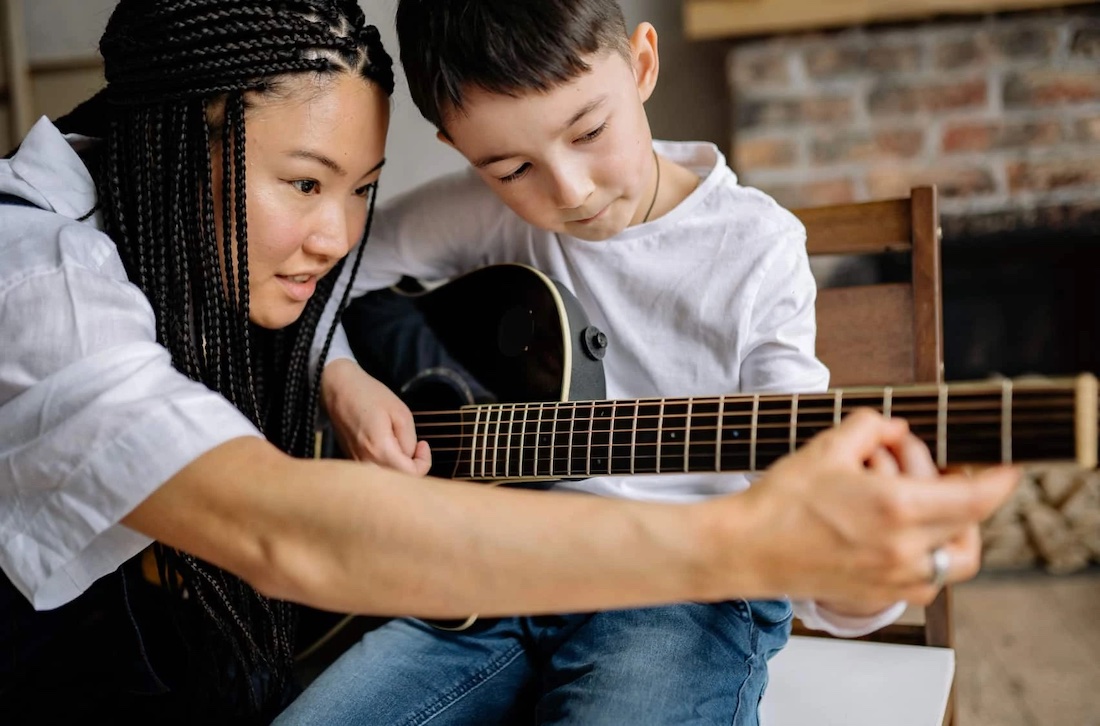
Guitar is one of the only things a kid will do all week that asks both hands to do something completely different at the same time, while their ear tracks pitch and their eyes follow notation. Researchers at USC’s Brain and Creativity Institute tracked kids in music programs over several years and found their brains developed faster in areas linked to language and executive function than kids who weren’t learning an instrument. Other studies have picked up more activity in the prefrontal cortex in young musicians too, the part of the brain in charge of focus, planning, and not doing the first impulsive thing that comes to mind.
Luka, founder of Sydney Music Lessons, which teaches guitar lessons in Sydney to kids of all ages, says the shift shows up well outside the lesson room too. “The kids who stick with it, even just a year or two, start bringing that same focus into other things, homework, sport, whatever it is. Parents come in expecting their kid to learn a few songs. What they don’t expect is how much it changes the way their kid concentrates.”
So what’s actually improving?
- Coordination. The fretting hand and the strumming hand are doing two completely unrelated jobs at once, which is a serious workout for the brain’s motor planning.
- Memory, in a hands-on way. Kids aren’t just memorising chord shapes, they’re building the kind of muscle memory that sticks around for years.
- Pitch and pattern recognition, which overlaps more than people realise with the wiring used for language and reading.
- Frustration tolerance. Getting a tricky bar of a song wrong twenty times and trying it a twenty-first is basically training for handling setbacks calmly.
Electric or acoustic guitar?
This comes up constantly, and the honest answer is it matters less than parents expect. A nylon-string classical guitar is usually easiest on small fingers, since the strings are softer, though a steel-string acoustic sounds closer to what kids hear on the radio. Electric guitars are actually quite gentle on the fingers too, thinner strings and lower action, but they need an amp, which is one more thing to set up before every practice session.
Most teachers start young beginners on a smaller acoustic and let them move to electric later if that’s the sound they’re drawn to. Whatever a kid is excited to pick up will always beat the “technically correct” choice, so if their heart is set on electric because that’s what their favourite song was played on, that enthusiasm is worth more than the small difference in finger comfort.
Final Word
None of this means every kid needs to become the next great guitarist. The benefits build up just from showing up and practising regularly, which is really the whole argument for lessons over a guitar gathering dust in the corner of the lounge room. A decent teacher is what turns “owning a guitar” into the kind of consistent practice where any of this brain stuff actually kicks in.
So if you’re on the fence about whether it’s worth the time and cost, it’s probably worth remembering this isn’t just an extracurricular, it’s brain development that happens to look like a hobby. Compared with a lot of what’s competing for a kid’s attention right now, that’s a pretty good trade.
Watching a kid go from mangling their first chord to actually playing something recognisable, and noticing they’re a little more locked in doing homework a few months later, is usually the moment it clicks for parents that the guitar was never just a hobby.