
Meditate with Friends
Between the school run, homework, sports, and screens, modern life can feel like a whirlwind, not just for adults, but for kids too. Helping children slow down and reconnect with their breath can be one of the most valuable life skills we can give them.
Meditation is a great way to improve both our mental and physical health. It’s a positive way of giving the body and mind a well-deserved rest too. But its benefits are not just for adults , children can also reap the rewards of a regular meditation practice or more mindful minutes in their days.
Research from the Australian Psychological Society (APS) shows that mindfulness practices can reduce anxiety, improve emotional regulation, and enhance attention spans in children. Even a few mindful minutes a day can make a meaningful difference.
Why Meditation Matters for Kids
If we are tired, grumpy, too excited, nervous or worried, meditation can make us feel better. It teaches our brain to focus, which also makes it easier to learn and listen to new information. And, it can make us feel calmer and enjoy bedtime, so we sleep better and grow well.
The best part — the earlier children learn the skills of meditation, the greater the benefits they will experience over their lifetime. Mindfulness in childhood can help build resilience, focus, and a sense of inner calm that lasts well into adulthood.
Four Simple Steps to Make Meditation Work for Your Family
You might be wondering, how do you actually introduce meditation into an already busy routine? The good news is, it doesn’t have to be complicated. Here are four simple, evidence-based steps to make the transition smooth and enjoyable for the whole family.
1. Have a Chat About It
Before you dive into meditation, it’s important to take the time to explain to your child what this new activity is all about. Tell them in simple terms what the practice will involve and why you are doing it. Provide a brief explanation, then finish on an open-ended question to engage them, for example, “What do you think might happen if we started meditating every day?”
Most importantly — keep it light, relatable, and fun. Let go of all your expectations and enjoy the experience. When children see you approaching it with curiosity rather than pressure, they’ll be more open to giving it a go.
2. Set the Mood
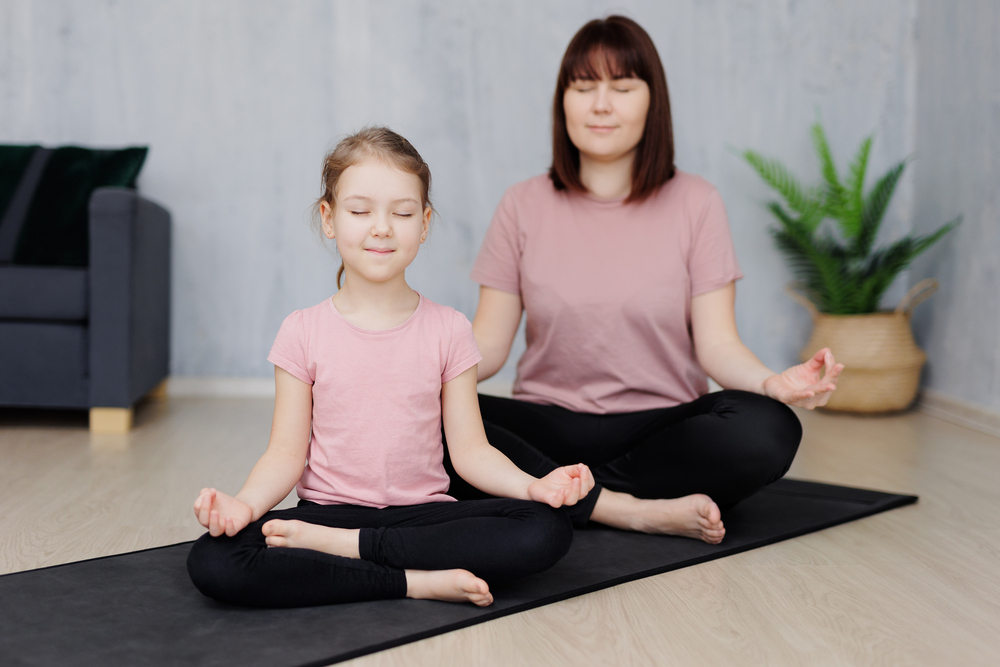
Find a comfortable place to sit, whether that’s inside or out in nature. Ask your child to pick their favourite blanket or cushion to sit on. This will help create a comfortable yet “special” place that your child knows is for meditation.
Next up, make sure the area is clear of distractions so it’s easier for everyone to focus on the present. This might involve dimming the lights or closing the blinds. Perhaps it might be covering up distracting electronics (like TV screens), or spraying some essential oils or lighting a candle. None of these are essential, instead, use what you already have available in your home to create the mood.
If you’re comfortable, you could also incorporate some gentle exercise or yoga movement before sitting down to start the meditation, which can help things go more smoothly.
(Evidence note: Studies suggest that gentle movement before meditation helps children settle more easily, releasing restlessness before focusing.)
3. Be Patient
It’s important to be patient and to keep it simple.
Start off slowly. You can play a guided meditation they are curious about. Even better? Start by playing the first two minutes of the meditation to see if it goes well. If it does, continue a little longer! If it doesn’t, that’s okay too. The key is not to force anything. You can always try again tomorrow.
Consistency matters more than duration. Even one minute of calm, regular practice helps create positive neural patterns linked to emotional regulation and focus.
4. Start on a Day They’re Already Feeling Good
Start on a good-mood day so your kids have a positive association with meditation. Allow them time to slowly build a reliable relationship with the practice, and confidence using it, before engaging it to assist with anxiety or during worrying times.
It’s very important not to use meditation during a tantrum or emotional meltdown. In these cases, the goal is to help children improve their mood in the same way they would move up a ladder, from frustrated or angry, through to happy and content.
Simple Meditation Exercises to Try with Kids
Keen to get started? Here are some simple meditation exercises for you to enjoy with your kids:
-
Choose a guided meditation app that suits your child, consider length, reader’s voice, and your child’s interests. Australian apps like Smiling Mind and Headspace for Kids are great starting points.
-
Try a “squeeze and release” mindfulness exercise. Encourage your child to squeeze different parts of their body before slowly relaxing them. This helps teach children the difference between feeling tense and relaxed. Follow up with open-ended questions like, “What do you feel when you are tense?” or “How does that differ from when you feel relaxed?”
-
Take three to ten slow, deep breaths together. Involve your kids by getting them to count the breaths aloud. This simple act of shared focus can calm nervous systems and build awareness of breath.
(Tip: The best results come from keeping meditation fun, flexible, and routine, not rigid.)
Building Calm, Confidence, and Connection
The benefits of introducing meditation early in life go far beyond relaxation. Studies have shown improvements in concentration, empathy, sleep quality, and emotional intelligence.
Most importantly, it becomes a shared ritual of connection, a few minutes of peace that remind your family to pause, breathe, and come back to what truly matters.
So tonight, find a quiet corner, take a deep breath together, and begin. The calm you nurture today will grow with your child for years to come. 🌿