

What if control over money isn’t really about money? 💔
You might think financial abuse means someone taking their partner’s money.
But sometimes it looks much quieter.
Being told what you can spend.
Having no access to the family bank account.
Being stopped from working.
Having debt put in your name.
Being denied money for groceries, medication or the kids.
Being made to feel that you have no choice but to depend on someone else.
And when you’re a parent, financial control can become even more complicated.
Taking time out of work to care for children can naturally create financial dependence. That isn’t abuse.
The warning sign is when someone deliberately uses that dependence to control your choices, restrict your freedom or make it harder for you to leave.
Economic and financial abuse is now expressly recognised in Australian family law as a form of family violence.
But what does it actually look like behind closed doors?
And how can you tell the difference between a normal financial arrangement and financial control?
💛 We explore the signs, the law, the impact on children and what parents need to know.

When we sit down to watch the footy with our kids, we want them to see the game — not a constant stream of messages telling them that betting is part of it. 🏉❤️
And during our current National Child Protection Week, running runs 6–12 September 2026, it’s a timely question for parents to ask: what are our children seeing, hearing and learning from the world around them?
For many Australian families, gambling has become increasingly woven into the sporting experience — from betting odds and promotions to gambling brands appearing alongside the teams and players children know and love.
But that’s about to change.
From 2027, new gambling advertising reforms will change what families see around live sport. While gambling messages won’t disappear completely, the changes are designed to reduce children’s exposure to wagering advertising during sport.
This year’s National Child Protection Week theme, “Every Conversation Matters: Shifting Conversation to Action,” is a powerful reminder that protecting children isn’t only about what we do when something goes wrong. It’s also about the everyday environments we create around them — and the messages they absorb along the way.
So, what will your family actually notice when Footy 2027 arrives? What gambling messages might kids still see? And how can parents help children recognise the sales pitch behind them?
We break down what Australian parents need to know.
#NationalChildProtectionWeek #EveryConversationMatters #GamblingAds #Footy2027 #AustralianParents #Parenting #ChildSafety #KidsAndSport #FamilyFooty #GamblingAwareness #MediaLiteracy #DigitalLiteracy #AustralianFamilies #FamilySafety #ParentingAdvice

What if family violence doesn’t look like what you think it does?
It isn’t always physical. It can be controlling the money, monitoring a phone, isolating you from family and friends, stalking, intimidation, threats or using children as a way to maintain control.
For parents, recognising what is happening can be incredibly difficult — especially when you’re trying to keep your children safe while navigating fear, finances, housing and what to do next.
The good news? You don’t have to wait for things to get worse before reaching out.
Our latest article explores how early legal support, safety planning and family violence support services can help create clearer boundaries, safer arrangements and practical options for parents and children.
💛 If something doesn’t feel right, trust that feeling. Knowing where to turn can be the first step towards safety.
👉 Read the full article to understand your options and the support available to Victorian families.

📱💛 When is your child ready for their first connected device?
There’s no magic age when children become ready for more independence — it often happens in those everyday moments that make parents pause…
🚶♀️ Walking to school alone
🚌 Catching public transport
🏡 Going to a friend’s house or sleepover
🌏 Spending more time away from home
For many parents, the question isn’t about giving their child a smartphone — it’s about finding the right balance between freedom, safety and staying connected. 💕
New research reveals the milestones that are prompting Australian families to consider their child’s first connected device, and why smartwatches are becoming an option for parents who want to support independence while still having peace of mind.
💬 When did you first feel your child was ready for more independence?
👉 Read the full article to explore what Australian parents are thinking about when it comes to staying connected as children grow.

We baby-proof our homes.
We watch them near water.
We do everything to keep them safe…
But what about the moment something goes wrong?
CPR training is one of the most important things you can do as a parent—yet most of us put it off.
This is your reminder.
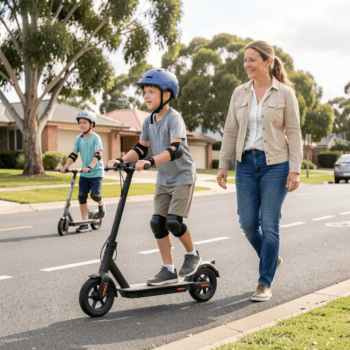
They’re everywhere right now…
⚡ The whirr of e-scooters racing down suburban streets.
For kids and teens they feel like freedom, speed and fun.
But behind the excitement, Australian hospitals are seeing a sharp rise in serious injuries, many involving children under 16.
From dopamine-driven thrill seeking and peer pressure to night-time crashes and head injuries, there are risks many parents simply don’t realise.
Before your child jumps on an e-scooter, this article explains the psychology, the safety risks, and the simple steps parents can take to protect their kids.
Because these devices aren’t toys — they’re motorised vehicles.
👉 Read the full article now.
Get parenting advice and support delivered right to your inbox
We'd love to hear what you think of the website, so we can continue to improve it . . . GIVE YOUR FEEDBACK >