
Kiddipedia
The National Roadmap for Change to Prevent and End Family Violence against People and Animals, developed by Lucy’s Project, sets out recommendations for policy, program and legislative reform aimed at ensuring victim-survivors can seek safety without being forced to leave their animals behind.
An Australian-first national framework calling for greater protection for people and animals experiencing domestic and family violence was just launched at NSW Parliament House on 24 September.
The NSW launch follows the Roadmap’s national launch at Australian Parliament House on 19 August, and comes amid growing recognition that animals can be targeted by people using violence as a way to control, intimidate or cause distress to other family members.
Lucy’s Project CEO Monique Dam said the connection between human and animal safety had historically been overlooked.
“For too long the connection between human and animal safety has been overlooked. We know that if animals are at risk of violence, then the people who love them are at risk too,” Ms Dam said.
“When there is nowhere safe for survivors to go with their animals, many delay leaving and are forced to continue living with a partner and parent using violence.”
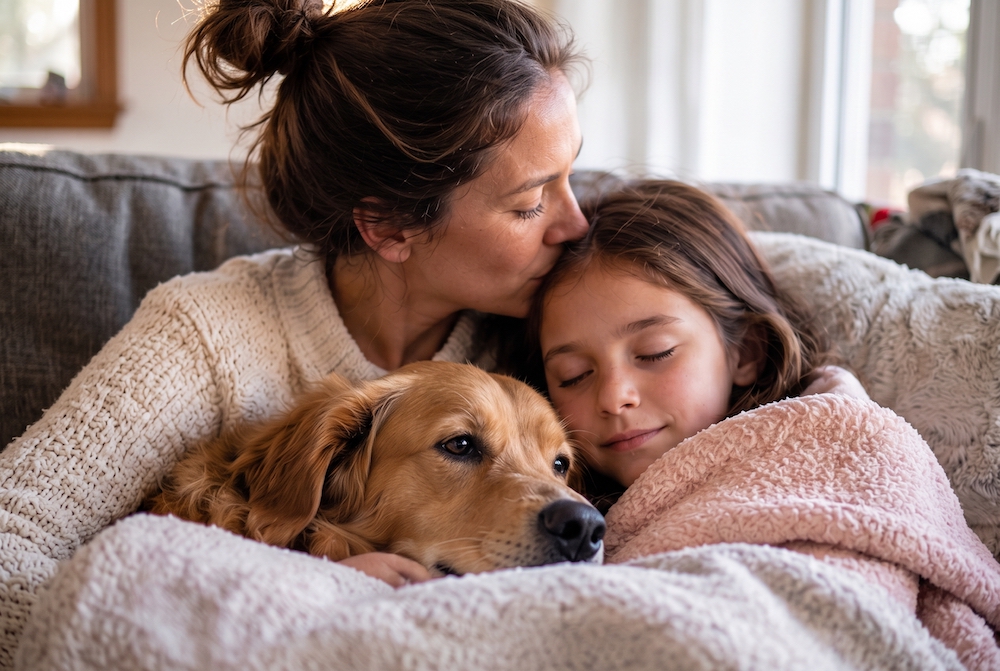
For most Australian families a pet isn’t just a pet, they’re another member of the family.
Pets can be part of the family, and part of the abuse
Pets are part of the everyday lives of millions of Australians, with 73 per cent of Australian households living with animals. They can provide comfort, companionship and a sense of safety during periods of fear and instability.
For children in particular, a beloved animal can be an important source of comfort and connection when home does not feel safe.
But those close bonds can also be exploited.
Threatening, harming or neglecting an animal can be used as a form of coercion and control, with research showing violence against animals can occur alongside domestic and family violence against people.
A NSW survey found 81 per cent of workers had supported victim-survivors who disclosed that a person using violence had threatened to harm or kill animals.
Survivor advocate Talie Star, whose insights helped inform the Roadmap, said animals could provide a sense of safety during experiences of violence.
“Being in a place where there was not a lot of love, my animals created that love and that safe place,” she said.
“It was like a softness in all the hardness.”
Lack of pet-friendly accommodation remains a major barrier
One of the key issues identified in the Roadmap is the shortage of emergency, crisis and transitional accommodation where people can stay safely with their animals.
For a parent trying to leave a person using violence, that can mean deciding whether to leave an animal behind, arrange temporary care or delay leaving until accommodation can be found.
Other barriers can include the cost of boarding, difficulties transporting animals and concerns around ownership where an animal is registered or microchipped in the name of the person using violence.
In some cases, women and children may live in cars with their animals because they cannot find safe accommodation where they can remain together.
While progress has been made in recent years, including the rollout of some animal-inclusive refuge models in NSW and Victoria, access remains inconsistent across Australia.
The Roadmap calls for governments to increase funding for animal-inclusive emergency, crisis and transitional accommodation, including modifications to existing refuges and the construction of new facilities.
It also recommends funding emergency boarding, foster care, veterinary treatment, food and transport for animals when families cannot initially remain together.
Calls for animals to be recognised as victim-survivors
The Roadmap also calls for animals to be recognised in legislation as victim-survivors of domestic and family violence in their own right.
Currently, animals are generally treated as property under Australian law.
Lucy’s Project argues this can create further barriers for victim-survivors, particularly where a person using violence claims ownership of an animal or is listed on its registration or microchip.
The Roadmap recommends allowing family violence protection orders to be made for animals and improving processes around ownership, registration and information sharing.
It also calls for greater education and training across the domestic and family violence, homelessness, legal, veterinary, animal welfare and law enforcement sectors.
The aim is to ensure frontline workers understand how violence against animals can be linked to violence against people and know how to recognise, record and respond to the risk.
A focus on prevention
The Roadmap also looks beyond crisis response and considers how violence can be prevented in the first place.
One recommendation is for animal welfare, empathy and compassion towards animals to be included in respectful relationships education across early childhood, schools, universities, vocational education and workplaces.
The approach reflects the Roadmap’s broader argument that the safety and wellbeing of people and animals are interconnected.
The framework was developed following a national roundtable convened by Lucy’s Project in 2025, which brought together more than 100 survivors, researchers, advocates and practitioners from 80 organisations across Australia.
The Roadmap is also supported by the Petstock Foundation through a one-year, $150,000 partnership with Lucy’s Project. The partnership reflects the Foundation’s focus on strengthening the human–animal bond and is helping Lucy’s Project drive greater awareness, collaboration and systemic change to improve safety for people and animals experiencing domestic and family violence.
Participants in the roundtable identified several persistent gaps, including a lack of animal-inclusive crisis accommodation, limited recognition of animals as victim-survivors in their own right and poor coordination between human services, animal services and law enforcement.
Lucy’s Project is now calling on all levels of government to adopt the Roadmap’s recommendations and invest in coordinated reform.
The organisation says its goal over the next five years is to ensure human and animal victim-survivors can find a safe home together, frontline workers know how to respond and services across sectors work together.
For families experiencing domestic and family violence, that could mean one less barrier standing in the way of safety.
If you or someone you know is experiencing, or at risk of experiencing, domestic, family or sexual violence, contact 1800RESPECT on 1800 737 732. In an emergency or if you are in immediate danger, call 000.