
Kiddipedia
In this article, you’ll learn:
- Why the first few minutes in an emergency matter most
- What actually happens in a child emergency
- How CPR for children is different
- Why hands-on training makes all the difference
- Who should be trained (it’s more people than you think)
- What to do in those critical first moments
Children are curious, fast, and completely unpredictable.
One moment they are playing happily in front of you, and the next they are choking, unconscious, or not breathing.
These moments are rare, but they do happen. And when they do, the minutes before an ambulance arrives are the most critical of that child’s life.
If you’re like most parents, you probably assume help will arrive quickly. But the reality is, in many parts of Australia, especially suburban and regional areas, ambulance response times can stretch beyond 8–10 minutes (AIHW, 2022). That’s a long time when every second counts.
CPR, cardiopulmonary resuscitation, is the skill that bridges that gap. It keeps blood and oxygen moving through the body when the heart and lungs have stopped doing their job. When performed quickly and correctly, it significantly increases the chance of survival and reduces the risk of permanent brain damage.
This matters because the brain depends on a constant supply of oxygen. Without it, irreversible injury can begin in as little as four to six minutes (Australian Resuscitation Council, 2023).
The problem is that most Australians have never learned CPR. Or they learned it once, years ago, and wouldn’t feel confident performing it today if a child’s life depended on it.
This article is a direct call to action for every parent, grandparent, teacher, childcare worker, sports coach, and anyone else who spends time around children. CPR certification isn’t just a nice-to-have, it’s part of keeping children safe.
🔎 Quick Facts
- Brain injury can begin within 4–6 minutes without oxygen
- Ambulance response times can exceed 8–10 minutes in some areas
- Early CPR can double or triple survival rates
(Australian Resuscitation Council; AIHW; St John Ambulance Australia)
What Happens in a Paediatric Emergency
A cardiac or respiratory emergency in a child can be triggered by a surprising range of events.
Drowning remains one of the leading causes of accidental death in young children in Australia, particularly in home pools (Royal Life Saving Australia, 2024). Other causes include choking on food or small objects, severe allergic reactions, traumatic falls, and sudden cardiac events in children with undiagnosed heart conditions.
It’s confronting to think about—but these are everyday environments:
- a backyard birthday party
- swimming lessons
- the park
- the kitchen
Emergencies don’t announce themselves. They happen in ordinary moments.
The statistics around response time are sobering. Brain damage can begin within four to six minutes of the heart stopping (Australian Resuscitation Council, 2023). By the time an ambulance arrives, the window for the best possible outcome may already be narrowing.
CPR performed by a bystander in those first few minutes can double or even triple survival rates (St John Ambulance Australia, 2023). That’s not a small improvement, it can be the difference between a child going home and a family facing the unthinkable.
And yet, many Australians still feel unsure about what to do.
That hesitation is completely normal. Most people haven’t had the chance to practise. Confidence comes from training, and training is more accessible than most people realise.
CPR for Children Is Different from CPR for Adults
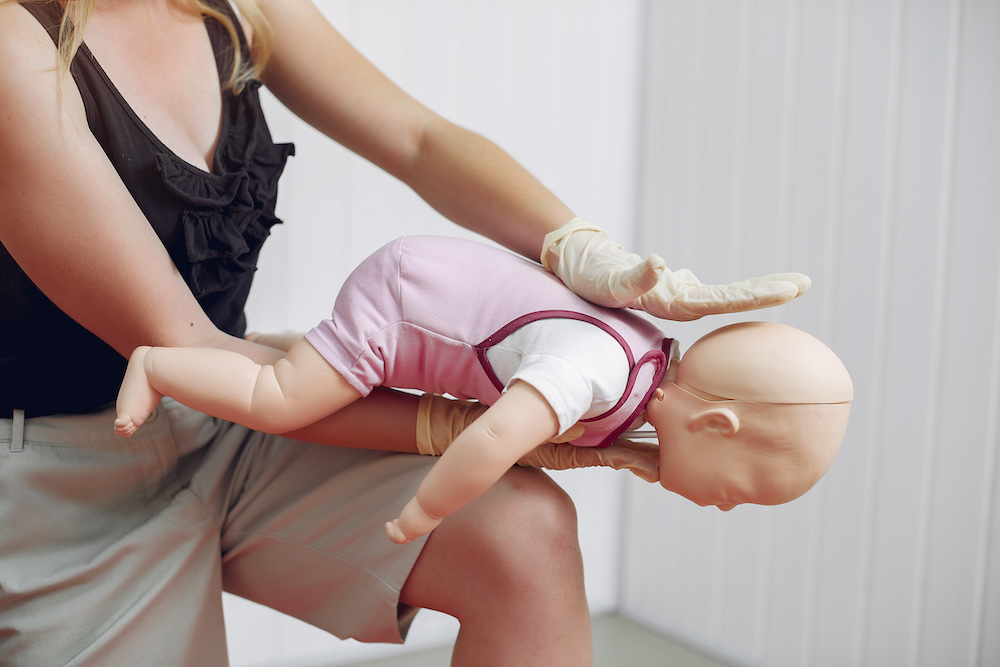
One of the most important things to understand before an emergency happens is that paediatric CPR is not identical to adult CPR.
Children have:
- smaller airways
- more fragile chest walls
- different compression depths and techniques
Using adult CPR techniques on a child without adapting them can reduce effectiveness, or cause harm.
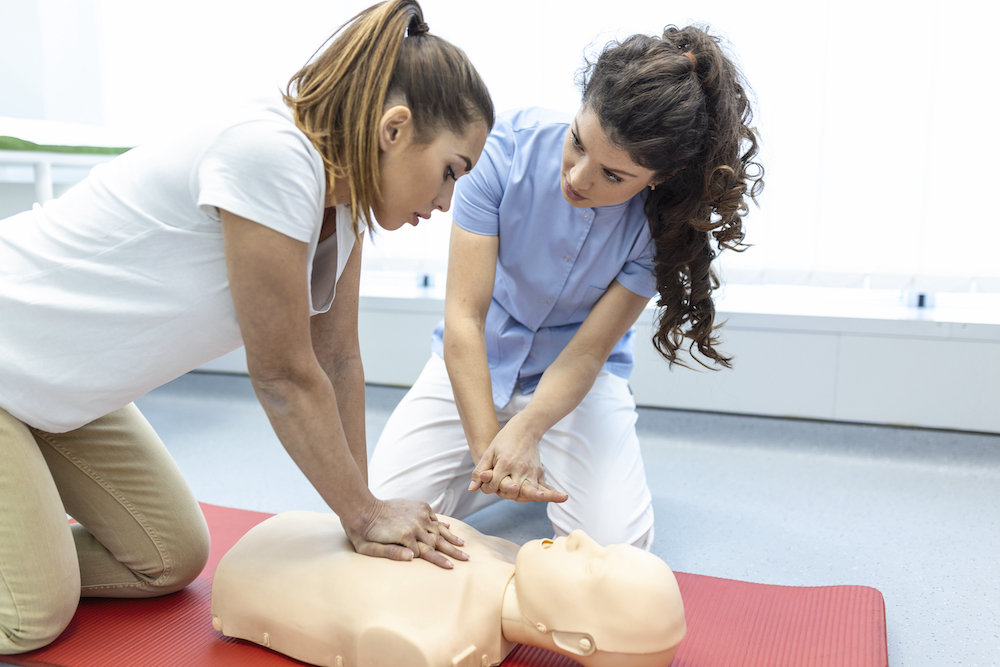
Professional CPR training covers these distinctions clearly and allows you to practise on mannequins designed to replicate both infant and child anatomy. This hands-on practice builds the muscle memory that allows you to act quickly and correctly when stress is high and every second counts.
Because in a real emergency, you’re not calmly recalling steps, you’re responding under stress.
Training helps you develop:
- correct compression depth and rhythm
- proper positioning
- effective rescue breaths
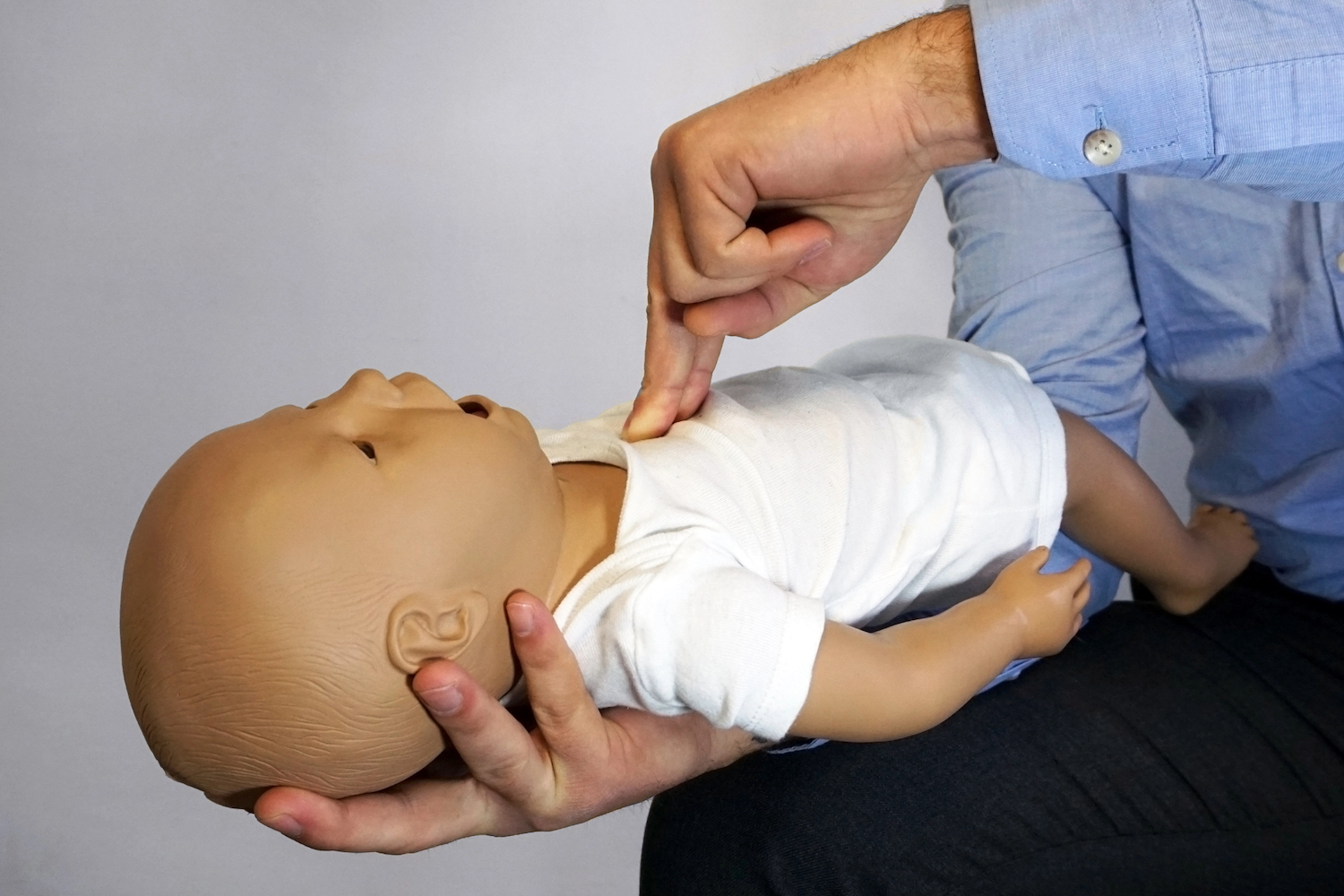
- choking response for infants vs older children
These aren’t things most people can learn properly just by watching.
Understanding how to position a child, how hard to compress, how to deliver rescue breaths effectively, and how to manage choking in an infant versus an older child are all skills that come together in a properly structured course.
If you want to make sure you have the right skills to protect a child in an emergency, the most direct step is formal certification from a recognised provider. You can get your CPR certification through My First Aid Course and complete nationally recognised training that covers both adult and paediatric techniques in a practical, confidence-building format.
Certification through a registered training organisation also means your qualification is formally recognised, which matters for childcare workers, teachers, sports coaches, and anyone whose employer or regulatory body requires evidence of current first aid competency.
What To Do in an Emergency (In Australia)
If a child is unresponsive and not breathing normally:
- Call Triple Zero (000) immediately
- Start CPR
- Give 30 chest compressions followed by 2 breaths
- Continue until help arrives
(Based on Australian Resuscitation Council Guidelines)
Why Watching a Video Is Not Enough
There is a tempting shortcut that many people take when it comes to CPR. They watch a YouTube video or read a step-by-step guide and tell themselves they now know what to do.
The gap between knowing the theory and being able to perform CPR effectively under the stress of a real emergencyis enormous.
Performing chest compressions correctly requires:
- the right depth
- the right speed
- the right positioning
And it feels very different in real life than it looks on a screen.
Research shows that people who complete hands-on, instructor-led CPR training perform significantly better in real emergencies than those who rely on theory alone (Australian Resuscitation Council, 2023).
Research consistently shows that people who have completed practical, instructor-led CPR training perform significantly better in real emergencies than those who have only read about or watched the technique. The physical practice builds automatic responses that do not require your brain to consciously recall every step in a moment of panic.
Group training also allows you to ask questions, have your technique corrected, and build genuine confidence that you could act effectively if you needed to.
For parents and carers in South Australia, accessible, high-quality training is available locally and designed to fit around the busy schedule of anyone managing family life alongside work and other commitments. You can find CPR training Adelaide courses through First Aid Certification and Training, and find a course time and format that works for your life.
Short, focused CPR courses are often completed in a few hours and are designed to be genuinely practical rather than overwhelming. The investment of a single morning or afternoon gives you a skill that lasts years and could save the life you love.
Practice builds muscle memory. And muscle memory is what takes over when panic sets in.
Training also gives you the chance to:
- ask questions
- correct your technique
- build genuine confidence
For many parents, that confidence is the biggest shift—from “I hope I’d know what to do” to “I know I can act.”
Myth vs Fact
Myth: CPR is only for adults
Fact: Children often need CPR due to breathing-related emergencies
Myth: You might hurt the child
Fact: Doing nothing is far more dangerous
Myth: Watching a video is enough
Fact: Hands-on practice significantly improves performance
Who Should Be Trained
The honest answer? Anyone who spends time around children.
Parents and guardians are the obvious starting point. But the circle is much wider than most families think.
- Grandparents often provide regular care but may not have current training
- Childcare workers are required to maintain certification—but it needs regular renewal
- Teachers, sports coaches, and swimming instructors are often responsible for groups of children
- Older siblings, teenagers who babysit are another group often overlooked
CPR is not complicated, and with proper training, a capable teenager can make a life-saving difference in the minutes before help arrives.
If a child is in your care—even occasionally—it’s worth asking:
Would I feel confident if something happened?
Keeping Your Skills Current
Like any practical skill, CPR fades over time.
Guidelines are updated regularly as new research emerges, and most Australian recommendations suggest refreshing CPR skills every 12 months and first aid certification every three years (Australian Resuscitation Council, 2023).
Muscle memory for physical techniques fades over time without practice, which means a certification from five years ago provides significantly less confidence and effectiveness than one that is current.
It’s easy to put off, but building it into your routine, like a health check or car service, makes it manageable—it also ensures the skill stays sharp and the certification stays valid.
Many workplaces, community organisations, schools, and sports clubs organise group CPR training for their members, which reduces both the cost and the time commitment for individuals. If you are part of any of these groups, advocating for regular training sessions is a genuinely valuable contribution to your community.
The Mindset Shift That Matters
Most parents do everything they can to protect their children.
You install car seats properly.
You watch closely around water.
You check safety locks and routines.
CPR training belongs in that same category.
Not because you expect something to go wrong—but because it prepares you for the moment when it does.
The hesitation is understandable. Life is busy. It’s easy to think, “I’ll get to it later.”
Emergencies do not announce themselves. They happen on an ordinary Tuesday at a backyard birthday party, at swimming lessons, at the park, and in the kitchen. The parents and carers who were trained are the ones who can act.
They happen on ordinary days, in familiar places.
And in those moments, the people who are trained are the ones who can act.
The ones who aren’t can only wait.
A Final Thought
Choosing to learn CPR is one of the simplest, most practical steps you can take as a parent or carer.
It doesn’t take long to learn.
It doesn’t require medical training.
But it can make an extraordinary difference.
It’s one of those decisions most people never regret making.
Your child deserves a ready parent. This is how you become one.
References
- Australian Resuscitation Council. (2023). Guideline 12: Paediatric Basic Life Support.
- Australian Institute of Health and Welfare (AIHW). (2022). Cardiac Arrest in Australia.
- Royal Life Saving Society Australia. (2024). National Drowning Report.
- St John Ambulance Australia. (2023). CPR Fact Sheet.
- Kidsafe Australia. (2023). Child Injury Prevention Statistics.