
Kiddipedia
By Claire D. | Parenting and family safety writer, 6 years covering Australian consumer policy. Updated September 2026.
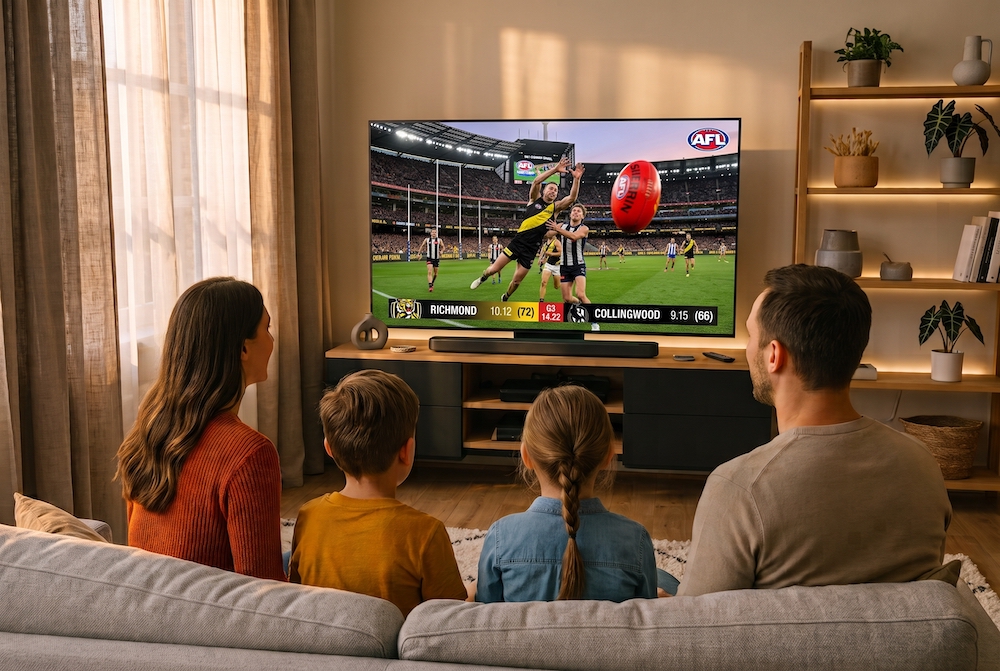
Saturday afternoon. The kids are sprawled across the couch, the footy’s on, someone is asking what’s for dinner, and the ad break rolls around.
For years, Australian families have become used to seeing betting brands, odds, multis and gambling promotions woven into the sporting experience.
The new season is set to look different.
On 26 August 2026, the Interactive Gambling Amendment (Gambling Reform) Act 2026 received Royal Assent after Parliament passed the legislation on 19 August. Most of the major reforms, including the new wagering advertising restrictions, commence on 1 January 2027.
For parents, that matters.
Because this isn’t really about whether an adult chooses to place a bet. It’s about how often children see gambling presented alongside the sport they love, and what repeated exposure can teach them about betting before they are old enough to properly understand risk.
Australian research has found that 53% of adults surveyed believed wagering advertising normalises gambling among children, while 60% said it made sport less family-friendly.
So what actually changes in 2027? What will your family notice when the footy is on? And, importantly, what will still be there?
Here’s what parents need to know.
Why gambling advertising matters to families
For many children, their first encounter with gambling isn’t necessarily sitting down and placing a bet.
It can be much more ordinary.
It’s a brand name on a player’s clothing, an advertisement during a match, odds mentioned around a game, a betting promotion appearing in a sports video, or a social media post from an influencer they already follow.
That matters because children don’t experience advertising in isolation.
They experience it as part of the things they already love.
Footy. Cricket. Soccer. Their favourite players. Their favourite teams.
When gambling repeatedly appears alongside those things, it can make betting seem like just another normal part of being a sports fan.
Research from the Australian Gambling Research Centre at the Australian Institute of Family Studies (AIFS) found that Australians reported seeing sports and race betting advertising across television, social media, streamed content and other platforms. Young adults were among those most likely to report that advertising had influenced their betting behaviour.
AIFS research has also found that 69% of Australians surveyed thought wagering advertising was too common, while 53% believed it normalised gambling among children.
That is why the 2027 changes are significant for families.
They aren’t simply about taking a few betting commercials out of an ad break.
They’re part of a broader attempt to reduce the amount of gambling marketing Australians encounter, particularly around sport and digital media.
Why this conversation matters during National Child Protection Week
The timing of these changes is also worth noting.
National Child Protection Week runs from 6–12 September 2026, providing a timely opportunity to look at the environments children grow up in — and the messages they encounter as they move through the world. This year’s theme, Every Conversation Matters: Shifting Conversation to Action, encourages Australians to move beyond talking about child protection and consider the practical steps that can help create safer environments for children.
And that includes paying attention to the commercial messages children are repeatedly exposed to.
Children don’t need to gamble themselves to be influenced by gambling culture. They can encounter betting messages through the sport they watch, the teams they support, the players they admire, the content they consume online and even the conversations they hear from adults around them.
When those messages are repeated often enough, they can begin to make gambling feel like a normal part of sport and everyday life.
That doesn’t mean every child who sees a gambling advertisement will go on to gamble, or that advertising is the only factor influencing future gambling behaviour. But Australian research has raised concerns about the role of gambling advertising in normalising betting among children and young people.
This is where the 2027 reforms become more than a change to advertising rules.
Reducing children’s exposure to gambling marketing is one practical way of creating a healthier environment around one of Australia’s most popular family activities — watching sport.
The new laws won’t remove every gambling message from children’s lives. They won’t eliminate gambling-related content from social media or prevent children from hearing adults talk about betting.
But they do represent a meaningful change in the amount and type of wagering advertising children may encounter around live sport.
And for parents, that creates another opportunity to do something equally important: talk to children about what they see, why companies advertise, and how advertising can shape the way we think about risk, reward and what feels “normal”.
Because child protection isn’t only about responding when something goes wrong. It is also about creating environments that support children’s safety, wellbeing and healthy development in the first place.
This conversation started well before 2027
The new rules didn’t appear overnight.
In June 2023, the House of Representatives Standing Committee on Social Policy and Legal Affairs, chaired by the late Peta Murphy MP, handed down its landmark inquiry into online gambling and gambling harm.
The report, You win some, you lose more: Online gambling and its impacts on those experiencing gambling harm, made 31 recommendations, including a phased, comprehensive ban on online gambling advertising over three years. The recommendation was designed to progressively remove gambling advertising from social media and online platforms, sporting broadcasts, sporting venues and, ultimately, all forms of online gambling advertising and sponsorship.
That recommendation became an important turning point in Australia’s gambling advertising debate. More than three years later, the federal government has now legislated significant new restrictions, with most of the reforms taking effect from 1 January 2027. (via Gulf News).
Its report, You win some, you lose more: Online gambling and its impacts on those experiencing gambling harm, made 31 recommendations aimed at reducing gambling harm in Australia. One of its most significant recommendations was a phased, comprehensive ban on online gambling advertising, to be introduced over three years.
The committee’s recommendations went considerably further than simply removing betting commercials from family footy broadcasts. They included restrictions on gambling advertising and odds commentary around sporting broadcasts, gambling branding on sporting uniforms and at sporting venues, online advertising and inducements, as well as broader regulatory measures.
The report also put children and young people firmly within the conversation, recognising the concern that repeated exposure to gambling marketing could contribute to the normalisation of gambling.
It then took more than three years for the federal government to settle on the reforms that ultimately became law in 2026. The legislation that passed is therefore best understood as a significant response to the Murphy inquiry, but not a complete adoption of all 31 recommendations.
For parents, that history matters because it explains why the changes arriving before the 2027 sporting season are being described as a major shift — while also explaining why some advocates continue to argue that more needs to be done.
What changes from 1 January 2027?
The reforms have evolved considerably from the government’s earlier proposal. ABC News reported in May 2026 that the original draft would still have allowed some gambling advertising during late-night sporting events, including at half-time and during weather delays. The final legislation introduced in August subsequently established a broader framework of restrictions, making it important to distinguish between what was proposed earlier in the year and what ultimately became law.
Importantly, the legislation doesn’t define that content narrowly as a traditional television commercial. It includes advertising, sponsorship and promotional content relating to licensed interactive wagering services.
From 1 January 2027, wagering advertising content will generally be prohibited in conjunction with live coverage of sporting events.
For daytime live sport, the legislation creates a particularly strong protection between 5am and 8.30pm, with wagering advertising prohibited during the live coverage window and a defined period around the beginning and end of the event.
For live sport broadcast between 8.30pm and 5am, different rules apply to the precise timing of advertising around play and breaks.
The reforms also extend beyond traditional television.
They cover relevant online content services, meaning parents shouldn’t assume that moving from free-to-air television to an online stream automatically takes gambling advertising outside the new framework.
And there is another important change many parents may not realise:
The reforms also address gambling branding in sporting environments.
The legislation prohibits wagering advertising content on sporting uniforms and at sporting venues, although transitional arrangements mean some existing arrangements can continue for a period, with the legislation providing an exemption for certain displays through to the end of 31 December 2031.
So the picture is considerably bigger than simply:
“There won’t be betting ads during the footy anymore.”
What will families actually notice during footy?
For a family watching a Saturday afternoon game together, the most obvious change should be the reduction of wagering advertising associated with the live broadcast.
That could mean fewer betting commercials and fewer gambling promotions appearing around the live sporting coverage.
And for parents, that may be welcome simply because it removes one more repeated commercial message from an environment children already spend time in.
Australian research has found that many adults believe gambling advertising has changed the experience of watching sport.
In AIFS research, 60% of respondents said wagering advertising made sport less family-friendly, while 46% said it reduced their enjoyment of sport.
That doesn’t mean a child who sees a betting advertisement will automatically develop a gambling problem.
It does mean exposure matters, particularly when gambling becomes repeatedly associated with something positive and familiar.
And reducing unnecessary exposure is one piece of the bigger picture.
The important distinction: advertising isn’t the same as gambling
It’s worth making one thing clear.
The reforms aren’t designed to tell parents that they can’t discuss gambling, or that every child who hears the word “bet” is somehow at risk.
The issue is normalisation and repeated exposure.
A six-year-old doesn’t need to understand probability to recognise a logo.
A primary-school child can remember a catchy slogan without understanding what an odds market actually means.
A teenager can understand what a “multi” is without fully appreciating the financial or behavioural risks associated with gambling.
Children are constantly learning what is considered normal, exciting, adult, successful or socially acceptable by watching the world around them.
Advertising is one part of that learning environment.
But gambling advertising won’t simply disappear
This is probably the most important thing for parents to understand.
The new restrictions are significant, but they are not the end of gambling exposure.
The legislation targets specific forms of wagering advertising and promotion. It does not mean children will suddenly live in a gambling-free sporting environment.
Parents may still encounter gambling-related material through existing content, digital environments, social media and other forms of exposure, depending on how and where the content is delivered.
And while the legislation introduces restrictions around wagering advertising content at sporting venues and on sporting uniforms, transitional arrangements mean some existing displays can remain for several years.
That means your child may still see a gambling brand associated with a team, venue or sporting environment even after the new broadcast restrictions take effect.
For parents, that distinction is important.
Less exposure is not the same thing as no exposure.
It’s not just the ads between the action
One of the reasons the new rules matter is that gambling exposure around sport has never been limited to television commercials.
A 2026 State of Play report, commissioned by the Foundation for Alcohol Research and Education (FARE), examined gambling and alcohol sponsorship across Australia’s AFL and NRL clubs, leagues and broadcast partnerships. Its findings showed just how deeply gambling brands had become woven into the sporting environment.
The report from Croakey Health Media found that all NRL clubs and five AFL clubs had gambling-company sponsorships during 2025 and 2026, with gambling brands appearing through sponsorship arrangements, stadium advertising, digital channels and, in some cases, player or official uniform branding.
For children, that distinction matters.
A child watching the footy doesn’t necessarily experience gambling advertising as a standalone commercial. They may see a brand on a uniform, around the stadium, in sporting content online or associated with their favourite team.
The same report highlighted research showing that children are exposed to gambling advertising through both attending sporting events and watching sport on television, and that exposure can contribute to more positive attitudes towards gambling among children and young people.
That’s why the new restrictions are best understood as one part of a much bigger change, rather than a magic switch that makes gambling disappear from Australian sport.
The aim is to reduce children’s exposure to gambling messages in some of the places where they are most likely to encounter them.
And that matters because children don’t need to understand odds, wagering or probability to recognise a brand.
They simply need to see it often enough for it to become familiar.
That’s the normalisation problem parents should be aware of.
What about streaming the footy?
This is where things become a little more complicated.
The reforms specifically cover relevant online content services, and existing ACMA rules already distinguish between broadcast television, online streaming and other forms of digital content.
Under the existing rules, online providers streaming live sport have already been subject to restrictions around gambling advertising and promotion of odds, including stronger protections during the daytime period when children are more likely to be watching.
The 2027 reforms replace and expand parts of this existing framework.
For parents, the practical takeaway is simple:
Don’t assume “streaming” means the rules don’t apply.
At the same time, don’t assume that every piece of football-related content online is covered in exactly the same way as a live match.
A live broadcast, an on-demand replay, a highlights package, a sports podcast and an influencer’s social media post can all sit in different regulatory environments.
That is one reason parents still have an important role to play.
What about YouTube, TikTok and social media?
This is one of the areas parents should continue watching closely.
A child doesn’t have to sit through a television ad to encounter gambling marketing.
They may see it while watching:
- Sports highlights
- Footy commentary
- YouTube creators
- Short-form videos
- Sports podcasts
- Influencer content
- Team or player content
- Online promotions
- Direct marketing
The 2026 reforms include new rules relating to wagering advertising content delivered through online services and social media, alongside restrictions designed to reduce exposure for certain users.
But legislation can’t remove every gambling reference from the internet.
That is where digital literacy becomes increasingly important.
Rather than trying to create a completely gambling-free digital world — something that is neither realistic nor sustainable — parents can help children understand why gambling companies advertise and how advertising is designed to influence behaviour.
Teach children to recognise the sales pitch
You don’t need to give a nine-year-old a lecture about gambling addiction.
You can start much earlier with a simpler idea:
Advertising is trying to make you want something.
When a gambling advertisement appears, older children can begin to recognise some of the techniques being used.
For example:
“Everyone is doing it.”
Advertising can make an activity appear widespread and socially accepted.
“You could win.”
The potential reward is made highly visible, while the possibility of losing can be much less emotionally engaging.
“Make the game more exciting.”
Betting can be presented as something that makes watching sport more interesting.
“You’re part of the action.”
The advertising can blur the line between being a sports fan and participating in betting.
“This offer won’t last.”
Urgency and promotions can encourage people to act quickly rather than think carefully.
Helping children identify these techniques gives them a valuable skill that goes far beyond gambling.
It is advertising literacy.
And that is something children will need throughout their lives.
How to talk to your child about gambling without making it a big deal
You don’t need to wait until your child asks:
“What’s betting?”
If they notice something on television or at a sporting ground, use it as a natural opening.
For a younger child, you might say:
“That’s an advertisement for betting. It’s something adults can choose to do, but you can lose money doing it, so it’s not a game for children.”
For a primary-school child:
“Those ads are designed to make betting look exciting because the company wants people to spend money with them. The advertisement doesn’t show the whole picture — people can lose money too.”
For a teenager, you can have a more sophisticated conversation about:
- Probability
- Risk
- Advertising psychology
- Promotions and inducements
- Influencers
- Social pressure
- The difference between entertainment and financial risk
The goal isn’t to frighten children. It’s to help them become critical consumers of the messages they’re seeing — and sometimes the most useful parenting advice is simply to use these everyday moments as an opportunity for an honest, age-appropriate conversation.
And what about parents who gamble?
This is an important part of the conversation that can easily get lost.
The new advertising restrictions are primarily about reducing exposure to gambling marketing and regulating how wagering services are promoted. They don’t mean parents have to pretend gambling doesn’t exist.
If gambling is something that exists in your household, the most useful approach is usually honest, age-appropriate conversation rather than secrecy.
Children notice more than we sometimes realise.
They can hear conversations about betting.
They can see an app on a phone.
They can notice a parent checking a score or discussing odds.
Rather than presenting gambling as a harmless way to make money, parents can reinforce the reality that gambling involves risk and that losing money is always possible.
And importantly, children shouldn’t be given access to gambling accounts or betting products.
For parents who want to understand the difference between Australian gambling services, regulation and the broader online gambling landscape, a guide to the best online casinos in Australia may provide general information about the sector. However, Kiddipedia does not recommend gambling products or operators, and parents should be aware that some forms of online gambling are prohibited in Australia. The Australian Communications and Media Authority states that online casino-style services are among the gambling services prohibited from being offered to Australians.
That distinction is particularly important because “online gambling” isn’t one single category under Australian law.
The bigger issue: children learn from what adults normalise
One of the strongest reasons to reduce gambling advertising around sport isn’t simply the number of advertisements children see.
It’s the context in which they see them.
When gambling repeatedly appears alongside:
team pride + sporting heroes + excitement + winning + friendship + celebration
it can become part of the cultural language of sport.
Australian research has specifically identified concerns about gambling advertising normalising gambling among children and linking betting with sporting interests.
That’s why removing advertising from some of the most highly watched sporting environments matters.
It changes the messages children receive.
Not completely.
But meaningfully.
What the new rules don’t solve
Parents shouldn’t see 1 January 2027 as a finish line.
There are still several areas worth keeping an eye on.
Sponsorship and existing branding
The legislation does address wagering advertising content on sporting uniforms and at sporting venues, but transitional provisions mean some existing arrangements can continue until the end of 2031.
So a child may still encounter familiar gambling branding in sporting environments during the transition.
Social media
Children can encounter gambling-related material outside traditional advertising breaks.
Influencer marketing, user-generated content and sports-related conversations can all expose young people to gambling messages.
Sports content outside live matches
Highlights, podcasts, previews and commentary can create additional exposure.
Parents shouldn’t assume that because the live match itself has fewer betting promotions, every piece of related content will be free from gambling references.
The influence of adults
Children also learn from what the adults around them say and do.
A casual:
“I’ll put $10 on that.”
can communicate a very different message to a child than a conversation about probability and risk.
That doesn’t mean parents have to be perfect.
It simply means our behaviour is part of the environment our children learn from.
Five simple things parents can do before footy season 2027
You don’t need to overhaul family life.
A few small changes can make a difference.
1. Watch with your child
You don’t need to monitor every second of every match.
But watching together occasionally gives you opportunities to explain things naturally when they come up.
2. Explain advertising
Teach children that advertising has a purpose.
Its job is to persuade, not simply inform.
3. Don’t make gambling sound like a guaranteed win
If betting comes up, talk honestly about risk and losing money.
4. Look beyond the television
Pay attention to the sports content your child consumes on YouTube, social media and streaming platforms.
5. Use the new rules as a conversation starter
Rather than simply saying:
“The government has banned gambling ads.”
try:
“They’re changing the rules because people were concerned about how much gambling advertising children were seeing around sport.”
That turns a policy change into a useful lesson about media, advertising and consumer protection.
What should parents remember about the 2027 changes?
If you only remember five things, make them these:
Gambling advertising restrictions strengthen from 1 January 2027.
Live sporting coverage will have stronger restrictions on wagering advertising content.
The reforms extend beyond traditional television and include relevant online content services.
Sporting uniforms and venues are also covered, although transitional arrangements apply to some existing displays until the end of 2031.
And perhaps most importantly:
The changes reduce exposure — they don’t eliminate it.
Children will still encounter gambling messages in different parts of the media and sporting environment, which is why helping them understand how advertising works remains one of the most useful things parents can do.
A better kind of family footy night
There is something quite nice about the idea behind these reforms.
A child should be able to sit down on a Saturday afternoon, cheer for their team, argue about whether that was really a free kick, demand another sausage roll and fall asleep halfway through the third quarter without being treated as a future customer by a betting company.
The new rules won’t make gambling disappear from Australian sport.
They won’t remove every logo overnight.
They won’t stop children encountering gambling messages online.
But they can reduce one of the most repetitive forms of exposure — particularly during the live sporting broadcasts that families watch together.
And that gives parents something valuable too.
A little more room to let sport simply be sport.
For children, that’s not a bad place to start.
Frequently Asked Questions
When do the new gambling advertising restrictions start?
The Interactive Gambling Amendment (Gambling Reform) Act 2026 received Royal Assent on 26 August 2026, with most of the substantive reforms commencing on 1 January 2027.
Will gambling ads disappear completely during the footy?
The new legislation significantly restricts wagering advertising content in conjunction with live coverage of sporting events, but parents should not interpret this as meaning every gambling-related reference surrounding sport will immediately disappear. Different rules and transitional arrangements apply to different forms of content and existing arrangements.
Does the legislation apply to streaming?
Yes. The reforms cover relevant online content services, and existing ACMA rules have already placed restrictions on gambling advertising around live sport streamed online.
Will gambling logos disappear from football jerseys?
The new legislation prohibits wagering advertising content on sporting uniforms and at sporting venues, but transitional provisions allow certain existing arrangements to continue until 31 December 2031.
Will children still see gambling content online?
Potentially. The reforms introduce stronger controls around wagering advertising, including online content services, but children can still encounter gambling-related material through social media, sports content, user-generated material and other digital environments. Parents therefore still have an important role in helping children develop critical advertising and media literacy skills.
What age should I talk to my child about gambling?
There isn’t a single magic age. Simple conversations can begin when children start noticing gambling-related advertising or conversations, with the level of detail increasing as they get older.
For younger children, keep it simple: gambling involves risking money and isn’t a children’s game.
For teenagers, conversations can expand into probability, advertising tactics, risk, inducements, social pressure and the way gambling companies market their products.
What should I say if my child asks why gambling ads are being restricted?
Keep it simple and factual:
“The government is changing the rules because there were concerns about how much gambling advertising people, including children, were seeing around sport. The aim is to reduce that exposure.”
It doesn’t need to become a lecture.
Sometimes the simplest explanation is the one children remember.
Where families go from here
The arrival of the 2027 gambling advertising restrictions is a meaningful change for Australian sport and for families who watch it together.
But legislation can only do part of the job.
Parents still have an important role in helping children understand the difference between sport and gambling, advertising and information, excitement and risk.
The good news is that you don’t need to have all the answers.
You can start with the next advertisement.
The next football match.
The next question your child asks.
And perhaps, next season, there will simply be a few fewer gambling messages competing for their attention.
That’s a change worth noticing.
Australian sources and further reading
- Australian Government – Federal Register of Legislation: Interactive Gambling Amendment (Gambling Reform) Act 2026
- Australian Parliament – Interactive Gambling Amendment (Gambling Reform) Bill 2026 Bills Digest
- Australian Communications and Media Authority – Rules for gambling ads
- Australian Communications and Media Authority – Gambling ads during live sport streamed over the internet
- Australian Gambling Research Centre / Australian Institute of Family Studies – Exposure and impact of sports and race betting advertising in Australia
- Australian Gambling Research Centre / Australian Institute of Family Studies – Community attitudes towards sports and race betting advertising in Australia
- Australian Gambling Research Centre / Australian Institute of Family Studies – Gambling participation, experience of harm and community views
Gambling involves risk. If gambling is causing concern for you or someone in your family, seek support from an appropriate Australian gambling-help service.