
Kiddipedia
Nobody warns you about the shoulders.
You take up a bit of sewing while the baby naps, or knit through winter on the couch, or spend the school holidays getting the vegetable beds in with the kids. It is meant to be the restful part of the week, the bit that belongs to you. Then one morning you reach for a mug on the top shelf and something between your shoulder blade and your neck objects loudly, and you find yourself wondering when exactly parenting and hobbies started leaving marks.
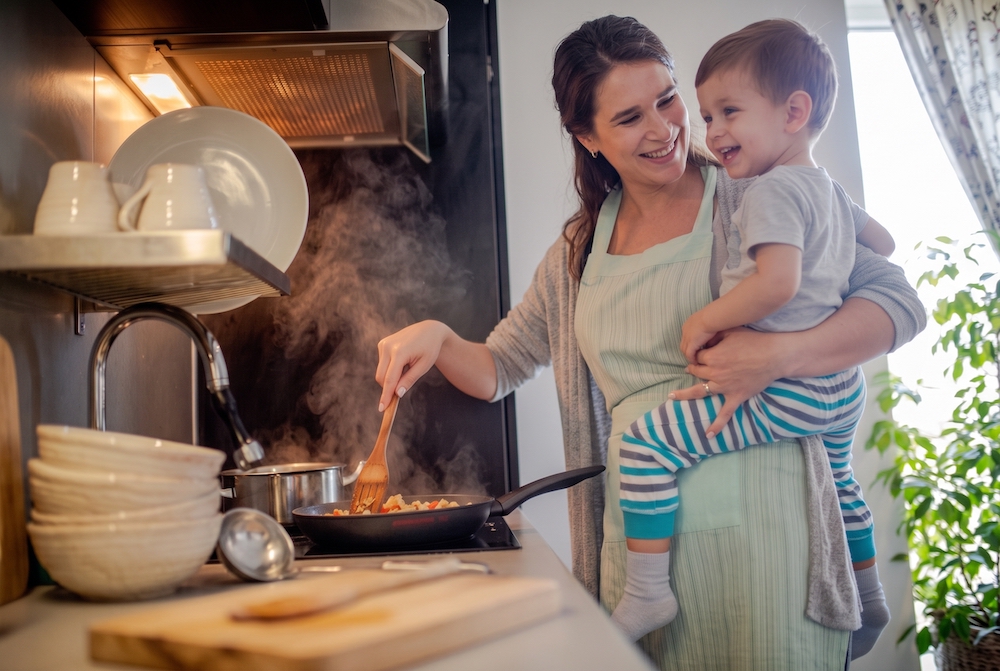
The answer is usually that it happened gradually. A few hundred hours in a chair that was never meant for the job. A few thousand nappy changes at a bench slightly too low. A toddler on one hip for the school pickup, on the same side every time.
The position you never notice you are in
Almost every craft involves the same basic shape. Head tipped forward, shoulders rolled in, elbows tucked, hands working in a small space about thirty centimetres in front of your chest. Sewing does it. Crochet does it. Piping icing onto a birthday cake does it. Weeding on your knees does it, with the added insult of a twisted hip.
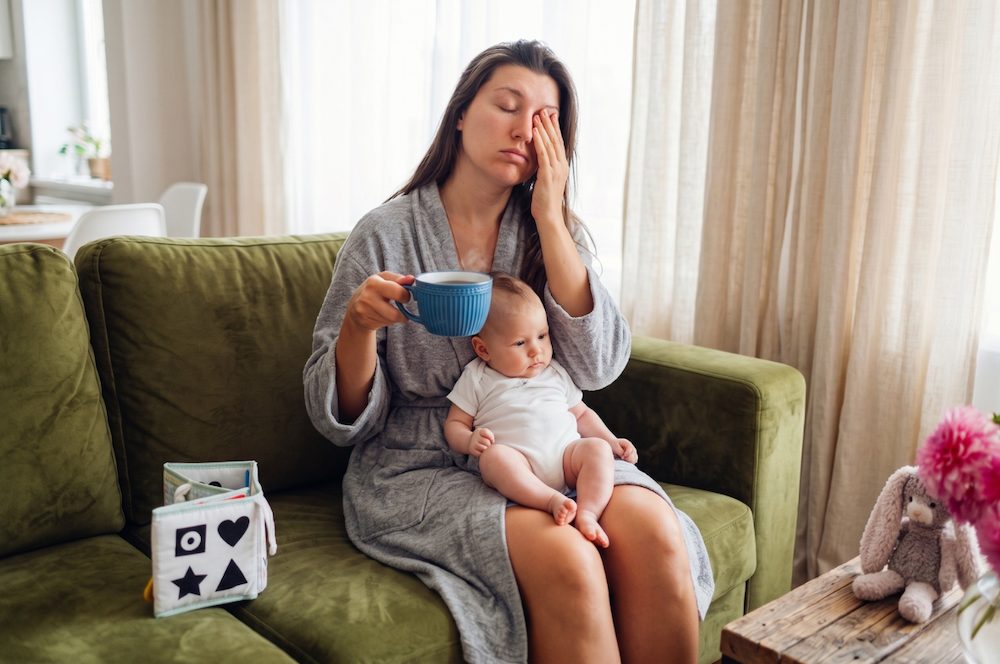
Parenting does it constantly, without you noticing. Bottle feeding in the small hours. Reading picture books with a child leaning on your chest. Cutting up food, brushing tiny teeth, wrestling small feet into gumboots. Held for ten minutes, that shape is nothing. Held for years across countless small moments, it becomes the position your muscles start treating as home. The chest tightens, the upper back lengthens and weakens, and the small muscles running up the side of the neck end up doing work they were never designed for.
Hands have their own version of this. Repetitive gripping, pinching and twisting, especially with cold fingers, is exactly the pattern that produces the dull ache people write off as getting older. Add in the specific loads of parenting, opening jars, unclipping car seats, carrying capsules and toddlers and grocery bags all at once, and the hands take a genuine beating over the early parenting years.
Most of us respond to all this by doing nothing until it becomes a problem, then by doing nothing for a fortnight and hoping. That works fine the first few times. When it stops working, parents start searching for red light therapy sessions near me or booking a massage in whatever tiny window of childcare they can find, which is sensible, although it is worth sorting out the causes at the same time so you are not paying to fix the same thing every six weeks.

Fix the setup before you fix the body
The single biggest change most parents can make costs nothing. Raise the work, rather than lowering yourself to it.
If you sew or craft, the work surface should sit so your forearms are roughly parallel to the floor, which for most people means a table slightly lower than a standard dining table, paired with a chair that lets your feet sit flat. If you knit, crochet or do handwork on the couch, a cushion on your lap brings the work up closer to your eyeline so your neck does not have to fold forward to meet it. If you do fine detail work, get the light onto the work rather than leaning in to find it. A lot of neck strain is really a vision problem wearing a disguise, particularly for parents whose eyes are already tired from too little sleep.
For the parenting equivalents, small setup changes make a surprising difference. A change table at your natural elbow height rather than one you stoop over. A feeding chair with proper arm support so you are not holding the entire weight of a baby with your shoulder muscles. A footstool while you feed, which drops the shoulders and takes strain off the lower back. Swap which side you carry the toddler on, deliberately, because the body remembers even when you do not.
Gardeners with kids in tow, the equivalent is a kneeler with handles, a stool for anything at bed height, and long handled tools for anything you currently do bent at the waist. Bonus, the kids can usually be roped into the shorter handled jobs.
The ten minute rule
Set a timer. Not for how long you work, but for how long you go without changing shape.
Every twenty to thirty minutes of any static task, whether that is sewing, feeding, working at a laptop or reading a story, stand up. Roll the shoulders backwards a few times. Press your palms together in front of your chest, then open your arms wide and let the chest stretch. Shake the hands out. Look at something at the far end of the room for a slow count of ten. The whole thing takes forty seconds and it interrupts the pattern before it sets.
For hands specifically, open and close the fists slowly ten times, then spread the fingers as wide as they will go and hold. Warmth helps enormously here. A hot water bottle across the lap before a long session, or warm water over the hands after a cold morning at the park, makes the first half hour considerably kinder.
For parents, honesty helps. You are not going to do a twenty minute yoga flow every day. But you can do the shoulder roll while the kettle boils. You can do the palm stretch while the microwave counts down. Building the tiny movements into moments that already exist is what makes them stick.
When rest stops being enough
There is a point at which the ache stops being a Sunday evening thing and becomes a background hum. It is there when you wake up. It shows up on days you have not been near the sewing machine or held a child for more than a few minutes.
That is the signal to bring in something more deliberate than stretching. For a lot of parents that means a physiotherapist or a remedial massage therapist, particularly if there is any numbness, pins and needles, or pain that travels down an arm, because those deserve proper assessment rather than guesswork. Postpartum bodies especially benefit from a proper check from a physio who understands what pregnancy and birth actually do to the shoulders, pelvis and abdominal wall.
Alongside hands on treatment, recovery studios have become far more common, and they are no longer only for athletes. Infrared saunas, compression boots, float tanks and red light beds all sit in the same category: passive, low effort, time bound. Red light beds involve lying under LED panels for twenty to thirty minutes while specific wavelengths of light reach the tissue underneath the skin. The research on light therapy for inflammation and muscle recovery is genuinely promising, although it is still developing, so treat it as something that may help rather than something guaranteed to.
The honest appeal for most parents is simpler. It is twenty minutes in a quiet room where nobody is asking for anything and you are not allowed to do anything useful.
Choosing where to go
If you do book something, a few questions sort the good from the ordinary. Ask what the session actually involves and how long it runs. Ask whether there is a trial or a single session rate before you commit to a membership, because most of the value in these treatments comes from consistency, and you will only be consistent if you like the place and the timing works around childcare or school hours. Ask about hygiene between clients and about eye protection. And be wary of anyone promising to cure anything.
Then pay attention to whether you feel better. Not in a general, hopeful way, but specifically. Is the Monday morning stiffness shorter. Is your grip better by Wednesday. Are you making it through the bedtime routine without the shoulder complaining. That is the only evidence that matters for you.
Recovery is part of the job
There is an odd reluctance among parents to take their own bodies seriously. We will happily spend an afternoon researching the right pram or the safest car seat, then feed a baby for six months in a dining chair without a second thought. The projects last longer when you look after the person doing them. So do the hands. So does the patience for the twenty seventh story before bed.