



Julie Williams
They say baby brain isn’t real. But I know it is – because as a pharmacist and a mum, I forgot to take my postnatal supplements more times than I can count.
You’d think someone with a background in health would have everything sorted: the right iron, DHA and multivitamins lined up neatly on the bench, ready to go. And I did. At least, in theory.
But in the fog of sleep deprivation, leaking breasts and the overwhelming mental load of being everything to everyone, my own health became an afterthought. I wasn’t choosing to neglect myself, I was just trying to survive.
And I’m not alone.
Research shows that up to 85% of new mums experience the “baby blues” in those early weeks postpartum [1]. For many, that fog never fully lifts. Around 1 in 5 women go on to experience postnatal depression or anxiety within the first year [2].
We talk a lot about the baby in those early months. Their weight. Their sleep. Their milestones. But who is checking in on the mum? Her iron levels? Her B12? Her basic needs?
As a pharmacist, I understand the crucial role supplements play in postnatal recovery. Nutrients like DHA support brain health and mood. Iron helps fight the bone-deep exhaustion so many of us chalk up to “just new mum life.”
But here’s the thing: many women aren’t taking them consistently. And it’s not because they don’t care. It’s because remembering something for yourself, when your brain is already at capacity, feels impossible.
A 2023 study into the mental load of caregiving found that parents, especially mothers, carry a disproportionate cognitive and emotional burden [3]. It’s not just the physical exhaustion. It’s the constant mental tabs open 24/7:
- Is the nappy bag packed?
- Did I book the immunisation appointment?
- When did I last sterilise the pump?
That level of brain noise leaves very little space for “Did I take my iron today?”
I remember one morning, standing in the kitchen, staring blankly at the pill container and thinking,
“Did I already take it? Or was that yesterday?”
I felt stupid. Frustrated. Even ashamed. I knew better. But I couldn’t seem to get it right.
That moment was the catalyst for me. I didn’t need more education – I needed support. A system that didn’t rely on me remembering. Something visual. Something with reminders. Something kind.
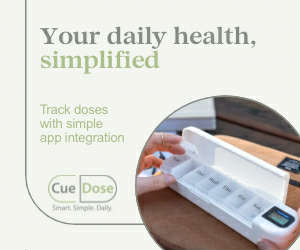
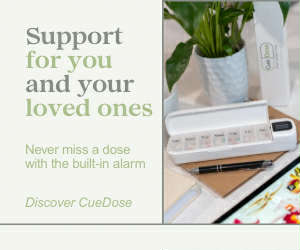
Eventually, I created that system – a tool called CueDose – because I couldn’t find anything that truly supported mums like me. But this isn’t about a product. It’s about the reality so many of us live through in silence.
Mums deserve better support.
Whether it’s systems, products, or just someone checking in, the message we send can’t just be “the baby matters.” We need to say:
You matter, too.
So if you’re in the thick of it right now, trying to keep a tiny human alive while forgetting when you last showered or ate a vegetable, please hear this:
You’re not failing.
You’re just full.
Full of love, of responsibility, of things to remember.
And maybe, like me, you just need a little help remembering you.
Sources
[1] Australian Institute of Health and Welfare. (2022). Perinatal mental health.
https://www.aihw.gov.au/reports/mothers-babies/perinatal-mental-health
[2] PANDA. (2023). How common are perinatal mental health issues?
https://panda.org.au/articles/how-common-are-mental-health-issues-in-the-perinatal-period
[3] Adams, R. et al. (2023). The cognitive cost of caregiving: A systematic review of mental load in mothers.
https://arxiv.org/abs/2505.11426
Author bio:
 Julie Williams is a pharmacist, mum, and founder of CueDose — a smart medication organiser designed to support busy lives. She’s passionate about helping women take better care of themselves and their families, and hopes to bring more relatable health and wellness stories to the parenting community.





A thoughtful remark that brings focus to an important aspect.
Great information shared.. really enjoyed reading this post thank you author for sharing this post .. appreciated https://heosexhay.net/
I found this article very helpful and well-structured. The writing style is straightforward, and the explanations are easy to follow. It’s the kind of content that encourages readers to learn more.