
Kiddipedia Sleep Support
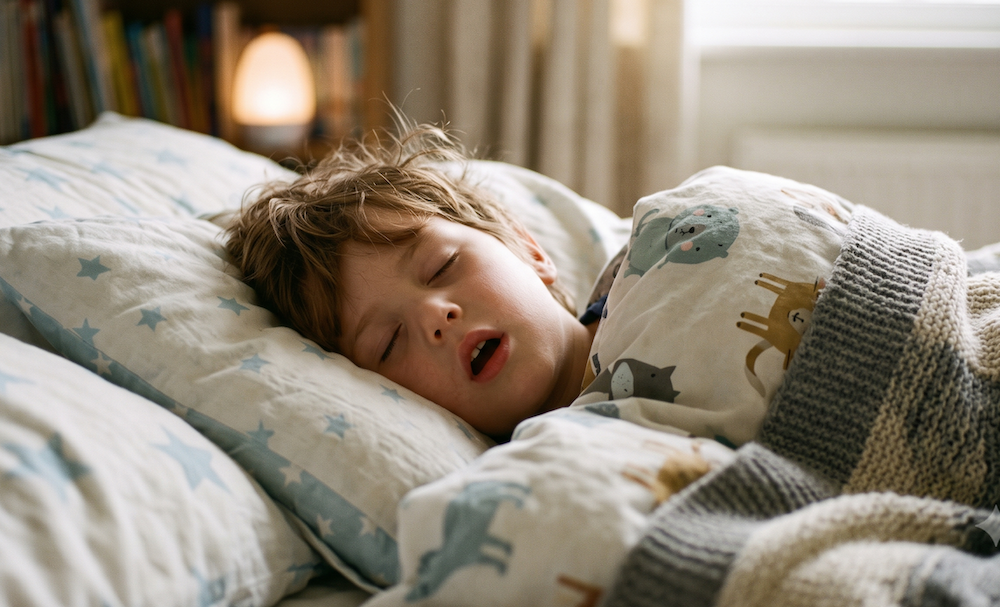
Sleep is one of the most important foundations for a child’s growth, development, emotional wellbeing and learning. While many parents may smile when they hear their child make little snoring sounds during sleep, regular snoring should never be dismissed as “just a cute habit.”
For some children, snoring can simply occur because of a temporary blocked nose from a cold or allergies. However, persistent or habitual snoring may be a sign that your child’s airway is struggling during sleep, and in some cases, it can indicate a condition known as obstructive sleep-disordered breathing (SDB) or obstructive sleep apnoea (OSA).
Understanding why your child snores, what warning signs to look for, and when to seek professional advice can help ensure your child gets the restorative sleep they need to support their brain development, behaviour, concentration and overall health.
Key Takeaways: Childhood Snoring
✔ Snoring in children should always be taken seriously, especially when it happens regularly.
✔ Habitual snoring (three or more nights per week) should be discussed with a healthcare professional.
✔ Snoring may sometimes indicate obstructive sleep-disordered breathing, where airflow becomes restricted during sleep.
✔ Poor-quality sleep can affect mood, behaviour, learning, memory and emotional regulation.
✔ Babies who snore should have their sleep position and airway safety assessed immediately.
✔ Early assessment and treatment can help children achieve better sleep quality and developmental outcomes.
Snoring facts and what you need to know…
We’ve all seen cute kiddy snoring videos but in all seriousness this is something you need to take seriously..
Snoring or obstructive sleep disorder breathing occurs when the upper airway becomes resistant to airflow and the narrower airway causes that all too familiar snoring noise to occur. Sometimes snoring occurs in conjunction with pauses in breathing termed sleep apnoea (temporary cessation of breathing) resulting in loud snoring and sudden air intake commonly heard as a gasp or snorting sound.
What Happens When a Child Snores?
When a child sleeps, the muscles throughout the body naturally relax, including the muscles that help keep the airway open. If the airway becomes narrowed or partially blocked, air has to move through a smaller space, causing the surrounding tissues to vibrate. This vibration creates the familiar sound we recognise as snoring.
In some children, this narrowing is mild and temporary. In others, the airway may repeatedly become restricted throughout the night, causing interruptions to normal sleep cycles and reducing the amount of restorative sleep a child receives.
This is why snoring is not only about noise — it is about what may be happening to your child’s breathing and sleep quality while they are asleep.
Snoring occurs when the upper airway becomes resistant to airflow, and the narrower airway causes that all too familiar snoring noise to occur. Sometimes snoring occurs in conjunction with pauses in breathing termed sleep apnoea (temporary cessation of breathing), resulting in loud snoring and sudden air intake commonly heard as a gasp or snorting sound.
Understanding Obstructive Sleep-Disordered Breathing
Obstructive sleep-disordered breathing (SDB) describes a range of breathing difficulties that occur during sleep, from simple snoring through to more severe airway obstruction.
At the more serious end of this spectrum is obstructive sleep apnoea (OSA), where a child’s airway repeatedly becomes blocked or narrowed during sleep. These episodes can cause:
- disrupted sleep cycles
- brief awakenings that parents may not notice
- changes in oxygen levels
- increased stress on the body
- reduced restorative sleep
Children experiencing sleep disruption may not always appear tired in the same way adults do. Instead, they may show changes in behaviour, attention, emotions and learning.
There can be several reasons your child may snore including sleeping position, environment, allergies, and medical reasons that often require surgical intervention by an ENT (Ear, Nose Throat) specialist.
Why Does My Child Snore?
There are many possible reasons why a child may snore. Some causes are temporary, while others may require assessment and treatment.
Common contributors include:
1. Sleeping Position
A child’s sleeping position can influence how open their airway remains during sleep. Certain positions may encourage the tongue or soft tissues to move backwards, narrowing the airway.
2. Environmental Factors
The environment where a child sleeps can also affect breathing. Exposure to irritants such as smoke, pollution, dust and allergens may contribute to airway inflammation and congestion.
3. Allergies and Nasal Congestion
Conditions such as hay fever, sinus inflammation and recurrent nasal congestion can make it harder for children to breathe comfortably through their nose during sleep.
4. Enlarged Tonsils and Adenoids
One of the most common medical reasons children snore is enlarged tonsils and adenoids, which can reduce the space available for airflow through the upper airway.
An assessment by an ENT (Ear, Nose and Throat) specialist may be recommended if airway obstruction is suspected.
Snoring occurs during sleep and may disrupt sleep cycles resulting in children waking unrested and sleep-deprive and a recent study found that children who snored regularly had brain changes, behavioural issues and poorer learning skills.
Can Snoring Affect a Child’s Brain Development?
Sleep is an active biological process that supports a child’s developing brain. During sleep, children consolidate memories, process emotions, regulate behaviour and support healthy neurological development.
When sleep is repeatedly interrupted, children may not receive enough uninterrupted restorative sleep, even if they appear to sleep for the recommended number of hours.
A recent study highlighted concerns around the potential impact of habitual snoring on children’s brain development and behaviour.
The study of over 10,000 nine- and 10-year-olds in the US, studied MRI brain imaging results plus data collected from those children’s parents on how often they snore and found that the children who snored regularly had a thinner grey matter in some sections of their brains, including those parts that regulate reasoning and impulse control.
What Does Brain Research Tell Us?
The study mentioned above used MRI brain imaging and parent-reported information about children’s snoring patterns. Researchers identified associations between regular snoring and differences in areas of the brain involved in:
- reasoning
- impulse control
- emotional regulation
- behavioural responses
Importantly, the researchers noted that more research is needed to understand exactly how snoring, sleep disruption and brain development interact.
However, existing evidence already demonstrates that quality sleep is essential during childhood, particularly during periods of rapid growth and neurological development.
Although the study reported more research was needed, we know that lack of sleep at particular key developmental stages has been shown to affect brain development causing cognitive changes that impact learning, concentration, and memory. In addition, children are often seen to display hyperactive and aggressive behaviours when sleep is inadequate. When sleep interruptions occur during REM, or dream sleep, for any age, emotions are affected as the dream sleep phase keeps us on an emotionally even keel.
Sleep, Behaviour and Emotional Regulation
Many parents are surprised to learn that children who do not sleep well do not always appear sleepy.
Unlike adults, children may respond to poor sleep by becoming:
- more active or restless
- easily frustrated
- emotionally reactive
- less able to concentrate
- more impulsive
- more challenging behaviourally
This is why sleep problems can sometimes be mistaken for behavioural issues when the underlying concern may actually be disrupted sleep.
Healthy sleep supports a child’s ability to regulate emotions, manage challenges and engage in learning.
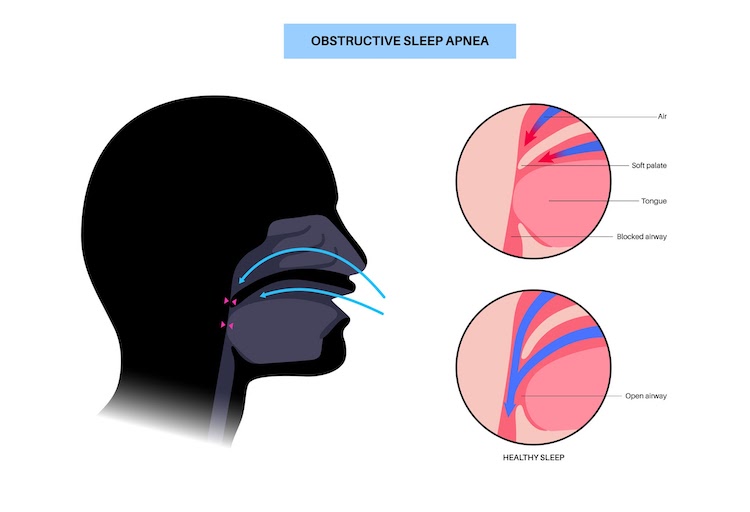
Obstructive Sleep Apnea (OSA) Airway Diagram. Source: Pikovit44 / Getty Images
When Should Parents Be Concerned About Their Child’s Snoring?
When should parents be concerned about their children’s snoring?
All snoring events in children should be taken seriously by parents and habitual snoring of 3 times or more per week should be assessed by your doctor.
When Is Snoring More Than Just Snoring?
While occasional snoring can happen when a child has a cold, blocked nose or seasonal allergies, regular snoring is different.
Habitual snoring may indicate that a child’s airway is repeatedly becoming narrowed during sleep, affecting their ability to achieve uninterrupted, restorative rest.
Parents should pay attention not only to the sound of snoring, but also to what happens before, during and after sleep.
Signs Your Child’s Snoring May Need Medical Assessment
Alongside regular snoring, parents should seek advice if they notice:
- pauses in breathing during sleep
- gasping, choking or snorting sounds
- restless sleep or frequent movement
- sleeping in unusual positions to breathe more comfortably
- sweating heavily during sleep
- breathing through the mouth regularly
- waking tired despite having enough hours of sleep
- morning headaches
- difficulty concentrating
- changes in mood or behaviour
- increased irritability or emotional outbursts
- learning difficulties or reduced school performance
Parent Tip
If you are concerned about your child’s snoring, consider keeping a simple sleep diary for one to two weeks.
Record:
✔ how many nights your child snores
✔ whether snoring is loud or mild
✔ whether there are pauses in breathing
✔ whether your child wakes tired or has daytime behaviour changes
A short video recording of your child’s breathing during sleep can also be helpful for your doctor when assessing symptoms.
Snoring triggers…
Initially, parents should assess their home environment to see if there are triggers that are causing their child to snore.
This can include cigarette smoke and environmental pollution. Some studies report increased snoring to occur in winter when home heating elements such as gas, wood stoves/fireplaces, space heaters, oil burners, and other heating devices emit nitrogen dioxide, an odorless gas commonly emitted from heating elements which can irritate airways.”
Environmental Factors That Can Affect Children’s Breathing
A child’s sleeping environment plays an important role in maintaining healthy airways.
Exposure to irritants can cause inflammation inside the nose and throat, making airflow more difficult during sleep.
Potential environmental triggers include:
- cigarette smoke
- second-hand smoke exposure
- indoor air pollution
- dust
- mould
- pet allergens
- seasonal pollen
- poorly ventilated heating environments
Children have smaller airways than adults, meaning even mild inflammation or congestion can have a greater impact on airflow.
Winter Heating and Snoring
During colder months, families often spend more time indoors and rely on heating systems.
Some heating sources can contribute to airway irritation by reducing indoor air quality or producing airborne pollutants.
Where possible, parents can support healthier sleeping environments by:
- ensuring rooms are well ventilated
- maintaining heating systems regularly
- reducing exposure to smoke and strong fragrances
- managing dust and allergens
- keeping bedrooms comfortable without excessive dryness
Did You Know?
Children who breathe through their nose during sleep generally experience more efficient airflow. Chronic nasal congestion can encourage mouth breathing, which may contribute to snoring and disrupted sleep.
Other triggers that can increase snoring include recurrent respiratory tract problems such as asthma, allergies like hay fever, sinus and nasal passage inflammation, tonsillitis, and common colds and flu that cause inflammation to airways.
Medical Conditions That May Contribute to Childhood Snoring
Allergies and Nasal Inflammation
Children with allergies such as hay fever (allergic rhinitis) may experience:
- blocked nasal passages
- swelling inside the nose
- increased mucus production
- difficulty breathing comfortably through the nose
When nasal breathing becomes restricted, children may naturally breathe through their mouth during sleep, which can contribute to snoring.
Managing allergies with advice from a healthcare professional may help improve symptoms.
Asthma and Respiratory Conditions
Children with asthma or recurrent respiratory problems may experience airway inflammation that affects breathing.
Although asthma does not directly cause all cases of snoring, children with respiratory conditions may be more likely to experience sleep disruption, particularly when symptoms are not well controlled.
Parents should discuss ongoing night-time coughing, wheezing or breathing difficulties with their doctor.
Enlarged Tonsils and Adenoids
One of the most common physical causes of childhood snoring is enlarged tonsils and adenoids.
The tonsils and adenoids are part of the immune system and help the body recognise and respond to infections. However, when they become enlarged, they can narrow the airway.
This narrowing may contribute to:
- loud snoring
- mouth breathing
- restless sleep
- pauses in breathing
- obstructive sleep apnoea
An assessment by an ENT (Ear, Nose and Throat) specialist may be recommended if enlarged tonsils or adenoids are suspected.
Childhood Obesity and Snoring
Childhood obesity can also be a trigger for snoring when additional fatty tissue around the neck impedes breathing when lying down to sleep.
How Weight Can Affect Airway Function
Children’s bodies change significantly as they grow, and maintaining healthy habits supports overall wellbeing.
In some children, increased tissue around the airway area can contribute to narrowing during sleep.
It is important that conversations around weight are approached with sensitivity and focus on:
- healthy eating patterns
- physical activity
- quality sleep
- overall health and wellbeing
Every child’s body is different, and medical advice should always consider the individual child rather than focusing only on weight.
No matter what you think the cause might be, it’s a good idea to seek medical advice for all regular snoring, for an assessment and diagnosis.
Myth vs Fact: Childhood Snoring
Myth: Snoring means my child is sleeping deeply
Fact:
Snoring may actually be a sign that breathing is being disrupted during sleep. A child can appear asleep while their body is working harder to maintain airflow.
Myth: All children eventually grow out of snoring
Fact:
Some children may stop snoring as temporary issues resolve, such as a cold or allergy flare-up. However, persistent snoring should be assessed.
Myth: If my child is energetic during the day, their sleep must be fine
Fact:
Children often respond differently to poor sleep compared with adults. Instead of appearing tired, they may become more active, emotional, impulsive or easily frustrated.
Why Early Assessment Matters
Sleep is fundamental to childhood development.
When breathing difficulties repeatedly interrupt sleep, children may miss out on important restorative sleep stages that support:
- memory development
- learning
- emotional regulation
- growth
- immune function
- overall wellbeing
The earlier potential sleep breathing concerns are identified, the sooner families can access appropriate support.
Expert Insight
Persistent childhood snoring is often underestimated because parents may assume it is harmless. However, habitual snoring can sometimes be an early indicator of disrupted breathing during sleep. Assessment by an appropriate health professional can help identify the cause and guide the right treatment pathway.
What You Can Do Today
If your child snores regularly:
✔ Observe their sleeping patterns
✔ Check for pauses in breathing or gasping
✔ Consider possible allergy or environmental triggers
✔ Create a healthy sleep environment
✔ Speak with your GP for guidance
Babies, Safe Sleep and Getting the Right Medical Support
My Baby snores and it’s so cute…
Snoring when your baby is asleep may seem to be an endearing behaviour but it is something you should take seriously and therefore should be immediately investigated by parents.
Why Baby Snoring Should Never Be Ignored
Babies have developing airways that are much smaller and more delicate than those of older children and adults. Because their airways are narrower, even small changes such as congestion, positioning or pressure around the airway can affect how easily they breathe.
While occasional noisy breathing can occur, persistent snoring in a baby should always be discussed with a healthcare professional.
Unlike older children, babies rely heavily on maintaining a clear airway because they have less ability to compensate when breathing becomes restricted.
Sleeping positions can cause narrowing of the airway making it harder for babies to breathe and potentially life-threatening.
Safe Sleep Positioning and Protecting Your Baby’s Airway
Young babies have softer airway cartilage and placing them on a soft mattress or hammock, on pillows, or in positions that are too upright means their head, the heaviest body part, can fall forward, backward, or sideways and place them at risk of narrow airways and reduced oxygen intake.
When you hear your baby snoring the first action is to adjust their position to allow the opening of the airway.
You will hear the snoring stop and your baby breathing regularly without noise.
Understanding Baby Airways
A young baby’s head is proportionally larger compared with the rest of their body, and their neck muscles are still developing. This means that positioning plays an important role in maintaining a safe airway.
A baby’s airway can become compromised if their head falls:
- forward towards the chest
- backwards into extension
- sideways into a position that restricts airflow
This is why safe sleep recommendations focus on placing babies on a firm, flat, safe sleep surface rather than soft or inclined surfaces.
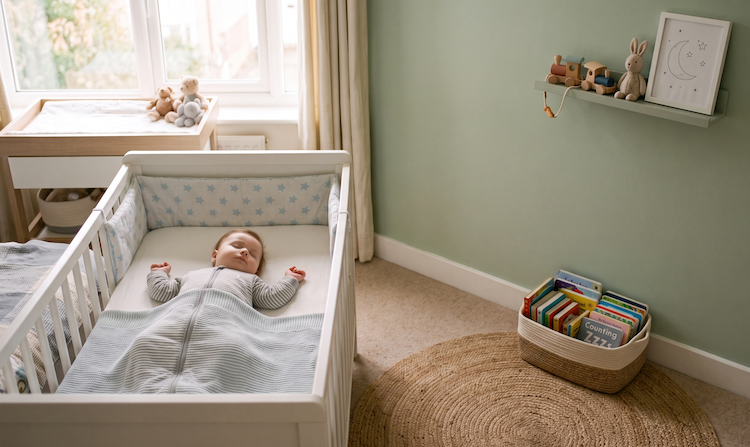
Safe Sleep Essentials for Babies
A safe sleep environment includes:
✔ A firm, flat mattress
✔ A clear sleep space free from pillows, doonas, toys and soft bedding
✔ Placing babies on their back for sleep
✔ Using a safe and appropriately fitted sleep space such as a bassinet or cot
✔ Avoiding sleep surfaces that can allow a baby’s head or body to become positioned unsafely
Tip
If your baby makes unusual noises during sleep, take a moment to observe:
- Is their chest moving normally?
- Is their breathing regular?
- Is their colour normal?
- Is their head and neck positioned safely?
- Does the noise stop when their position changes?
If you are ever concerned about your baby’s breathing, seek medical advice.
As a sleep practitioner, I always remind parents of the importance of making sure your baby is sleeping safely on a firm flat surface, and if you find your baby has fallen asleep in the car seat, for example, make sure they are under strict supervision by a responsible adult.
Car Seats, Capsules and Infant Sleep Safety
It is very common for babies to fall asleep while travelling in a car seat. However, car seats are designed for safe travel, not as a routine sleep environment.
When a baby remains asleep in a sitting position for extended periods, their head can move into positions that may affect their airway.
It is far better to transition from the car seat to a safe sleep space such as your child’s bassinet or cot and know your baby is sleeping safely.
Transitioning and keeping your baby asleep can be achieved very easily, and you might like to read my previous blog on the topic.
When Should You Seek Help for Baby Snoring?
Parents should seek professional advice if their baby:
- snores regularly
- appears to struggle to breathe during sleep
- has pauses in breathing
- makes gasping or choking sounds
- has difficulty feeding alongside breathing concerns
- appears unusually tired or unsettled
- has repeated chest infections
- has poor weight gain
- shows signs of reduced oxygen intake such as colour changes
When Breathing Concerns Need Urgent Medical Attention
Seek urgent medical advice if your baby experiences:
- difficulty breathing
- significant chest pulling or working hard to breathe
- blue or grey colouring around lips or face
- prolonged pauses in breathing
- signs of distress
Parents should always trust their instincts if something about their baby’s breathing does not seem right.
Irrespective of conclusive research evidence, snoring occurs during sleep and any interruption to good sound sleep requires early intervention to ensure that best possible health and learning outcomes are achievable for your child to be their very best.
What Happens When You Seek Medical Advice About Snoring?
Many parents are unsure what happens after they speak with their GP about their child’s snoring.
The assessment process may include:
1. Medical History and Sleep Assessment
Your healthcare professional may ask questions about:
- how often your child snores
- when the snoring started
- whether symptoms occur every night or only occasionally
- whether breathing pauses occur
- whether your child sleeps restlessly
- daytime behaviour and concentration
- allergies or respiratory conditions
- family history of sleep problems
Keeping a sleep diary can make this conversation easier.
2. Physical Examination
Your doctor may examine:
- nasal passages
- throat
- tonsils
- breathing patterns
- growth and overall health
They may look for signs that could explain why airflow is being restricted.
3. Referral to an ENT Specialist
If enlarged tonsils, adenoids or structural airway concerns are suspected, your child may be referred to an:
ENT (Ear, Nose and Throat) specialist
An ENT specialist can assess whether physical narrowing of the airway may be contributing to snoring or sleep-disordered breathing.
4. Sleep Studies
In some cases, a child may require a sleep study, also known as polysomnography.
A sleep study can monitor factors such as:
- breathing patterns
- oxygen levels
- heart rate
- brain activity
- sleep stages
- movement during sleep
This helps healthcare professionals understand what is happening while your child sleeps.
Treatment Options for Childhood Snoring
Treatment depends entirely on the cause.
There is no single solution for every child, which is why assessment is important.
Possible approaches may include:
Managing Allergies
If congestion or allergic inflammation contributes to snoring, treatment may focus on improving nasal airflow.
Addressing Enlarged Tonsils or Adenoids
For children with significant airway obstruction, an ENT specialist may discuss whether surgical treatment is appropriate.
Improving Sleep Environment
Reducing exposure to irritants and supporting healthy sleep routines may help improve breathing comfort.
Supporting Healthy Lifestyle Habits
For children where weight contributes to airway narrowing, health professionals can provide supportive guidance around nutrition, movement, sleep and wellbeing.
Sleep Breathing Support
Some children with ongoing sleep breathing difficulties may require additional therapies under specialist care.
Questions You Can Ask Your Doctor
If your child snores regularly, consider asking:
“Could my child’s snoring be affecting their sleep quality?”
“Could enlarged tonsils or adenoids be contributing?”
“Does my child need an ENT assessment?”
“Would a sleep study help understand what is happening?”
“Could allergies or nasal congestion be affecting their breathing?”
“What signs should I monitor at home?”
Make sure you seek help with snoring or any sleep related issues from a registered health professional so you know you are getting the best advice from a qualified health practitioner.
Childhood Snoring FAQs, Parent Checklist, Evidence and References
A Guide to Knowing When Snoring Needs Attention
Snoring can be easy to dismiss, especially when a child appears comfortable and settled while sleeping. However, understanding the difference between occasional snoring and habitual snoring can help parents make informed decisions about when to seek support.
A child’s sleep is not just a time for rest. It is an important period where the body supports:
- physical growth
- brain development
- memory consolidation
- emotional regulation
- immune function
- learning and behaviour
When breathing difficulties repeatedly interrupt sleep, addressing the underlying cause can help children achieve the quality rest they need to thrive.
Childhood Snoring Checklist
If your child snores, consider the following questions:
How often does your child snore?
☐ Occasionally (during illness or congestion)
☐ Weekly
☐ Three or more nights per week
☐ Every night
Have you noticed any of the following?
☐ Loud snoring
☐ Pauses in breathing
☐ Gasping, choking or snorting sounds
☐ Restless sleep
☐ Mouth breathing
☐ Sweating during sleep
☐ Difficulty waking in the morning
☐ Daytime tiredness
☐ Behaviour changes
☐ Difficulty concentrating
☐ Learning challenges
If you have answered yes to several of these questions, it is worth discussing your concerns with your child’s healthcare professional.
Frequently Asked Questions About Childhood Snoring
Is it normal for children to snore?
Occasional snoring can happen, particularly during a cold, respiratory illness or allergy flare-up. However, regular snoring is not considered something parents should ignore.
Habitual snoring may indicate that breathing is being disrupted during sleep and should be assessed.
Should babies snore?
Babies can make a variety of noises while sleeping, including occasional sounds caused by developing airways or congestion.
However, persistent snoring in babies should always be discussed with a healthcare professional, particularly if there are concerns about breathing effort, pauses in breathing, feeding difficulties or changes in colour.
Can allergies cause my child to snore?
Yes. Allergies such as hay fever (allergic rhinitis) can contribute to nasal congestion and inflammation, making it harder for children to breathe comfortably through their nose during sleep.
Managing allergies with appropriate medical advice may help improve symptoms.
Can enlarged tonsils cause snoring?
Yes. Enlarged tonsils and adenoids are among the most common causes of childhood snoring.
When these tissues become enlarged, they can reduce the space available for airflow and contribute to:
- snoring
- mouth breathing
- restless sleep
- sleep-disordered breathing
An ENT assessment may be recommended if airway obstruction is suspected.
Can snoring affect my child’s behaviour?
Poor-quality sleep can influence how children regulate emotions, manage frustration and maintain attention.
Children experiencing disrupted sleep may appear:
- hyperactive
- impulsive
- irritable
- emotional
- easily distracted
This is why sleep concerns should always be considered when behavioural changes occur.
Can snoring affect learning?
Sleep plays an important role in memory, concentration and cognitive development.
When sleep is repeatedly disrupted, children may experience difficulties with:
- attention
- memory
- problem-solving
- classroom engagement
Supporting healthy sleep is an important part of supporting children’s learning.
Does every child who snores need surgery?
No.
Treatment depends on the cause of the snoring.
Some children may improve through managing allergies, reducing environmental triggers or addressing other contributing factors.
For children with significant airway obstruction caused by enlarged tonsils or adenoids, an ENT specialist may discuss surgical options.
What Parents Can Do To Support Better Sleep
While every child is different, parents can support healthy sleep habits by:
Creating a Healthy Sleep Environment
✔ Keep bedrooms free from smoke exposure
✔ Reduce allergens where possible
✔ Maintain comfortable room temperature
✔ Encourage consistent sleep routines
✔ Support good nasal health
Observing Your Child’s Sleep
Parents are often the first people to notice changes.
Pay attention to:
- breathing sounds
- sleep position
- night waking
- daytime behaviour
- energy levels
- concentration
Small observations can provide valuable information for healthcare professionals.
Expert Insight: Why Parents Should Trust Their Observations
Parents often know when something about their child’s sleep has changed.
A child does not need to appear obviously unwell for disrupted breathing during sleep to affect their wellbeing.
Early recognition and assessment can help identify the cause of snoring and ensure children receive appropriate support as early as possible.
When To Seek Medical Advice About Your Child’s Snoring
Speak with your GP if your child:
✔ snores regularly
✔ snores loudly
✔ has pauses in breathing
✔ gasps or snorts during sleep
✔ breathes mainly through their mouth
✔ wakes tired despite adequate sleep
✔ experiences daytime behavioural changes
✔ struggles with attention or learning
✔ has suspected enlarged tonsils or adenoids
Final Thoughts
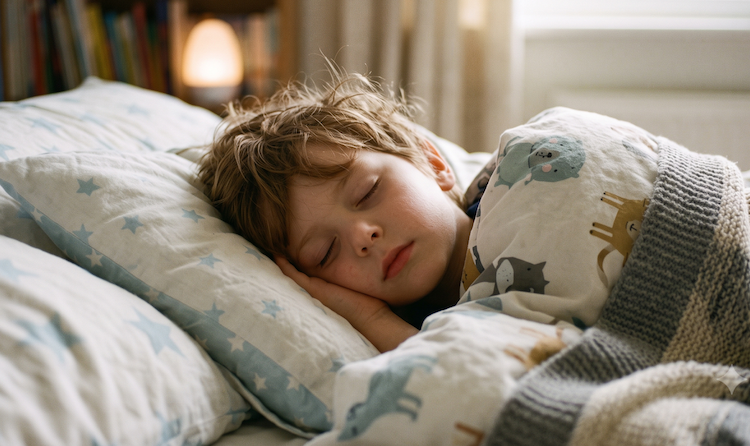
Snoring may seem harmless, especially when it is associated with a sleepy child curled up comfortably in bed. However, regular snoring is something parents should pay attention to.
Sleep is a critical part of childhood development, supporting everything from brain development and emotional wellbeing to learning, behaviour and physical health.
Whether the cause is environmental, allergy-related, positional or medical, understanding why your child snores is the first step towards helping them achieve healthier, more restorative sleep.
No matter what you think the cause might be, it’s important to seek advice from a qualified healthcare professional when snoring becomes regular.
Make sure you seek help with snoring or any sleep-related issues from a registered health professional so you know you are getting the best advice from a qualified health practitioner.
Medical Disclaimer
This article is intended to provide general information and education for parents. It is not a substitute for personalised medical advice, diagnosis or treatment.
If you have concerns about your child’s breathing, sleep patterns or snoring, speak with your GP or an appropriate registered healthcare professional.
Seek urgent medical attention if your child experiences significant breathing difficulty, prolonged pauses in breathing, colour changes or signs of respiratory distress.
References (APA 7th Edition)
American Academy of Pediatrics. (2012). Diagnosis and management of childhood obstructive sleep apnea syndrome. Pediatrics, 130(3), e714–e755.
Australian Government Department of Health and Aged Care. (2021). Safe sleeping practices for infants.
Royal Children’s Hospital Melbourne. (2024). Obstructive sleep apnoea.
Sleep Health Foundation. (2024). Children and sleep: Snoring and sleep apnoea.
Marcus, C. L., Brooks, L. J., Draper, K. A., et al. (2012). Diagnosis and management of childhood obstructive sleep apnea syndrome. Pediatrics, 130(3), e714–e755.
O’Brien, L. M., Mervis, C. B., Holbrook, C. R., Bruner, J. L., Klaus, C. J., Rutherford, J., & Gozal, D. (2004). Neurobehavioral implications of habitual snoring in children. Pediatrics, 114(1), 44–49.