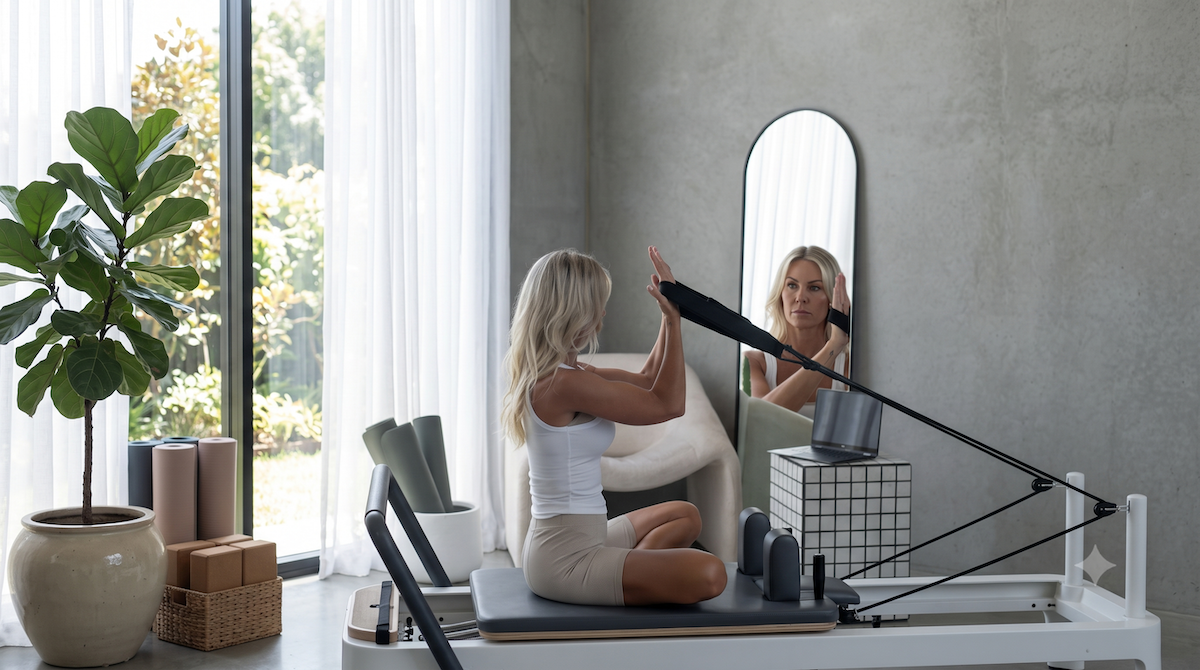

Thinking About Buying a Reformer Pilates Machine? Here’s What to Consider
There’s a moment most people who love reformer Pilates eventually reach: you’re booking your fourth class of the week, doing the maths on the membership, and you think — should I just get my own machine?
It’s a fair question, and for a lot of Australians it’s the right call.
But it’s not the right call for everyone, and the honest answer depends on a few things worth thinking through before you spend a cent.
Studio vs Home: They’re Not the Same Thing
A studio gives you two things a home setup can’t:
- An instructor watching your form
- The accountability of a booked class you’ve paid for
If you’re brand new to reformer work, that’s genuinely valuable. Good technique early saves you from grooving in bad habits (and the odd tweaked back).
A home reformer gives you something different:
- Available at 6am or 9pm
- No waitlists
- No ongoing class fees after the initial purchase
For people who already know the fundamentals and just want to move more often, that convenience is usually what tips the decision.
Many people eventually choose both: studio sessions for coaching and progression, and a home reformer for shorter daily workouts.
There’s no wrong answer—only what fits your lifestyle.
The Cost Question (With Real Numbers)
Australian reformer classes typically cost $30–$45 per session.
That means:
| Frequency | Approximate Cost |
|---|---|
| 1 class per week | $120–$180/month |
| 3 classes per week | $400–$500/month |
| Per year | $5,000+ |
A quality home reformer is a one-off investment that, for someone who practises regularly, will often pay for itself within a year.
Every workout after that is effectively free.
But here’s the catch…
That calculation only works if you actually use it.
If you’re only attending once every fortnight, a class pass is usually the cheaper option—and you avoid the storage challenge.
Be honest with yourself about your habits before buying.
Don’t Forget About Space
It’s also worth thinking about where the machine will actually live.
Many Australian homes—particularly apartments and townhouses—don’t have a spare room to dedicate to fitness equipment.
That’s where a foldable Pilates reformer can make all the difference.
A model that folds flat or rolls out of the way can easily become part of your daily routine rather than an obstacle.
Before purchasing, ask yourself:
- Where will it live?
- Can I leave it set up?
- Will I realistically use it every day?
A little planning here is the difference between a reformer you reach for every morning and an awkward piece of furniture you eventually resent.
Measure the space, picture your routine, and buy for the home you actually have.
What Actually Matters in a Home Machine
If you decide to buy, a few features separate a reformer you’ll love from one you’ll resent.
✔ A Stable Frame & Smooth Carriage
A machine that wobbles or judders will kill your motivation fast.
Look for:
- Solid timber or aluminium construction
- A carriage that glides smoothly
✔ The Right Footprint
Measure your space first.
Foldable and wheeled models are genuine lifesavers if you’re working with:
- Apartments
- Townhouses
- Shared rooms
- Smaller homes
✔ A Proper Spring System
More spring adjustability means:
- Beginners can start comfortably
- Stronger users can continue progressing
- The machine grows with you over time
✔ Who Built It
Not all reformers are created equal.
A manufacturer that designs equipment for professional studios—and actually operates studios themselves—is often building machines to withstand years of daily use.
Why Build Quality Matters
On that last point, it’s worth buying from an established Australian manufacturer like The Core Collab—a company that’s built reformers for 25 years and runs its own studios—rather than gambling on the cheapest imported machine you can find online.
A reformer is something you’re trusting with your spine and your consistency.
Build quality genuinely matters.
Making the Practice Stick at Home
The biggest risk with any home equipment isn’t the machine.
It’s motivation.
A few simple habits can make all the difference:
- Keep the reformer somewhere visible instead of folding it away out of sight.
- Save a couple of short routines you can start without thinking.
- Give yourself permission to do the ten-minute version on busy days.
Consistency beats intensity every time.
The Bottom Line
Whether you stay in the studio, bring Pilates home, or do a combination of both, the best setup is simply the one you’ll actually use.
Work out your habits first.
Then buy for the practice you genuinely have—not the one you wish you had.