
Kiddipedia
By Laura Higgins, Senior Director of Community Safety & Civility at Roblox
The social struggles faced by neurodivergent young people are well documented. The Australian Institute of Health and Welfare reports that more than half (56%) of neurodivergent young people who experience difficulties at school say fitting in socially is their biggest challenge. Online, though, things look different. Research conducted by Roblox and leading digital parenting organisation Internet Matters found that 90% of neurodivergent young people aged 11 to 17 regularly play online games and many report that gaming genuinely helps them connect with others. The research found that over half of respondents (51%) said online gaming helps them make friends, while around three in ten (31%) reported it gives them a sense of community. In addition, 42% said gaming helps them relax.
For neurodivergent young people who may find face-to-face interactions socially complex, online games can offer a lower-pressure environment to practise communication, build relationships, and feel genuinely understood.
While the study shows that the benefits of online gaming are often amplified for neurodivergent young people, it also highlights notable challenges, with one in five respondents (21%) reporting that gaming can make them feel unhappy. The findings also show that one in four (27%) find the sensory aspects of gaming difficult, 23% struggle with the accessibility of video games, and only two in five (44%) know how to report upsetting content or other users.
Parents want to help but many don’t know where to start
Parents clearly recognise the value of gaming. Nearly two in three said their neurodivergent child had learned important real-world skills from playing online, and three in five (59%) agreed their child had developed better communication skills through gaming.
However, almost half (48%) of parents said they either don’t know about parental controls or don’t intend to use them. Without the right tools and right information, even well-meaning parents can struggle to provide the specific kind of support neurodivergent young people need to navigate online spaces safely.
Practical tips for parents of neurodivergent gamers
To address this gap, Roblox and Internet Matters have developed practical guidance specifically for parents of neurodivergent young people. Here are our top 5 tips!
1. Set clear boundaries while gaming
Structure and predictability can make a big difference for neurodivergent young people by reducing overwhelm, fatigue, and frustration.
- Agree on gaming time limits and incorporate regular breaks.
- Use visual schedules or timers to help make expectations clear.
- Create a routine around when and where gaming happens (e.g., after homework). Where possible, display agreed rules somewhere they usually use devices at home, to remind them.
2. Keep conversations honest and open
Have regular, judgment-free check-ins to help neurodivergent young people feel safe sharing both positive and negative experiences.
- Check in on who young people are playing with.
- Ask them to show you their favourite platforms and set time aside to play together.
- Ask simple, open-ended questions like: “How did that game make you feel?”
3. Support confidence in online interactions
While for many neurodivergent young people, gaming can be a powerful way to build communication skills, some may need extra support navigating social cues.
- Openly discuss what positive and respectful online behaviour looks like, and consider writing and displaying these behaviours in the home as a visual reminder.
- Role-play scenarios to help practise responses.
- Reinforce that it’s ok to leave a game if something doesn’t feel right.
4. Build digital safety skills together
The goal is to help neurodivergent young people recognise the risks themselves, building independence and confidence over time.
- Discuss what personal information looks like and what they can do to keep it private.
- Together, create a list of red flag behaviours (such as trying to take the conversation off-platform) and talk about when and how to report and block users.
- Read through safety resources together and guide them through advice, such as how to spot scams or interact safely with others.
5. Combine parental controls with regular check-ins
Technology can help set boundaries for neurodivergent young people who enjoy online gaming, but it works best when paired with active involvement and regular check-ins by parents.
- Use parental control tools to manage things like screen time and spending.
- Adjust settings over time as confidence and skills build.
- Stay involved by understanding the platforms and games they interact with.
Online gaming can be an incredibly positive space for neurodivergent young people, but it’s not without its challenges. With the right guidance, however, parents and carers can help them unlock the benefits, while building the skills and awareness needed to navigate potential risks safely and confidently.
Sources
Research conducted by Roblox and Internet Matters (Sep/Oct 2023) with neurodivergent children aged 12–17 and their families in the UK and US. Full guidance available at Internet Matters.
Australian Institute of Health and Welfare data on neurodivergent young people and social challenges: www.aihw.gov.au.
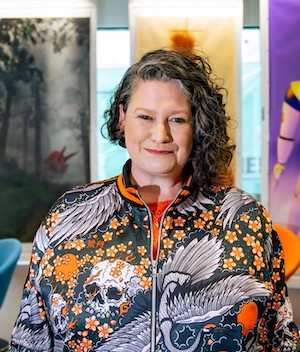 Author Bio
Laura Higgins is Senior Director of Community Safety & Civility at Roblox, where she leads initiatives designed to create safer, more positive online experiences for users. With more than two decades of experience in online safety and safeguarding, she has built global programmes focused on digital civility, working closely with industry, educators and parents