
Kiddipedia
🌱 Understanding when periods begin and what “normal” looks like
It often shows up on an ordinary school morning. Your child is half-dressed, a lunchbox is still open on the bench, and then comes the sentence that is easy to misread: My stomach really hurts.
Sometimes that does mean a rough first day of a period. Sometimes it means a child who already knows the walk to class, the bus ride, sport training, or a two-hour maths block is going to feel much harder than it should.
Parents hear for years that period pain is common, and that part is true. What gets missed is the second half of the story. Common does not always mean manageable, and it definitely does not mean a child should have to lose school days every month.
Before this stage even arrives, puberty has usually been unfolding for years in the background. Understanding that timeline helps make sense of why periods — and period pain — can vary so much between children.
A typical puberty timeline (but always with variation)
Most girls begin puberty somewhere between 8 and 13 years old, with the first period usually arriving about 2–3 years after breast development begins.
Here’s how development commonly unfolds:
Ages 8–10: Early puberty begins (for some girls)
- Breast “buds” may start forming
- Slight growth spurt begins
- Body odour may appear
- Fine pubic hair may develop
Ages 10–12: Puberty becomes more noticeable
- Breast development continues
- Pubic hair becomes darker and thicker
- Growth accelerates
- Skin may become oilier or acne-prone
- Vaginal discharge may begin
👉 Many girls will get their first period toward the end of this stage.
Ages 11–13: First period often occurs
- Menstruation begins
- Growth spurt may peak
- Body shape begins to change
- Emotional changes may become more noticeable
- Periods are often irregular at first
Ages 13–15: Regulation phase
- Cycles gradually become more regular
- Growth slows
- Symptoms may fluctuate month to month
Ages 15–17+: Maturation
- More consistent cycles
- Adult body development largely complete
This wide range is completely normal — timing varies significantly between individuals.
🧬 Why periods are sometimes starting earlier than in the past
Research shows the average age of first menstruation has slowly decreased in many countries over the past century. This shift is real, but it is generally gradual rather than dramatic, and scientists describe it as the result of multiple interacting factors.
1. Changes in body composition and nutrition (strongest evidence)
One of the most consistent findings is that higher levels of body fat and earlier weight gain in childhood can influence puberty timing.
Fat tissue produces hormones such as leptin and insulin, which signal energy availability to the brain. When the body perceives sufficient energy reserves, it can activate reproductive hormone pathways earlier.
This is currently considered the strongest and most established biological influence on earlier puberty.
2. Nutrition quality and dietary patterns
Some studies suggest that diets higher in ultra-processed foods may be associated with earlier puberty in some children. This is thought to be linked to effects on insulin regulation, inflammation, and overall metabolic signalling.
3. Environmental hormone disruptors (EDCs)
Chemicals such as BPA and phthalates are being studied for their ability to mimic or interfere with natural hormones.
- Evidence is still developing
- Effects appear variable and not fully understood
- Likely a contributing but not primary factor
4. Stress, sleep, and environment
Chronic stress, disrupted sleep, and broader psychosocial factors may also play a role in hormonal regulation, although these mechanisms are still being researched.
5. Genetics and natural variation
Genetics remains a major driver of puberty timing, often estimated at 50–80% influence, meaning family patterns still strongly shape when puberty begins.
🧭 Overall scientific consensus
- The trend toward slightly earlier puberty is real but modest
- The most supported driver is body composition and metabolic signalling
- Environmental and lifestyle factors may contribute
- There is no single cause
More than a hard couple of days
Australian clinicians describe dysmenorrhoea, or period pain, as the most common menstrual symptom in adolescents, and they also note that it is a leading cause of short-term school absenteeism. In other words, this is not a rare issue happening in a handful of families. It is one of the quieter reasons some girls stop concentrating in class, skip swimming, sit out sports, or ask to come home early.
Australian research has landed in a similar place. Period pain does not just affect comfort. It can spill into attendance, focus, social plans, and the parts of school life that make a child feel included.
That matters because many girls learn early to downplay it. They do not want to seem dramatic. They do not want to explain themselves to a teacher. They do not want to carry a heat pack through the school office while everyone else heads to science.
What it can look like at school
Not every school problem looks like obvious pain.
Sometimes it is the child who keeps asking to stay home on the first or second day of a period. Sometimes it is the one who goes to school, but texts at recess because she feels sick, shaky, or exhausted. Sometimes it is heavy bleeding that creates a different sort of stress: worrying about leaks in a light-coloured uniform, needing to change products more often than expected, or dreading a long exam with no easy bathroom break.
You might also notice smaller patterns. A child suddenly wants to miss netball every few weeks. She avoids camp. She seems tense the night before school if her period is due. Her marks do not collapse, but her concentration does. She comes home flattened, then bounces back a day or two later.
That pattern is easy to dismiss because it comes and goes. Still, the fact that it repeats is exactly why it deserves a closer look.
What is common, and what deserves more attention
Mild to moderate cramping at the start of a period can be part of normal menstruation. Tiredness, mood changes, and feeling a bit off are common, too, especially in the early years after periods begin.
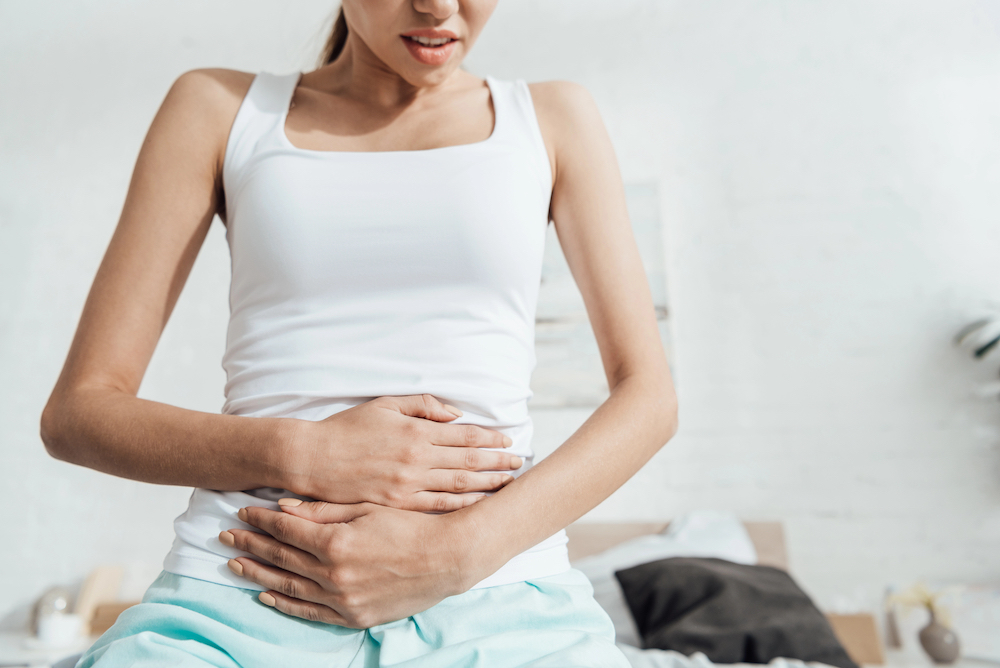
The line starts to shift when pain regularly interrupts daily life. A child who cannot get through class, keeps missing school, vomits, faints, curls up with pain every month, or bleeds so heavily that the school day feels like something to endure rather than participate in should not be told to simply push through it.
The same goes for periods that seem to be getting worse, pain that stretches beyond the first couple of days, bleeding between periods, or pelvic pain that shows up at other times in the month. Those details do not automatically point to a serious condition, but they do belong in a GP conversation.
The record that helps more than guesswork
When a child feels rotten for two or three days each month, memory gets fuzzy fast. Which month was the worst one? Was the bleeding heavier last term, or did it only feel that way because it happened during exams? Did the pain start before the bleeding, or on the first day?
That is where tracking helps, not because parents need to turn the family calendar into a medical chart, but because patterns are easier to see on paper than in hindsight.
If your child’s cycle is fairly regular, a period calculator can help you estimate when the next period may land, which is useful for camp weeks, carnivals, and assessment days. The more useful record, though, is the simple one you can take to a GP: when the period started, how many days it lasted, whether the flow seemed unusually heavy, what the pain felt like, what medicine or comfort measures were tried, and whether school, sport, or sleep took a hit.
What support can look like at home and at school
A good plan is often less dramatic than parents expect. It might mean a small period kit in the school bag, spare underwear in the locker, pain relief discussed in advance with your GP or pharmacist, and one trusted adult at school who knows what is going on.
It can also help to talk with your child about what part feels hardest. Some girls fear the pain itself. Others are more worried about embarrassment, leaking, asking to leave class, or managing a period during PE. Those are different problems, and they need different support.
When to book the GP appointment
Parents do not need to wait for a complete disaster before seeking help. If period pain is stopping your child from going to school, joining in, or getting through normal activities, that is enough reason to make an appointment. That conversation does not need to begin with panic. In many cases, there are straightforward ways to manage symptoms. What matters is that the problem gets taken seriously.
A child should not have to spend every fourth week deciding whether to face class, fake a smile, or ask for the sick bay again. If periods are starting to shape school life in that kind of monthly pattern, the issue is no longer only about cramps. It is about whether your child can get through her day with enough comfort, confidence, and attention left for the parts of growing up that should matter more than pain.
📚 References
Puberty timing and development
- Parent, A.-S., et al. (2003). The timing of normal puberty and the age limits of sexual precocity: Variations around the world, secular trends, and changes after migration. Endocrine Reviews, 24(5), 668–693.
- Herman-Giddens, M. E., et al. (1997). Secondary sexual characteristics and menses in young girls seen in office practice. Pediatrics, 99(4), 505–512.
- Sørensen, K., et al. (2012). Recent secular trends in pubertal timing: implications for evaluation and management. Nature Reviews Endocrinology, 8, 235–242.
Trends toward earlier puberty / menarche
- Biro, F. M., & Kiess, W. (2016). Controlling the timing of puberty: The complex interaction of biological, environmental, and social factors. Journal of Adolescent Health, 59(2), S1–S3.
- Eckert-Lind, C., et al. (2020). Worldwide secular trends in age at pubertal onset assessed by breast development. JAMA Pediatrics, 174(4), e195881.
- Papadimitriou, A. (2016). The evolution of the age at menarche from prehistorical to modern times. Journal of Pediatric and Adolescent Gynecology, 29(6), 527–530.
Body composition, nutrition, and metabolic factors
- Kaplowitz, P. B. (2008). Link between body fat and the timing of puberty. Pediatrics, 121(Suppl 3), S208–S217.
- Ahmed, M. L., Ong, K. K., & Dunger, D. B. (2009). Childhood obesity and the timing of puberty. Trends in Endocrinology & Metabolism, 20(5), 237–242.
- Wang, Y. (2002). Is obesity associated with early sexual maturation? A comparison of the association in American boys versus girls. Pediatrics, 110(5), 903–910.
Endocrine-disrupting chemicals (EDCs)
- Gore, A. C., et al. (2015). EDCs: An Endocrine Society scientific statement. Endocrine Reviews, 36(6), E1–E150.
- Street, M. E., et al. (2018). Endocrine-disrupting chemicals and puberty timing. Human Reproduction Update, 24(3), 332–346.
- WHO/UNEP (2013). State of the Science of Endocrine Disrupting Chemicals.
Stress, psychosocial factors, and sleep
- Ellis, B. J. (2004). Timing of pubertal maturation in girls: An integrated life history approach. Psychological Bulletin, 130(6), 920–958.
- Mendle, J., et al. (2010). Associations between early life stress and pubertal timing. Development and Psychopathology, 22(1), 1–15.
Menstrual pain (dysmenorrhoea) and adolescent impact
- Harel, Z. (2006). Dysmenorrhea in adolescents and young adults: etiology and management. Journal of Pediatric and Adolescent Gynecology, 19(6), 363–371.
- Ju, H., Jones, M., & Mishra, G. (2014). The prevalence and risk factors of dysmenorrhea. Obstetrics & Gynecology, 124(4), 1–10.
- Armour, M., et al. (2019). The prevalence and impact of dysmenorrhea in adolescents. BMC Women’s Health, 19, 85.
School attendance and functional impact
- Australian Institute of Health and Welfare (AIHW). Menstrual health and hygiene in Australia.
- Parker, M. A., et al. (2010). Dysmenorrhea and its impact on school attendance and performance. Journal of Adolescent Health, 46(1), 1–7.
- Grandi, G., et al. (2012). Prevalence of menstrual pain in adolescents and its impact on daily life. Gynecological Endocrinology, 28(10), 1–6.
Clinical guidance
- Royal Australian College of General Practitioners (RACGP). Managing menstrual disorders in general practice.
- Healthdirect Australia. Period pain (dysmenorrhoea). https://www.healthdirect.gov.au
- Australian Commission on Safety and Quality in Health Care – adolescent health resources