

Kiddipedia
Most parents don’t question their importance in their child’s life.
The real challenge lies in knowing how to consistently show up in ways that nurture a child’s happiness, resilience, and overall wellbeing, particularly when balancing work, family, and the demands of daily life.
The good news is this: decades of research consistently show that it’s not perfection, expensive activities, or constant stimulation that matters most. It’s consistent, emotionally available, and engaged parenting.
In Australia, large-scale studies and national organisations continue to highlight that the quality of the parent–child relationship is one of the strongest predictors of child wellbeing.
So what does “active parenting” actually look like in real life—and why does it matter so much?

Okay, But What Does “Active Parenting” Actually Mean?
So, what is “active parenting”, really?
It’s more than just physically being there. You can be in the same room as your child, scrolling through your phone, or you can be truly present with them—listening to their stories, playing a game, or helping (or attempting to help) with homework.
Active parenting involves emotional engagement, a genuine interest in your child’s learning, physical interaction, and open, ongoing communication. Of course, what this looks like will vary depending on culture, background, and your own upbringing. It’s not a one-size-fits-all approach.
Think of it as a spectrum.
On one end are parents who, for a range of reasons, may find it difficult to fully connect. On the other are parents who are deeply immersed in their child’s daily experiences. Somewhere in the middle is the balance most families are working toward: Active parenting —being present, supporting your child’s growth, and encouraging independence.
It’s not always easy to get that balance right.
Research and clinical perspectives, such as those highlighted by PrairieCare, suggest that active parenting supports emotional security and resilience in children. In other words, what we do as parents truly matters—parenting style has a meaningful influence on a child’s development.
Active parenting isn’t about doing more—it’s about being present in a meaningful way.
At its core, active parenting includes:
- Emotional availability – being responsive, warm, and attuned
- Behavioural involvement – spending time actively engaging with your child
- Cognitive involvement – supporting learning, curiosity, and development
- Communication – open, respectful, two-way interaction
- Shared experiences – play, routines, and everyday moments together
According to guidance from the Raising Children Network, children thrive when parents are consistently responsive and supportive—being physically present is important, but emotional connection is what truly strengthens development.
Importantly, active parenting doesn’t mean constant interaction or being “on” all the time. It’s about intentional connection in everyday moments, even within the realities of a busy life.
The Science of Happy Kids
Why does being an active parent lead to happier kids?
The science is clear that strong, consistent relationships play a central role in a child’s overall wellbeing. For example, the Harvard Grant Study—one of the longest-running studies on human development—has consistently highlighted that close relationships are one of the strongest predictors of long-term health and happiness.
Children who feel loved, supported, and understood are more likely to develop emotional security, healthy self-esteem, and a sense of agency in their own lives.
The importance of connection also extends into everyday interactions. The American Academy of Pediatrics emphasises the role of play in supporting social and emotional development. Active parenting creates opportunities for shared play, communication, and connection, factors that contribute to lower stress and stronger relational bonds. Research has also indicated that children who regularly engage in play with their parents tend to experience lower levels of anxiety.
Across both international and Australian research, a consistent pattern emerges: when parents are actively involved, children tend to experience better mental and emotional outcomes.
This includes:
- Better emotional regulation
- Stronger social skills
- Higher self-esteem
- Improved academic outcomes
- Lower levels of anxiety and depression
In the Australian context, longitudinal research such as the Longitudinal Study of Australian Children (LSAC), conducted by the Australian Institute of Family Studies, shows that parenting characterised by warmth, responsiveness, and consistency is strongly associated with positive social, emotional, and behavioural development.
Similarly, the Australian Institute of Health and Welfare highlights the importance of supportive family environments in promoting children’s mental health and overall wellbeing.
At a developmental level, children learn how to regulate emotions, form relationships, and manage stress through repeated interactions with their caregivers. Over time, these interactions shape how they understand and respond to the world around them.
In many ways, children develop emotional regulation through their parents before they are able to fully develop it independently:
Children borrow their emotional regulation from the adults around them before they learn to regulate it themselves.
Emotional Availability: The Real Core
Emotional availability is, arguably, one of the most important parts of being an active parent.
It’s about being truly present—both physically and emotionally—and staying open to what your child needs in the moment. At its core, it means creating a safe, supportive space where your child feels comfortable sharing their thoughts and feelings without fear of judgement.
Isn’t that what most of us want for our children?
When you consistently show that your child’s emotions matter, you’re helping them develop the ability to cope with stress, build resilience, and feel secure in themselves. Active listening, empathy, and open communication are key.
Sometimes it’s the simplest things that make the biggest difference—putting down your phone, making eye contact, and really listening. Even small moments of focused attention can have a meaningful impact over time.
One practical way to build this into your routine is the “10-Minute Rule.” Set aside ten minutes each day where your child has your undivided attention. Let them choose the activity—whether it’s playing a game, reading a book, or simply talking about their day. These short, consistent moments of connection can have a lasting effect.
If there is one consistent thread across research on child development, it’s this: children need to feel emotionally safe to thrive.
Emotional availability can be understood as:
- Listening without immediately fixing or dismissing
- Responding with empathy rather than reactivity
- Being consistent in tone, presence, and availability
- Making space for a child’s emotions—even the uncomfortable ones
This aligns closely with the concept of secure attachment, where children who experience reliable, responsive caregiving are more likely to develop confidence, resilience, and healthy relationships later in life.
In practical terms, emotional availability might look like:
- Getting down to your child’s level when they’re speaking
- Putting away distractions during conversations
- Naming emotions (e.g. “It sounds like you felt frustrated”)
- Validating feelings before guiding behaviour
Over time, these small but consistent moments of emotional attunement help build trust and strengthen the parent–child relationship in meaningful ways.
Don’t Underestimate Play and Physical Activity
Play is often underestimated, but research consistently shows it is essential for a child’s development.
Guidance from the Raising Children Network and early childhood experts highlights that play supports:
- Social development
- Emotional regulation
- Cognitive growth
- Problem-solving skills
- Creativity and imagination
Active parenting that includes shared play—whether structured or unstructured—helps strengthen connectionwhile also supporting a child’s development.
The good news is that this doesn’t need to be complicated.
It can include everyday activities such as:
- Reading together
- Outdoor play
- Board games
- Imaginative play
- Simple physical activities like walking, dancing, or kicking a ball
Even short, consistent moments of shared play can improve mood, reduce stress, and strengthen the parent–child bond.
At its core, play isn’t just about keeping children entertained. It’s about connection, learning, and emotional development. Free play, in particular, allows children to use their imagination, process experiences, and build social skills in a natural way.
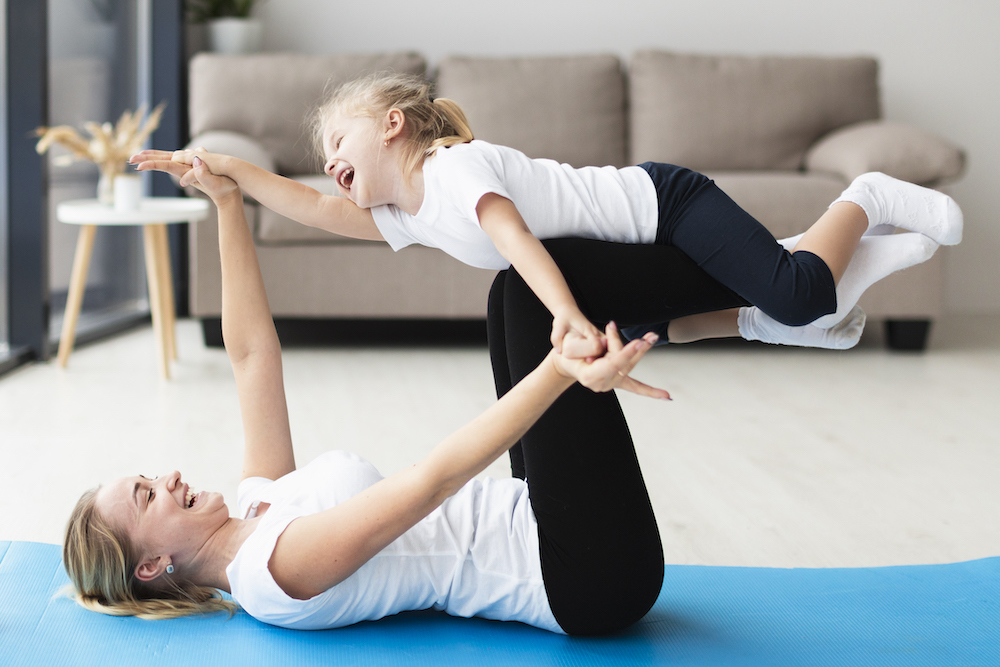
When parents engage in play with their children—whether through outdoor activities, sports, or even a spontaneous dance session—it creates meaningful shared experiences that strengthen emotional connection.
Physical interaction also plays a role in helping children develop healthy habits and emotional regulation. For example, rough-and-tumble play, when done safely and appropriately, can help children release energy, develop self-control, and learn boundaries in a supportive environment.
Research supports these benefits. According to clinical guidance from the American Academy of Pediatrics, play contributes to the development of social-emotional skills, cognitive abilities, and self-regulation.
In this way, active parenting combined with shared play not only supports a child’s wellbeing in the moment—it also helps lay the foundation for healthier habits, stronger relationships, and better emotional regulation over time.
Active Parenting in a World That Never Stops
Let’s be real, life is busy. Between dual-income households, constant technology distractions, and long commutes, it can be challenging to be an active parent. It’s easy to feel drained and disconnected when you’re juggling work, family, and trying to carve out a bit of “me” time.
But even with a packed schedule, creating meaningful connection is still possible. The key is prioritising it in small, intentional ways.
Here are a few practical ideas:
- Schedule it: Treat connection time like any other important commitment. Put it on the calendar and protect that time.
- Make the most of small moments: Even 10–15 minutes of undivided attention while making dinner or winding down can help build trust and connection.
- Unplug: Create device-free times where everyone focuses on each other—such as during meals or before bedtime.
Remember, it’s not about being perfect—it’s about showing up consistently. Small, regular efforts can make a meaningful difference over time.
One simple and effective way to strengthen connection is through shared physical activity.
Physical activity is not only beneficial for children’s physical health—it also supports emotional wellbeing and strengthens family connection.
When parents are physically active with their children, it:
- Models lifelong healthy habits
- Creates shared positive experiences
- Supports emotional bonding through interaction
- Helps regulate energy and mood
The key isn’t intensity—it’s participation. A walk together, a backyard game, or a spontaneous activity can be just as meaningful as organised sport. These shared moments reinforce connection while supporting both physical and emotional development.
The Ripple Effect: Long-Term Impacts
Active parenting is an investment in your child’s future.
A growing body of longitudinal research shows a strong link between parental involvement and outcomes such as academic success, emotional intelligence, and a lower risk of depression. Children who grow up with actively engaged parents are more likely to build healthy relationships, work toward their goals, and ultimately lead fulfilling lives.
Strong parent–child bonds play a key role in shaping a child’s development over time. When children feel connected, supported, and understood, they are more likely to develop trust, communicate openly, and seek help when they need it. This sense of connection can also reduce teenage withdrawal or rebellion, as children feel safer staying engaged with their parents rather than pulling away.
Over time, the difference between active parenting and more passive approaches becomes more noticeable. Children raised in consistently involved households tend to be more resilient, confident, and emotionally well-adjusted, largely because they have learned how to navigate challenges with the support of a responsive caregiver.
Research consistently shows that active, responsive parenting contributes to:
- Stronger parent–child relationships
- Improved emotional intelligence
- Better social outcomes
- Greater resilience
- Reduced risk of mental health challenges later in life
Children who feel securely connected to their parents are also more likely to reach out for support during difficult moments and carry those patterns of healthy connection into their own relationships as they grow.
Ultimately, the relationship you build today becomes the foundation your child relies on tomorrow.
Simple Steps to Becoming a More Active Parent
So, how do you become a more active parent? Here are a few ideas to get you started:
- Have daily check-ins: Ask your child about their day, how they’re feeling, and if anything is bothering them.
- Involve them in household tasks: Teaching responsibility builds connection and gives them a sense of accomplishment.
- Read together regularly: Reading aloud fosters a love of learning and creates opportunities for connection.
- Set up tech-free zones: Designate times when everyone puts away their devices and focuses on each other.
- Plan goals or weekend plans together: Involving your child in decision-making fosters a sense of control and belonging.
- Tell them you love them. Every. Single. Day. And tell them they are good people.
Don’t try to overhaul everything at once. Start with one or two things, be consistent, and celebrate the small wins.
The Takeaway? Presence Over Perfection
Active parenting is not about doing everything right—it’s about showing up consistently in ways that matter.
It’s the conversations in the car, the shared laughs at dinner, the moments of listening without interruption, and the everyday interactions that often seem small but add up over time.
Children don’t need perfect parents.
They need present ones.
And in those everyday moments of connection, you’re not just raising a child—you’re shaping their sense of safety, identity, and emotional wellbeing for life.
References (Australian-Based)
- Australian Institute of Family Studies – Longitudinal Study of Australian Children (LSAC) and parenting research
- Australian Institute of Health and Welfare – Child and adolescent health and wellbeing reports
- Raising Children Network – Evidence-based parenting guidance
- Beyond Blue – Parenting, family mental health, and wellbeing insights
- Murdoch Children’s Research Institute – Child development and early life research
- Telethon Kids Institute – Child health, development, and wellbeing studies
- Australian Bureau of Statistics (ABS) – Family, household, and social statistics
- Longitudinal Study of Australian Children (LSAC) – Government-funded cohort study tracking child development over time