

Feeling tired, snappy and completely over it? ❤️🩹
Sometimes burnout doesn’t look like a dramatic breakdown. It can look like waking up exhausted, losing patience over little things, struggling to concentrate or realising you just don’t enjoy the things you normally love.
If you’ve been feeling like you’re running on empty, these 5 everyday signs of burnout may help you recognise what’s really going on — and, importantly, what you can do about it.
Because looking after everyone else shouldn’t mean forgetting yourself. ❤️

When a family changes, children can feel it in ways they don’t always have the words to explain. 💔
Separation can bring big emotions, uncertainty, two homes, changing routines and questions that are sometimes hard for parents to answer.
But you don’t have to make separation painless to help your child feel safe, loved and secure.
From what to say — and what not to say — to managing routines, conflict, parenting arrangements and those moments when your child says, “I don’t want to go”, this guide offers practical, compassionate advice for parents trying to navigate one of life’s hardest transitions.
Because sometimes, the most important thing your child needs isn’t a perfect parent or a perfect arrangement.
They just need to know: “I’m loved. This isn’t my fault. And I’m going to be okay.” ❤️

🏠 I don’t want to move…”
For adults, moving house might mean a fresh start, a better home or simply doing what needs to be done.
But for a child, it can mean saying goodbye to their bedroom, their friends, their school, their favourite places and the little routines that make life feel safe. 💔
And when families are forced to move more often because of Australia’s housing and rental crisis, what does that mean for our children?
New research reveals that children who move frequently can experience changes in their emotions, sleep, eating, routines, concentration and sense of belonging.
The good news? There are things parents can do to help. ❤️
From how you first tell your child about the move, to using stories, play, photos and familiar connections to help them understand and process the change.
If your family is preparing for a move, don’t just pack the boxes — prepare your child’s heart, too.
👉 Read the article to discover how you can help your child feel safer, supported and connected through a big move.

What if the best Father’s Day gift isn’t something you can wrap? ❤️
We know Dad as Dad… but how well do we really know the person behind the title?
The little boy he once was.
The dreams he had.
The mistakes he made.
The stories we’ve never thought to ask about.
This Father’s Day, instead of simply buying another gift, why not give Dad something far more meaningful — your time, your attention and your curiosity?
Ask him a question you’ve never asked before. Listen to a story you’ve heard a hundred times. Put your phone away. Tell him what you appreciate.
And if you’ve drifted apart, perhaps take one small step towards reconnecting.
Because one day, the presents will be forgotten. The moments you shared won’t be. ❤️
Discover 7 simple ways to make this Father’s Day about more than presents.

Motherhood comes with a lot of feelings, and not all of them are warm and fuzzy. ❤️
One minute you’re filled with love and gratitude. The next, you’re overwhelmed, frustrated, tearful or wondering how you’re supposed to keep everything together.
And that doesn’t make you a bad mum. It makes you human.
Rather than pushing difficult emotions away, learning to listen to them can help you understand what you need, where your boundaries may be stretched and what might help you feel more supported.
🌿 Discover how to work with your emotions, release what you’ve been holding onto and find a greater sense of calm, clarity and empowerment in early motherhood.
Because you don’t have to be positive all the time. You’re allowed to feel it all.

What if your child isn’t “too much”… but simply misunderstood?
“Why can’t they just focus?”
If you’ve ever asked this, quietly or in frustration, you’re not alone.
ADHD can look like distraction, restlessness, big emotions, or constant movement — but underneath it is something far more complex and far more powerful: a brain that feels deeply, thinks quickly, and locks into interest with incredible intensity.
For many parents, an ADHD diagnosis brings relief and understanding. For others, it can bring guilt, confusion, or worry. But one truth remains steady: your child is not broken — they are wired differently.
In this honest and deeply personal reflection, Elly Both shares her lived experience of ADHD and how shifting the way we see it can change everything. Instead of trying to fit kids into a box, we can start recognising what’s already there — creativity, curiosity, hyperfocus, and unique strengths waiting to be supported.
ADHD is not a lack of attention. It’s an interest-based nervous system. And when we learn to work with it instead of against it, something powerful happens — shame softens, confidence grows, and strengths begin to shine.
This is not about ignoring the challenges. It’s about holding them alongside understanding, honesty, and compassion — so children feel seen, supported, and capable of becoming who they already are.
Because when we stop trying to shrink our kids… we finally start seeing their superpowers.
👉 Read the full article by Elly Both

Starting therapy can feel like a big step… but the conversation you have with your child can make all the difference. 💛🌱
Many parents worry about saying the wrong thing.
Will my child think something is wrong with them? Will they feel scared? Will they refuse to go? 🤔
And sometimes the question children quietly carry is:
“Are we going to therapy because something is wrong with me?” 💭
The truth is, therapy isn’t about fixing a child — it’s about helping them understand their feelings, build confidence and learn skills that support them for life. 💛✨
With the right words, parents can help children see therapy as a positive step — a safe place to learn, grow and better understand themselves. 🌈
From what to say, what to avoid, and how to answer those tricky questions, this guide helps parents navigate one of the most important conversations they may have. 💬❤️
Discover how to introduce therapy in a way that feels safe, positive and reassuring — because sometimes the most powerful thing a child can hear is:
“You’re not in trouble. Nothing is wrong with you. We’re doing this together.” 🤗❤️

Have you ever felt like becoming a parent meant losing a part of yourself? 💛
You’re not alone.
Many parents spend so much time caring for everyone else that their own happiness quietly slips away. But here’s the surprising truth: one of the most powerful ways to raise happy, emotionally resilient children is to nurture your own wellbeing first.
In this honest and deeply personal article, happiness researcher and first-time dad Declan Edwards shares the reality of navigating sleep deprivation, postnatal mental health challenges, and the unexpected “parenting paradox”—along with three simple, science-backed strategies that helped him rediscover joy in parenthood.
✨ Learn why protecting your own happiness isn’t selfish—it’s one of the greatest gifts you can give your child.
If you’ve ever felt exhausted, overwhelmed, or like you’re simply trying to survive the day, this article is for you.
Read the full story
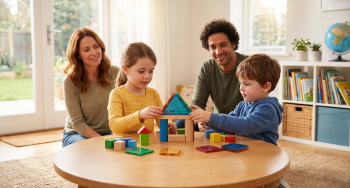
💛 Separation changes a family, but it doesn’t have to change how deeply a child feels loved.
When a relationship ends, parents are often navigating heartbreak, uncertainty, financial pressures and countless life-changing decisions. But for children, the biggest questions are much simpler: *”Am I still safe? Am I still loved?”*
This heartfelt article explores how keeping children at the centre of every decision can help protect their emotional wellbeing during one of life’s biggest transitions. From maintaining familiar routines and recognising the many faces of grief to shielding children from adult conflict, these compassionate, practical insights can make a lasting difference.
Because while families may look different after separation, children still need the same things they’ve always needed—to feel safe, secure, heard and deeply loved.
Whether you’re navigating separation yourself or supporting someone who is, this is an important read.
❤️ Every child deserves to know: *”This isn’t your fault, and you are loved beyond measure.”*
Read the full article now.

💬 “They’re just online friends.”
But what if those friendships are the ones helping your teen feel accepted, understood… and less alone?
For many teenagers, meaningful friendships don’t just happen at school anymore. They happen through group chats, gaming communities, and late-night conversations that can offer genuine connection and support.
As parents, it can be difficult to know when these relationships are healthy—and when they’re beginning to replace the real-world balance every young person needs.
This insightful article explores the signs of positive online friendships, the red flags to watch for, and how to have open, judgment-free conversations that strengthen trust instead of shutting it down.
❤️ Sometimes, the most important question isn’t “How much time are they spending online?”—it’s “How are they feeling when they log off?”
👉 Read now and learn how to help your teen enjoy the best of both their online and offline worlds.
Get parenting advice and support delivered right to your inbox
We'd love to hear what you think of the website, so we can continue to improve it . . . GIVE YOUR FEEDBACK >