
Breanna Jayne Sada
By Breanna Jayne Sada
Let’s Reconnect With Breanna Jayne Sada Ep
As a psychologist and a mum, this is a question I’ve been asking myself more and more recently: should we still be posting photos of our children online?
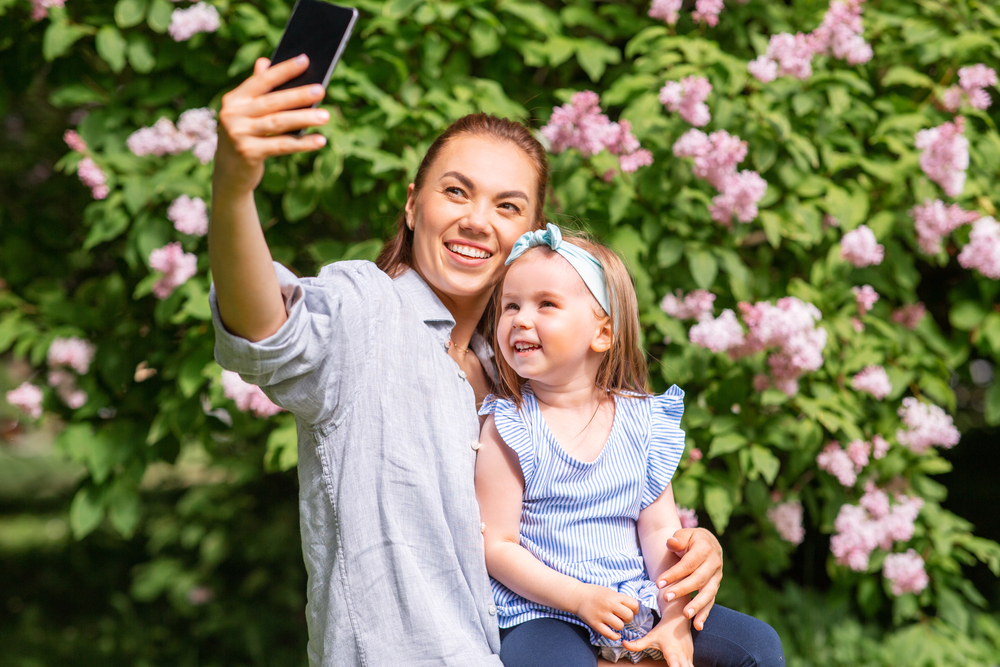
Today’s children are the first generation in history to grow up with a digital footprint created before they can even speak. Before they understand privacy, consent or identity, many already have hundreds or even thousands of images and videos of themselves online. Moments that once would have lived quietly in family photo albums are now shared permanently on the internet.
Most parents are not doing this to exploit their children. They are sharing because they are proud, connected and wanting to celebrate the people they love most. But as technology and artificial intelligence continue to evolve rapidly, many families are beginning to ask whether we have accidentally shared more of our children’s lives online than we ever intended to.
As parents, we are biologically wired for connection. Sharing stories and milestones is part of how humans bond. Parenting can also feel isolating at times, and social media has created opportunities for parents to stay connected with family, friends and communities, especially those who live far away or are separated by culture and distance.
For many families, posting online genuinely comes from a place of love and joy.
But the internet remembers differently than we do.
Posting a child’s photo online is not the same as putting a photo into a private family album. Even platforms that feel secure are still collecting data, and many parents are unaware of how images can be stored, used or even sold if ownership of platforms changes hands.
We are parenting in a world where technology is advancing faster than most adults can keep up with. AI tools can now manipulate images, generate fake videos and use facial recognition software trained on publicly shared photographs. Even seemingly harmless information like school uniforms, logos in the background of photos, birthday posts or location tags can provide identifying information about a child.
Children now have digital identities before they are old enough to meaningfully consent to one.
As a psychologist, one of the things that concerns me most is the long-term psychological impact this may have on children and teenagers. Adolescence is a critical period for identity development and autonomy. It is completely natural for teens to start wanting more privacy and more control over how they are perceived by others.
What happens when a teenager realises that embarrassing moments, vulnerable experiences or personal milestones have been publicly shared online for years?
Many young people are now growing up in environments where moments feel curated and performative. Parents often feel pressure to document birthdays, graduations and milestones in ways that are “Instagrammable”. Children observe this too. They learn that moments are meant to be captured, shared and validated online.
Over time, this can unintentionally teach children to seek validation externally through likes, comments and engagement, rather than internally through self-worth and confidence.
I recently spoke about the upcoming Australian release of the book Like, Follow, Subscribe by journalist Fortesa Latifi, which explores the experiences of children who grew up featured on family YouTube channels and blogs. Many of these now-adult children reflected on the pressure of growing up online and the loss of privacy they experienced before they were old enough to understand the consequences.
Some described how distressing or vulnerable moments received more engagement online than happy family moments. Others reflected on deeply personal experiences being shared publicly without their consent.
This is not about shaming parents. Most families participated in this culture because it became normalised very quickly. We are the first generation navigating parenting in both the age of the internet and the age of AI. There is no roadmap for this.
But we do need to pause and reflect.
As parents, schools, sporting clubs and organisations, we need to ask whether our current practices still make sense in a rapidly changing digital world.
Questions worth reflecting on include:
- Will my child be comfortable with this being online when they are older?
- Am I posting this for connection or validation?
- Is the child’s dignity being respected?
- Could this moment be shared privately instead?
- Have I sought consent where appropriate?
Consent is one of the most important conversations we can start having with children around online sharing. Even young children can begin learning that they have a say in what happens with photos of them.
It can be as simple as asking:
“Would you mind if I posted this photo?”
“Which photo would you prefer I use?”
Importantly, if a child says no, that no should be respected.
This teaches children that their boundaries matter and that consent is not just about romantic relationships. It is about bodily autonomy, privacy and respect.
I do not believe the answer is that parents should never post their children online again. But I do believe we need to become more intentional and thoughtful about what we share and why.
Children deserve both memories and privacy.
They deserve opportunities to exist without constantly feeling observed, photographed or evaluated. They deserve the chance to shape their own digital identity as they grow older.
This generation of children will one day be able to tell us what it felt like to grow up online. I suspect many of us as parents are already beginning to ask these questions because we care deeply about getting it right.
There is no perfect parenting. We do not need to panic. But we do need to slow down long enough to ask whether the decisions we are making online are truly holding the child at the centre of the decision.