
Kiddipedia
By Dane Cross, Chief Operating Officer, Sporting Wheelies
Sporting Wheelies Chief Operating Officer Dane Cross argues that genuine inclusion starts before children enter the classroom, with schools needing to give students practical opportunities to understand disability and challenge assumptions. He highlights the role of adaptive sport, immersive activities and lived-experience storytelling in helping students develop empathy, confidence and a stronger understanding of accessibility, while emphasising that creating inclusive school communities is a shared responsibility.
Every child deserves to feel that they belong at school but, for too many young Australians living with disability, school can still be a place where they feel left out rather than included.
Around one in five Australians living with disability report being excluded from broader school activities such as assemblies and sport. At the same time, 41% of school-aged children with disability do not receive study-related support1, despite 68% requiring assistance to participate fully in everyday life2.
These figures should make all of us stop and think about what inclusion really looks like because inclusion isn’t simply about making sure a child can enter a classroom, join a sports team or attend a school assembly.
It’s about creating an environment where every child feels understood, respected and confident that they have a place in their school community.
I believe one of the most powerful ways we can start building that culture is by giving children opportunities to experience inclusion for themselves.
We can’t teach empathy from a textbook
Disability awareness can sometimes become a conversation about what people can’t do. We need to shift that conversation.
At Sporting Wheelies, we see every day how adaptive sport can change perceptions. When a student gets into a wheelchair to play basketball, navigates a practical challenge using an assistive device or hears directly from someone with lived experience of disability, something changes.
Disability becomes less abstract. Students aren’t simply being told to be more inclusive. They’re being given the opportunity to ask questions, challenge assumptions, work together and understand some of the barriers that people with disability can encounter.
Most importantly, they’re learning that disability doesn’t define a person’s potential. That is the thinking behind our Pathways to Inclusion program, which brings adaptive sport, immersive learning and lived experience into schools.
Inclusion is everyone’s responsibility
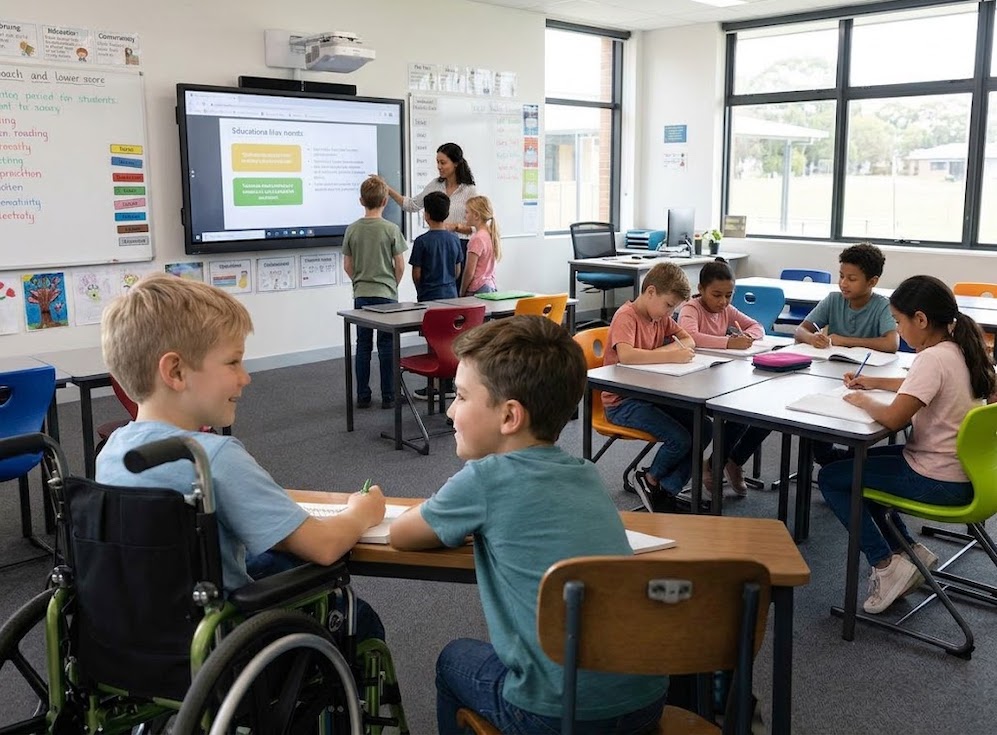
One of the most important lessons we’ve learned is that inclusion can’t sit solely with a teacher or learning support team. It needs to be embraced by the whole school community that includes students, teachers, parents and carers.
For teachers, this can mean having practical strategies to create more accessible and inclusive learning environments.
For parents, it can mean understanding disability and reinforcing inclusive attitudes at home.
And for students, it can mean developing the confidence to speak up, include others and recognise when someone might be experiencing a barrier they don’t see themselves.
This whole-school approach matters because children don’t leave their understanding of inclusion at the school gate.
The attitudes they develop at school can influence how they interact with classmates, teammates, friends and, eventually, colleagues and members of the broader community.
Sport has a unique role to play
Sport is one of the great equalising spaces in a school community. It teaches teamwork, resilience, communication and problem-solving. However, it can also highlight how different environments can either create barriers or enable participation.
Adaptive sport gives students an opportunity to see accessibility through a different lens. Take wheelchair basketball; a student might initially see the wheelchair as the defining feature of the experience but, once they’re on the court, the focus quickly shifts to passing, positioning, teamwork and strategy.
They’re not just learning about disability, they’re learning about capability. Similarly, practical activities that involve mobility aids can help students understand why something as simple as navigating a space can be very different depending on the environment around you.
These experiences can create conversations that continue long after the activity itself has finished.
The importance of lived experience
One of the most important parts of building genuine understanding is hearing directly from people with disability.
Statistics can tell us about the scale of an issue but lived experience can help us understand what those statistics actually mean for someone’s everyday life.
When students hear from people who have navigated disability, education, sport, work and everyday life, they can move beyond assumptions and stereotypes, and they can see disability through a much more human lens.
That’s why lived-experience storytelling is such an important part of Pathways to Inclusion. We want students to leave with a greater willingness to listen, ask questions and understand people as individuals, while also seeing positive role models
Citations
- https://www.aihw.gov.au/reports/disability/people-with-disability-2026/contents/summary
- https://www.abs.gov.au/articles/children-and-young-people-disability-2022
 About Dane
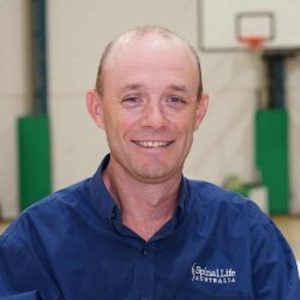
Dane’s lived experience of spinal cord injury (quadriplegia), combined with his qualifications as an Access Consultant, gives him a practical perspective on access, inclusion and participation.
Following Sporting Wheelies’ merger with Spinal Life Australia in February 2024, Dane has served as Chief Operating Officer of Sporting Wheelies, part of Spinal Life Australia.
With a background in Exercise Science and access consulting, Dane’s work spans disability sport, accessibility and inclusive community participation.
Dane is a member of the Association of Consultants in Access Australia (ACAA) and contributes to advisory work across accessibility, para sport and inclusive infrastructure.
About Sporting Wheelies
Sporting Wheelies, part of Spinal Life Australia, supports people with disability to participate in sport and recreation, from first experiences through to development pathways, and provides allied health and inclusion services.