
Breanna Jayne Sada
By Breanna Jayne Sada
Children and teens are wired to seek out novelty. It is not a flaw, a lack of discipline, or a sign that something has gone wrong in your parenting. It is a normal and important part of development. Yet in many families, life has become so structured, busy, and predictable that there is very little room left for newness. When novelty disappears from a young person’s everyday life, they will often go looking for it elsewhere, and in today’s world, that often means online games, social media, and fast paced digital content.
To understand why this happens, it helps to look at what is going on in the brain in a very simple way.
During childhood and especially adolescence, the brain is going through a period of rapid growth and change. One of the key systems involved is the dopamine system. Dopamine is a chemical in the brain that is linked to motivation, curiosity, and reward. It is released when we experience something new, exciting, or interesting.
For children and teenagers, this system is particularly sensitive. Their brains are more responsive to novelty than adult brains. This is part of what helps them learn about the world, try new things, and develop independence. It is also why they can be more drawn to risk taking or thrill seeking behaviours.
At the same time, the part of the brain responsible for planning, impulse control, and long term thinking is still developing. So you have a brain that is highly motivated to seek out new and rewarding experiences, but not yet fully equipped to regulate those impulses. This is not a problem to fix, but something to understand and work with.
Now think about the lives many children and teens are living. Their days are often filled with school, homework, sport, tutoring, and structured activities. While these are all valuable, they can also become repetitive and predictable. Even leisure time can start to feel routine.
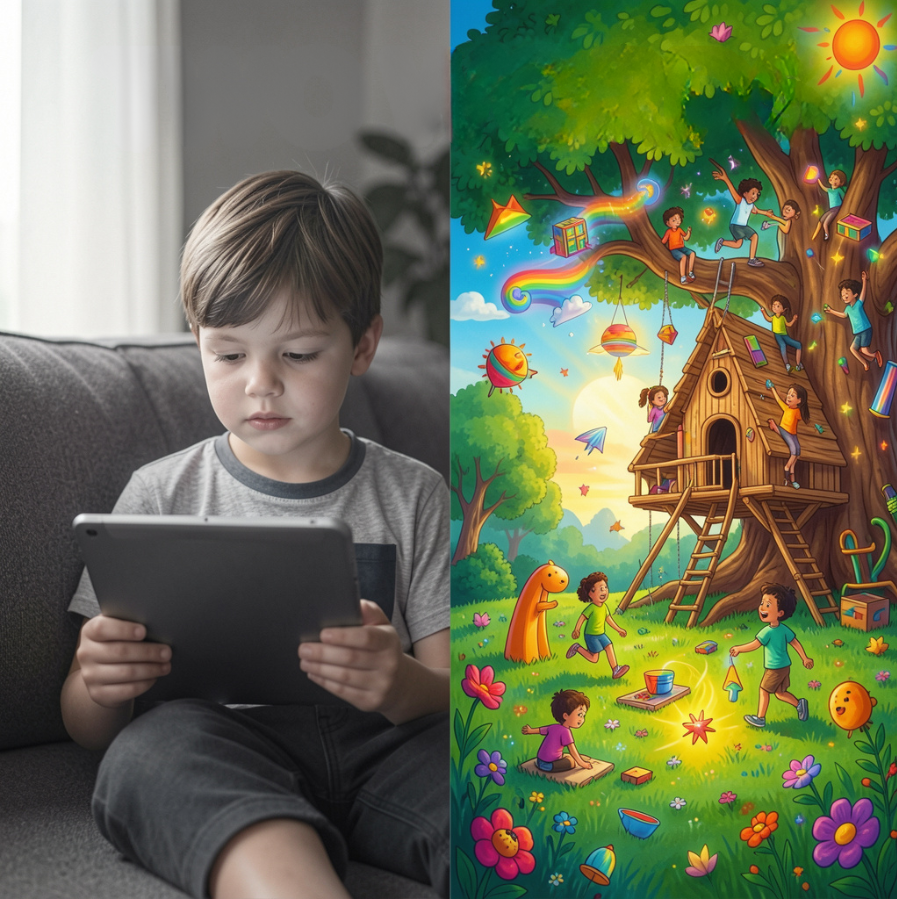
When the brain is not getting enough novelty in everyday life, it naturally looks for it elsewhere. Online games and social media are very good at providing this. They offer constant newness, quick rewards, and unpredictability. Every scroll, every level, every notification brings something slightly different. This keeps the dopamine system activated and can make these platforms feel very hard to step away from.
This is where many parents can feel stuck. They see their child becoming increasingly drawn to screens and may respond by trying to restrict or remove them. While boundaries are important, if we only focus on taking something away without understanding the need it is meeting, we can miss an opportunity to support our child in a more effective way.
Instead of only asking “how do I reduce screen time?”, it can be helpful to also ask “where is my child getting novelty in their offline life?”
Injecting novelty does not mean constant entertainment, expensive outings, or over scheduling more activities. In fact, it is often the opposite. Novelty can be simple, low cost, and built into everyday moments.
Here are some practical ways parents can introduce more novelty into their child’s life.
Change the routine in small ways. Take a different means of transport to school, have breakfast for dinner, or swap the usual evening routine for a trip to get icecream. Even small changes can activate a sense of newness.
Let your child or teen plan part of the weekend or evening within reasonable limits. The sense of control and unpredictability can feel exciting.
Introduce challenges or mini adventures. This could be something like building a cubby house, creating a backyard obstacle course, or setting a family challenge such as cooking a meal with only five ingredients.
Encourage trying something new without long term commitment. This might be a one off workshop, trying a new sport at the park, or learning a skill from a YouTube video together. The key is keeping it low pressure.
Use nature as a source of novelty. Visiting a new park, going for a bushwalk, or even exploring a different part of your local area can provide rich sensory experiences that feel new and engaging.
Change the social environment. Invite a different friend over, have a picnic with another family, or connect with extended family members they do not see often. New interactions bring new experiences.
Be playful and spontaneous. Sometimes novelty comes from moments of silliness. Dancing in the kitchen, playing a new or old game, or surprising your child with an unplanned activity can go a long way.
Importantly, novelty does not have to be constant. In fact, boredom also has an important role in development. But when a child’s life becomes too predictable for too long, their brain will look for stimulation elsewhere.
When we understand that the pull towards screens is not just about defiance or habit, but about a brain seeking novelty and reward, it shifts how we respond. Rather than fighting against their biology, we can work with it.
Supporting children and teens to experience novelty in healthy, real world ways helps meet a genuine developmental need. It can reduce the intensity of the pull towards digital spaces and, importantly, create more opportunities for connection, joy, and shared experiences within the family.