
kiddi
Key Highlights
- An under sink water filter connects to the cold-water line and sends water through a compact filtration system below your kitchen sink.
- It improves water quality by reducing sediment, chlorine, chemicals, and, in some systems, heavy metals or fluoride.
- Filtered water reaches a tap, which helps keep it separate from regular tap water.
- Most systems save counter space and cut bottled water use and plastic waste.
- Installation is often straightforward, and routine filter replacement is usually needed every 6 to 12 months.
Introduction
If your tap water has an odd smell, a metallic note, or just does not taste right, an under sink water filter can be a practical fix. This kind of filtration system sits out of sight and improves drinking water at the point you actually use it. Instead of filling pitchers or buying bottled water, you get cleaner water straight from the sink. The key is understanding how water filtration happens inside the unit and what each stage is doing for your kitchen.
Understanding Under Sink Water Filters in Australian Kitchens
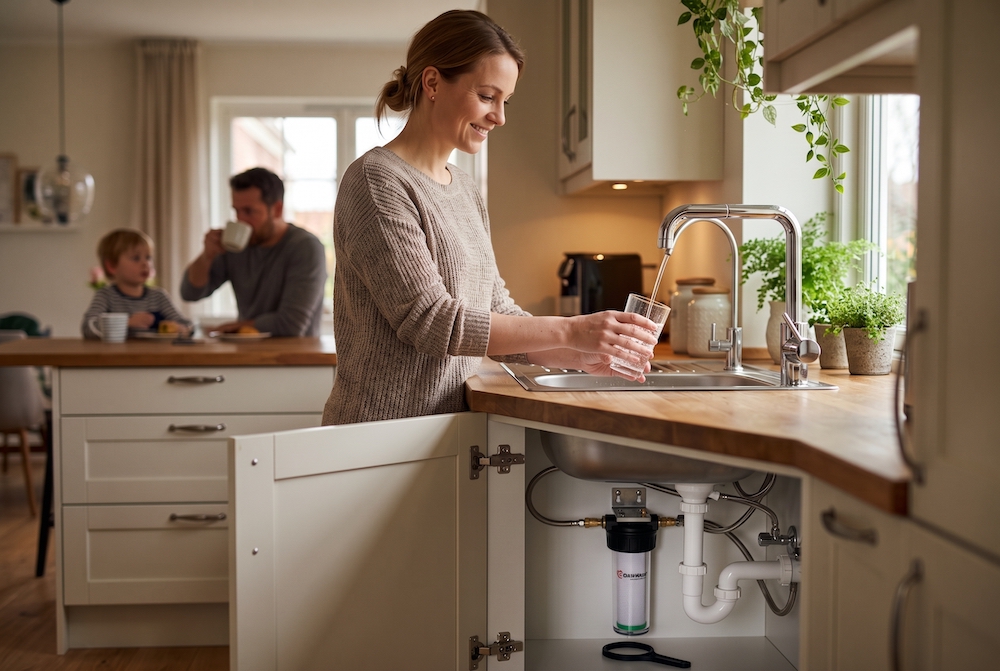
An under sink water filter is a sink water filter system fitted below the kitchen sink and connected to the cold-water supply. It treats tap water before it reaches a separate tap, so the filtered stream stays separate from standard flow. That setup makes it useful in homes where taste, odour, or visible sediment affects daily use.
Safety is a common question, especially when you use the water for drinking and cooking. The exact result depends on the water filtration type you choose, which is why the next section focuses on how the process works from connection to output.
How Does an Under Sink Water Filter Work Step by Step?
In simple terms, an under sink water filter works by diverting tap water from the cold-water line into a water filter system under the cabinet. Inside the unit, the water passes through one or more filter cartridges that target different issues.
After treatment, the filtration system sends filtered water through a separate tube to its own tap. That direct path controls water flow and helps keep the drinking stream away from unfiltered water. Now let’s break down the path and stages in more detail.
Water Flow: From Tap Connection to Filtered Output
The process starts under the cabinet. A sink filter is connected to the cold water line using a small tube and fitting kit. Next, water from the main water supply is diverted into the filter rather than sent straight to the kitchen tap. This means only part of the water flow is treated for drinking use. In homes using a tap, the filtered stream travels through its own line and does not mix back with standard sink water.
At the end of the route, the water comes out through a tap mounted on the sink or bench. Where a hole is needed, the usual size is 12 to 13 mm. Some setups may also work with a way mixer tap, depending on the sink arrangement and the chosen system.
Explaining the Filtration Stages and Their Functions
Not every unit uses the same filtration stages, and that matters. A basic single-stage model may focus on taste and odour, while a twin system often adds a sediment prefilter before a carbon filter. That first stage is there for a practical reason: it catches larger particles so the more expensive cartridge does not clog early.
More advanced systems add specialised treatment. Some are built for fluoride reduction, some target PFAS and heavy metals, and reverse osmosis models offer a deeper level of water filtration. There are also UV systems designed to deal with microbes.
| Filtration stage | Main function |
| Sediment prefilter | Removes larger particles and suspended material |
| Carbon filter | Reduces chlorine, chemicals, bad tastes, and odour |
| Reverse osmosis | Provides deeper reduction of a wide range of contaminants |
| UV stage | Targets microbes in the water |
Main Benefits of Installing an Under Sink Water Filter
The biggest benefit is convenience. A water filter system gives you clean water for drinking and cooking straight from the sink, without storing pitchers or making runs for bottled water. That solves a daily problem in a way you will notice every time you fill a glass.
There is also a cost and waste angle. When you filter water at home, you rely less on bottled water, which can cut plastic waste and reduce spending over time. For many households, that mix of better taste, less clutter, and easier access is the real selling point.
Improved Taste, Odour, and Clarity of Drinking Water
Many people first notice a problem with tap water through taste or smell. Chlorine can leave a sharp note, and other impurities can create unpleasant tastes that make even cold water less appealing. A good filter can change that experience quickly.
For example, if your family avoids filling bottles from the sink because the water smells like a pool, a carbon-based setup can make drinking water far more usable day to day.
- Filtered water often tastes cleaner than untreated tap water. Odour reduction can make the kitchen feel more pleasant during cooking.
- Clearer water can improve confidence in daily drinking water use.
Health Protection: Removal of Common Contaminants
A short answer: yes, many under-sink systems are made to reduce common contaminants found in tap water. The exact list depends on the model.
This is where matching the unit to your concern matters. If the issue is sediment and chlorine, a twin filter may be enough. If you want broader contaminant reduction, reverse osmosis or a UV-equipped water filtration system may make more sense.
- Carbon-based stages commonly target chlorine and chemical taste.
- Specialised systems can reduce heavy metals.
- Reverse osmosis is used for broader contaminant reduction.
- UV systems are designed to address microbes.
Choosing the Right Under Sink Water Filter System
Choosing the right filter system starts with one question: what is wrong with your water now? Different types of systems are built for different jobs, so the specific system should match your actual concern, whether that is chlorine taste, sediment, fluoride, or a wider contaminant load.
You should also think about the characteristics of the water in your area and how much treatment you really need. A single-stage unit may be fine for taste issues, while a more advanced setup fits homes dealing with multiple water quality concerns.
Essential Features for the Australian Market
In the Australian market, there is a wide spread of under sink options, from simple single cartridges to reverse osmosis and UV purification systems. The right choice depends less on price alone and more on the quality of your water and the contaminants you want to reduce.
A useful example is the difference between a twin system and a reverse osmosis unit. A twin setup can suit homes mainly bothered by chlorine, chemicals, or sediment. A reverse osmosis system is more suited to people wanting broader reduction from their water supply.
- Check what the filter cartridges are designed to remove.
- Match the system to the main contaminants in your local water.
- Consider whether basic filtration or advanced purification fits your needs.
Considerations for Space and Kitchen Compatibility
One reason people choose an under sink system is simple: it keeps the bench clear. If you have tight spaces or a small kitchen sink cabinet, that matters more than any brochure claim. These units are designed to sit below the bench, which helps preserve working room above.
Still, under-cabinet room is not unlimited. A larger reverse osmosis setup may take more storage space than a slim single or twin filter. Before choosing, check what else already lives under the sink, such as bins, cleaners, or pull-out organisers.
- Measure the cabinet height, depth, and width first.
- Leave room for the filter kit, tubing, and future servicing.
- Check whether a tap can be added to your sink or bench.
Installation and Maintenance of Under Sink Water Filters
Installation and maintenance are usually simpler than people expect, but they still need planning. Most systems connect to the cold-water line with a standard kit, and many homes can fit one without changing the whole sink filtration layout.
After setup, the main jobs are filter replacement and basic routine checks. You want to keep an eye on flow, cartridge age, and any signs of wear in the tubing or fittings. The next two sections cover what a homeowner can handle and when service becomes necessary.
Can a Homeowner Install It Themselves?
In most Australian states and territories, connecting a filter to the mains water supply is regulated plumbing work that must be done by a licensed plumber. Exemptions are limited and vary by jurisdiction. That said, comfort level matters. Drilling a 12 to 13 mm hole for a tap, working in a cramped cabinet, or connecting to older plumbing may push some people away from DIY. If you are unsure, getting help is often the safer route.
- DIY can work for straightforward under-sink connections.
- A tap installation may require extra care.
- Choose help if cabinet access or plumbing layout is difficult.
How Often to Replace Filters and Perform Routine Checks
For most homes, filter replacement is needed every 6 to 12 months. Routine maintenance is not complicated, but skipping it creates problems. A blocked water filter cartridge can affect taste, flow, and how well later stages work. This is especially true in twin systems where the prefilter protects the carbon stage.
- Replace standard filter cartridges on schedule.
- Check flow changes that may signal a blocked cartridge.
- Inspect tubing and fittings during each maintenance cycle.
Conclusion
In conclusion, an under sink water filter is an excellent investment for any kitchen, ensuring that you have access to clean, safe, and great-tasting drinking water right at your fingertips. By understanding how these systems work, from the initial water flow to the various filtration stages, you can appreciate their value in removing contaminants and enhancing the overall quality of your water. As you explore your options, consider the specific features suitable for your space and lifestyle. Remember, regular maintenance and timely filter replacements are key to maximising the benefits of your system. If you’re ready to improve your home’s water quality, take the next step and explore the different under sink water filter options available to you today!
Frequently Asked Questions
Are under sink water filters safe for drinking water?
An under sink water filter is designed to improve drinking water quality at the point of use. Safety depends on choosing a filtration system that matches your water concerns and is installed correctly.
Do under sink water filters reduce water pressure or flow in the kitchen?
A sink filter can affect flow rate if the cartridge is clogged or overdue for replacement. In normal use, filtered water is supplied through its own tap, so the main kitchen sink water supply is handled separately. Routine filter changes help keep flow steady.
Are under sink water filter systems worth the investment?
For many homes, yes. A water filter system has an upfront cost, but it can reduce bottled water use, improve daily drinking water, and save counter space. With affordable prices ranging from basic to advanced systems, the better question is which filter system fits your needs best.