
kiddi
Picture this: by Sunday night, your living room flips from toddler play space to relaxing movie nook in minutes. Everything stays safe, labelled, and simple to reset. This guide suits Australian homes and small apartments where both space and time feel tight.
Success is simple to measure. You want safe circulation for prams and little legs, clear play and study zones that set up quickly, and a teardown routine under 10 minutes so adults can reclaim the room each evening.
Know Who This Plan Helps Most
This setup works best for Australian parents, carers, and grandparents with children from birth to about 12. About 30.6% of occupied private dwellings in Australia were rented at the 2021 Census, so every step here leans on renter-friendly methods that avoid drilling where possible.
Pain Points This Layout Solves
- Clutter hotspots that trip kids and adults on school nights
- Unstable TVs and storage creating tip-over risks for toddlers
- Weak Wi-Fi is forcing screen time into one corner
- Harsh single-source lighting that strains eyes
Plan Around Your Real Daily Modes
Design around activities, not furniture. List your weekday evenings, weekend mornings, and hosting moments, then assign realistic percentages to each. The biggest time blocks deserve the most space.
Write a one-line room brief such as ‘quiet reading plus toddler play, with occasional guests.’ This becomes your filter for every decision. Spend 10 minutes timing a normal week so you do not overbuild for rare events.
Measure Carefully So Changes Stay Easy
Room measurements unlock flexible layouts. Measure wall lengths, window and door swings, and note power points. Use painter’s tape to outline major pieces on the floor before moving anything heavy. Target clear paths of 900 to 1000 mm so prams can pass without bumps. Leave 300 to 450 mm between the sofa and coffee table for comfortable knees. Allow about 50 to 70 litres of toy storage per child as a starting point.
Make Safety A Daily Habit
Anchor tall furniture and TVs before anything else. The ACCC reports nearly 20 injuries every week in Australia from toppling furniture, with children under five at highest risk. Australia’s new mandatory information standard for toppling furniture took effect on 4 May 2025.
10-Minute Tip-Over Audit
- Try the pull test: if you can rock a unit with one hand, it needs an anchor kit
- Move tempting items like remotes out of high positions that encourage climbing
- Anchor TV and tall storage today, then add child locks during the weekend
Button Battery Discipline
Button and coin batteries pose serious ingestion hazards. Australia has four mandatory standards covering these batteries and products containing them. Check every remote, musical toy, and novelty decoration for a screw-secured battery door. Keep spare coin cells in a locked container.
Use Simple Zones So Reset Is Fast
Four simple zones with reset routines let children and adults switch modes quickly. Each zone serves a purpose and clears in under a minute.
The relax zone pairs seats with a focused reading lamp. Use a small tray to catch remotes out of toddler reach. The play zone anchors with a soft rug and low storage so kids can self-serve and self-pack. Label baskets by activity.
Add a study mini-zone with a slim folding desk and clip-on task light. The supply caddy lives in a cube so the surface clears in seconds. Your screen zone needs clear cable management and a parking spot marked for consistency.
Let Your Screen Setup Move With You
If wall-mounting works in your rental, use appropriate anchors into studs and keep consoles low. Route cables in adhesive raceways that remove cleanly when you move out.
Wall Mount Or Wheeled Solution
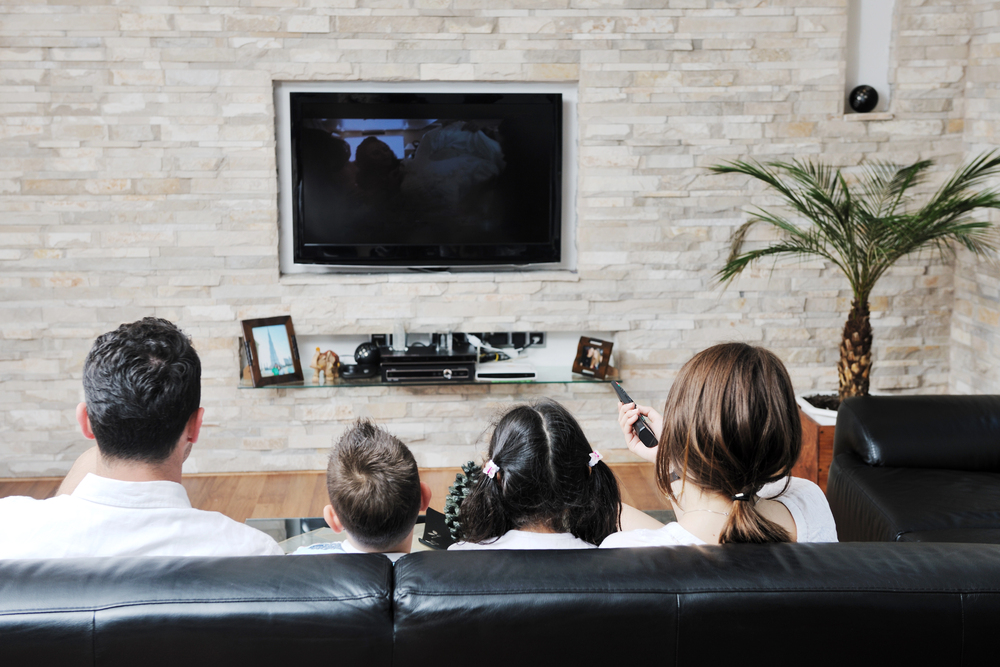
Think about how your family actually gathers around the screen throughout a normal week. Wall-mounting creates the smallest footprint and keeps cords away from toddlers. In rentals where drilling is prohibited, a wheeled screen option with locking casters works brilliantly. If you regularly reconfigure the room for playtime and movie night, a mobile tv stand lets you roll the screen toward the play zone by day and back to the sofa at night. Lock the casters for stability to help reduce tip-over risk in homes with young kids. Mark two floor positions with discreet felt dots so everyone returns the screen to the right place.
Use adhesive raceways along skirting boards and short Velcro wraps to gather leads neatly. Mount a small remote caddy above toddler reach and verify the button battery door is screw-secured.
Stop Mess At The Source With Smart Storage
Follow the 1:1 rule: one container per category such as blocks, trains, or art supplies. This prevents overstuffed catch-alls that slow pack-up times. Use vertical cube storage at child height with fabric bins. Label with pictures and words so pre-readers can self-serve. Adopt a rotate and rest method by storing half the toys out of sight and rotating fortnightly to refresh interest while reducing daily clutter.
Use Layered Lighting To Shift From Day To Night
Layer your lighting to shift from homework to movie time smoothly. Ambient light should wash walls at warm white 2700 to 3000 K for relaxing evenings. Task lighting targets reading seats at 3000 to 4000 K.
LEDs use about 75% less energy than halogens and last 5 to 10 times longer. Use plug-in dimmers or smart plugs to introduce scenes without rewiring, which is ideal for rentals.
Tidy Wi-Fi And Power So Tech Fades Away
Place the router centrally and elevated with a clear line of sight to common device spots. Avoid thick brick walls, large metal appliances, and mirrors that can interfere. Run cables along baseboards in adhesive raceways and label power boards clearly.
Conclusion
A few simple measurements and a mode-based brief take the guesswork out of furniture placement. Anchors, cable control, and button battery checks make safety part of the background. With zones and routines in place, your living room can pivot from LEGO builds to book club without stressful cleanup. Revisit your room brief every school term and adjust as your kids grow.
FAQs
How do I keep a toddler safe around the TV if I cannot drill into rental walls?
Use a stable, low, wide cabinet with anti-tip straps and lockable casters. Route cables in adhesive raceways along skirting and store the remote above toddler reach with a screw-secured battery door.
What is the quickest way to tidy the room before guests arrive?
Run the one-minute reset for each zone: toss toys into labelled bins, fold the desk, and return the screen to its parking spot. Do a fast floor sweep and clear 900 mm lanes.
How warm should my living room lighting be for reading versus movie night?
Aim for 3000 to 4000 K at the reading seat for clarity. Use 2700 to 3000 K for relaxed evening ambience. Add soft backlight behind the TV during movies to reduce eye strain.
Where should the router go if my NBN box is in a corner?
Place a mesh Wi-Fi node in a central, elevated spot and connect it by Ethernet if possible. Avoid placing the router behind TVs or near large mirrors, and test speed at the sofa to confirm improvements.