
kiddi
For many families, the car holds the week together. It covers the morning drop-off, the commute, the sport on Tuesday and the pick-up that has to happen by 3.15. When it is suddenly sitting in a repairer’s workshop after a crash, the routine has to be rebuilt almost overnight. If the accident was not your fault, not at fault car hire is one option that can keep the school run, the work commute and everything in between moving while your own car is repaired.
Start with the accident itself
Before you think about logistics, look after the basics. Check that everyone is safe and, if anyone is hurt or there is a public safety risk, call 000. Exchange details with the other driver, take photos of the scene and the damage if it is safe to do so, and note down the names of any witnesses.
The rules differ a little between states and territories, so it helps to read the official guidance for where you live. Victoria Legal Aid’s guide to driving and accidents explains when to contact the police, what details to swap and why insurance matters. It is written for Victorians, but the steps are a useful checklist wherever you are.
Map the week before you need it
Once the immediate paperwork is under way, sit down with a calendar and work out what the car actually does for your family. Write down every trip that depends on it: school start and finish times, before and after-school care, sport and music lessons, shifts, the supermarket run, and any medical appointments.
Then sort the list into trips that can move and trips that cannot. Some can be shared with another family, swapped for a bus or train ride, or done on foot or by bike. Others, such as an early drop-off before a work shift, are harder to shuffle. Knowing which is which tells you how much transport you really need.
It is also a good moment to update your family’s contact list. If you are late to pick up, a grandparent or neighbour needs to be reachable and the school needs to know who is allowed to collect your children. Kiddipedia’s guide to emergency contacts is a handy prompt for who should be on that list.
Talk to the school and the other parents
Schools see this often. A quick call or email to the office or the class teacher means they know why drop-off times might wobble for a week or two. If you usually carpool, tell the other parents early, because they may be able to help for a while, and you can return the favour once things settle.
Children also cope better when they know what to expect, so explain that the car is being fixed and who will pick them up, and when.
Why a replacement car suits a family
A family car is rarely interchangeable with just any vehicle. You may need a certain number of seats, room for a pram or sports gear, or a child seat that fits properly. That is why a like-for-like replacement matters more than it might for a solo commuter.
Right2Drive supplies replacement vehicles to drivers who were not at fault in an accident. The vehicle is similar to your own, and you can keep it for the length of your repairs or, if your car is written off, until your settlement comes through. The range includes electric and hybrid cars, and there are branches across Australia. The hire is at no cost to you, and Right2Drive’s zero excess means you pay no excess if you have an accident while driving the replacement car, regardless of fault. Terms and conditions apply, and eligibility is checked before a vehicle is arranged, so it is worth confirming your details early rather than when the repairs are already under way.
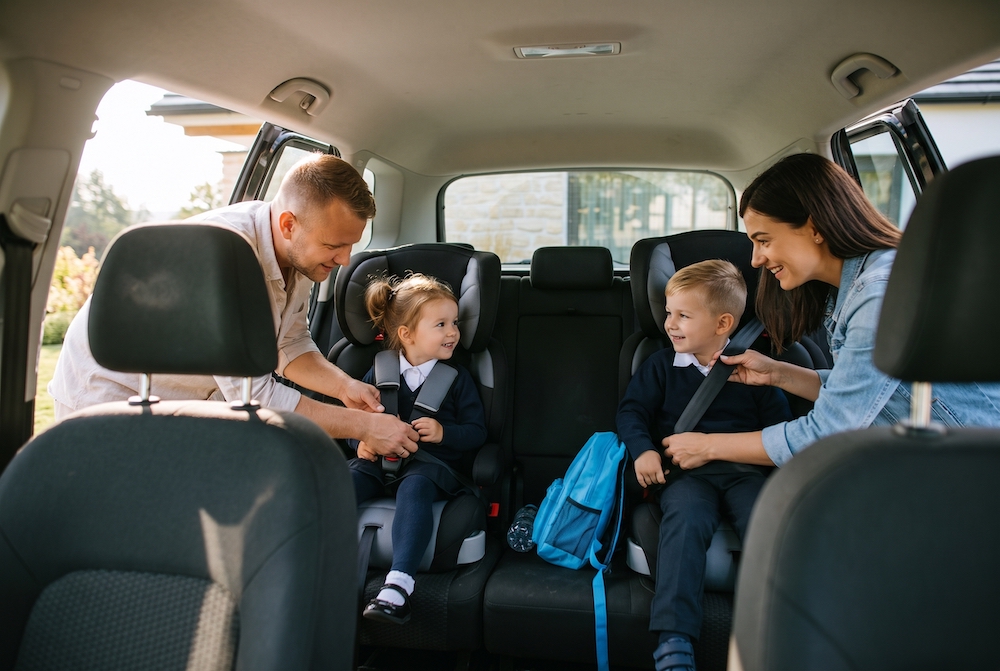
Whatever car you end up driving, take a few minutes to check it before the first school run. Make sure any child seats or boosters fit securely and are installed correctly, adjust the mirrors and seat for the driver, and learn where the controls are before you are in peak-hour traffic with a car full of children.
A short checklist for the first week
- Report the accident to your insurer and keep a record of what you have been told.
- List every regular trip and mark the ones that cannot move.
- Tell the school, the care provider and any carpool partners what has happened.
- Check child seat fit and installation in whichever car you are driving.
Getting back to normal
A crash that was not your fault still costs you time, energy and routine. Cover the essentials first, tell the people who need to know and arrange transport that matches how your family actually lives. Repairs and settlements often take longer than anyone would like, so plan for several weeks of disruption. A little preparation now means the school run can carry on much as it did before.
This article is general information only and is not legal, financial or insurance advice.