
kiddi
Picture this: it’s lunch break at your child’s school. Kids are crouched on cracked concrete steps, giggling and squirming, while teachers on yard duty stand with nowhere comfy to sit. As parents, many of us have quietly thought, Surely this could be better?
The hard truth is that outdoor furniture often gets treated as a last‑minute budget tick‑box, yet this “afterthought” approach ends up costing schools, and communities , far more than anyone realises.
The Real Cost of Cheap Choices
Here’s the thing about outdoor furniture for schools – going cheap usually means going twice. That bargain picnic table might look like a win for the budget committee, but fast-forward two years, and you’re looking at wobbly legs, splintered surfaces, and replacement costs that make the finance team wince.
Here’s the smarter view: quality outdoor furniture usually sticks around. These pieces are designed to cope with:
- Boisterous lunch breaks
- Rainy sports carnivals
- Community events on weekends
Over five to ten years, a high‑quality investment often costs less overall than repeated cheap replacements, saving time, money and headaches.
More Than Just Somewhere to Sit
Outdoor spaces with good furniture don’t just look nicer — they transform how children interact with their school environment.
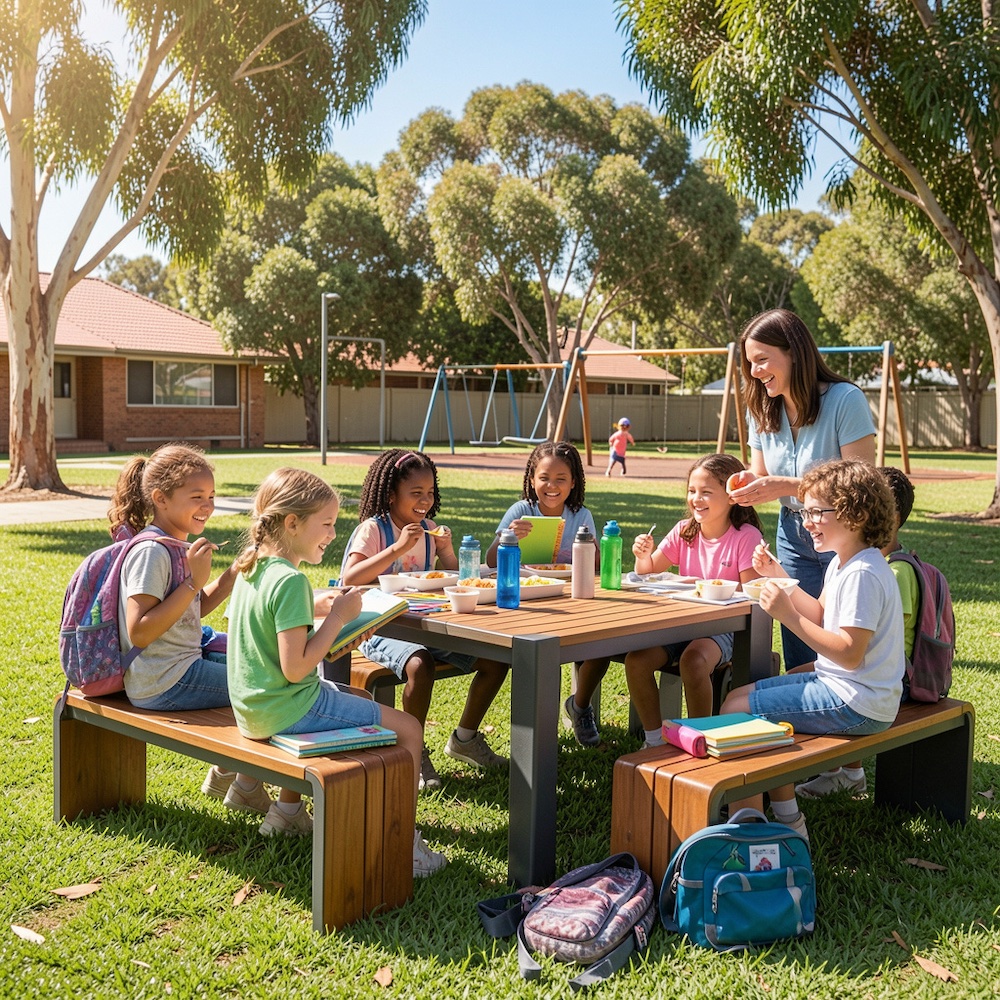
A well‑placed bench can become a reading nook where classmates share books. A sturdy table can host an outdoor science lesson on a sunny afternoon. In fact, research shows that outdoor learning isn’t just a nice add‑on: it’s recognised by the Australian Curriculum as a valuable way for students to engage with school content, build wellbeing and connect with their environment in practical, active ways.
Parents attending school events also notice these touches. Comfortable, thoughtful outdoor spaces say, “We care about our children’s experience.” Community groups using the grounds for markets or meetings feel welcomed and appreciated.
What Actually Matters in School Furniture
Let’s get into what really makes outdoor seating worth investing in — from a parent’s point of view:
1. Durability
Kids are rough on furniture — and rightly so. Outdoor furniture needs to withstand daily use from hundreds of energetic students without splintering, cracking or breaking.
2. Comfort
Uncomfortable seating leads to fidgety kids and teachers who avoid taking lessons outside. Furniture that’s comfortable encourages children to spend more time outdoors — and that means movement, fresh air and better wellbeing.
3. Weather Resistance
Australia’s weather swings from searing sun to wet, windy days. Choosing materials and finishes that can handle UV, rain and heat makes a huge difference in how long furniture lasts.
4. Safety
This is huge. Furniture should have:
- Rounded edges
- Stable bases
- Materials that don’t heat up dangerously in the sun
These details matter when you’re responsible for children’s wellbeing every school day.
The Ripple Effect on Learning and Wellbeing
Outdoor learning isn’t just about moving desks outside. It’s recognised in the Australian Curriculum as a way to deepen children’s connection with their natural and social environments while developing skills like teamwork, resilience, leadership and critical thinking.
Time outside — whether in lessons, on breaks, or during community activities — supports children’s health, improves engagement, and nurtures a lifelong appreciation for active, nature‑rich learning. Research shows that outdoor experiences encourage:
- Greater student engagement
- Better social interactions
- Opportunities for deeper wellbeing and physical activity
The Community Connection
Today’s schools aren’t just for students. They’re community hubs where weekend markets, parent workshops and local meetings happen. Quality outdoor furniture helps transform school grounds into welcoming spaces where people want to gather.
When local groups feel at home using these areas, schools may unlock new opportunities, like facility hires, fundraising events, and stronger community partnerships. Comfortable, well‑designed outdoor spaces aren’t just useful; they send a message that everyone belongs here.
Making It Work for Everyone
The best outdoor seating & furniture for schools balances multiple needs. Students need durability and comfort for daily use. Teachers need functional spaces that support outdoor learning. Maintenance staff need furniture that’s easy to clean and move when necessary.
Parents and community members need welcoming spaces that make school events more enjoyable. Even the finance committee needs to see long-term value that justifies the initial investment.
Getting the Investment Right
Smart schools think of outdoor furniture as infrastructure, not decoration. They ask the right questions before buying:
- Which areas are most used by students?
- Where do children naturally gather?
- What kinds of activities happen outdoors most often?
- Which pieces will be versatile across seasons and events?
Once these needs are clear, it’s easier to choose furniture that balances durability, comfort and community value.
Quietly Supporting School Life — All Year Long
When a school gets this right, outdoor furniture becomes one of those things you barely notice — until it’s missing. It supports:
- Lunchtime chats under the sun
- Outdoor lessons on crisp mornings
- Community picnics and celebrations
It’s not just about seats and tables — it’s about creating spaces where children thrive, teachers are inspired, and communities connect.
References
Here are the Australian resources that informed this article:
- Outdoor learning and its role in the Australian Curriculum: benefits to student engagement, wellbeing and human‑nature connection.
- Outdoor learning benefits, including leadership, resilience, and human‑nature relationships.
- Outdoor learning’s role in connection and engagement with nature.