
Kiddipedia
Let’s be honest, all parents sometimes dream of a child playing independently for as long as possible, while mum or dad could do all their household chores, combining them with remote work. The paradox of the situation is that often the parents themselves become the reason why the child does not want to play on their own.
For parents everywhere, the dream of a child engaging in independent play while you tick off chores or work from home is very real. But often the reason our kids don’t play on their own is not about capability, but about how we set it up. This article takes your original insights and backs them with Australian research and expert guidance to show why your approach matters and how it helps your child grow in every way that counts.
In this article, we’ll uncover independent play secrets that will work for you, and we’ll explore why they work using Australian child development research and expert guidance.
Create a Space for Baby Playing
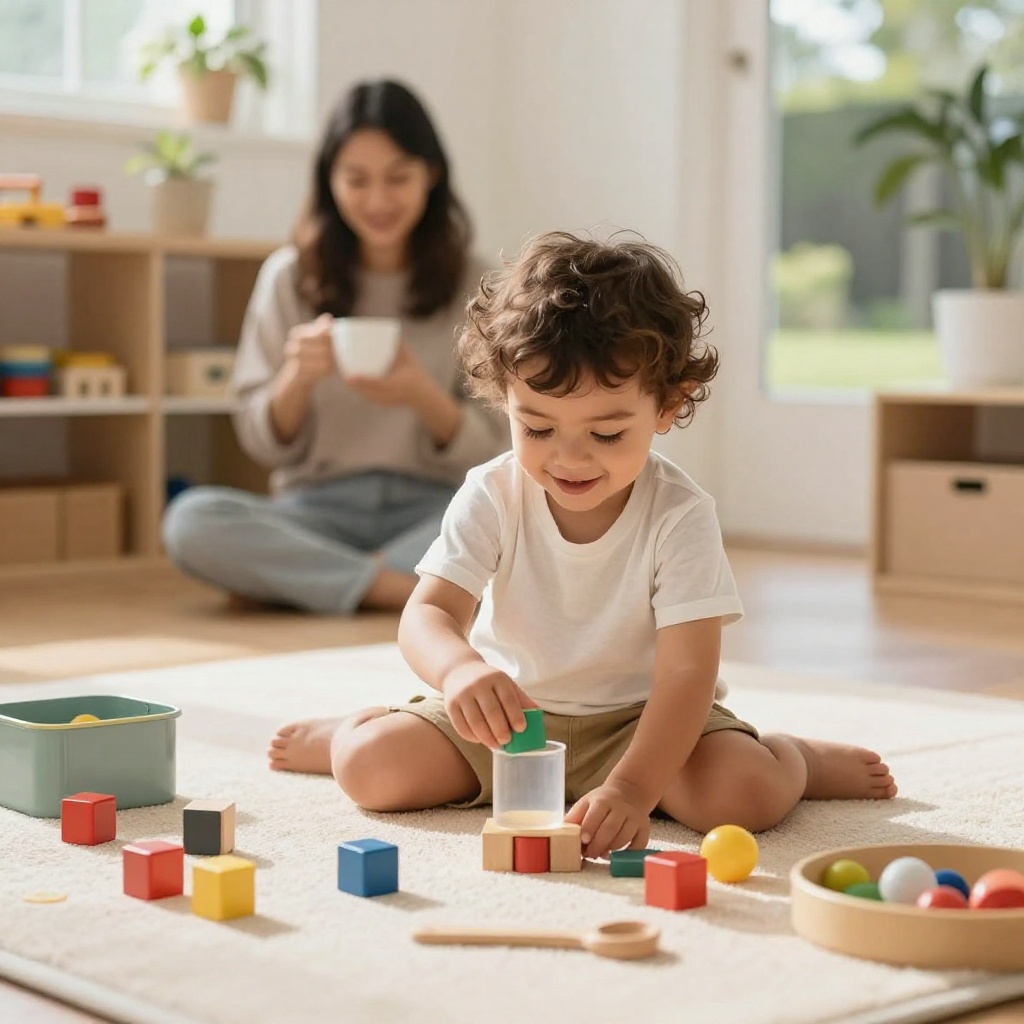
It does not have to be a children’s room; any special place designated for this will be suitable. The main thing is for the child to know that this is the place of their free choices, and they can do whatever they want (while staying safe) and play as they want.
It doesn’t need to be a dedicated “kids room.” What matters is consistency. Children quickly learn that a particular area is their space for exploration, choice, and play, and that predictability helps them settle into independent play with confidence.
Why this matters: Establishing a consistent play space helps children develop predictability and autonomy. According to Royal Children’s Hospital Kids Health Info, familiar play environments support brain development, motivation to explore, and emotional security in early childhood.
Tip: A low shelf of favourite toys or a soft mat in a corner signals to your child, “This is your space to explore.”
Teach Your Child How to Play
If they master a game well with you, then they will be able to play it themselves. Independent play starts with modelling. When a young child sees how play works, through your shared engagement, they internalise structure, turns, imagination, and problem-solving steps.
It might seem obvious, but many children don’t know how to play unless they’ve seen it modelled. When you join in and show them how a game works, your child learns patterns of engagement, turns, symbols, and storytelling, and can emulate it later.
Research note: Australian early childhood resources underline that play-based learning, where adults scaffold first and then step back, strengthens cognitive flexibility, creativity, self-regulation, and confidence in toddlers and preschoolers.
Parent thought: Think of yourself as a play coach, show them the ropes, then hand the game back to them.
Introduce the Child to Your Chores
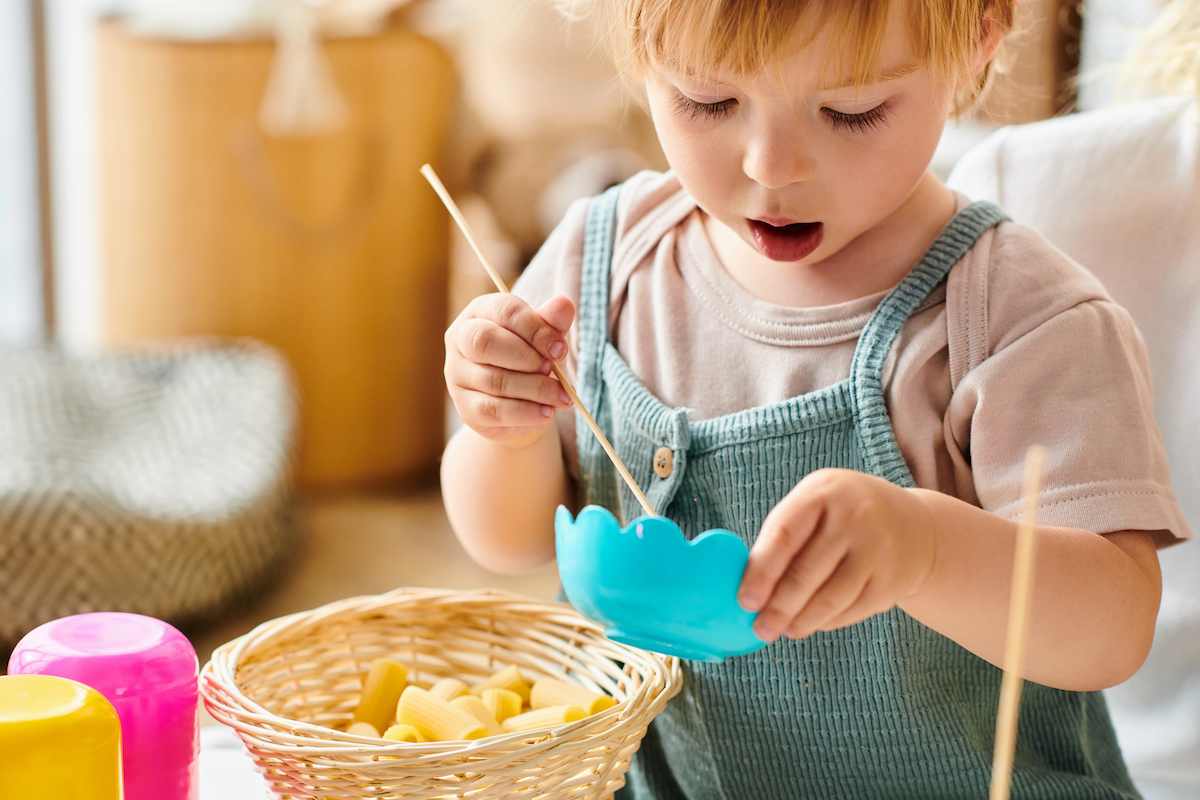
Helping mum and dad, the child learns to repeat after you and behave correctly and safely. For example, a little helper in the kitchen will be happy to “cook” a soup from pieces of specially selected potatoes and carrots for at least half an hour, and playing with water can captivate kids for hours.
Hint! Give your child unbreakable utensils and allow them to play with real materials, such as washed vegetables, cereals, and water.
Why chore-based play works: Children learn early independence and sequencing skills when everyday tasks are presented as play. Australian research has found that such pretend and practical play supports decision-making, problem-solving, language development, and emotional regulation.
Tip: Giving your child play materials like bowls of water, washed veggies, or safe utensils turns helping into play, and play into growth.
Diversify Impressions to Foster Independent Discovery
Watering plants, exploring textures, or handling containers all give toddlers something to figure out for themselves. According to the Australian Institute of Family Studies, nature play and self-directed exploration contribute to improved confidence, self-esteem, and decision-making skills.
Children learn not just through repetition, but through novelty, and your role is to introduce environments and objects that spark curiosity.
Idea: A small watering can and a patch of garden can spark focus and joy for surprisingly long stretches.
Always Stay in Sight
Sit down next to or within sight of your child and go about your business. And let the baby make independent play, sometimes coming to you for advice or to share the news and results.
Why presence matters: Research on attachment and secure caregiving shows that children are more comfortable exploring independently when they know you’re nearby and attentive. This supports confidence and reduces anxiety.
Tip: A comfy chair beside their play space lets your child feel connected even if you’re doing dishes or checking emails.
Accept That Infants’ Independent Play Is Short
If your baby is up to two years old, you should not expect them to be able to play independently for long. Understand and accept that your child needs you now and buy a baby sling or a baby chaise lounge. It will greatly facilitate your life and free up your hands for household chores and work tasks.
Developmental note: Young children, especially under two, have short attention spans; independent play typically comes in short bursts of a few minutes, which is entirely developmentally appropriate.
Parent relief: Short play sessions add up — and every tiny independent moment is a step forward.
Make the Child Interested
Leaving the children’s room, leave the child with this bait: open the door of a closet full of interesting but safe things, “forget” your bag, put a stack of old postcards in a prominent place. Babies’ play toys will not always be able to interest the child as something unknown and full of mysteries.
Why novelty works: Children are naturally drawn to novelty, and psychologists in Australia and internationally describe play as intrinsically motivated behaviour that thrives on curiosity.
Try this: Put a “treasure box” of safe curiosities within reach and rotate items weekly.
Throw in New “Old” Toys Regularly
A toy that was once forgotten becomes “new” again when reintroduced after a break. This toy rotation works because children seek novelty, and a fresh perception reignites exploration and independent play.
Evidence-based trick: Rotating toys renews interest and keeps the play environment engaging without buying new things. The novelty effect triggers curiosity and sustained engagement — a key aspect of the science of play.
Provide Your Little One With Full Communication Time
Sometimes children constantly ask you to play with them, not because they lack independent play skills, but because they want your attention.
Why this matters: Emotional security and quality connection build confidence, which leads to better independent play later. Australian research shows that responsive parent-child interaction during play improves language and social skills.
Tip: Try to find dedicated time in your routine, whether story time before bed, playful breakfast chats, or weekend park visits, because children who feel connected socially often play more confidently alone.
Understand Your Child
Being attuned to your child’s personality makes all the difference. Some children need a shorter window before they retreat into play, while others seek more interaction.
Development insight: Each child is unique, some prefer tactile play, others enjoy imaginative scenarios or problem-solving tasks. Observing preferences lets you seed play ideas that resonate with their interests.
Praise and Reward for Independent Play
“I loved the way you lined up those cars!”
“You kept going with your drawing for so long!”
Why encouragement works: Positive reinforcement nurtures intrinsic motivation. When children hear specific praise about their effort and creativity, they are more likely to engage independently next time.
Suggest Ideas for Further Games
Increase the complexity of game stories gradually, adding conditions, offering various events. Take all these “complications” from real life, for example:
-
The doll is dirty, it needs to be washed
-
The bear is hungry, it needs to be fed
-
The car broke down, maybe there is no gasoline
Parent-to-parent wisdom: Adding narrative twists helps sustain attention and introduces problem-solving and symbolic thinking — all foundational for school and life.
Conclusion
Teaching a kid to play independently is not as difficult as it may seem. Surely, you should be patient, and adjust your expectations according to your baby’s age. Independent play skills development is the first contribution to independent living skills formation, so this stage is very important for your kid. Teach them to do everything right, and you will be grateful to yourself in the future.
Why this matters long term: Independent play builds creativity, emotional resilience, problem-solving, and confidence — all strong predictors of school readiness and lifelong learning success. Australian child development frameworks emphasise play as a critical foundation for healthy development.
Trusted Australian Resources for Parents
-
Royal Children’s Hospital, Play and Child Development
https://www.rch.org.au/kidsinfo/fact_sheets/Play/ -
StartingBlocks.gov.au, Play-Based Learning Resources
https://startingblocks.gov.au/resources/parenting-and-home/play-and-leisure-activities/play-based-learning -
Australian Institute of Family Studies, Nature Play and Wellbeing
https://aifs.gov.au/resources/policy-and-practice-papers/nature-play-and-child-wellbeing -
AIFS, Playgroups and Early Interaction Research
https://aifs.gov.au/resources/webinars/encouraging-playgroup-participation-what-works -
Psychology Today (Australia), Understanding Play
https://www.psychologytoday.com/au/blog/freedom-to-learn/202205/what-is-play-how-children-define-it