
Kiddipedia
There are some conversations that return every year as parents, not because we haven’t had them before, but because our children meet them at a different stage of who they are becoming.
ANZAC Day is one of those conversations.
We wake earlier than we normally would on a weekend. The house feels still. The streets seem softer somehow, like the world itself has slowed down for a moment. Some of us head out to dawn services. Others stand at home, watching from the edge of the day as the light begins to shift.
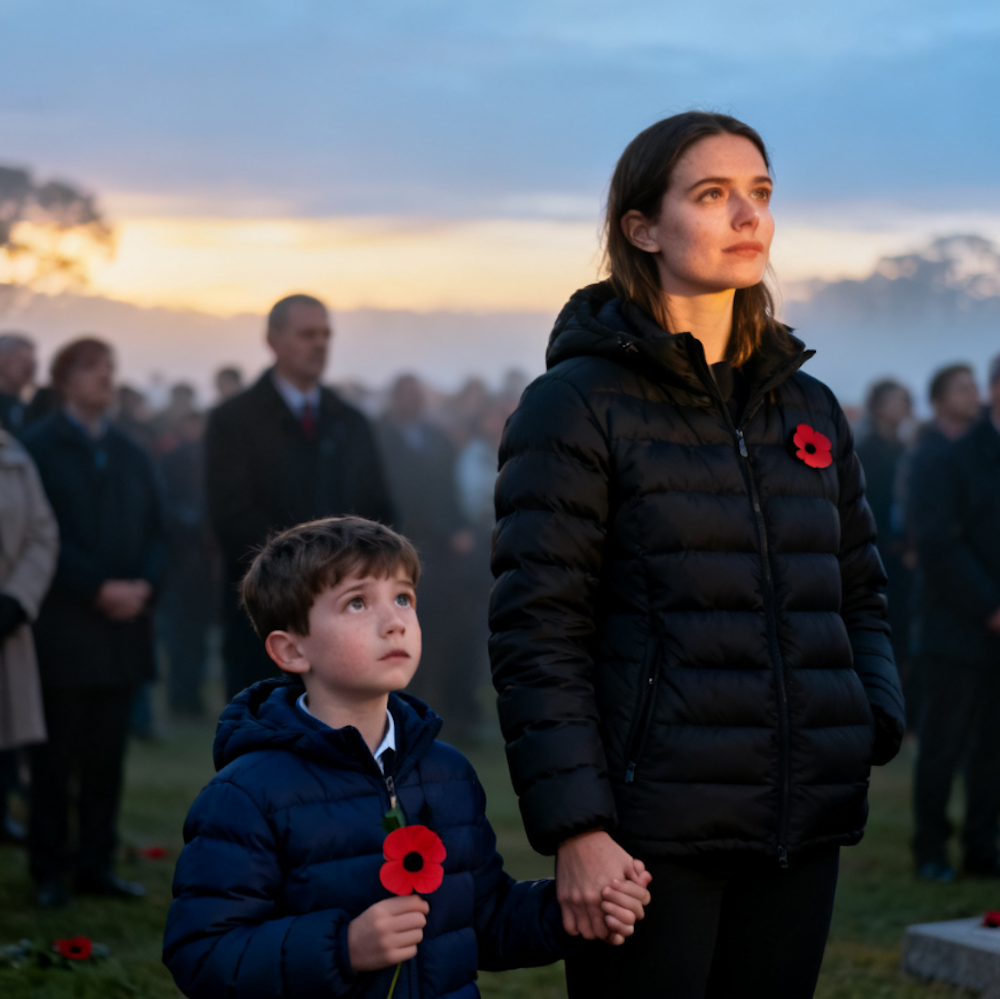
We might pin a poppy to a jacket. Or simply pause together in the lounge room in silence. A hand held a little longer. Fewer words spoken than usual.
And in those still moments, something often sits just beneath the surface.
Do they understand what this day truly means… or are they simply learning how to be part of something they can’t yet fully name?
The truth is, it’s rarely clear-cut.
Children don’t begin with understanding in the way adults define it. Not of history. Not of sacrifice. Not of why silence can feel so heavy.
They begin with something quieter.
They notice how we act differently. They feel the change in tone before anything is explained. They remember how a moment felt long before they understand why it mattered.
And perhaps that’s the part we often underestimate.
Because they don’t need to fully understand ANZAC Day right now for it to already be forming in them.
They just need to be there while it is remembered.
And maybe that’s where everything quietly begins.
Not with explanations. Not with perfectly chosen words. But with what children see us do when something matters more than everyday life.
Because long before they understand history, or sacrifice, or the weight behind ANZAC Day itself, they are already learning something else entirely.
They are learning what we pause for, what we slow down for, and what we quietly decide matters.
And this is where so many of our parenting conversations quietly connect.
Because if respect is something we are still shaping in the everyday—respect for others, for boundaries, for ourselves, then ANZAC Day becomes part of the same long lesson.
Just on a deeper, more reflective layer.
Not a different kind of respect.
The same one… asked to stretch further than words usually reach.
🌿 Respect: The Everyday Foundation We’re Still Building
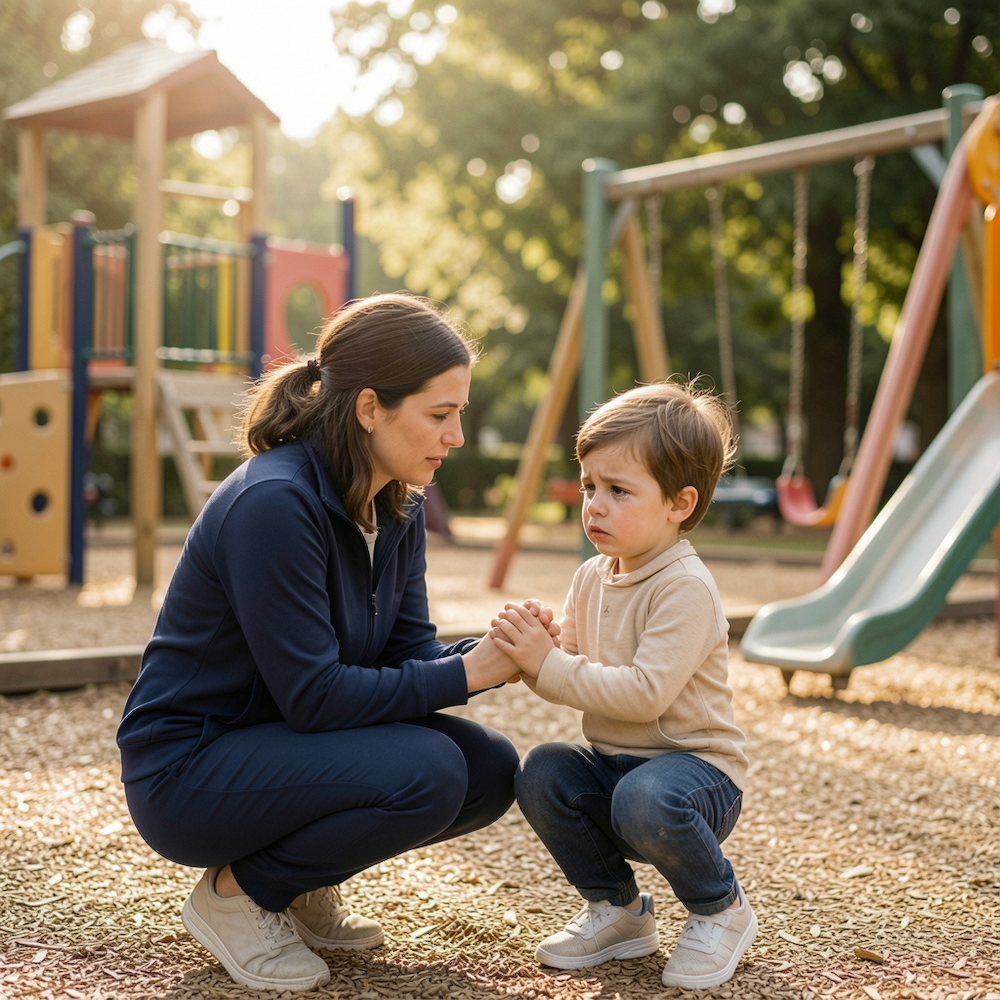
Respect is one of those things most of us are still actively teaching in real time.
Respect for us as parents.
Respect for their friends.
Respect for teachers.
Respect for belongings, boundaries, and shared spaces.
Some days it feels like we’re repeating ourselves constantly.
“Use kind hands.”
“Listen when someone is speaking.”
“Take care of your things.”
So it’s completely natural to pause and think:
If respect is still being learned in the everyday, how can we expect children to immediately grasp respect for something as layered and complex as ANZAC Day?
And yet, that’s exactly where the power of early exposure lies.
Children don’t begin with intellectual understanding. They begin with emotional imprinting.
They learn what matters by watching what we pause for.
🕊️ What ANZAC Day Represents (In Human Terms, Not History Lessons)
At its core, ANZAC Day is about remembrance.
It honours Australian and New Zealand service members who served and died in wars, conflicts, and peacekeeping operations. It also acknowledges those who returned home carrying visible and invisible scars.
The Australian War Memorial describes ANZAC Day as a time to reflect on “the service and sacrifice of all Australians who have served in wars, conflicts and peacekeeping operations” (Australian War Memorial, 2025).
But for children, this definition is too abstract.
So instead of facts, they learn through atmosphere:
The quiet at dawn
The stillness of a crowd
The sound of a bugle
The presence of adults who feel different that morning
Children are remarkably sensitive to emotional tone. Research in developmental psychology shows that young children interpret meaning through adult emotional cues long before they fully grasp conceptual history (Australian Institute of Family Studies, 2023).
In other words, they don’t need to understand war to understand reverence.
🌸 A Parent’s Age-by-Age Guide to Talking About ANZAC Day
ANZAC Day is one of those moments in parenting where words often feel too small for what we’re trying to explain.
We want our children to understand respect, sacrifice, and remembrance, but we’re also aware that history, war, and loss are not concepts children absorb in one conversation.
So instead of trying to “teach ANZAC Day perfectly,” the goal is simpler:
👉 Help children grow into its meaning over time.
Here’s how that looks by age and stage of development.
🧸 Ages 3–5: A Quiet, Simple Understanding
At this age, children live in feelings, routines, and symbols. They do not understand history—but they do understand atmosphere.
🗣️ How to talk about it:
- “Today is a special day where we remember people who helped others.”
- “We stand quietly to show respect.”
- “We wear a poppy to remember.”
🕊️ What matters most:
- No war details
- No heavy explanations
- Focus on calm, gentle presence
💡 What they are learning:
- Silence can have meaning
- Adults pause for something important
- Some days feel different
🌱 Ages 6–9: Stories That Build Meaning
Children begin thinking in stories, heroes, and simple ideas of right and wrong.
🗣️ How to talk about it:
- “Some Australians went away to help others during war.”
- “They showed courage and looked after each other.”
- “We remember them so we don’t forget their bravery.”
🕊️ What matters most:
- Keep it human, not historical overload
- Focus on kindness, mateship, and care
- Allow questions without pressure
💡 Helpful approach:
One story is enough. One person. One moment. One letter.
🌿 Ages 10–12: Understanding Begins to Deepen
Children start understanding time, cause and effect, and fairness.
🗣️ How to talk about it:
- “ANZAC Day remembers people who served in wars, including Gallipoli.”
- “Many were young, like older kids today.”
- “It was a very difficult time, and not everyone came home.”
🕊️ What matters most:
- Be honest, but gentle
- Avoid graphic detail
- Focus on human cost and remembrance
🌏 Ages 13–16: Questioning and Connection
Teenagers can engage with history, ethics, and modern parallels.
🗣️ How to talk about it:
- “ANZAC Day is about remembering sacrifice and thinking about peace.”
- “What do you think we learn from history?”
- “Why do you think we continue to remember?”
🌍 Connection to today:
Some teens may already be aware of global conflicts. Gentle references to current events (such as Ukraine or Iraq) can help them understand that service and sacrifice still exist today.
🕊️ What matters most:
- Encourage questions
- Don’t rush answers
- Allow complexity
🌄 Ages 17+: Personal Meaning Emerges
Young adults begin forming their own interpretation of remembrance.
🗣️ How to talk about it:
- “What does remembrance mean to you now?”
- “How should we honour service today?”
- “What responsibility comes with memory?”
🕊️ What matters most:
- Space for personal reflection
- No forced interpretation
- Respect for individual meaning
🌺 A Gentle Truth for All Ages
One of the hardest parts of parenting is accepting this:
Children do not fully understand ANZAC Day when we first introduce it.
And that’s not the failure—it’s the design.
Understanding is layered:
First comes feeling
Then story
Then context
Then reflection
Then meaning
🌅 Why Silence Teaches More Than Words
Silence can feel unfamiliar in childhood.
But it is one of the most powerful teaching tools we have.
At ANZAC services, silence is not emptiness. It is collective memory.
Children may not understand it intellectually, but they feel its weight.
And over time, that feeling becomes association:
This matters. We stop for this. We remember this.
That is the beginning of respect.
🧠 Understanding Doesn’t Arrive All at Once
Children are not meant to fully understand ANZAC Day in childhood.
Understanding develops over time:
- Early childhood: emotional recognition
- Primary school: stories and simple meaning
- Adolescence: context and questioning
- Adulthood: personal interpretation
This aligns with Australian curriculum frameworks showing that abstract moral reasoning develops gradually through adolescence (ACARA, 2024).
So if they don’t “get it” yet, it’s not a gap—it’s a stage.
🌿 Respect in the Everyday
Respect is something we are still teaching in the everyday.
Respect for others.
Respect for boundaries.
Respect for ourselves.
So it’s natural to wonder how children can extend that understanding to something as layered as ANZAC Day.
But children don’t learn respect in categories.
They learn it in patterns.
When they see us pause, they learn:
Some things matter beyond explanation.
🌏 Helping Children Connect to Sacrifice
For older children, gentle connections to the present world can deepen understanding.
Global events such as Ukraine or Iraq can sometimes help children recognise that war is not only history—it is still part of the world today.
These conversations should always be age-appropriate, brief, and reassuring.
The Department of Veterans’ Affairs encourages focusing on service, courage, and remembrance rather than detail or distress (DVA, 2025).
🌼 What We’re Really Teaching on ANZAC Day
ANZAC Day is not about memorising history.
It is about planting something deeper:
Empathy
Gratitude
Respect
Memory
Reflection
These grow slowly, across years—not moments.
🫶 A Reassurance for Parents
Children rarely interpret meaning the way adults do at the time.
But they absorb far more than we realise.
They notice when we slow down.
They notice when something matters.
They notice what we do without needing to explain why.
And over time, those moments become understanding.
Not immediate.
Not perfect.
But real.
🌄 Final Reflection
ANZAC Day is not a single conversation.
It is something we return to year after year, until one day, they begin to carry it themselves.
And maybe that’s the point.
They don’t need to fully understand it yet.
They just need to grow up in a world where remembrance exists.
📚 References
- Australian War Memorial (2025). ANZAC Day and its significance. https://www.awm.gov.au
- Department of Veterans’ Affairs (Australia) (2025). Education and ANZAC resources for schools. https://www.dva.gov.au
- Australian Institute of Family Studies (2023). Children’s emotional development and learning through observation. https://aifs.gov.au
- Early Childhood Australia (2022). Storytelling and emotional literacy in early learning. https://www.earlychildhoodaustralia.org.au
- Australian Curriculum, Assessment and Reporting Authority (ACARA) (2024). Humanities and Social Sciences curriculum framework. https://www.acara.edu.au