
Kiddipedia
For parents, choosing an activity for their child is about more than keeping them busy after school. We want our children to feel confident in who they are, build friendships, develop healthy bodies and minds, and have the skills to navigate the challenges that come with growing up.
Self-defence-based activities, including karate, taekwondo, judo, Brazilian jiu-jitsu and other martial arts, can offer a combination of physical activity, structured learning, social connection and opportunities to practise managing challenging situations.
What makes these activities particularly interesting is that the benefits can extend well beyond physical self-protection. Children can practise responding to setbacks, communicating boundaries, managing frustration, working with others and gradually building confidence through experience.
However, the benefits depend on the quality of instruction, the child’s individual needs and the training environment. Research on physical activity, motor development and children’s psychological wellbeing provides a strong basis for many of these benefits, while findings specifically about martial arts are more variable. It’s important to distinguish well-supported benefits from outcomes that are possible but not guaranteed.
The following expands on each benefit from a parent-focused, evidence-informed perspective.
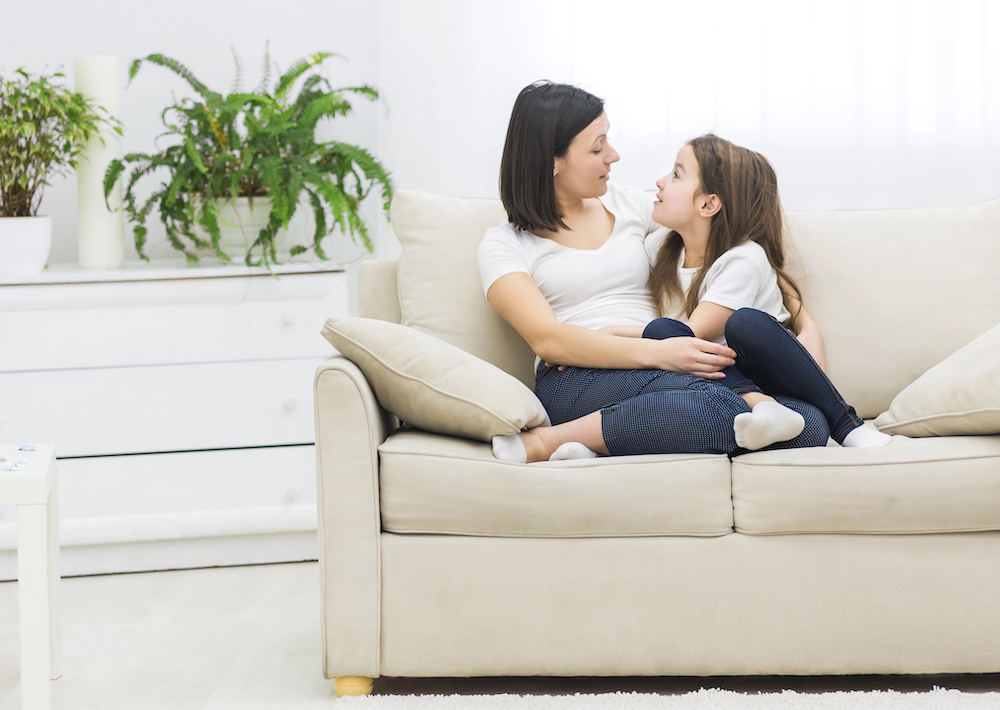
1. Building confidence and emotional resilience
1. Increases self-confidence
Confidence develops when children begin to trust their ability to handle situations, rather than simply being told they can do something. In a well-run martial arts class, a child might initially struggle to coordinate a movement, feel nervous about practising with a partner or hesitate to participate in front of others. With patient instruction and repeated practice, those unfamiliar tasks can become manageable.
These small experiences provide opportunities for children to build confidence through mastery: the understanding that effort, practice and persistence can help them improve. That confidence may carry into other areas of life, including trying a new school activity, speaking up in class or meeting unfamiliar children.
For parents, the real value isn’t necessarily a child who becomes the loudest or most outgoing in the room. It may be the quieter child who begins volunteering an answer, trying something new or trusting themselves to handle a challenge.
2. Builds self-esteem
Self-esteem relates to how children value themselves, not simply how well they perform. Learning a new skill, receiving constructive feedback and recognising personal progress can give children meaningful experiences of competence and achievement.
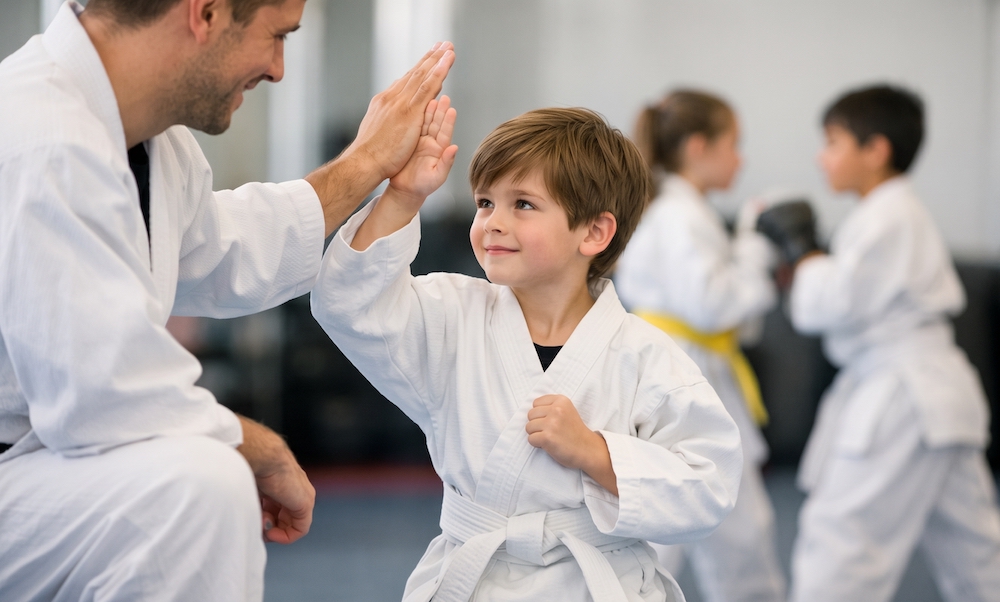
Martial arts can provide visible milestones, such as mastering a movement or progressing to a new belt. When instructors celebrate effort, improvement and respectful behaviour alongside technical ability, children can learn that their worth isn’t determined by winning, being the strongest or progressing faster than their peers.
The important distinction is that self-esteem grows best when achievement is not the only measure of a child’s value. Parents should look for classes where beginners, children who learn differently and those who need extra time are treated with equal respect.
3. Develops resilience
Resilience is the ability to adapt to difficulties and recover after setbacks. A martial arts class can offer manageable opportunities to practise this skill: a technique doesn’t work, a child loses a game, or a movement takes several attempts to learn.
With supportive coaching, children can learn to pause, accept feedback, adjust their approach and try again. These experiences may help them become more comfortable with the frustration that naturally accompanies learning.
This matters because children encounter disappointments well beyond sport, from friendship difficulties to academic challenges. A child who learns that struggling with something doesn’t mean they have failed may be better equipped to approach future setbacks constructively.
Resilience doesn’t mean never feeling upset or afraid. It means learning that difficult feelings can be managed and that asking for help is part of coping successfully.
4. Encourages a growth mindset
A growth mindset involves recognising that abilities can improve with learning, practice and effective support. Martial arts naturally provides opportunities to experience progress over time, particularly when a child revisits a technique that once felt difficult.
Instead of hearing only, “You’re a natural,” children can receive feedback such as, “You kept practising and your balance improved.” This shifts attention towards the strategies and effort that contributed to progress.
For parents, this can be a useful way to reinforce a healthy relationship with mistakes. Children can learn that making an error is information about what to practise next, rather than proof that they aren’t good enough.
The key is to avoid turning every lesson into a test of performance. Progress is more meaningful when children can learn at their own pace without feeling they must constantly outperform others.
5. Improves opportunities to practise emotional regulation
Martial arts classes often ask children to wait their turn, follow instructions, manage excitement and respond appropriately when a drill doesn’t go as planned. These situations give them opportunities to practise stopping, listening and adjusting their behaviour.
Repeated practice in a supportive environment may help children develop better strategies for managing frustration and impulses. Physical activity can also support mood and stress regulation, although it should not be treated as a guaranteed solution for emotional or behavioural difficulties.
A good instructor does more than tell a child to calm down. They model how to pause, explain expectations and help the child return to the activity when ready.
These lessons can be particularly valuable when parents reinforce them at home, helping children recognise when they’re becoming frustrated and choose an appropriate response.
6. Helps children feel more prepared for unfamiliar situations
Feeling safer and being safe are related, but they aren’t the same thing. Learning basic personal-safety skills may help children feel less uncertain about what to do if someone behaves aggressively, ignores their boundaries or makes them uncomfortable.
Age-appropriate training can introduce practical responses such as creating distance, using a clear voice, moving towards a safer place and seeking help from a trusted adult. Older children may learn additional physical escape techniques under suitable supervision.
Rehearsing these responses can make them easier to recall, but no course can prepare a child for every situation or guarantee that they will be able to respond under pressure.
2. Physical health and development
7. Improves overall fitness
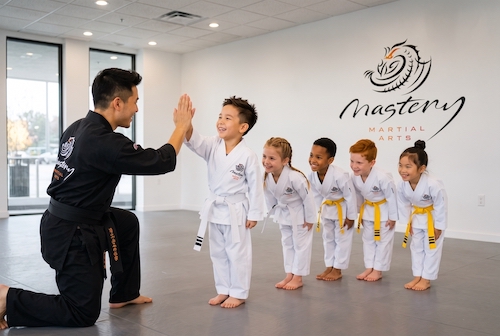
Martial arts can combine aerobic movement, short bursts of higher-intensity activity, balance work, bodyweight exercises and repeated technical drills. Depending on the discipline and class structure, children may improve cardiovascular endurance, muscular strength, flexibility and agility.
This variety matters because children’s physical fitness isn’t one single ability. A child might have excellent endurance but struggle with balance, or be strong but find quick changes of direction difficult. Different activities challenge different parts of physical fitness.
Australian physical activity guidance recommends that children and young people aged 5–17 accumulate an average of at least 60 minutes of moderate-to-vigorous physical activity each day across the week, including vigorous and muscle- and bone-strengthening activities on at least three days a week. Martial arts can contribute to this target, alongside active play, walking, cycling and school sport.
For parents, the goal isn’t to turn every child into an athlete. It’s to help them find movement they enjoy enough to keep doing.
8. Develops body awareness and coordination
Self-defence activities often require children to coordinate their arms and legs, maintain balance, judge distance, change direction and respond to another person’s movements. These tasks challenge several motor skills at once.
Motor competence is important because children who become more comfortable with fundamental movement skills may find it easier to participate in a wider range of physical activities. Better coordination can also make everyday tasks, playground games and school sport feel less intimidating.
Martial arts may be particularly engaging for children who enjoy learning through movement rather than sitting still and listening for long periods. However, the benefits depend on the activities being age-appropriate, well taught and practised regularly.
Parents can look for gradual improvement in balance, control and coordination rather than expecting perfect technique straight away.
9. Supports healthy growth and physical development
Childhood is an important period for developing strong bones, muscles, movement skills and healthy exercise habits. Weight-bearing activities that involve running, jumping and other suitable impact movements can contribute to bone health, while resistance-based movements can help develop muscular strength.
Depending on the style, martial arts may include some of these activities. The exact benefits will vary: a technique-focused class with little sustained movement will provide a different physical stimulus from a more active class incorporating jumping, footwork and conditioning.
The broader evidence supports regular physical activity for children’s health, but it’s important not to suggest that martial arts uniquely improves growth or guarantees better development than other suitable sports.
Children benefit most from a varied movement routine that includes active play, outdoor exploration, strength-building activities and opportunities to develop different physical skills.
10. Encourages an active lifestyle
One of the most useful outcomes of an extracurricular activity is that it gives children a reason to move regularly. When an activity is enjoyable, welcoming and achievable, children are more likely to want to return.
Martial arts can offer a sense of progression that helps sustain interest: children learn a technique, practise it, receive feedback and gradually build on what they know. For children who don’t enjoy traditional team sports or feel uncomfortable with competition, this structured individual progression may be appealing.
The key is finding the right fit. Some children love the routine of a dojo, while others would rather dance, swim, cycle or play football. There is no single exercise that every child needs to enjoy.
Australian sports medicine and psychology experts emphasise that enjoyment, personal preference and the environment in which activity takes place influence whether children keep participating. A sport that a child genuinely enjoys may be more valuable in the long term than one chosen solely for its perceived benefits.
11. Provides a positive outlet for energy
Children need opportunities to move, explore and engage their bodies. A structured martial arts class can give them a predictable space to practise movement, respond to instructions and focus on physical challenges.
For some children, an active session after school can provide a welcome transition between the demands of the classroom and the quieter parts of the evening. Physical activity is also associated with benefits for psychological wellbeing, although the effect varies between children and circumstances.
It’s worth being careful about the idea that children simply have excess energy that needs to be burned off. Movement can be enjoyable and regulating, but high activity levels may also reflect a child’s temperament, age, tiredness or individual needs.
Parents should look for an instructor who offers clear routines, appropriate breaks and constructive guidance rather than expecting every child to remain perfectly still or calm throughout the session.
3. Social skills, friendships and belonging
12. Creates opportunities to make friends
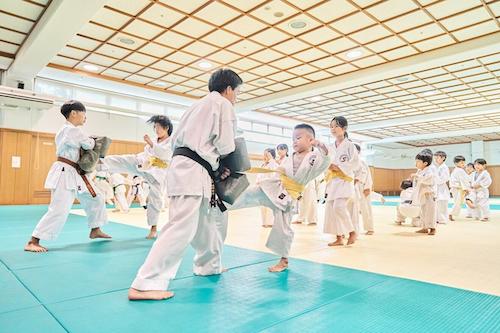
Extracurricular activities give children repeated opportunities to see the same peers, work alongside them and develop familiarity over time. Friendships often grow through these small, regular interactions rather than one big social event.
Martial arts can be a useful option for children who struggle to find their place in conventional team sports. Although many classes involve partners and group exercises, children can still work towards their own goals rather than feeling that the whole team depends on their performance.
Children may also meet peers from different schools and age groups, broadening their social experiences beyond their usual classroom circle.
Of course, friendship isn’t automatic. A welcoming instructor, respectful class culture and opportunities for children to interact outside formal drills all help create the conditions in which friendships can develop.
13. Strengthens communication skills
Children in martial arts classes need to listen to instructions, ask questions, communicate with training partners and indicate when something feels uncomfortable. Partner activities can also teach children to pay attention to another person’s responses rather than focusing only on their own movements.
These experiences can provide practical opportunities to practise clear communication. For example, a child may learn to say that a grip is too tight, ask for a technique to be demonstrated again or tell a partner they need to stop.
Those are useful skills outside sport, too. Children benefit from learning that communication involves expressing their own needs while listening to other people.
Parents can reinforce this by asking what their child found challenging, encouraging them to explain what they need and reminding them that they are allowed to speak up when an interaction doesn’t feel right.
14. Teaches teamwork and cooperation
Even in an individual martial art, progress often depends on other people. Children may need a partner to practise a movement, take turns, match their movements to another person’s pace and help create a safe learning environment.
This teaches an important lesson: personal improvement doesn’t have to come at someone else’s expense. A child can work towards their own achievement while helping a partner learn, too.
Cooperative practice can also encourage patience and adaptability. Children discover that not everyone learns at the same speed, has the same level of experience or responds to instructions in the same way.
These are opportunities to practise cooperation, not guarantees that a child will automatically become a better team player. Instructors need to deliberately reinforce mutual support, fair play and respect for different abilities.
15. Builds a sense of belonging
Feeling accepted by a group can be particularly important during childhood, when friendships and peer relationships increasingly shape a child’s experiences.
A martial arts club can provide familiar routines, shared goals and a community in which children are recognised as individuals. Turning up each week, learning alongside the same people and celebrating one another’s progress may help a child feel that they have a place where they belong.
This can be meaningful for children who feel overlooked at school, are new to an area or find it difficult to join established friendship groups. It may also provide a positive connection outside the pressures of academic performance.
The environment matters enormously, though. If a club tolerates humiliation, favouritism or exclusion, it can undermine the very benefits parents are seeking. Belonging grows when children feel safe, respected and included, not when they have to earn acceptance by being the best.
16. Encourages respect for others
Many martial arts traditions incorporate greetings, etiquette, listening, care for training equipment and respect for instructors and partners. When these expectations are explained meaningfully, children can practise treating others with consideration.
The deeper lesson isn’t simply following rules because an adult says so. It is understanding why other people’s safety, comfort and boundaries matter.
For example, children can learn that a partner’s consent matters during practice, that physical strength must be controlled and that a more experienced student should help beginners rather than intimidate them.
Parents should look for instructors who model the behaviour they expect from children. Respect should be mutual: children should not be expected to tolerate inappropriate conduct simply because it comes from an adult or a senior student.
17. Helps children navigate social situations
Martial arts classes can provide structured opportunities to practise sharing space, negotiating turns, responding to feedback and working with children who have different personalities.
For a child who feels unsure in social situations, having a shared activity can make interaction easier. Instead of having to think of something to say, children have a task to focus on together, which can help conversations and familiarity develop more naturally.
These experiences may support social confidence, but they won’t necessarily resolve friendship difficulties, social anxiety or exclusion on their own. Children may need additional support to navigate more complex relationships.
Parents can help transfer these skills into everyday life by talking through situations such as joining a playground game, disagreeing with a friend or responding when someone ignores a boundary. The aim is to help children practise flexible, respectful responses rather than assuming every social problem can be solved with a single technique.
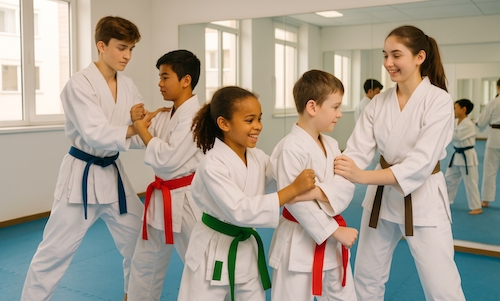
4. Bullying prevention, assertiveness and personal safety
18. Develops assertiveness and boundary-setting skills
Assertiveness means being able to express needs, opinions and boundaries clearly without being aggressive or unnecessarily submissive. It is an important skill for children learning to navigate friendships, peer pressure and uncomfortable interactions.
In a suitable self-defence class, children can practise using a firm voice, maintaining appropriate distance and communicating that a behaviour needs to stop. These skills can be reinforced through age-appropriate role-play, such as responding when another child keeps pushing them after they’ve asked them to stop.
The benefit extends beyond physical safety. A child who becomes more comfortable expressing a boundary may also find it easier to decline unwanted pressure, ask a friend to stop teasing them or tell an adult when something doesn’t feel right.
Confidence isn’t about intimidating other people; it’s about recognising that your own boundaries matter. Children should also learn that another person ignoring those boundaries is not their fault.
19. Teaches practical self-protection skills
Depending on the discipline, children may learn defensive positioning, how to maintain distance, how to regain their balance, how to move away from a confrontation and how to escape certain holds in a controlled training environment.
The practical value lies in understanding that self-defence is not the same as fighting. The safest response to a threatening situation is often to create an opportunity to leave, move towards other people and get help.
Physical techniques should be taught progressively, with close supervision and an emphasis on preventing injury. Children also need to understand that techniques practised with a cooperative training partner may not work the same way in a real confrontation.
Parents should therefore consider whether a class teaches escape, avoidance and help-seeking alongside physical techniques, rather than focusing primarily on strikes, winning or defeating an opponent.
20. Helps children recognise potentially unsafe situations
Personal safety involves more than knowing physical techniques. Children also need to recognise when an interaction is making them uncomfortable, when someone is ignoring their boundaries and when it is time to seek assistance.
A good instructor can reinforce simple, age-appropriate strategies: notice warning signs, create distance when possible, move towards a safer location and tell a trusted adult. Children should understand that they can seek help even if they are uncertain whether a situation is serious enough to warrant it.
This learning can also be relevant to situations involving peer pressure, inappropriate touching or adults who ask children to keep unsafe secrets. These topics need to be handled sensitively and in ways appropriate to the child’s age.
Importantly, safety education should not make children feel responsible for predicting or preventing every dangerous situation. Adults remain responsible for creating safe environments and responding when children raise concerns.
21. Encourages de-escalation rather than confrontation
One of the most valuable lessons a child can learn is that they don’t need to prove themselves by winning an argument or responding physically to a provocation.
A well-designed self-defence programme can teach children to recognise escalating tension, avoid retaliating, maintain distance and leave when it is safe to do so. They can also practise using short, clear phrases and finding an adult who can intervene.
This is particularly relevant in school settings, where reacting physically to teasing can sometimes intensify a situation or result in both children facing consequences.
Children need to know that walking away is not cowardice. It can be a deliberate, sensible decision that protects their safety. Physical self-defence should be a last resort when necessary to protect themselves, not a way to punish someone or settle a disagreement.
22. May help children respond to bullying
Bullying can leave children feeling powerless, embarrassed or worried that speaking up will make things worse. Activities that give children opportunities to practise assertive communication, build supportive relationships and develop confidence may help them feel more prepared to seek help and respond to difficult peer interactions.
However, martial arts has not been established as a reliable standalone way to prevent or stop bullying. Bullying can involve social exclusion, repeated humiliation, online harassment or a group targeting one child. Physical skills cannot resolve every form of bullying, and visible confidence does not guarantee that a child will be left alone.
Australian anti-bullying guidance emphasises early intervention, emotional support, collaboration between families and schools, and a whole-school approach. If a child is being bullied, parents should document what is happening where appropriate, listen without blame, contact the school and agree on practical steps to protect the child.
Self-defence training can be one part of a child’s support system, but responsibility for stopping bullying rests with the adults and institutions responsible for children’s safety.
23. Reinforces that self-defence is about safety, not aggression
Children need to understand that learning how to defend themselves comes with responsibility. The purpose of training is to help them make safer decisions, not to give them permission to use physical force when they feel angry, embarrassed or challenged.
Instructors can reinforce this by teaching children to stop when asked, respect training partners, follow safety rules and use physical techniques only within the boundaries of supervised practice.
This distinction is especially important when children are learning to manage peer conflict. A child may become physically more capable without becoming any better at resolving disagreements unless emotional regulation, empathy and conflict management are taught alongside physical skills.
Parents can reinforce the same message at home: being strong includes knowing when to stop, when to walk away and when to ask an adult for help.
24. Teaches children when and how to ask for help
Children sometimes stay silent about bullying or uncomfortable experiences because they fear getting into trouble, being called a dobber or making the situation worse. Helping them understand when to seek assistance is an essential part of personal safety.
A good programme should reinforce that children can stop an activity, tell an instructor when they feel unsafe and speak to a trusted adult about something that has happened. Children should know they can keep asking for help if the first adult they approach doesn’t take their concerns seriously.
Parents can practise this at home by discussing who their child could approach at school, at sport or in the community, and what they might say. For example: “I’ve asked them to stop, but they’re still doing it, and I don’t feel safe.”
Knowing how to ask for help is a protective skill, not a sign of weakness. Children should never be expected to manage bullying or threatening behaviour alone.
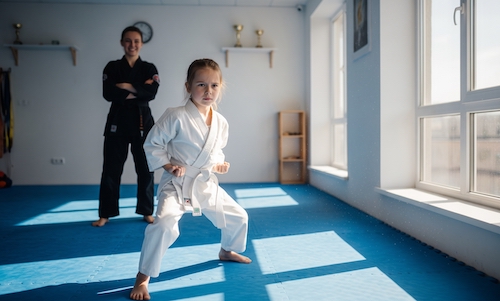
5. Life skills that extend beyond the training mat
25. Develops discipline and self-control
Martial arts classes typically involve routines, clear expectations and repeated practice. Children learn to listen, wait their turn, follow safety instructions and work within agreed boundaries.
Over time, these routines can provide opportunities to practise self-control, particularly when children need to pause before acting or manage the excitement of a fast-moving activity.
The most useful form of discipline is not blind obedience. It is learning to understand expectations, make responsible choices and recognise how behaviour affects other people.
Parents should look for instructors who use calm, consistent guidance rather than humiliation, intimidation or punishment. Children must also feel able to question an instruction or report unsafe behaviour.
26. Provides opportunities to practise concentration and listening
Learning a new technique requires children to watch demonstrations, remember instructions, coordinate movements and adjust when something doesn’t work. These activities challenge attention and working memory in a practical setting.
A child may need to remember the order of several movements, listen for a change in direction or pay attention to a partner’s position. This can make learning active and engaging, particularly for children who enjoy hands-on activities.
Physical activity and structured learning may support aspects of children’s cognitive functioning, but parents should not assume that martial arts will automatically improve classroom concentration or academic results.
A well-run class should adapt instructions to the child’s developmental stage, use demonstrations and provide enough repetition for learning to occur without overwhelming them.
27. Builds patience and perseverance
Some skills take weeks or months to master. Children may need to repeat a movement many times, adjust their balance or learn to coordinate actions that initially feel unnatural.
This gives them opportunities to experience the relationship between practice and improvement. They can also learn that frustration is a normal part of learning, rather than a reason to give up immediately.
The lesson becomes more valuable when instructors recognise steady effort and incremental progress, not just the children who master techniques quickly.
Parents can reinforce this by asking, “What can you do now that felt difficult when you first started?” rather than focusing only on grades, belts or competition results. That encourages children to notice their own progress instead of constantly comparing themselves with others.
28. Encourages goal-setting
Martial arts often breaks learning into smaller steps, such as mastering a stance, improving a movement or preparing for a grading. These milestones give children a concrete way to work towards a longer-term goal.
Learning to set realistic goals can help children understand how to plan, practise, receive feedback and review their progress. These are useful habits for school projects, learning a musical instrument and developing other skills.
The most effective goals are appropriate for the individual child. For one child, the next step might be participating in a full class; for another, it might be improving a particular technique.
A child’s success should be measured against their own progress, not simply how quickly they achieve the next belt. This helps keep the experience focused on learning rather than external approval.
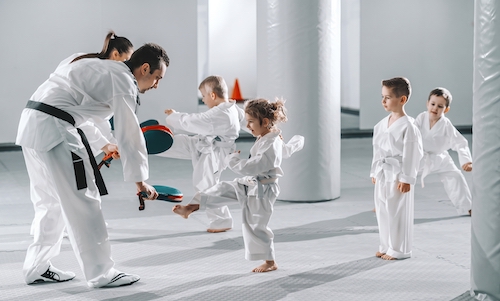
29. Encourages independence
As children become familiar with routines and techniques, they may begin taking greater responsibility for remembering instructions, preparing for class and identifying what they need to practise.
These small steps can help them develop a sense of agency: the feeling that their choices and actions can influence what happens next. For children who rely heavily on adults to guide unfamiliar activities, mastering a task independently can be a meaningful achievement.
Independence doesn’t mean expecting children to solve every problem themselves. Healthy independence includes recognising personal limits, asking appropriate questions and knowing when adult support is needed.
Parents can encourage this by allowing children to attempt manageable tasks before stepping in, while remaining available to support them when they get stuck.
30. Encourages a sense of responsibility
In a safe training environment, children learn that their actions can affect another person’s physical and emotional wellbeing. They need to control their movements, respect instructions and recognise that a training partner is trusting them to practise safely.
Older or more experienced children may also have opportunities to welcome beginners or demonstrate a technique under supervision. These experiences can encourage consideration, leadership and an understanding of how to support others.
Responsibility is particularly important in self-defence because physical ability must be paired with good judgement. Children need to understand that being capable of using a technique doesn’t mean it is appropriate to use it.
The strongest programmes model responsibility consistently, including when someone makes a mistake. Children learn that taking ownership means acknowledging what happened, listening to feedback and making a safer choice next time.
31. Provides healthy opportunities to step outside their comfort zone
Trying an unfamiliar activity can feel daunting, especially for children who worry about making mistakes in front of their peers. A supportive martial arts class can introduce challenges gradually, allowing children to become familiar with new movements, partners and routines at their own pace.
These experiences may help children discover that nervousness doesn’t always mean they cannot do something. They can learn to approach manageable challenges with curiosity, practise a skill and reassess how they feel as they become more familiar with it.
The distinction between a healthy challenge and overwhelming pressure is important. Children shouldn’t be forced into sparring, physical contact or activities that frighten them simply to make them “tougher”.
The aim is to expand a child’s confidence while preserving their sense of safety, choice and control. A good instructor knows when to encourage a child and when to slow things down.
32. May support mental wellbeing
Physical activity can offer children several overlapping benefits: movement, enjoyment, a break from daily pressures, opportunities to connect with others and a sense of achievement.
Martial arts brings these elements together for some children. They may enjoy having a regular activity to look forward to, building relationships with familiar peers or working towards a goal that matters to them.
An Australian-led systematic review and meta-analysis by Moore and colleagues examined 14 studies of martial arts and mental health. The authors found a small positive effect on wellbeing and a potential benefit for internalising symptoms, such as anxiety-related difficulties. However, the studies varied considerably, and the review did not find a meaningful overall reduction in aggression. This supports a cautiously positive interpretation, not a promise that martial arts will improve every child’s mental health.
For parents, the practical takeaway is to look at how a child feels before, during and after participating. Are they enjoying themselves? Do they feel accepted? Are they developing confidence without feeling excessive pressure?
Exercise can complement a child’s broader wellbeing support, but it is not a substitute for professional help when a child is experiencing persistent anxiety, depression, distress or bullying.
he goal is not to raise a child who is ready to fight. It is to help them become more physically active, socially connected, aware of their boundaries and comfortable seeking help when they need it.
Which Self-Defence Disciplines Could Children Try?
There is no single best discipline for every child. Some children enjoy the structure of traditional martial arts, while others prefer grappling, striking-based activities or classes that focus specifically on personal safety.
The right choice depends on your child’s interests, developmental stage, physical abilities, comfort with contact and the instructor’s approach to safety.
1. Karate
Best for: Structured learning, coordination, confidence and practising controlled movements.
Karate commonly teaches stances, blocks, punches, kicks and formal sequences known as kata. Many children’s programmes emphasise respect, focus, technique and gradual progression.
For children who enjoy clear routines and working towards achievable goals, karate may be appealing. Parents should look for a class that teaches control and de-escalation rather than encouraging children to use techniques aggressively.
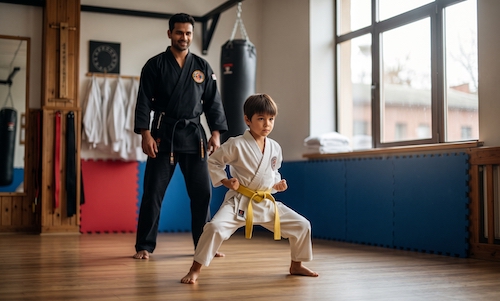
2. Taekwondo
Best for: Agility, balance, flexibility, coordination and goal-setting.
Taekwondo is known for its kicking techniques, footwork and structured grading systems. Children’s classes often combine movement drills with discipline, fitness and controlled practice.
It may appeal to children who enjoy dynamic movement and learning new physical skills. Parents should check how contact is managed, whether protective equipment is used where appropriate and whether sparring is optional or required.
3. Judo
Best for: Balance, body awareness, coordination and learning how to fall safely.
Judo focuses on throws, balance, controlled grappling and groundwork. Children may learn how to move with a partner and how to fall in a more controlled way.
Because judo involves close physical contact, safe instruction and careful progression are essential. Parents should ask how instructors adapt activities for beginners and how they prevent unsafe throws or pressure on a child’s neck and joints.
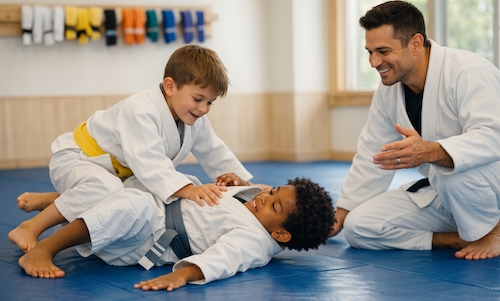
4. Brazilian Jiu-Jitsu (BJJ)
Best for: Grappling, problem-solving, positional awareness and learning how to manage close contact.
Brazilian jiu-jitsu commonly involves ground-based grappling, positional control and techniques designed to help a smaller person manage certain physical situations.
Some children enjoy the puzzle-solving aspect of learning how to move and respond to a partner. However, close contact may not suit every child, and the class must teach clear consent, safe tapping or stopping signals and immediate responses when a child indicates discomfort.
Parents should look for age-appropriate coaching and avoid programmes that place children under excessive physical pressure.
5. Aikido
Best for: Controlled movement, balance, coordination and exploring ways to redirect movement.
Aikido generally emphasises movement, balance, positioning and techniques intended to redirect an interaction rather than relying solely on striking.
Children’s programmes vary considerably in how they teach these ideas and how much practical personal-safety instruction they include. Parents should ask what children actually practise and how the instructor adapts techniques for different ages and abilities.
As with any discipline, do not assume that classroom techniques will reliably work in a real-world confrontation.
6. Boxing
Best for: Cardiovascular fitness, footwork, coordination and learning controlled movement.
Non-contact boxing classes can offer energetic exercise, skipping, footwork, movement drills and pad work. They may appeal to children who enjoy structured physical challenges.
Boxing is a striking sport, so parents should carefully distinguish between fitness-based, non-contact instruction and programmes that involve sparring. Children should not be exposed to head impacts as a routine part of learning personal safety.
If the main goal is fitness and confidence, a non-contact programme may provide a more appropriate starting point.
7. Kickboxing
Best for: Fitness, coordination, agility and practising combinations of movements.
Kickboxing combines punching and kicking techniques, often through pad work and structured drills. Depending on the class, it can provide a vigorous workout and opportunities to develop movement control.
Parents should check whether the programme is fitness-focused or includes contact sparring. For children, instruction should be age-appropriate, carefully supervised and clear about the difference between practising a sport and responding safely to conflict.
8. Mixed Martial Arts (MMA)
Best for: Children who enjoy varied movement and want exposure to more than one martial arts style.
MMA draws on several disciplines, which may include striking and grappling. Children’s programmes vary widely in content, coaching standards and the amount of contact involved.
A carefully designed, non-contact or low-contact introductory class may suit some older children, but parents should investigate the programme closely. Ask about sparring, injury prevention, supervision, protective equipment and whether children are ever encouraged to use techniques outside training.
MMA is not necessary for learning personal safety, and a child should never feel pressured to participate in contact activities.
9. Wrestling
Best for: Balance, coordination, strength, movement awareness and controlled grappling.
Wrestling involves positioning, balance, holds and attempts to control an opponent within sporting rules. It can provide a physically demanding activity for children who enjoy close-contact sport.
Because wrestling involves physical resistance and contact, coaching quality and safe technique are essential. Parents should ask how instructors manage differences in size, experience and physical development, and how they respond if a child feels uncomfortable.
Wrestling is a sport, not a complete personal-safety curriculum, so children may need separate education about boundaries, de-escalation and seeking help.
10. Krav Maga or Child-Focused Personal-Safety Training
Best for: Programmes that teach age-appropriate situational awareness, personal boundaries, avoidance and escape strategies.
Some Krav Maga schools offer classes for children, while other organisations provide personal-safety programmes that are not based on a traditional martial art. Krav Maga is a self-defence system designed around responding to threatening situations, with an emphasis on practical techniques, reacting under pressure and getting to safety rather than competition or scoring.
For Melbourne families, Krav Maga classes in Melbourne offer an option to explore. The approach focuses on responding to real-world threats, using techniques designed to be straightforward and adaptable to different fitness levels.
However, not all Krav Maga classes are designed specifically for children, and the content and teaching methods can vary between providers. Parents should look for age-appropriate instruction that helps children recognise unsafe behaviour, communicate boundaries confidently, create distance, leave a situation and seek help from trusted adults.
Before enrolling, ask how instructors adapt scenarios to children’s developmental stages, maintain a safe and supportive learning environment, and teach physical techniques as a last resort. A suitable programme should prioritise avoidance, escape and getting help rather than encouraging confrontation.
No self-defence system can guarantee that a child will defeat an attacker or prevent bullying. The goal is to help children develop practical personal-safety skills while understanding that they are never responsible for another person’s harmful behaviour.
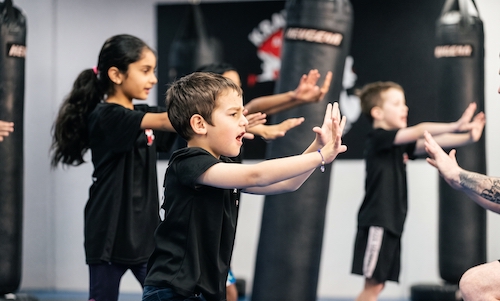
11. Non-Contact Personal-Safety and Anti-Bullying Classes
Best for: Children who want to build communication and safety skills without participating in physical contact.
Not every child wants to learn martial arts, and not every child is comfortable with sparring or grappling.
A suitable personal-safety class may focus on boundaries, assertive communication, recognising unsafe behaviour, moving towards safety, identifying trusted adults and practising how to ask for help.
Some programmes also discuss peer pressure, bullying, bystander behaviour and what to do when a friend is being targeted.
These classes may be a useful option for children who are anxious about contact, have sensory preferences or simply want to develop personal-safety skills without taking up a combat sport.
How to Choose the Right Discipline for Your Child
The best class is not necessarily the most intense, competitive or physically demanding. It is the one that suits your child and provides a safe, supportive environment for learning.
Before enrolling, consider the following:
- Your child’s interests: Ask what they would enjoy trying. A child who likes structured routines may prefer one discipline, while a child who enjoys energetic movement may prefer another.
- Comfort with contact: Find out whether the class includes grappling, sparring or physical partner exercises. Your child should be able to express discomfort without being mocked or pressured.
- The instructor’s approach: Look for patient, respectful teaching, clear safety rules and an ability to adapt activities for different ages and abilities.
- Safety standards: Ask how injuries are prevented, how contact is supervised, what protective equipment is used where relevant and how instructors respond to a child who wants to stop.
- The approach to bullying: Be cautious of programmes that promise to eliminate bullying, encourage children to retaliate or suggest that a child is responsible for stopping another person’s harmful behaviour.
- The emphasis on personal safety: Look for instruction that prioritises awareness, boundaries, escape, de-escalation and seeking adult help, not just physical techniques.
- Your child’s experience: After a trial class, ask how they felt. Did they feel included, respected and comfortable asking questions? Their experience matters as much as the discipline itself.
- Accessibility and individual needs: Discuss any adjustments your child may need, including adaptations for disability, sensory preferences, communication needs or different physical abilities.
- Cost and practical commitment: Consider class fees, uniforms, travel, grading costs and the time required. An affordable, enjoyable activity that fits family life is more sustainable than one that creates ongoing stress.
Parents should also check the instructor’s qualifications, relevant working-with-children requirements and the organisation’s safeguarding and complaint procedures.
Most importantly, a child should never be forced to continue an activity that consistently leaves them frightened, humiliated or unsafe.
What Does the Research Tell Us?
The evidence supports the value of regular physical activity for children’s health and development. Australian guidelines recommend at least 60 minutes of moderate-to-vigorous physical activity each day for children and young people aged 5–17, including muscle- and bone-strengthening activity on at least three days each week.
Martial arts can contribute to these activity levels, while also providing structured opportunities to practise movement, cooperation and self-control.
Research specifically examining martial arts and mental health is promising but not conclusive. In a 2020 systematic review and meta-analysis, Australian researchers Moore, Dudley and Woodcock reported a small positive effect on wellbeing and a potentially meaningful effect on internalising mental health outcomes. The studies differed in their methods and results, so these findings should not be interpreted as a guarantee of benefit for every child.
The practical takeaway for parents is to focus on the quality of the experience: enjoyable movement, safe instruction, respectful relationships, achievable challenges and an emphasis on personal growth rather than aggression.
No discipline can guarantee that a child will never be bullied or harmed. Physical skills may be one part of personal-safety education, but children also need supportive adults, safe schools and clubs, and clear pathways to report concerns.
Beyond Self-Defence: Skills for Life
Self-defence training can offer children far more than a collection of physical techniques. In the right environment, it can be an enjoyable way to become more active, practise confidence, develop coordination, meet other children and learn about personal boundaries.
But the real value is not in teaching children to fight back at all costs. It is in helping them understand their capabilities, respect other people, recognise when a situation is unsafe and know that they can walk away and ask for help.
If your child is curious about martial arts or self-defence, consider a trial class and let them help choose. The best programme is one where they feel safe, supported and motivated to keep learning.
The goal is not to raise a child who is ready for a fight. It is to help raise a child who feels capable, knows their boundaries and understands that their safety and wellbeing matter.
References and Further Reading
Australian Government Department of Health, Disability and Ageing. (2026). Recommendations for children and young people (5 to 17 years).
https://www.health.gov.au/topics/physical-activity-and-exercise/physical-activity-and-exercise-guidelines-for-all-australians/for-children-and-young-people-5-to-17-years
Australian Bureau of Statistics. (2026). Children’s physical activity, screen time and sleep.
https://www.abs.gov.au/articles/childrens-physical-activity-screen-time-and-sleep
Australian Institute of Health and Welfare. Australia’s youth: Physical activity.
https://www.aihw.gov.au/reports/children-youth/physical-activity
eSafety Commissioner. Cyberbullying advice for educators and schools.
https://www.esafety.gov.au/key-topics/cyberbullying/cyberbullying-advice-for-educators-and-schools
Moore, B., Dudley, D., & Woodcock, S. (2020). The effect of martial arts training on mental health outcomes: A systematic review and meta-analysis. Journal of Bodywork and Movement Therapies, 24(4), 402–412.
https://doi.org/10.1016/j.jbmt.2020.06.017
Moore, B., Woodcock, S., & Dudley, D. (2021). Well-being warriors: A randomised controlled trial examining the effects of martial arts training on secondary students’ resilience. British Journal of Educational Psychology.
https://doi.org/10.1111/bjep.12422
Australian Government Department of Health. (2019). Australian 24-Hour Movement Guidelines for Children (5–12 years) and Young People (13–17 years): An Integration of Physical Activity, Sedentary Behaviour, and Sleep.
https://www.health.gov.au/sites/default/files/documents/2021/03/australian-24-hour-movement-guidelines-for-children-5-to-12-years-and-young-people-13-to-17-years-an-integration-of-physical-activity-sedentary-behaviour-and-sleep.pdf
Editorial note: The benefits described above are potential outcomes, not guaranteed results. The quality of instruction, the child’s preferences, the type of programme and the broader support available to them all influence their experience. Self-defence training should complement—not replace—adult intervention and appropriate action when bullying or unsafe behaviour occurs.
Further reading
The following sources provide a useful starting point for an evidence-informed Kiddipedia article.
1. Moore, B., Dudley, D., & Woodcock, S. (2020). The effect of martial arts training on mental health outcomes: A systematic review and meta-analysis. Journal of Bodywork and Movement Therapies, 24(4), 402–412. Read the research via PubMed.
2. Sports Medicine Australia and the Australian Psychological Society. (2023). Optimising the effects of physical activity on mental health and wellbeing: A joint consensus statement. Read the publication.
3. Australian Government Department of Education. (2025–2026). Anti-Bullying Rapid Review and implementation of the National Framework for Addressing Bullying in Australian Schools. Read the Australian Government guidance.
4. Australian Institute of Family Studies. Working with children who are experiencing or engaging in bullying behaviour. Read the practice guidance.
5. Australian Institute of Family Studies. Protection through participation. Read the practice guide.
6. Physical activity and depression, anxiety, and self-esteem in children and youth: An umbrella systematic review. (2019). Mental Health and Physical Activity, 16, 66–79. Read the review.