

Another week. Another packed calendar. Another “quick” dash from school to sport, then home for dinner, homework and bedtime. 😮💨
If your family is constantly rushing from one thing to the next, you’re definitely not the only one.
The tricky part is that most of us aren’t trying to over-schedule our kids. We’re just saying yes to the things they enjoy, the things they need, the things their friends are doing… and suddenly there’s barely a free night left.
So how do you know what to keep, what to let go and when your child simply needs some time to do absolutely nothing?
Our latest article shares realistic ways to take the pressure off the family calendar, protect downtime and make room for more connection and joy — without giving up everything your kids love.
Because sometimes, the best thing you can put in the calendar is nothing at all. ❤️

📱💛 When is your child ready for their first connected device?
There’s no magic age when children become ready for more independence — it often happens in those everyday moments that make parents pause…
🚶♀️ Walking to school alone
🚌 Catching public transport
🏡 Going to a friend’s house or sleepover
🌏 Spending more time away from home
For many parents, the question isn’t about giving their child a smartphone — it’s about finding the right balance between freedom, safety and staying connected. 💕
New research reveals the milestones that are prompting Australian families to consider their child’s first connected device, and why smartwatches are becoming an option for parents who want to support independence while still having peace of mind.
💬 When did you first feel your child was ready for more independence?
👉 Read the full article to explore what Australian parents are thinking about when it comes to staying connected as children grow.

Starting therapy can feel like a big step… but the conversation you have with your child can make all the difference. 💛🌱
Many parents worry about saying the wrong thing.
Will my child think something is wrong with them? Will they feel scared? Will they refuse to go? 🤔
And sometimes the question children quietly carry is:
“Are we going to therapy because something is wrong with me?” 💭
The truth is, therapy isn’t about fixing a child — it’s about helping them understand their feelings, build confidence and learn skills that support them for life. 💛✨
With the right words, parents can help children see therapy as a positive step — a safe place to learn, grow and better understand themselves. 🌈
From what to say, what to avoid, and how to answer those tricky questions, this guide helps parents navigate one of the most important conversations they may have. 💬❤️
Discover how to introduce therapy in a way that feels safe, positive and reassuring — because sometimes the most powerful thing a child can hear is:
“You’re not in trouble. Nothing is wrong with you. We’re doing this together.” 🤗❤️
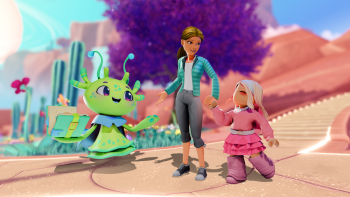
Is your child obsessed with Roblox, but you’re not quite sure what they’re doing online? 🎮👨👩👧
What if the best way to help keep them safe wasn’t by watching from the sidelines—but by playing alongside them?
Roblox’s new Family Zone lets your child become the teacher while you explore the platform together, helping parents better understand what their kids love, discover the built-in safety features, and start important conversations about online safety in a way that feels fun and natural.
More than just a game, it’s an opportunity to strengthen your connection, build digital confidence, and create healthier online habits—one shared gaming session at a time.
Discover why millions of families are already exploring Family Zone and why co-playing could be one of the simplest ways to make your child’s online experience safer and more enjoyable.

🎸 What if learning guitar could do so much more than teach your child to play music?
Every chord, every practice session, and every small breakthrough is helping to strengthen the developing brain. From improving focus and memory to building resilience, coordination and problem-solving skills, guitar lessons offer benefits that reach far beyond music.
If you’ve ever wondered whether music lessons are really worth the investment, the science might surprise you. Discover what’s actually happening inside your child’s brain every time they pick up a guitar—and why it could be one of the best gifts you give their future.
✨ Read the full article and see why guitar may be one of the smartest hobbies a child can have.

🚗 The bags are packed. The snacks are ready. The kids are buckled in… but are you truly prepared for the journey ahead?
Every parent knows that a family road trip can create some of the most treasured childhood memories — the laughter, the unexpected stops, the family singalongs and the stories told for years afterwards.
But travelling with little ones also comes with its challenges.
From keeping children safe in the car and knowing the hidden risks many parents overlook, to preventing road trip meltdowns, managing motion sickness, keeping kids hydrated and preparing for the unexpected, this guide shares the practical insights every family needs before hitting the road.
Because a successful road trip is not about a perfect journey…
It is about feeling confident, prepared and present for the moments that matter most. ❤️
🌿 Discover the family road trip safety tips experienced parents wish they knew sooner — and make your next adventure safer, calmer and more enjoyable.
👉 Read the full guide now.
“So… what do you want to be when you grow up?”
It’s a question almost every child hears.
We ask it with the best intentions — hoping to inspire dreams, encourage ambition and help our children imagine an exciting future.
But what if this simple question is asking children to decide who they will become before they have had enough time to discover who they are?
In a world that is changing faster than ever, the future won’t belong to children who have every answer early.
It will belong to children who are curious, adaptable, resilient and confident enough to keep learning, growing and embracing new possibilities.
✨ The truth is, children don’t need to choose the “perfect” path from a young age.
They need the freedom to explore, make mistakes, follow their interests and discover their strengths without the pressure of having everything figured out.
Because changing their mind isn’t failure.
It’s learning.
And the greatest gift we can give our children isn’t choosing their future for them…
❤️ It’s helping them become confident enough to create their own.
Discover why we need to rethink the way we talk about careers, success and the future, and how we can support our children to explore possibilities with curiosity rather than pressure.

Could your child’s ability to focus have less to do with trying harder… and more to do with what happens long before they walk into the classroom?
Every parent wants to help their child learn, concentrate and feel confident at school. But supporting a growing brain isn’t about finding a miracle food or the latest trend. It’s about understanding the powerful role that nutrition, sleep, movement and everyday family habits play in helping children thrive.
Backed by research, this article explores the key nutrients that support healthy brain development, why sleep may be one of the most overlooked learning tools, and the simple, realistic changes that can make a lasting difference.
Because when children are given the right foundations, they’re better equipped to learn, grow and reach their full potential.
Read the full article now

The best family beach days aren’t the ones where everything goes perfectly… they’re the ones where you’re prepared for whatever comes your way. ☀️🏖️💙
Every parent knows how quickly a forgotten hat, empty drink bottle or hungry toddler can turn a relaxing day at the beach into a stressful one.
The good news? A little planning goes a long way.
This practical guide shares the smart packing essentials, expert beach safety advice and simple tips that help keep your family protected from the Australian sun, safe around the water, well-fed, hydrated and ready to enjoy every moment together.
Because the memories your children will treasure won’t be about the perfect picnic… they’ll be about the laughter, the waves, the sandcastles and the time you spent together.
🌊 Before you head to the beach, make sure you’ve packed what really matters.
Read the full guide today.
💛 Separation changes a family, but it doesn’t have to change how deeply a child feels loved.
When a relationship ends, parents are often navigating heartbreak, uncertainty, financial pressures and countless life-changing decisions. But for children, the biggest questions are much simpler: *”Am I still safe? Am I still loved?”*
This heartfelt article explores how keeping children at the centre of every decision can help protect their emotional wellbeing during one of life’s biggest transitions. From maintaining familiar routines and recognising the many faces of grief to shielding children from adult conflict, these compassionate, practical insights can make a lasting difference.
Because while families may look different after separation, children still need the same things they’ve always needed—to feel safe, secure, heard and deeply loved.
Whether you’re navigating separation yourself or supporting someone who is, this is an important read.
❤️ Every child deserves to know: *”This isn’t your fault, and you are loved beyond measure.”*
Read the full article now.
Get parenting advice and support delivered right to your inbox
We'd love to hear what you think of the website, so we can continue to improve it . . . GIVE YOUR FEEDBACK >