
Kiddipedia
Moving interstate with your family isn’t just a change of address; it’s one of those life moments that quietly unravels everything familiar at the same time. As parents, we’re usually deep in the logistics: boxes stacked in corners, deadlines running in our heads, decisions stacking up faster than we can make them, all while trying to hold everyday life steady for our children.
But for kids, the experience lands very differently. They’re not thinking about what comes next; they’re living inside what’s disappearing. The familiar bedtime doesn’t quite feel the same. The room that slowly empties. The friends, routines, and small daily rhythms that once felt automatic… suddenly gone or out of reach.
And what often surprises us as parents is this: it’s not the move itself that unsettles them most—it’s the quiet, in-between moments where everything feels unfamiliar, and they’re still trying to make sense of it all while we’re already halfway to the next step.
And that’s where the real impact of a move begins to show up in everyday life.
When you relocate your family across states, the change is much greater than just a new address. In addition to impacting your child’s daily routines, including school hours, bedtime, relationships and the operational processes that help run daily life smoothly, there are other ways that a relocation will impact your child. The physical process of packing, scheduling transportation, and determining the time of the hand-over of your belongings tends to occupy most of your time, but the emotional/psychological effects of a relocation on your child will generally take a little longer to appear, until the routines begin to fall apart.
Children usually react to uncertainty before they react to the move itself
Adults typically think in terms of the end destination. Children however, tend to think in terms of what is changing immediately. The bottom line is this. Unpredictability creates stress faster than the move itself.
This is why transport planning can play a significant role in creating a smoother relocation experience. If the delivery window for your household goods is indeterminate (i.e., we don’t know when we’ll deliver), if essential furniture is included in the initial load, or if household basics (e.g., food, linens) arrive too late, children lose the cues that tell them a new location feels like “home”.
Beds, dining tables and storage units for well-known items all contribute to a child’s ability to navigate a new environment. While parents are researching different removal companies, they often visit websites such as Best Rated to compare different removal services based on their service offerings, estimated delivery timeframes and pricing. While cost certainly plays a factor, it is far less important than eliminating unnecessary stressors.
Plan the relocation of your family around essentials, not how fast you can pack
Many families incorrectly view their relocation as a competition to see how quickly they can pack every last item. However, this strategy doesn’t work particularly well for families with children. Rather than focusing solely on how fast you can pack, you want to separate those items that provide the greatest benefit to your daily routine from the remainder of the household items and decorations.
While you would ideally prefer all furniture and equipment be delivered at one time, this isn’t always possible. Typically, you will want to receive delivery of those items that will allow you to establish your daily routines as soon as possible. These are the beds, tables, chairs, seating, and basic storage solutions. Once received, these items allow you to create a functional living space. You may then choose to delay receiving deliveries of items that aren’t critical to your immediate needs.
Timing is much more important than most people realise
Once you determine which type of mover is best suited for your relocation needs (and budget), you want to select a mover that provides reasonable flexibility with regard to scheduling. Unfortunately, many families schedule their relocation based upon the earliest available moving slot. The decision regarding when to relocate should be made with consideration of your family’s current commitments.
You want to choose a relocation date that will minimise disruption to your family’s existing routines. Some families find it beneficial to relocate during school breaks or recess periods, while others may prefer to relocate after completing a major project at work (regardless of whether it delays your relocation). Families with young children may need to consider their child’s ability to adapt to new environments along with ensuring adequate rest and quality care prior to relocation.
Delivering furniture at the optimal time also impacts logistics. If your movers arrive prior to being granted access to your home, you may incur additional fees for storing your household goods. On the other hand, if the movers deliver too late into your relocation cycle, you may needlessly expend considerable amounts of time (possibly weeks) operating without the basic amenities required for daily living.
As mentioned earlier, good planning requires coordinating various logistical elements, including contracts (moving company), keys (to your new home), utilities (electricity, gas, water), etc. Prior to confirming a firm relocation date.
Maintaining routines throughout relocation
Your children do not necessarily need a perfect transition. They need enough consistency so that they feel safe. One way parents can assist with maintaining familiarity is by keeping a number of constants in place prior to, during and subsequent to your relocation.
Consistency in meal times and bedtimes will help alleviate anxiety and promote security. Keeping certain familiar items readily available (books, toys, sleeping objects) in addition to providing clear information regarding expectations can go a long way toward alleviating anxiety associated with uncertainty.
Why children feel stress before the move “hits”
Child development research shows that children often respond to anticipation and uncertainty, not just events themselves.
In practical terms:
- Adults focus on the destination
- Children focus on “What changes today?”
This aligns with guidance from Raising Children Network, which emphasises that predictable routines help children feel secure during transitions.
The science behind “home anchors”
Psychological research highlights that children use physical routines and objects as emotional anchors:
- Bed = safety
- Dining table = family connection
- Familiar toys = emotional regulation
When these are delayed in a move, children can experience what clinicians describe as “environmental instability stress.”
This is supported in child wellbeing frameworks from Australian Institute of Family Studies.
Why transport timing matters more than most parents realise
From a developmental perspective, inconsistency in access to:
- sleeping spaces
- meals
- familiar belongings
can increase emotional dysregulation in children.
Even small delays in essentials can feel significant from a child’s perspective.
What this actually looks like in a home move
Most parents don’t realise:
- kids often fixate on one item (a blanket, toy, or lamp)
- unpacking order matters more than unpacking speed
- emotional reassurance is more important than organisation
“We moved everything in perfectly… but my child only wanted their pillow. Until that arrived, nothing felt right.”
PRACTICAL STRATEGIES
1. The “First Night Box”
Prepare a clearly labelled box containing:
- pyjamas
- favourite toy
- toothbrush
- snacks
- bedding essentials
This supports emotional regulation and routine continuity.
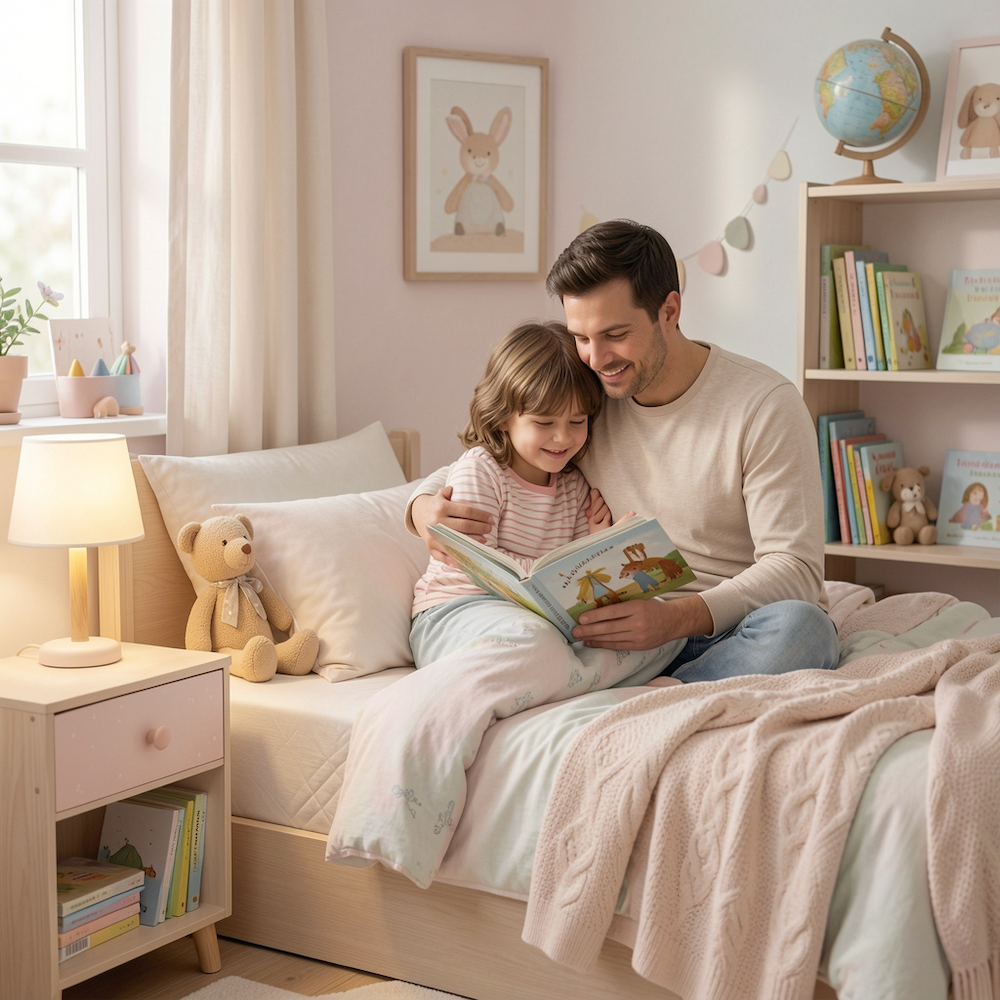
2. Recreate bedtime immediately
Even in chaos:
- same bedtime
- same story routine
- same sleep cues
Research from Headspace highlights routine consistency as a protective factor for anxiety in young people.
3. Let children “own” their space early
Even if the house is not unpacked:
- set up their bed first
- allow them to choose placement of toys
- create one “safe corner”
4. Slow the pace intentionally
A calmer move is not about speed—it’s about emotional pacing.
COMMON MISTAKES PARENTS MAKE
- Prioritising speed over emotional stability
- Packing children’s essentials too late
- Changing routines immediately after arrival
- Underestimating the emotional impact of timing gaps
FIRST 48 HOURS FRAMEWORK
Focus only on:
- Beds
- Food access
- Toiletries
- Familiar items
- Bedtime routine
Everything else can wait.
Key takeaway
Children don’t need a perfect move.
They need a predictable one.
And often, the difference between stress and stability isn’t the move itself—it’s the consistency we maintain inside it.
References
- Raising Children Network – child routines & transitions
- Australian Institute of Family Studies – family adjustment research
- Beyond Blue – anxiety and stress in families
- Headspace – youth emotional wellbeing