
kiddi
Stop buying cheap plastic trash for your kids. You know the ones. The big box store specials with shiny stickers that snap in half the second your toddler hits a tree root.
I bought one of those a few years ago for my nephew. We spent three hours assembling the thing. It got stuck on damp grass in exactly twelve seconds. Never again.
If you want an off-road ride-on toy that actually goes off the road, you need to look at the mechanical specs. Not the superhero licensing deals. Not the flashy paint job. The actual hardware.
12V vs 24V Ride On Toys: Why You Need 24 Volts
Let’s talk about voltage first. Manufacturers love to sell 12V cars. They’re cheap to make and easy to ship. They’re also completely useless on anything but flat pavement.
Try taking a 12V toy up a tiny hill. You’ll end up pushing it from behind while your kid complains. Skip the 12-volt aisle completely. You need 24 volts minimum.
The difference isn’t just top speed. It’s torque. Torque gets you over gravel, mud, and uneven grass.
Here is a real-world metric for you: A standard 12-volt battery drops to roughly 60 per cent capacity after just 40 charge cycles if you leave it in a freezing garage. You end up with 15 minutes of drive time after one season.
Don’t waste your money.
Why EVA Rubber Tires Beat Plastic Wheels Off-Road
Now look at the wheels. Are they hollow plastic? Run away.
Here is exactly why plastic wheels fail:
- They spin out on wet grass.
- They slip on loose dirt.
- They crack on jagged rocks.
- They sound like a jet turbine scraping against asphalt.
You want EVA rubber tires. Some brands call them foam rubber. They grip the ground. They absorb shock. They actually pull the heavy toy over obstacles instead of just spinning helplessly. If the toy has plastic tires, it belongs indoors. Period.
Why You Need a Remote Control Ride-On Car
Toddlers are erratic. They have zero concept of property damage. They’ll steer directly into your neighbor’s pristine rose bush or the side of your parked car.
You absolutely must buy a ride-on toy with a parental remote control. Specifically, you need the emergency override feature. When your kid aims for the creek, you hit the stop button on the remote. It saves you from sprinting across the yard in slippers.
Make sure the remote operates on a dedicated 2.4GHz frequency. Older cheap models use standard radio frequencies. Buy the modern tech to keep your kid safe.
Real Four-Wheel Suspension for Off-Road Ride On Toys
Suspension is another feature you can’t skip. Real off-roading hurts without shock absorbers. The same goes for your toddler’s spine.
Look for true four-wheel suspension. Push down hard on the hood of the toy in the store. Does it bounce back? Good. If it feels like a solid block of rigid plastic, your kid will hate riding it for more than ten minutes.
True Weight Limits and Ride On Toy Motors
Don’t trust the weight limits printed on the box either. A manufacturer might claim the toy holds 130 pounds. Sure, the plastic chassis won’t instantly crack under that weight.
But put two heavy five-year-olds in a cheap car and watch the motors scream in agony. The vehicle will crawl at a miserable one mile per hour.
If you have multiple kids, buy the biggest motors you can afford. The extra power prevents the motors from burning out prematurely. I learned this the hard way when two neighborhood kids tried to drive my nephew’s old truck up a steep driveway. The motor smoked, popped, and died.
Assembling Your 24V Off-Road Ride On Truck
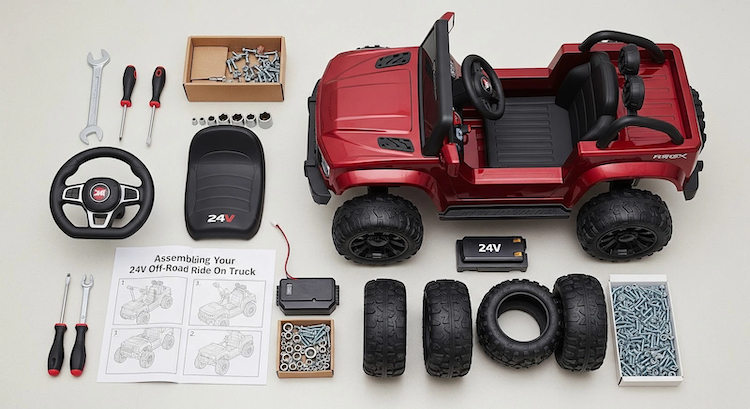
Assembly is the secret nightmare nobody warns you about. You’ll open the box and find a bag of sixty identical screws. The instruction manual will look like a blurry photocopy of a bad drawing. Do yourself a massive favor:
- Buy a ratcheting screwdriver.
- Borrow a proper socket set.
- Throw away the tiny metal wrench included in the box.
I used the included wrench once. I stripped three bolts and scraped my knuckles raw. Use real tools.
Ride On Toy Battery Maintenance and Storage
Storage matters just as much as the purchase. These toys are massive. They’ll eat half your garage space. Before you click buy, measure the spot where you plan to park it.
Then figure out your charging routine. You can’t leave these batteries dead for months. They’ll permanently fail. Buy a smart trickle charger. Plug it in during the winter months. You’ll double the lifespan of the battery.
Core Features for the Best 24V Off-Road Ride On Toys
So what actually works out in the yard? You need high voltage, grippy tires, and real suspension.
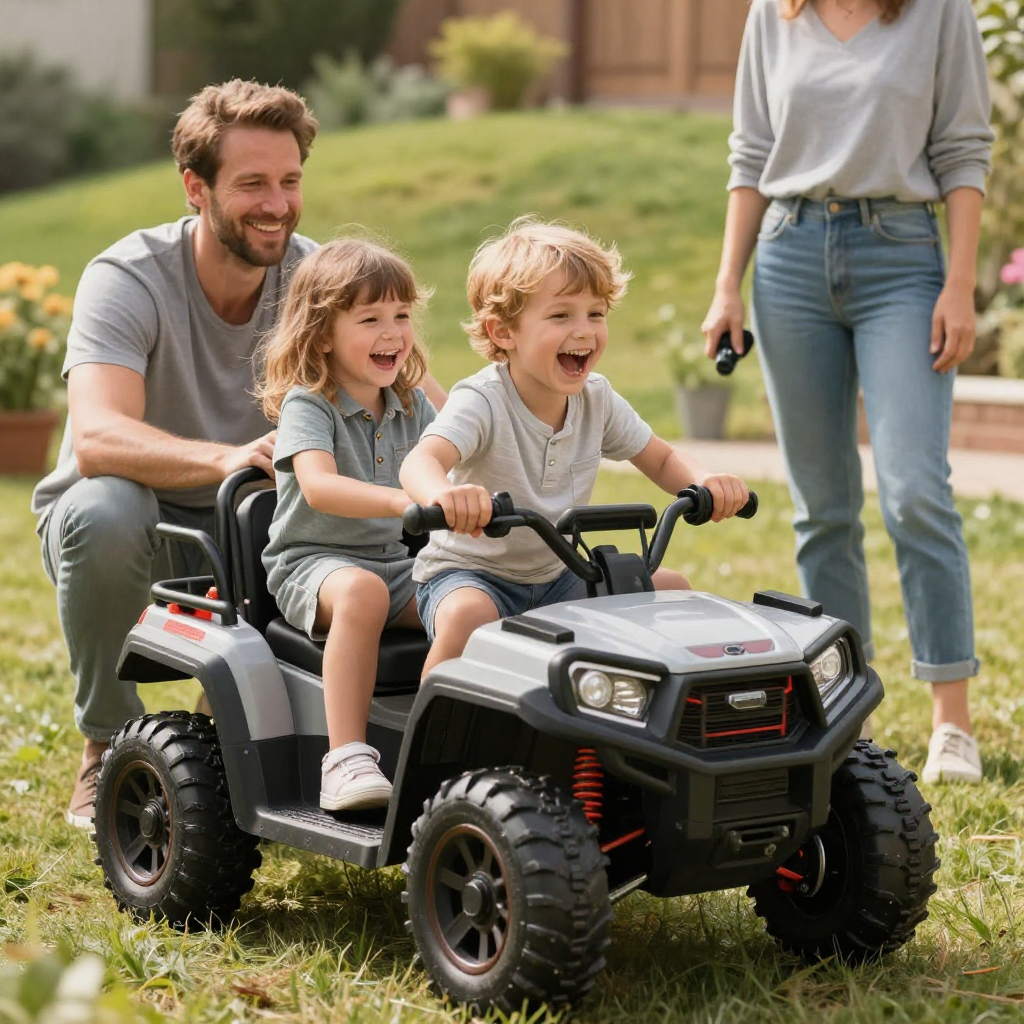
If you want a specific example of something that survives heavy yard abuse, look at a can-am ride on 24v model. They have the torque to handle thick mud. They easily fit two kids at once. They look like actual utility vehicles instead of cartoon props.
Any brand works if it meets the core criteria though:
- 24 volts
- Rubber tires
- Parental remote
- Shock absorbers
Buy it right the first time. Keep the battery charged. Tighten the steering column bolts every month. Your kid gets a massive blast of independence. You get to drink your coffee on the porch instead of pushing a dead plastic brick up a hill.