
Kiddipedia
Have you ever noticed your child’s face change when they’re upset or excited, but wondered how to help them understand what they’re feeling? Emotions are a huge part of our lives, yet many of us didn’t get a clear guide on how to name or manage them growing up. As parents, teaching children about emotions and how to regulate them is one of the most powerful gifts we can give. It helps them navigate life with confidence and kindness — skills that matter for their happiness, relationships, and success now and into adulthood.
But, let’s be honest — talking about emotions can sometimes feel tricky. How do we help children who get overwhelmed? Or those who seem unsure what they’re feeling? This article shares practical ideas to support your child’s emotional growth, helping them build what experts call emotional intelligence.
What is Emotional Intelligence?
Emotional intelligence is simply the ability to notice, understand, manage, and express feelings in a helpful way. It’s about knowing what’s happening inside you and others, and using that knowledge to make good choices.
For example:
-
A child who sees a friend looking sad might ask if they’re okay.
-
Another child might feel frustrated but take deep breaths before reacting.
-
Or a youngster might say, “I feel worried about my test tomorrow,” and talk about it instead of keeping it inside.
These everyday moments show emotional intelligence in action — and they can be learned, practised, and strengthened.
Why Does Emotional Intelligence Matter?
Research shows that children who develop emotional intelligence tend to have better mental health, stronger friendships, and perform well at school. They learn to bounce back from setbacks (resilience) and handle social situations with ease. Dr. Marc Brackett, a leading expert in this field, says that emotional intelligence helps children “understand their feelings instead of being controlled by them,” leading to healthier, happier lives.
Learning these skills early sets children up for success well into adulthood, helping them form positive relationships, manage stress, and adapt to change.
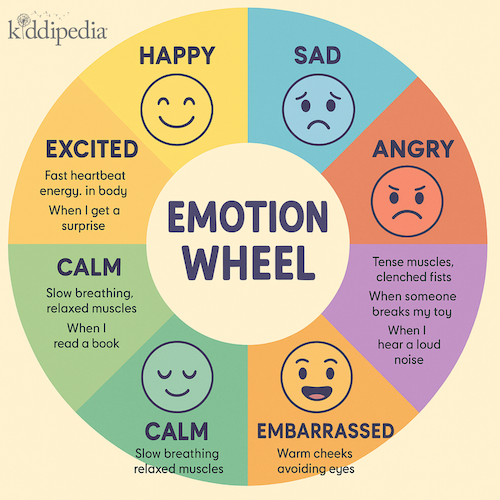
Noticing and Naming Emotions and Body Feelings
Emotions are like messages from our brain and body, telling us about what’s happening inside and around us. A key first step is to teach children to notice and name these feelings.
You might notice your child’s tummy fluttering before a big event — that’s often their body saying “I’m nervous.” Or maybe their fists clench when they feel angry.
One way to build this skill, called the “Noticer” in the DNA-V model, is by pausing to check in with where emotions live in the body and what words describe them. You can guide your child by saying things like, “I see you’re frowning. Are you feeling upset?” or “Your cheeks look red — maybe you’re feeling embarrassed?”
Try playing simple games like “Emotion Charades” where family members act out feelings for others to guess. Reading stories or watching movies and discussing characters’ emotions also helps children notice feelings in themselves and others.
As a parent, model this by using “I feel…” statements. For example, “I feel happy when we play together,” or “I felt worried this morning but talking about it helped.”
Understanding Others’ Emotions: Teaching Empathy
Helping children step into someone else’s shoes is a vital part of emotional intelligence. Encourage your child to think about how others might be feeling by asking questions like:
-
“How do you think your friend felt when that happened?”
-
“What might make someone feel sad or excited in this story?”
You can also discuss real-life situations gently, such as disagreements during playdates, helping your child consider others’ feelings and perspectives.
Books like The Colour Monster by Anna Llenas or Today I Feel Silly by Jamie Lee Curtis are great tools to explore emotions and empathy together.
All Emotions Are OK and Normal
It’s important for children to know that all emotions are okay — even the hard ones like anger, sadness, or jealousy. Sometimes we want to push uncomfortable feelings away, but these emotions are natural and they pass with time.
Suppressing emotions can lead to confusion and stress later on. Instead, Dr. Marc Brackett encourages us to be emotion scientists — curious and kind observers of our feelings rather than judges.
Try saying, “It’s okay to feel mad sometimes,” or “I see you’re feeling sad. That’s normal, and I’m here with you.”
When parents share their own feelings in age-appropriate ways, it normalises emotions for children. For example, “I felt worried about my work today, but I talked to a friend and it helped.”
Reading picture books about emotions and taking turns sharing feelings can also support this message.
Parents as Emotional Role Models
Children learn a lot from watching their parents. Showing your emotions — and how you handle them — teaches your child that feelings are a natural part of being human.
If you lose your temper, apologizing shows your child how to take responsibility and repair relationships.
Remember, expressing emotions doesn’t mean losing control. It means being honest and respectful about how you feel.
Emotional Regulation: Managing Our Feelings
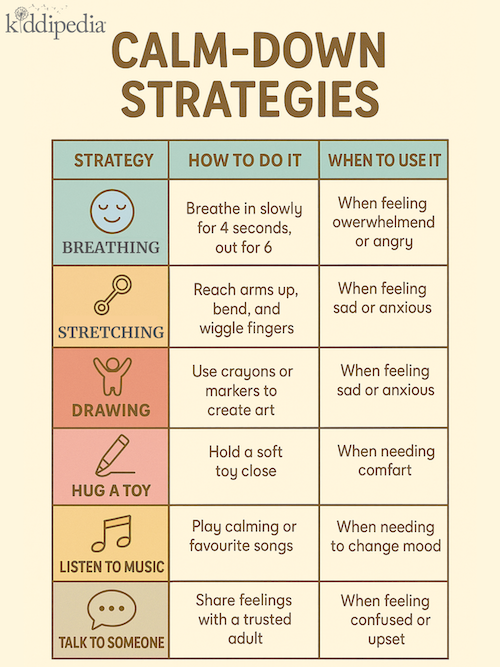
Emotional regulation means finding ways to feel and express our emotions without them taking over. Once children can notice and name their feelings, they can learn strategies to manage them.
For young children, this often means co-regulation, where a calm and supportive adult helps soothe and guide their emotions.
You can help by encouraging your child to try different calming techniques, such as:
-
Deep breathing exercises
-
Using fidget toys
-
Blowing bubbles slowly
-
Stretching or walking outside
-
Drawing or colouring
-
Hugging a favourite toy
-
Listening to music
-
Writing down thoughts and feelings
-
Touching slime or playdough
-
Talking to someone they trust
Ask your child what might help them feel better and create a “calm-down corner” or box with favourite tools.
Older kids and teens can practice mindfulness, journaling, or talking through their feelings with trusted adults to build independence in regulating emotions.
Challenges and Common Pitfalls
Teaching emotional intelligence is a journey, not a race. Some children may take longer to understand or manage their feelings, and that’s okay.
Parents might feel unsure or frustrated sometimes — that’s normal too.
If your child’s emotional struggles are persistent or affecting daily life, consider seeking guidance from a psychologist or counsellor.
Practical Tips for Parents
Top 5 Daily Practices to Support Emotional Intelligence:
-
Check in daily: Ask your child how they’re feeling each day.
-
Name emotions: Help your child put words to feelings as they arise.
-
Model emotions: Share your feelings honestly and calmly.
-
Practice calming strategies: Encourage regular use of coping tools.
-
Celebrate successes: Praise your child when they manage emotions well.
Apps like Zones of Regulation or books like The Whole-Brain Child by Daniel Siegel and Tina Payne Bryson offer helpful guidance and activities.
Visual Tools to Try
Using emotion wheels or body maps can help children identify feelings more easily. Visual charts with faces or colours linked to emotions are especially helpful for younger kids.
Final Thoughts
Building emotional intelligence is one of the greatest gifts you can give your child. It takes patience and practice, but the rewards — resilience, empathy, and self-awareness — last a lifetime.
Remember, emotions are part of being human. By guiding your child to understand and manage theirs, you’re setting them on a path to a happier, healthier future.
References
Billings, C. E. W., Downey, L. A., Lomas, J. E., Lloyd, J., & Stough, C. (2014).
Emotional Intelligence and scholastic achievement in pre-adolescent children.
Personality and Individual Differences, 65, 14-18. https://doi.org/10.1016/j.paid.2014.01.017.
Brackett, M. (2019). Permission to Feel. Quercus Publishing.
Guerra-Bustamante, J., León-del-Barco, B., Yuste-Tosina, R., López-Ramos, V. M., & Mendo-Lázaro, S. (2019). Emotional Intelligence and Psychological Well-Being in Adolescents. International Journal of Environmental Resources and Public Health, 16(10), 1720. https://doi.org/10.3390/ijerph16101720
Hayes, L. L., & Ciarrochi, J. (2015). The thriving adolescent: Using Acceptance and Commitment Therapy and positive psychology to help teens manage emotions, achieve goals, and build connection. New Harbinger Publications.
Schutte, N. S., Malouff, J. M., Bobik, C., Coston, T. C., Greeson, C., Jedlicka, C., Rhodes, E., & Wendorf, G. (2001). Emotional Intelligence and Interpersonal Relations (2001). The Journal of Social Psychology, 141(4), 523-536. doi:10.1080/00224540109600569