
Kiddipedia
Media kindly brought to you by Jasnor Australia
As parents, we can often struggle to keep up with what’s considered “cool” in kids’ culture. Between viral TikTok trends, Roblox adventures, and ever-changing toy fads, it can feel like a full-time job just staying in the loop. If you haven’t yet heard of the Deddy Bears Series, these creepy-cute collectibles are set to be Christmas 2025’s must-have gift – and, as an added bonus, they come with a long list of cognitive play benefits for children.
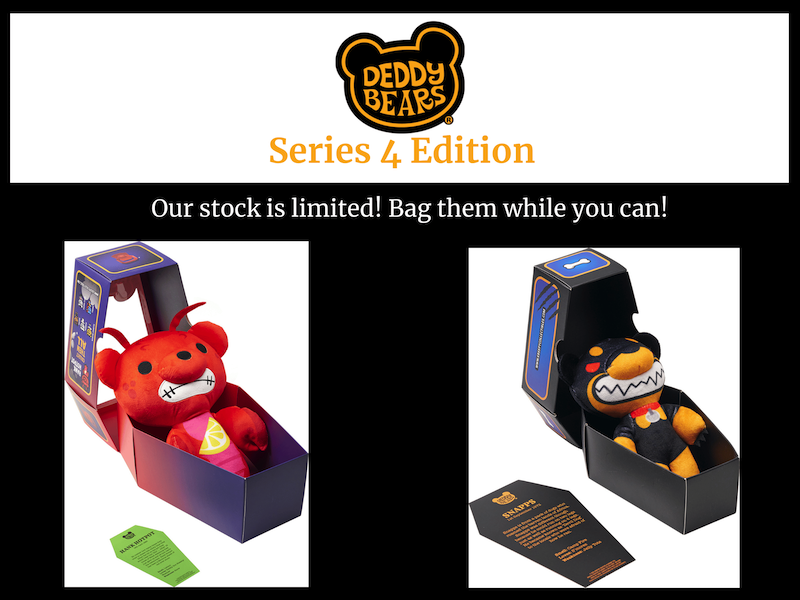
Deddy Bears Series 4, available at EB Games JB Hi-Fi and online at https://deddybears.com.au are a line of collectible plush toys that bridge the gap between playful charm, imaginative storytelling, and social currency for children. With their quirky, creepy-cute personalities, these toys are perfect for swapping at school, collecting at home, and gifting in Christmas stockings. From 12cm blind bag surprises to 30cm large plush, each Deddy Bear isn’t just a toy, it’s an open opportunity to foster creativity, empathy, and cognitive growth.
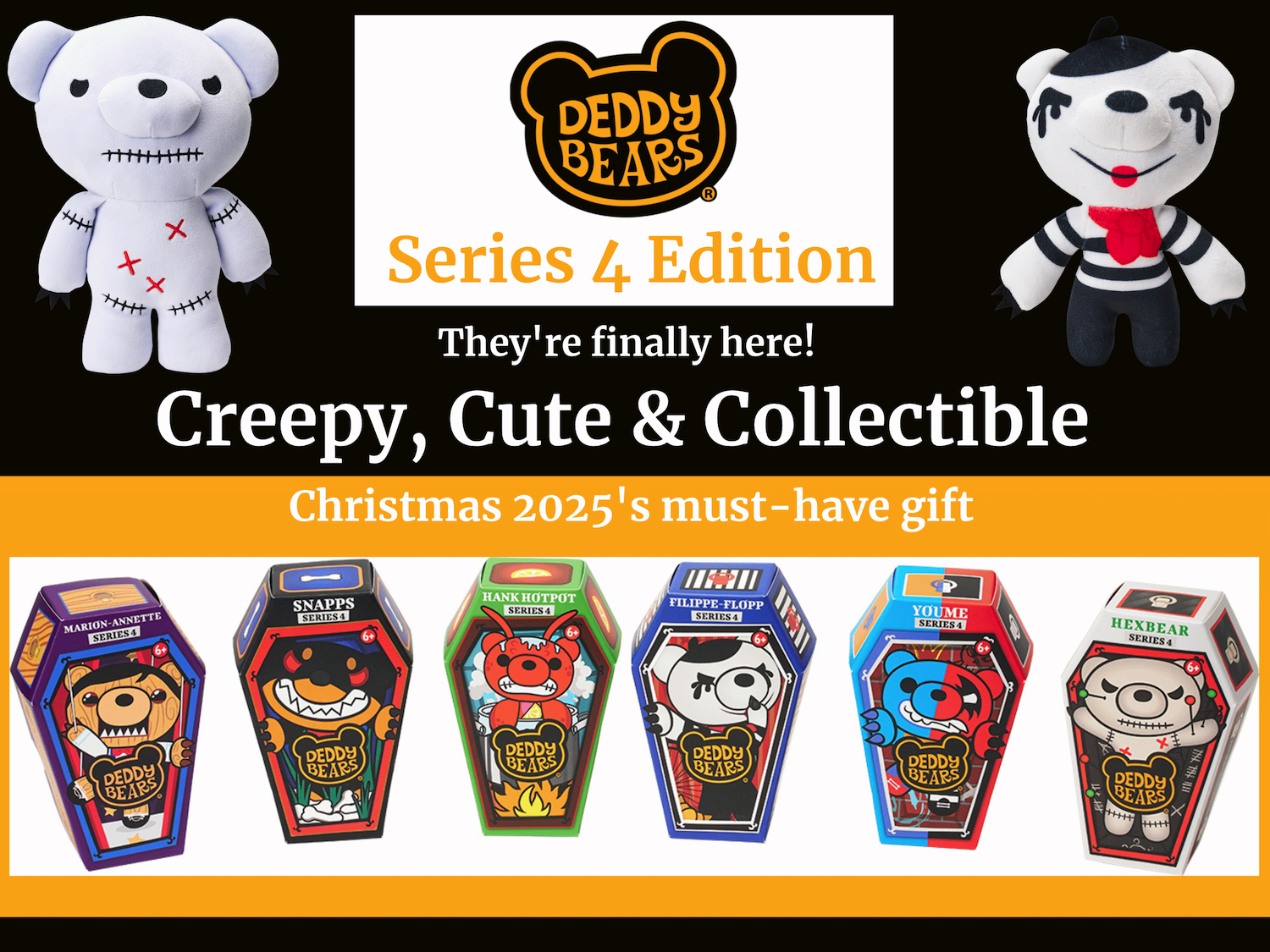
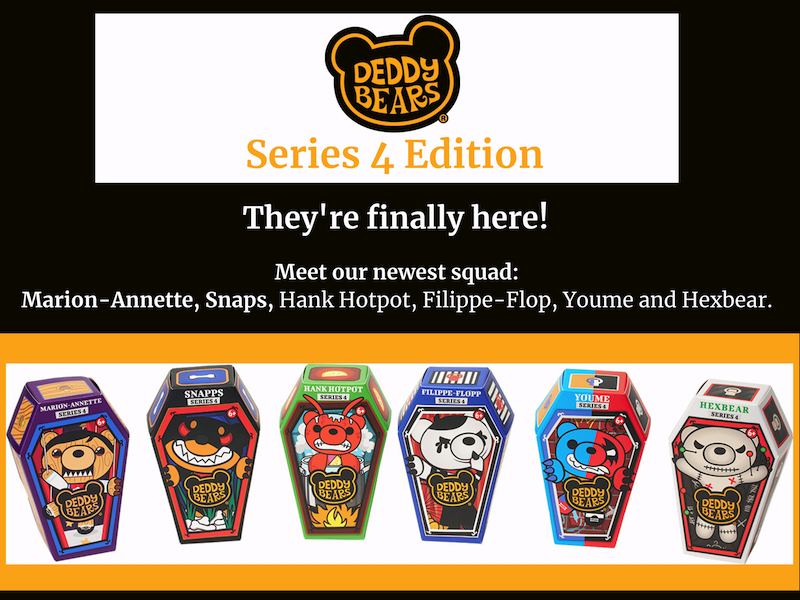
This season, six brand-new characters join the already beloved lineup, offering kids and adult collectors alike a mix of bold colours, unique designs, and rich backstories. Meet Hank Hotpot, Youme, Hexbear, Filippe-Flop, Marion-Annette, and Snaps. Each Deddy Bear comes with a spine-tingling date of death and a haunting tale that tugs at the heart. You’re not just collecting them, you’re uncovering the eerie stories behind their cuddly, tragic end. But these cuddly companions aren’t only fun, they’re powerful tools for learning, emotional expression, and responsible play. In an age where playtime and digital engagement intersect, Deddy Bears prove that thoughtful, well-designed toys can do more than bring smiles; they can spark meaningful learning and development.
Deddy Bears Series 4: Creepy, Cute, and Collectible
Series 4 introduces six new characters, each with their own quirky, slightly spooky charm. From eerie-eyed bears to adorably odd plushies, these toys encourage kids to embrace differences and dive into imaginative storytelling.
The collection comes in three main formats:
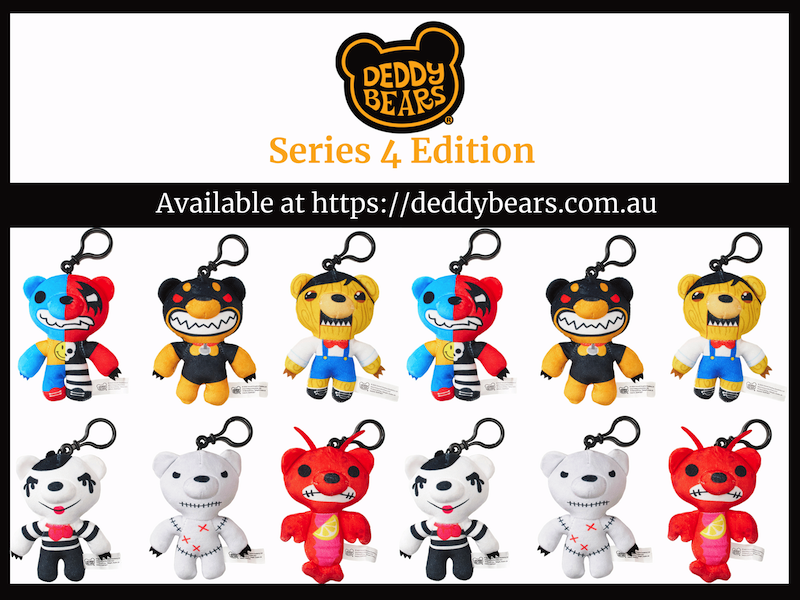
- 12cm Blind Bag Plush Keyrings – Perfect for backpacks or as a surprise collectible to swap with friends.
- 14cm Plush in Coffin Boxes – Ideal for gift-giving and collectors who love a touch of mystery.
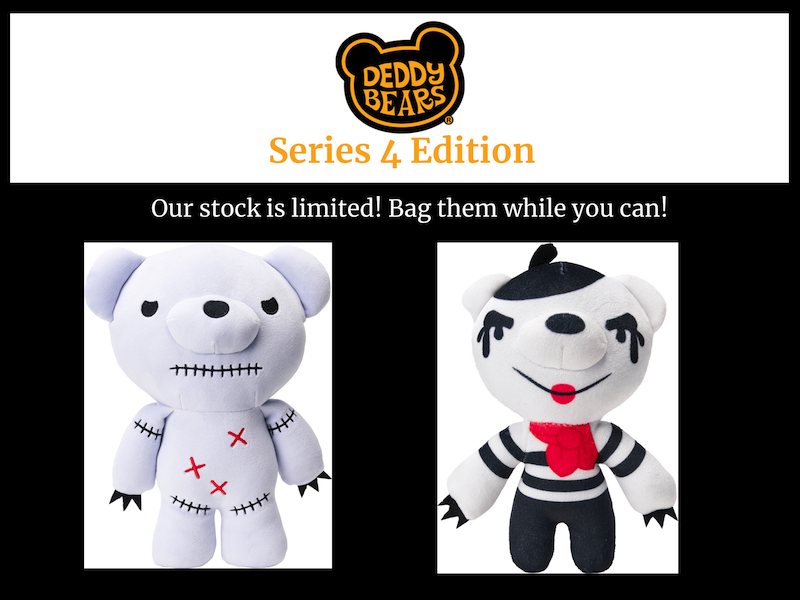
- 30cm Large Plush – Statement-sized favourites that double as soft companions and decorative pieces.
Each bear has a distinct name, personality, and imaginary world, allowing children to create stories and adventures that are entirely their own. These small, tangible companions also teach patience, anticipation, and creative thinking as kids build their collections one surprise at a time.
Limited-edition and licensed versions of Deddy Bears are part of the fastest-growing subcategories in the collectible market. Many buyers fall into the 18–34-year-old “kidult” demographic, proving that the appeal of these toys spans generations. TikTok’s #plushcollector hashtag has amassed over 1.4 billion views, reflecting how plush collectibles have evolved into a vibrant, digital-age hobby.
Bright Colours, Bold Designs, and Creative Learning
Deddy Bears go beyond being creepy cute, they’re a powerful tool for visual and creative learning. Research from the Australian Institute of Health and Welfare (AIHW) shows that bright colours and distinct shapes stimulate young children’s visual processing and support early cognitive development (AIHW, 2023).
When children explore the design of each Deddy Bear, they learn to recognise patterns, distinguish colours, and make aesthetic choices, laying the foundation for creativity, individuality and problem-solving skills.
Playing with these visually engaging toys also inspires storytelling and imaginative play. By inventing adventures for their bears, children strengthen language development, narrative skills, and sequencing abilities. For example, a child might create a scenario where one bear helps another overcome fear, or a group of bears embarks on a daring adventure in a make-believe world. These activities allow children to experiment with social situations, empathy, and moral decision-making in a safe, playful context.
Imaginative Play and Emotional Growth
Imaginative play is not just fun, it’s a cornerstone of childhood development. According to the Child Mind Institute (2024), pretend play helps children understand emotions, build empathy, and practice social problem-solving.
Deddy Bears, with their mix of creepy charm and cuddly appeal, are ideal for encouraging children to explore feelings in a safe and engaging way.
For instance:
- Overcoming Shyness: Acting out a story where a Deddy Bear overcomes shyness builds self-confidence.
- Collaboration Skills: Role-playing scenarios of sharing and teamwork develop social cooperation.
- Emotional Regulation: Expressing fears or frustrations through plush companions teaches emotional control.
By giving children tools to externalise feelings and navigate social dynamics, Deddy Bears support emotional intelligence and help kids build the foundation for resilient, empathetic behaviour.
Responsibility and Independence Through Collecting
Caring for a Deddy Bear collection can teach responsibility and independence. Small, portable plush toys like the 12cm keyrings encourage children to look after their belongings, while larger plush can be displayed as part of a mini art gallery at home.
Practical benefits include:
- Organisation Skills: Keeping the collection tidy fosters planning and organisational habits.
- Accountability: Ensuring each bear is cared for encourages responsibility.
- Decision-Making: Choosing which bear to carry or display strengthens prioritisation skills.
Research from the AERO (Australian Education Research Organisation (2021) report shows that children who manage small possessions and collectibles develop stronger executive functioning skills and a sense of ownership over learning experiences.
Display, Pride, and Personal Expression
Turning a Deddy Bear collection into a mini art gallery can be both educational and fun. Children can:
- Celebrate Achievement – Displaying their collection reinforces pride and accomplishment.
- Develop Aesthetic Sense – Arranging plush toys encourages spatial awareness and creativity.
- Express Personality – Each display reflects the child’s preferences and identity.
This encourages storytelling with family and friends, as children explain the personality, backstory, and adventures of each bear, nurturing communication skills in a playful, low-pressure environment.
Why Deddy Bears Make the Perfect Gift
Deddy Bears Series 4 are more than just toys, they are developmental tools and fun companions. They also make practical and memorable gifts:
- For Kids: Imaginative adventures, responsibility, and social-emotional learning.
- For Collectors and Kidults: Limited editions and quirky designs appeal to nostalgia and intergenerational play.
- For Parents: Affordable, educational, and giftable options that entertain and inspire.
Perfect for Christmas stocking fillers, birthday gifts, or special rewards, Deddy Bears combine cuddly comfort with meaningful play. Parents can rest easy knowing these toys encourage learning, empathy, and creativity while still being irresistibly fun.
Where can you find them? The full Series 4 collection are available at EB Games JB Hi-Fi and online at https://deddybears.com.au
From TikTok to Playtime: Social Trends That Matter
Deddy Bears have grown beyond popularity in the real world, making waves online. TikTok videos showcasing collections, unboxings, and imaginative play have racked up billions of views, showing how plush collecting has become a global hobby. Roblox-inspired storylines and community swaps bring digital and physical play together, offering children a sense of belonging and shared excitement.
For parents, this provides an opportunity to:
- Engage in responsible online sharing.
- Encourage collaborative play with peers.
- Introduce concepts of value and scarcity with limited-edition plush.
Learning Beyond Play: Early STEM and Problem-Solving
Creating adventures with Deddy Bears promotes critical thinking and early STEM skills such as:
- Sequencing: Planning a bear’s journey from backpack to bedroom.
- Problem-Solving: Designing creative challenges for characters.
- Collaboration: Group play strengthens teamwork and communication.
Research from Walker et al. (2020) found that imaginative play enhances executive function, cognitive flexibility, and problem-solving, giving children a strong foundation for academic and social success.
Final Thoughts
Deddy Bears Series 4 aren’t just cute collectibles, they’re, imaginative, and emotionally enriching companions. From storytelling and social-emotional growth to responsibility, aesthetic expression, and STEM learning, these quirky plush toys provide countless opportunities for development and fun.
This Christmas, consider adding Deddy Bears Series 4 to your child’s playroom or gift list. Not only will they spark creativity, empathy, and imaginative play, but they’ll also provide a shared language between parents, children, and adult collectors.
Explore the collection today at EB Games JB Hi-Fi and https://deddybears.com.au let your child’s imagination take the lead.
References
- Australian Institute of Health and Welfare (AIHW). (2023). Child learning and development. https://www.aihw.gov.au/reports/children-youth/australias-children/contents/education/child-learning-development
- Walker, S., Fleer, M., Veresov, N., & Duhn, I. (2020). Enhancing executive function through imaginary play: A promising new practice principle. Australasian Journal of Early Childhood, 45(2), 114–126. https://journals.sagepub.com/doi/full/10.1177/1836939120918502
- Australian Education Research Organisation (AERO). (2021). Executive function and self-regulation. Retrieved from https://www.edresearch.edu.au/sites/default/files/2021-09/tried-tested-executive-function-self-regulation-aero.pdf
- Ginsburg, K. R. (2007). The importance of play in promoting healthy child development and maintaining strong parent–child bonds. Pediatrics, 119(1), 182–191. https://doi.org/10.1542/peds.2006-2697
- Child Mind Institute. (2024). How imaginative play helps kids learn and grow. https://childmind.org/blog/how-pretend-play-helps-children-build-skills/
- Raising Children Network (Australia). (2024). Creative and imaginative play: Why it’s important for school-age children. https://raisingchildren.net.au/school-age/play-learning/creative-activities/creative-imaginative-play
- LEGO Foundation. (2022). Learning through play: Strengthening learning through joyful experiences. https://www.legofoundation.com/en/learn-with-us/learning-through-play/
- University of Melbourne. (2021). Why play matters: How play supports social and emotional learning in children. https://education.unimelb.edu.au/