
Kiddipedia
E-Scooter Safety At-a-Glance: Fast Facts for Parents
-
E-scooters are rapidly becoming a common sight in Australian suburbs, with tweens and teens increasingly using them for recreation and transport.
-
The teenage brain is wired for novelty and thrill, meaning the speed and independence of e-scooters can trigger dopamine reward loops similar to social media and video games.
-
Peer pressure plays a powerful role, with many teens taking greater risks when friends are watching or encouraging thrill-seeking behaviour.
-
Emergency departments across Australia are seeing a sharp rise in e-scooter injuries, including serious head, facial and upper-limb trauma.
-
Nearly half of e-scooter injuries in Victoria involve children aged 10–14, despite most states requiring riders to be 16 years or older.
-
Head injuries are the most serious and common injury, particularly when helmets are not worn.
-
Two in five e-scooter crashes occur at night, when visibility is reduced, and risk factors such as fatigue or alcohol may be involved.
-
E-scooters crash differently from bikes or skateboards, with small wheels and a forward centre of gravity making head-first falls more likely.
-
Teen risk-taking is amplified by brain development, where reward-seeking develops faster than impulse control.
-
Education and supervision dramatically reduce injury risk, which is why Australia’s BRAKE Driver Awareness school program is teaching safety to students aged 11–15.
-
Parents play a critical role in setting boundaries, including helmet use, age limits, supervised riding and safe environments.
-
E-scooters can offer independence and environmentally friendly travel, but they must be treated as motorised vehicles — not toys.
The New Reality Parents Are Seeing on Suburban Streets
Have you noticed that it’s becoming all too common to hear the whirr of electric motors and see kids, tweens, teens, and sometimes even their parents, zipping up and down suburban streets on e-scooters? What looks like harmless fun can actually bring a whole new set of challenges for families, especially when it comes to our kids’ emotions, behaviour, and safety.
The Sudden Surge in Speed, Freedom and Thrill
For our tweens and teens, e-scooters aren’t just a step up from bikes or push scooters, they’re a sudden surge in speed, freedom and thrill. That rush triggers the same brain systems that light up when they scroll social media or play video games: dopamine-driven reward loops.
Even with age restrictions and social media limits designed to protect them, that combination of digital and physical thrills can be tricky for parents to manage.
Why the Teen Brain Is More Vulnerable to Risk
At this age, roughly 9 to 19, kids’ brains are wired for novelty and excitement but are still learning to control impulses. That’s why we often see teens taking bigger risks on e-scooters than they might on a bicycle, like:
-
Riding fast
-
Attempting stunts
-
Ignoring traffic rules
Across Australia, emergency department presentations for e-scooter injuries have been rising significantly — involving not only older teens but younger children too.
Many of these injuries involve head, face and upper limb trauma, and a concerning number occur when riders aren’t wearing helmets.
The Dopamine Loop: Why E-Scooters Feel So Addictive
For many teens, e-scooter use taps into the same psychological loops that keep them glued to social media and video games: the pursuit of immediate reward, peer approval and novelty.
When an adolescent gets a rush from a “like” or a high score, their brain releases dopamine — the same chemical that drives them to chase speed and daredevil feats on a scooter.
Australian research on adolescent behaviour shows that patterns of online engagement and competitive gaming are linked with emotional and behavioural responses like:
-
Anxiety
-
Distress
-
Risk-led behaviours
— especially when mixed with other stressors in young people’s lives.
The Powerful Role of Peer Pressure
Couple this with the powerful force of peer influence, and many parents find themselves navigating territory far more complex than traditional road safety.
Teens don’t just want to ride — they want to look good riding.
Studies consistently show that adolescents make riskier choices when they believe their peers are watching or will approve — even if no one is explicitly encouraging the behaviour.
That desire for social status and acceptance can transform a once-innocent scooter outing into a compulsion:
ride → thrill → peer approval → repeat
Over time, this reinforcement loop can push teens toward more frequent, more reckless riding, sometimes at the expense of:
-
School
-
Sleep
-
Emotional wellbeing
The Emotional Impact Parents May Not Notice
There’s also the emotional side.
When riding becomes the main source of excitement, being unable to ride can trigger:
-
Irritability
-
Anxiety
-
Low mood
— very similar to patterns we see with social media or video game overuse.
Add in the fast-paced world of aggressive games, and the chase for novelty, and some teens may find it harder to settle into everyday responsibilities or focus on long-term goals.
A New Parenting Challenge
As parents, this adds a new layer to the modern challenge of moderating behaviour — where the battle isn’t just about screen time anymore, it extends into the physical world too.
Understanding how social influences, reward systems and real-world risk interact is vital to helping our tweens and teens stay safe, emotionally balanced and genuinely connected to the people and experiences that matter most.
E‑Scooter Popularity is Exploding — Along With Injuries
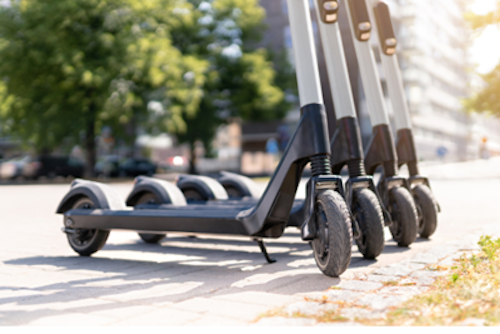
The rise in e-scooter use has been matched by a sharp rise in injuries presenting to Australian emergency departments.
In Queensland alone, more than five people per day are presenting to hospitals with e-scooter injuries, with serious injuries climbing year-on-year:
-
1,380 riders seriously injured in 2023
-
1,626 in 2024
-
2,000 serious injuries recorded in 2025
This trend shows injuries are increasing almost in step with the growing adoption of e-scooters (Queensland Health, 2025).
Victoria is seeing similar patterns. Data from Victorian trauma services shows that 47% of e-scooter injuries involve children aged 10–14, despite Victorian laws prohibiting riders under 16 years old (Monash University Accident Research Centre, 2024).
For parents, that statistic is particularly confronting. It suggests that many younger riders are using devices that they legally should not be riding — and doing so without adequate supervision or training.
Teenagers and E‑Bikes: A Rising Concern
Another concerning trend is emerging among older adolescents.
Recent data indicates that e-bike accidents are now the most common transport injury among teenagers aged 15–18, highlighting how adolescents are increasingly navigating powerful micromobility devices without the experience or hazard awareness needed to ride safely (Australian Institute of Health and Welfare, 2024).
For teenagers, the combination of speed, independence and peer influence can create the perfect conditions for risky behaviour.
According to road safety experts, e-scooters are often a young person’s first experience travelling at speed in shared traffic environments.
John Duncan, Chief Operating Officer of BRAKE Driver Awareness Australia, explains:
“Devices like e-scooters can be a young person’s first experience travelling at speed in shared traffic. While the technology and availability have arrived quickly, the education hasn’t, and that gap is costing young people their safety and, in some cases, their lives.”
The Surprising Difference: E‑Scooters vs Bikes and Skateboards
Many parents assume e-scooters are similar in risk to bicycles or skateboards.
But research shows the injury patterns are very different.
| Device | Typical Injuries |
|---|---|
| Bicycles | Arm fractures, road rash |
| Skateboards | Wrist fractures |
| E‑scooters | Head, face, dental injuries |
Why the difference?
- Small wheels make them unstable on cracks and uneven surfaces
- Higher centre of gravity increases the risk of forward falls
- Upright stance leads to direct head and facial impacts
- Braking mechanics differ from bikes, causing sudden stops
(Evidence: Royal Melbourne Hospital Trauma Registry, 2023)
Because of this design, head, face and dental injuries are significantly more common in e-scooter crashes compared with bicycles (Royal Melbourne Hospital Trauma Registry, 2023).
While bicycles cause more total injuries overall — largely because far more children ride bikes — e-scooter injuries are often more severe when crashes occur.
(Evidence: Royal Melbourne Hospital Trauma Registry, 2023)“Helmet use can reduce head injury risk by up to 85%.”
National School‑Based E‑Mobility Education
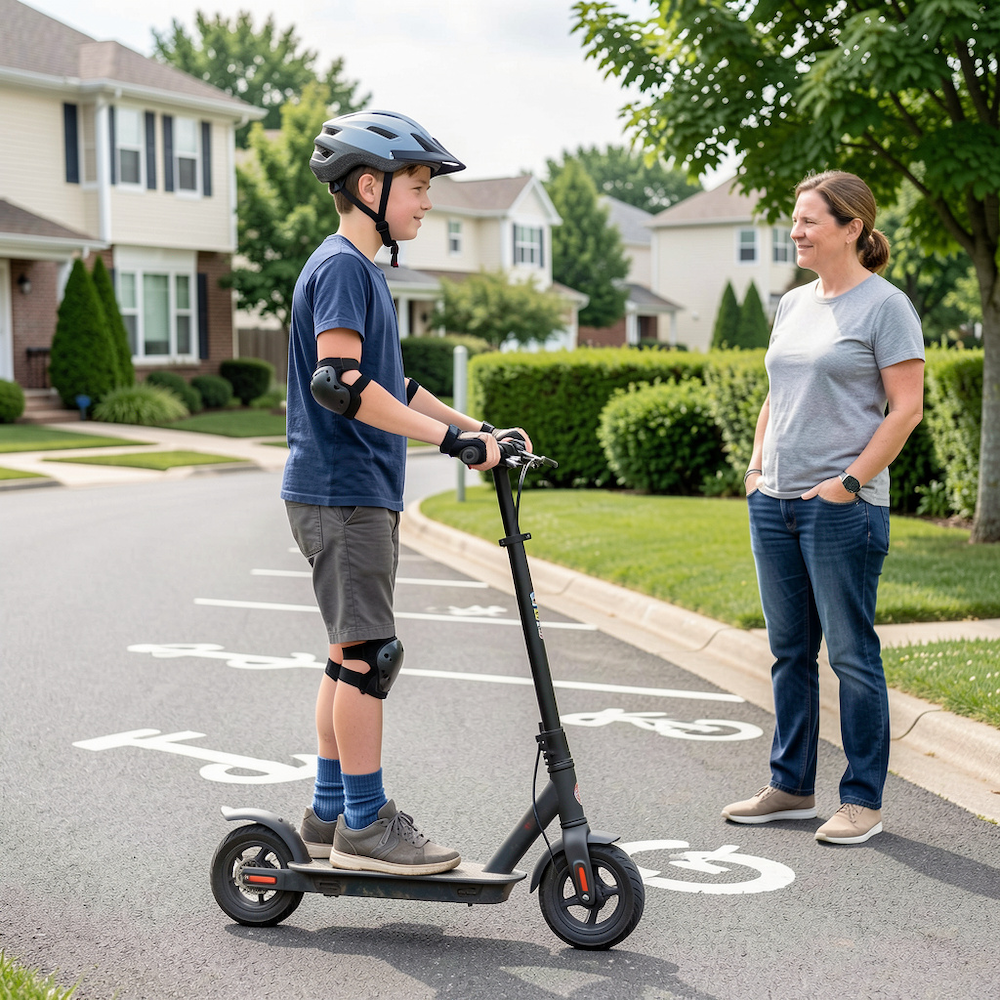
To address the growing safety problem, BRAKE Driver Awareness Australia has launched Australia’s first national school-based e-mobility education program.
The initiative targets students aged 11–15, aiming to equip young riders with practical safety skills before they begin using e-scooters and e-bikes independently.
Delivered in schools across two classroom sessions, the program teaches:
-
Hazard recognition
-
Safe riding behaviours
-
Speed awareness and stopping distances
-
Riding predictably in traffic
-
Night-time visibility and lighting
-
Legal responsibilities and penalties
-
The impact of peer pressure and risk-taking
“During adolescence, the part of the brain that seeks reward develops faster than the part responsible for impulse control. Our program helps students pause, think, and make choices that protect themselves and others,” — John Duncan.
The program also emphasises respect in shared spaces, encouraging students to consider the safety of pedestrians, older Australians and people with disabilities.
Simple behaviours — such as slowing down near pedestrians or using a bell to signal approach — can make a significant difference in preventing collisions.
What began as a pilot program in three Queensland high schools has already reached more than 90,000 students across over 190 schools, and is now expanding nationally into Victoria, South Australia and the Northern Territory.
Why Early Road Safety Education Matters
The urgency behind programs like BRAKE’s becomes clearer when we look at Australia’s broader road trauma statistics.
Road crashes remain the leading cause of unintentional injury death among Australians aged 15–24, accounting for around 60% of these fatalities (Australian Institute of Health and Welfare, 2023).
Risks are even higher outside major cities. Nearly 62% of fatal crashes occur in regional and remote areas, where higher-speed roads and longer travel distances increase both the likelihood and severity of incidents (Bureau of Infrastructure and Transport Research Economics, 2024).
Recognising this, BRAKE has also developed a rural and regional safety module tailored to the challenges young riders face outside metropolitan areas.
Practical Safety Guidelines for Parents
For families considering allowing their child or teenager to ride an e-scooter, safety experts recommend several key precautions.
Set a minimum age guideline
Most Australian jurisdictions recommend a minimum riding age of 16 years for e-scooters.
-
Under 12: Not recommended
-
12–15: Supervised use only
-
16+: Legal use in most states
Make helmets non-negotiable
A properly fitted helmet significantly reduces the risk of severe brain injury.
-
Helmet fitted correctly
-
Elbow and knee pads
-
Lights for visibility
-
Closed shoes
Start in low-risk environments
Children should first practise in empty parks or quiet paths, not busy roads or shared footpaths.
-
Start in empty parks or quiet paths
-
Avoid roads, footpaths with pedestrians and steep hills initially
Limit Speed
Some scooters can reach 25 km/h or more. Choosing devices with lower speed limits can reduce crash severity.
Speed Limits can be set via the devices App, but as children can be significantly more technologically advanced than we parents, be sure to ensure they do not have access to your phone where they can change the speed settings.
Reinforce clear riding rules
Be sure to insist on:
-
One rider per scooter
-
No phone use while riding
-
No riding at night without lights
-
No riding while tired or under the influence
Model responsible behaviour
Children often mirror adult behaviour. Demonstrating safe riding habits yourself can reinforce safer choices.
Why E‑Scooters Crash More Easily Than Bikes
-
Small wheels: Less stability on uneven surfaces
-
Forward centre of gravity: Falls result in direct head impacts
-
Braking physics: Sudden stops can throw the rider forward
The Most Common E‑Scooter Injuries Doctors See
-
Head injuries (most severe)
-
Wrist, arm and collarbone fractures
-
Facial injuries and dental trauma
-
Road rash and abrasions
Another Risk Parents Don’t Realise: Battery Fires
-
Lithium‑ion battery charging issues
-
Faulty or cheap chargers
-
Fires can occur indoors during charging
Signs Your Teen Isn’t Ready Yet
-
Poor road awareness
-
Easily distracted by devices
-
Frequently takes risks on bikes or skateboards
-
Ignores safety rules
Balancing Safety With Independence
E‑scooters offer benefits:
-
Independence for teens
-
Reduced traffic congestion
-
Environmentally friendly travel
Parents can support responsible use while maintaining safety.
Parent Discussion Prompts
Questions to ask before letting your teen ride:
-
Do they understand road rules?
-
Can they identify hazards?
-
Will they always wear a helmet?
-
Are they riding during daylight hours?
Call to Action
E-scooters are likely to remain a permanent part of Australia’s transport landscape.
They offer clear benefits — convenience, reduced congestion and environmentally friendly travel — but they also require a new level of awareness, education and responsibility.
For parents, the key message from safety experts is simple: these devices are not toys.
They are motorised vehicles capable of travelling at speeds that demand skill, judgement and respect for shared spaces.
Parents, teachers, schools and councils are encouraged to:
-
Talk with children about e‑scooter risks
-
Support e‑mobility education programs
-
Encourage safe riding habits early
As John Duncan from BRAKE Driver Awareness Australia puts it:
“Road safety shouldn’t be something young people learn through tragedy. With the right support, we can equip every student in Australia with the skills and awareness to ride safely.”
Visit BRAKE to learn more.
References
-
Australian Institute of Health and Welfare. (2023). Injury in Australia: Transport injuries. Canberra.
-
Australian Institute of Health and Welfare. (2024). Injury data on adolescents and micromobility devices.
-
Bureau of Infrastructure and Transport Research Economics. (2024). Road trauma statistics Australia.
-
Monash University Accident Research Centre. (2024). Micromobility injury patterns in Victoria.
-
Queensland Health. (2025). Emergency department presentations involving e‑scooters.
-
Queensland Trauma Audit. (2024). Patterns of e‑scooter injuries in Queensland hospitals.
-
Royal Australasian College of Surgeons. (2022). Helmet effectiveness in wheeled recreational activities.
-
BRAKE Driver Awareness Australia. (2025). National E‑Mobility School Education Program.