
Kiddipedia
I recently had a very insightful conversation with my neighbour, who’s a very sporty and wholesome kid who seems, on the surface at least, to have it together and not to buy into the social media effect. I wanted to gain more insight into what was happening around the social media scene and how it affects teenagers psychologically. I already had a good idea from the research we’d done at our company but nothing is better for getting the lay of the land than a good old chinwag with a local.
I learned a lot from my neighbour during that chat, but the most impactful thing she said was about the effects of social media on teenagers. She told me, ‘Your focus is on what other people think about you, and not what you think about yourself’. Many teenagers feel pressure to live and present themselves in a certain way, often curating their lives to fit an idealised image —living what I call ‘life through a lens’. Rather than embracing their individuality, many are drawn to mimicking influencers and personalities with cult followings on platforms such as Instagram, Facebook, Snapchat and TikTok. While this
It isn’t true for all, but the influence of social media has undeniably shaped the way many young people perceive themselves and the world around them.
It comes back to fear
My neighbour shared she was currently completing a school assignment on fear, where each student had to explore and write about their personal fears. To prompt discussion, the teacher presented images and clips of scary clowns, great white sharks, and extreme heights —classic examples of fears, but ones that rarely affect daily life. After all, encountering a menacing clown on the street or finding Jaws waiting at the top of an escalator is hardly an everyday occurrence. Yet, the fears that impact many teenagers —and even adults —are far less dramatic but far more pervasive. One of the most common and deeply felt fears is the fear of judgment, the worry of how others perceive you, the pressure to meet expectations, and the anxiety of not being accepted. Unlike the exaggerated fears shown in class, this is a fear that follows teenagers through school halls, social media feeds and daily interactions, shaping their confidence and sense of self.
What started in a dorm room back in 2004 and is now known as Facebook, part of Meta Platforms, has helped change the way we look at ourselves. As my neighbour said, ‘Your focus is on what other people think about you and not what you think about yourself’. Through a device that sits in our hands, we can access a showreel of everyone’s ‘best moments’ and, because this platform (and others like it) offers an endless scroll, we can be
constantly bombarded with people doing cool stuff from every corner of the globe. Before social media, our fear of missing out (FOMO) might have been triggered by a chat over the back fence, and finding out your neighbour was going camping over the holidays. Now, it can be triggered almost constantly.
Time for reconnection
While social media has given us incredible ways to stay connected —allowing
long-distance friendships to thrive and providing a lifeline for connection during times of isolation —it has also subtly changed the way we interact in person. These days, we often know what’s happening in our friends’ lives before we even meet up, thanks to the endless stream of updates at our fingertips. This can sometimes take the excitement out of real-life
conversations. When we do catch up, instead of sharing stories with fresh enthusiasm, we already know the punchlines, the highlights, and the latest events in each other’s lives. And,
ironically, while sitting together, we commonly find ourselves distracted, glancing at our phones to check in on what everyone else is doing, just in case we’re missing out.
Social media has enriched our connections in many ways, but it’s also worth being mindful of how it shapes our in-person interactions. Finding a balance between using it to stay
connected while still being present in the moment can help us make the most of both worlds. Innovation has undoubtedly made our lives more convenient, allowing us to enjoy comforts previous generations could only dream of. We’ve swapped bikes and horses for cars, automated everything from garage doors to TV channels, and can even have a meal prepared and delivered without ever stepping outside. Technology has given us incredible benefits —but it’s also changed the way we interact with the world around us.
Embrace the simple things
Family time, once filled with outdoor adventures and shared experiences, is now too often replaced by screens. Parents work harder to keep up with rising costs, while children
are entertained with tablets and phones. Meanwhile, poor diets, a lack of meaningful connection and the habit of passively consuming life through screens are contributing
to growing issues such as obesity, depression and a fading enthusiasm for life.
But here’s the good news —we’re not stuck on this path. The future isn’t written, and we have the power to shift the direction we’re heading. By being more intentional with how we spend our time and intentionally recharging our batteries, we can make room for what truly makes life fulfilling.
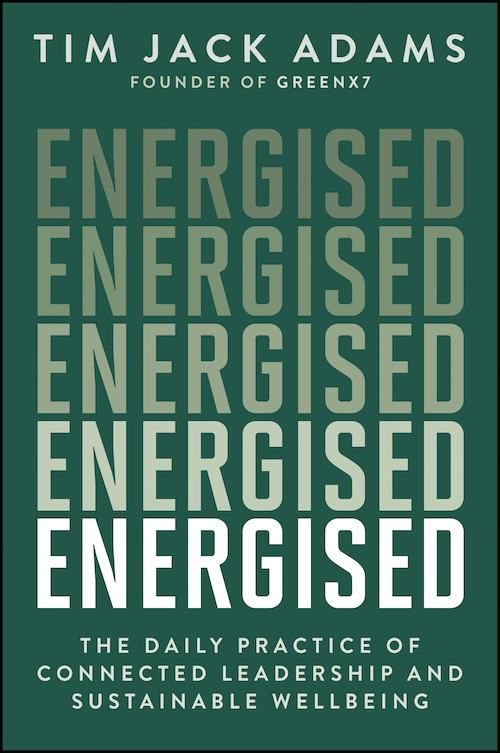
 Edited extract from Energised: The Daily Practice of Connected Leadership and Sustainable Wellbeing (Wiley $32.95) by Tim Jack Adams. Tim is a global speaker and a pioneering thought leader in human sustainability and performance and has spent over a decade guiding leaders and teams to reconnect with themselves and others through nature. Join The Great Reconnect movement at http://www.greenx7.com