
kiddi
When water damage strikes, most families assume the solution is simple: call a carpet cleaner and get the water out. But here’s the thing: water damage rarely stops at the carpet. It can sneak deep into your home’s structure, creating hidden problems that a surface clean just can’t fix.
For busy households, what seems like a minor spill today can quietly turn into tomorrow’s mould problem or even a costly repair. Understanding what really happens after a leak or flood is the best way to protect your home — and your family’s health.
Water Damage Goes Beyond Carpets
When a pipe bursts or a room floods, the carpet might look like the main victim, but it’s often just the beginning. Water travels fast, it seeps through the carpet underlay, down into the floor, and can even soak into your walls and insulation.
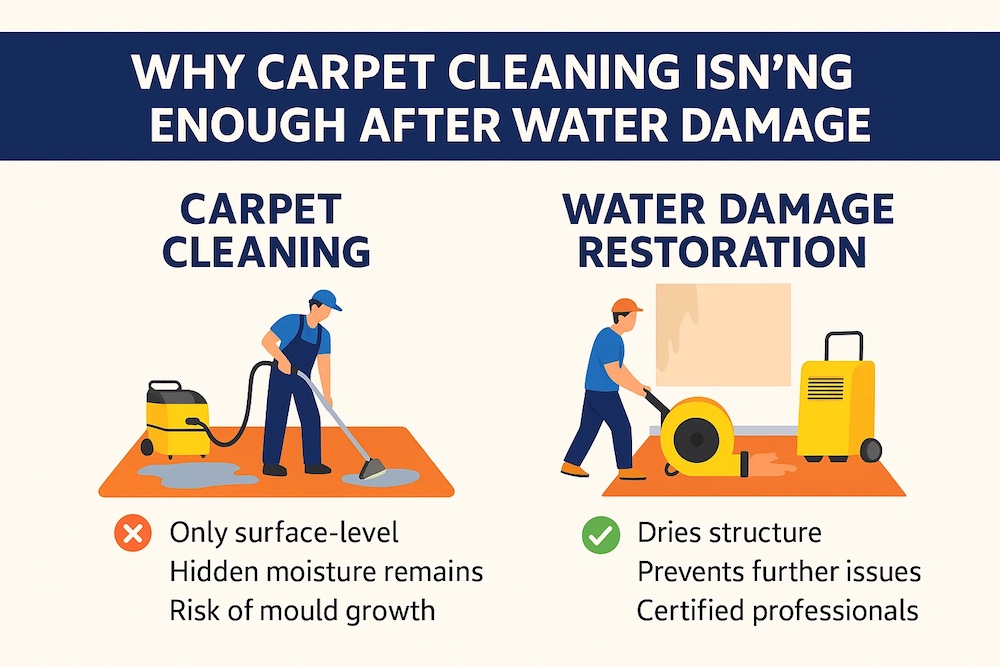
A regular carpet clean might make things look better, but the hidden dampness underneath can continue to cause trouble. Within 48–72 hours, that trapped moisture can lead to mould growth, musty smells, and damage to building materials, all while remaining invisible to the eye.
And for families with young kids, that’s more than just a home maintenance issue, it’s a health concern. Mould spores and damp air can trigger asthma, allergies, and other respiratory issues, especially in little ones. That’s why professional restoration teams focus on drying and treating the whole affected area, not just what’s visible on the surface.
Why Drying Comes Before Cleaning
It’s natural to want things clean and back to normal as quickly as possible, but when it comes to water damage, drying always comes first.
Professionals follow a simple but proven process:
-
Extract the water quickly – to remove the bulk of the liquid.
-
Thoroughly dry the structure – using industrial-strength dehumidifiers and air movers that pull moisture from floors, walls, and air cavities.
-
Clean and restore materials – only after the property is completely dry.
Skipping the drying stage is like washing clothes and folding them while they’re still damp — it looks okay at first, but the problem lingers underneath. A carpet might appear clean for a few days, but if the structure beneath stays wet, mould has the perfect environment to grow.
That’s the key difference between a quick fix and a proper, lasting solution that keeps your family safe and your home healthy.
When Flood Water Isn’t Clean
Not all water is safe. Flooding from storms, sewage backups, or toilet overflows can bring in what professionals call “Category 3” water — which simply means it’s highly contaminated and unsafe.
In these cases, carpets and underlay can’t be saved. They need to be safely removed and disposed of to protect everyone in the home from bacteria and harmful pathogens. Once that’s done, the area must be disinfected and thoroughly dried before rebuilding begins.
While it’s never fun to replace flooring, trying to “save” contaminated carpet can put your family’s health at risk. The safest approach is always to let a qualified restoration team handle it properly — giving you peace of mind that your home is clean, dry, and truly safe again.
Keeping Your Family Safe After Water Damage
When water damage happens, every minute counts. Acting quickly can make all the difference — not just for your home, but for your family’s wellbeing.
Here’s what to remember:
-
Call a restoration specialist immediately. The faster they can extract and dry, the less damage spreads.
-
Don’t rely on carpet cleaning alone. Hidden moisture can linger long after the surface looks dry.
-
Prioritise health and safety. Mould and damp air can affect children’s respiratory health and allergies.
Your home is the heart of your family — a place to feel safe, comfortable, and cared for. With the right help and understanding, even after a little chaos, you can bring it back to being the healthy, happy space your family loves most.
Why Choosing the Right Help Matters
Cutting corners after water damage can be devastating. Property owners who only invest in a quick clean often find themselves facing mould remediation, structural damage, and insurance disputes months later. The safest choice is to engage a professional restoration company that:
- Is IICRC-certified and follows international restoration standards.
- Is a member of the Restoration Industry Association (RIA).
- Is trusted by leading insurers for compliance and quality outcomes.
Reztor Restoration is one of Australia’s leading water damage specialists, having restored thousands of homes and businesses. From wet carpet drying to full sewage clean-up, our certified technicians ensure your property is restored safely, efficiently, and to the highest standards.
Final Word
Water damage is not a job for a carpet cleaner. While they play an important role once a property is safe and dry, they cannot address the hidden dangers lurking beneath the surface. Whether it’s a burst pipe, heavy rain, or a sewage backflow, professional restoration ensures your property is dried, sanitised, and restored properly the first time — protecting both your investment and your health.