Children’s outdoor life has been eroded in recent generations, as Richard Louv wrote about in his ground breaking book Last Child in the Woods. Urbanisation, digitalisation and education and parenting practices all contribute to what Louv describes as a nature deficit disorder caused by decreased outdoor experience and play. The latest editions of the Oxford Junior Dictionary mirror children’s increasing nature disconnection, by dropping words such as almond, apricot, goldfish, heron, ivy, lavender and leopard from their pages, and replacing them with words like blog, broadband, celebrity, chatroom and vandalism. This is not the stuff of happier or healthier childhoods.
Now more than ever is the time to nurture our children’s and our own connection with the natural world, as we grieve the losses of bushfires, droughts, climate disruption and COVID!19, all of them driven in part by our lack of care for our natural world. To love our land well, we need to know and spend time with her forests, animals, insects, rivers and beaches, and to cherish them.
Most young children are natural scientists and adventurers, happily becoming absorbed in studying the movement of ants, or climbing trees. This may look like play time but it is also a vital activity for developing understanding and bonding with nature’s processes. When adult carers support nature connectedness, by providing plenty of unstructured outdoor time and encouraging a child’s natural curiosity, they lay foundations for ongoing care and resourcefulness.
Here are 5 ways to nurture your child’s nature relatedness:
- Treasure a natural place that your child loves, whether it be a garden, beach, park, or tree. Go there often, learn about it and care for it together, sharing discoveries and doing some back up reading or viewing about the ecological life of such places.
- Grow food. Nothing is more magical than watching seeds sprout and grow into sunflowers, cucumbers, or snow peas- all of which are simple and quick to grow even in pots. Encourage your child’s preschool or school to set up a vegie garden if they haven’t already.
- Join up as a family for a local tree planting day or clean-up day, or become part of a community garden. Teach your child how caring for land is part of being a community.
- Make your next holiday a camping or tramping one- the more you physically engage with the natural world, the more comfortable and curious your child will be about the world we live in. Take along a bird watching guide and see how many birds you can spot and name.
- Choose a wildlife charity to support with your children. One whose focus includes understanding and saving animals’ habitats as part of their mission. The Australian Marine Conservation Society is one great example which has a special focus on engaging with children supporters.
To view on YouTube:
You may also like to read:
]]>Actually, any place that you can run around is fun. However, if you had another reason to explore the park wouldn’t that be fantastic too.
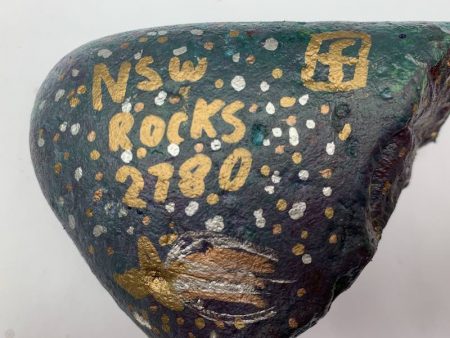
How about going to a park to search for mystery painted rocks?
These rocks have been left by other kids and parents. The rocks all have different designs and also have the rock group that they belong to as well as their postcode listed on the rock.
It is like going somewhere and looking for buried treasure, but it is not buried or in fact valuable. It’s just rocks that are placed around a park that you have to search for. It is a fun game for kids and parents alike to get involved with, the whole family can get involved.
You can get clues from the Rock Groups Facebook Pages and if you search you can find one for every state in Australia. I for one am a member of NSW Rocks on Facebook.
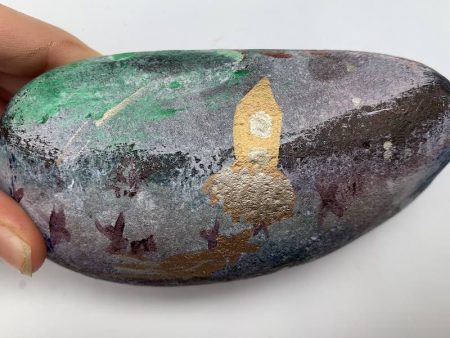
What do you need to paint rocks?
- Rocks are essential to have, you can either find wild rocks that live in your garden or park, or you can buy smooth rocks from a craft shop (otherwise known as captured rocks). We used wild rocks that were living in our garden.
- Acrylic paint in bright colours.
- Sharpie pens – we used the metallic ones to add a nice shimmer and due to the twins wanting to do a space theme this looked great with their space and galaxy rocks.
- Paint brushes.
- Container with water to wash out paint brushes.
- Baking paper to put rocks on to ensure they don’t stick to paper (You don’t want your kid to go to hours of trouble to then have paper stick to the wet paint on their rock)
- Waterbased Sealer – Use Mod Podge as this is ideal for rocks. I couldn’t get any and the one I used was not perfect and some of the colour of the paint came off. Once dry was okay.
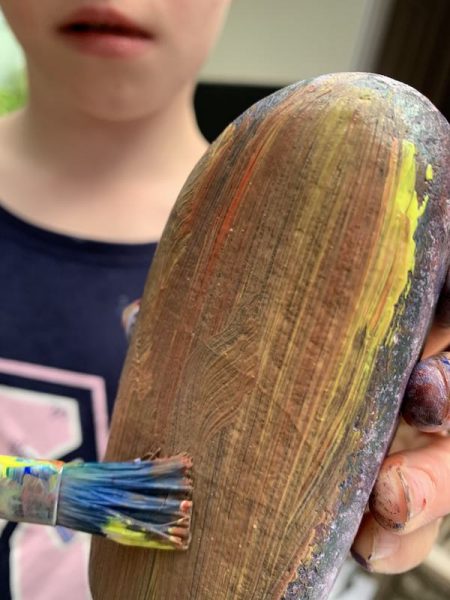
Warning kids will get messy. You will find they have paint in their hair, on their bodies and all over their clothes. Put on clothes that you don’t care about as the acrylic paint didn’t come out of the girl’s clothes.
Method:
- Wash your rocks especially if they have lived in the wild and are covered in dirt. Once washed give them a good dry and then you can start painting.
- Think about what you would like to create and then start painting. Kids can go crazy and be super creative, there is no right or wrong design. If you make a mistake, just paint over it.
- Once the paint is dry you can then paint the other side of the rock.
- Leave your rock to fully dry, if all happy with the paint you can now move onto adding more detail with your sharpie pens. I put the rocks on baking paper to ensure that paint didn’t stick to paper.
- You can create outlines of your painted artwork with the sharpie pens or do as the girls did and create shooting stars, stars and black holes to add to their space theme.
- With the design finished and the rock all dry, you can now use your waterproof sealer to cover the rock. Best to test on another rock to see how it works with the paint and design. This way you will understand how it interacts with the paint and design and if it needs a few coats and how long it takes to dry.
- Now you have your completed rocks you can relocate them to a park of your choice (best to go somewhere out of your area as it is fun for kids to find rocks with different postcodes). Add a picture of the rocks that you placed and tell the Rock Facebook Group the place where you put them. Don’t give exactly where they are just the park and area. This way the kids when they look at the Facebook Page know that there are some there to search for and it is still a mystery to find them.
- Enjoy the hunt for painted rocks and enjoy the outdoors.
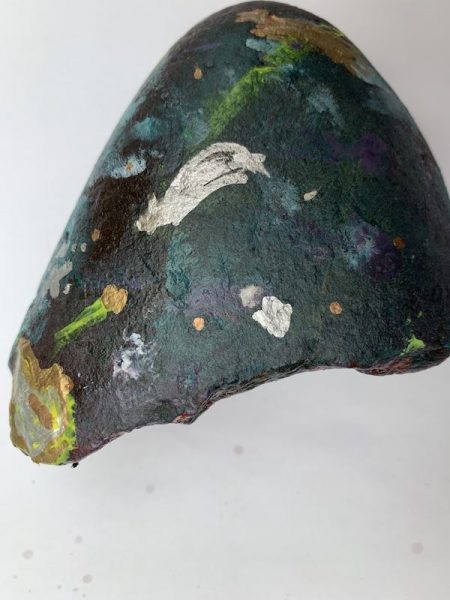
Join a Rock Facebook Group, create some fun rocks and go to parks and see if you can find some secretly hidden painted rocks.
This activity is perfect for autumn and winter, all you need is a warm jacket and hat and off you go to see how many fun rocks you can collect.
It is also something kids of all ages can do and be involved with, and perfect for large age gaps like my kids.
Let us know what rocks you find and also create.
You may also like to read:
]]>Have you ever thought of why parents treasure their children’s paintings and drawings so much?
Art is the unrestricted exploration that helps children form connections in their brain. Above all, art connects us to our heart. A painting from a child is a little glimpse into the window of their soul, deep I know but it’s the truth. The reason parents value and love their children’s paintings so much is that it is a little piece of them, a snapshot of the child’s feelings and viewpoint of the world, for that moment, from their eyes. No wonder we find it hard to part with them.
The art of creating through the imagination of a child is limitless. The only limit is the timeframe that they are children and have access to their boundless and incomprehensible imagination.
Kiddipedia is thrilled to announce our partnership with Tailored Artworks. Sharron Tancred, Director and Customised Artwork Specialist talks to us about the importance of art in childhood:
What are the benefits of creative arts in relation to child development?
Two thoughts. Firstly, art is a visual thinking process. To paint or draw, a child needs to think about what they want to see on their bit of paper. Adults can struggle to conceive of an idea and visualise it, so just trying this right brain activity is an important part of a child’s development. If they can imagine a picture to paint, then they will be able to see themselves achieving great things and to see how she wants her bedroom to look, see how he wants his new haircut! Want to go the next step, I help kids visualise their success with Kids Fantasy Face Portraits. Learning to see in ones mind is incredibly helpful for career and daily life!
Secondly, the creative arts is about self-expression. Why is self-expression important, after all, they can talk and cry and scream, so why would art or acting or music help this? The creative arts are about learning the skills to express a more profound belief, emotion, experience of their own or another’s in a beautiful and point making way. Children can gain great self-confidence through any of the creative arts.
For instance, my 13-year-old daughter is now far more socially confident through becoming an actress and my 15 old daughter has found confidence through publishing her stories online and gaining a following! When I art direct kids, even kids with disabilities, in my one on one Private Art Workshops to paint a gallery-quality artwork which they sign, and being tailored to their home’s décor is hung pride of place, parents tell me they still drag visitors to see their artwork years later! Nothing else, except perhaps sports I think, comes close to the creative arts for building a child’s confidence.
What skills can art teach children?
Aside from the above skills of visualising, self-expression and self-confidence, art can teach a child about the science of colour, the rules of design and in some kids, engage an appreciation of interior décor.
When I am helping adults with their art and décor, most have little understanding of colour and adorn themselves, and their homes, in merely neutral or natural colours for fear of making mistakes, which is pretty sad! There’s power in learning how colour works to beautify your home life and how you feel when you go out – trust me, I have a Cert in Colour Psychology. And, this appreciation can begin in childhood.
For kids, just the act of painting a large artwork, with big bold strokes encourages their bravado. Whether it looks great in the end comes down to design knowledge or art direction, but the act itself is fulfilling; it’s their canvas, their decisions, their willpower to finish something, consider it and work at it. Art teaches children the skill of bravado, design, patience and perseverance.
How would you describe the benefits art and colour psychology gives to children, especially those with dyslexia?
Wow! Big question! Let’s break it up. Hanging art in your home, and I mean real art, not prints, but large art with textures and real visible passion coming through, adds humanity and warmth and passion. Texture is an awesome design tool to warm your family life. Large artworks create impressive, heartfelt focal points that ground a living area and give it purpose. If your family loves the beach, put them at the beach every day with art – it will feel like a holiday and engage memories! If you and your kids love boating trips and bright, loud colours, then art painted energetically will take you they and create energy and happiness in your home, every day.
Colour psychology is a soft science revered for millennia across cultures, in religion, public service, and business, advertising and even, in daily life. Pink is traditionally used to give little girls energy, but I prefer to suggest yellow which encourages a love of problem-solving, learning, expresses self-confidence, positivity and a feeling of happiness. Blue, as used by the police and judicial systems, communications and safety companies, can be used in art, décor and clothing to encourage your child to communicate. Teenagers love black, for its sense of control and dealing from they know, not what they are told. Black means protectionism, which you can battle with colours like blue, or red for masculinity and energy.
Alternatively, green! Did you know that green is the most loving colour on the planet, to calm them and connect them with a love of the nature, the earth, humanity and animals! Green, is about the heart and giving, of one’s time and money, so art and décor that features green is most excellent for your home and your child’s emotional development and their connection to nature and community.
Now, dyslexia. Undiagnosed till 4 years ago when 46, I am so glad I now know that I have dyslexia as it solves all the riddles and has given me confidence! Dyslexia varies from person to person, evident in the various talents of famous people with dyslexia (LinkedIn editorial) from Da Vinci to Einstein to Picasso to Steve Jobs and Richard Branson. What’s the common denominator that you can use for your child?
Did you know that dyslexia is also known as ‘The Gift’. Forget the disadvantages and focus on The Gift! Dyslexia provides a greater than average right brain ability to visualise and merge real life with imagined concepts, see it clearly, problem solve the difficulties and focus on producing the real outcome with great passion and drive. People with dyslexia think like geniuses in this regard. We are obsessed with what we are good at.
Kids with dyslexia will daydream, zone out and go off thinking about highly specific things of interest to them. Einstein is best known for a period of “scientific thinking’ or visualising, which resulted in his theory of relativity. So, dyslexics can see and problem solve outside of the box, a talent not to be underestimated. 35% of dyslexics will become entrepreneurs: inventors, philosophers, actors, artists, etc. They can be the world’s great thinkers and creative minds and yet, bullied at school and belittled for being behind in a system not tailored to their needs.
As a voice for dyslexia, I’m very passionate about parents seeing the empowerment they can encourage in their child if they lean towards becoming an artist of any kind, and how the creative industries can be an excellent career choice and not the traditionally perceived downward slide into poverty. Feel free to connect with me on Facebook and chat about it!
What tips do you have for parents who want to develop their children’s artistic skills?
You can’t beat professional quality paints like Atelier Interactive for their longevity and vibrancy of colour. If they want to study art at school, let them. Learning art is the gateway into the design industries: graphics, animation, set/fashion or industrial design, architecture and even philosophy. Look at art from a broader perspective and allow your child to find their way.
Kids who find their passion will find their drive and confidence. Those who lack passion won’t survive in the creative industries – so that makes it simple for you! If you notice your child shows passion, encourage it with extra art classes, materials, a good space to work in private and verbal encouragement. Take them to art shows, museums and try to learn about art and how it’s expression has evolved with that of humanities development from cave art, to the radical changes expressed in the early 19th century as a result of the industrial age to modern art and back again to an appreciation of nature and history! We really have come full circle! Art is fascinating and opens a world of history and beauty that you can share with your child and learn from your child as a voice for the future and a voice from within their very Soul.
How can art help children with special needs?
Well, all of the above. Occasionally, I will work with kids who are autistic. Aside from expression and confidence building, creating something of their own art can help kids with special needs in finding an activity that they can pursue, perhaps professionally, in the comfort of home. Even elderly, sitting in a wheelchair, can paint a watercolour anywhere they go!
For kids with autism, you may find they are attracted to the colour orange which relates to gut instinct and creativity. Let them paint with it, put it in their spaces, let them wear it. Kids who have little voice can express feelings and messages through their art. Provide your child with ample resources, sketchbooks, pencils, paints and fun painting tools from rags to sponges to bits of rope to make interesting marks with. When I am working with kids in Private Art Workshop, there is a huge array of tools that keep them engaged as I change colours and we build their composition. So, start collecting!
I paint murals for aged care and dementia. Providing disabled kids who are restricted to set living spaces with atmospheric and interactive spaces using murals could help with more engaging places of play that will encourage their imagination. Hand-painted murals for disabled kids can be used to conceal spaces you don’t want them to see, like exit doors, and also to create the illusion of more space, build a theme and engage the emotions through colour psychology. I always say art is just paint and ideas, so, put on your thinking cap, think more than a print and think atmosphere!
What can the Kiddi-Community expect from you?
Well, I’m going to write some great blogs over the next 12 months on a range of topics including those mentioned above.
As a professional artist, graphic designer, illustrator, interior decorator who has blended all these to become a Customised Artwork Specialist, you can expect… unique! As a parent of 2 high achieving girls, you can expect some great, well-founded insight. As a dyslexic artist and designer, you can expect a few spelling errors but I hope you expect to see improved corporate and residential spaces, and learn about art and the rules of interior design! You can expect professionalism with a very fresh and innovative viewpoint…like my Real Art Kitchen Splashbacks that your kid could help paint; now that’s unique. Ha! There aren’t many people who do what I do, so, yes, unique is what you can expect from me.
If I was a genie and could grant you three wishes, what would they be? (and why?…)
OOOOOH! I’d love a genie!
1. My kids achieve their dreams; nothing could make me happier.
2. The phones ring with wonderful people wanting to create beautiful, meaningful spaces with me; because it makes me happy yet again, and…
3. I’d like to find an international art consultant who can arrange an art exhibition of my works, manage commissions and clients so I have more studio time and a chance for my own self-expression which would be the icing on the cake for my long career and make me happy indeed!
Thank you Genie!
]]>
It won’t be long until school’s out for the year. While of course this means hours of warm, fuzzy family quality time together, you also don’t want boredom to creep in for the kids (need we say more). But once again, we at Springfree Trampoline have you covered!
Transform your backyard into the ultimate activity-central fun zone with these DIY ideas to get your kids moving, exploring and using their imaginations for hours of fun outside!
- Make your own bubbles
Ready for a blast from the past? Grab the dishwashing detergent and make your own bubbles with this easy recipe. Sure to provide hours of cheap fun and bring back fond memories as a kid!
- Slip n’ Slide
Another Aussie classic, cool off on a hot day with a Slip n’ Slide! Follow this guide to make your own. Don’t forget the washing detergent for extra slippery fun!
- Create a treasure hunt with clues!
‘X’ marks the spot! Pop some ‘treasure’ (like a toy, note or treat) in a plastic container, then bury it or hide it somewhere in the backyard. Then create a series of clues or a cryptic map of your backyard and watch the fun! You can make it as hard, or as easy as you like!
For a harder version, make your kids solve a series of riddles or clues – each revealing the location of the next clue, until they get to the final buried treasure! Or for littlies, you can make it simple by counting out the steps, drawing directions and pictures on a map or telling them where to search for each new clue!
- DIY mini-golf
Let your imagination run wild to create the ultimate DIY mini-golf course! It’s easier than you think! All you need are some simple household items like cups, toys and cereal boxes. Learn how to build your own with this guide by My Kids’ Adventures. You can often pick up cheap plastic golf club and ball sets from the cheap shop, or add to the hilarity by using whatever you can think of as clubs…. Broom mini golf is sure to provide hours of giggles!
- Twister on the lawn
Grab your game of twister and take it outside. Or if you’re feeling adventurous, make your own with spray paint on the lawn. This is especially great for a backyard BBQ with plenty of kids! It doesn’t need to stop at twister – you could spray paint hopscotch or anything else easy you can think of on the lawn – you’re only limited by your imagination!
- Backyard picnic
Spread out a blanket, make sandwiches and have some family time with a backyard picnic. Add some of these DIY games you’ve created to the agenda for more fun!
- Ring-toss
Make your own quick and easy game of ring-toss. Use old soft drink or water bottles, give them a coat of paint and get ready for fun! Follow this guide from Woman’s Day. Bonus points: have the kids paint or decorate the bottles outside as a craft activity! Double the entertainment!
- Nature scavenger hunt
Get the kids exploring the backyard and running around in the fresh air with a nature scavenger hunt! Five Little Chefs has a great printable scavenger hunt list to get you started.
- Beanbag toss
It’s easy to make your own beanbag toss game. Just grab some bowls, make up some score signs and set it up on the grass. Check out this cute monster beanbag toss game made out of cardboard from Crafty Carnival!
- Obstacle course
Want a bigger challenge? Get some exercise with a backyard obstacle course! Follow this guide to make your own by Martha Stewart.
- Trampoline fun
A backyard is more fun with a Springfree trampoline. You can jump, draw chalk art and more. Check out our list of 50 ways to use your Springfree trampoline!
- Giant ‘KerPlunk’ game
Get ready for a game of suspense and strategy! Learn how to make a giant game of ‘KerPlunk’ from tomato cages with this guide by Design Dazzle.
- Backyard camping
Camping is a chance to get outside, breathe in the fresh air and have fun. Learn how to have a camping adventure right in your own backyard!
- Lawn bowling
There’s bowling, garden gnomes and recycling in this fun activity from Makezine. It even comes with a printable template so you can make the gnomes too! Get the instructions here.
- Hold a family carnival!
Set up the beanbag toss, ring-toss and invite the neighbours to a backyard carnival. Check out these 16 DIY carnival games by Tip Junkie!
We hope these DIY Backyard fun ideas give you and your kids hours of happy enjoyment and entertainment!
And for extra points, invite the kids to get crafty and decorate (or help set up) each of these DIY activities you try! You’ll get double the entertainment factor by turning the setup process into family craft activities! The only limit is your imagination! Enjoy!
Enjoy reading this article? You can learn more about Springfree Trampoline, view our range of trampolines, or read more in our Springfree Beyond the Bounce blog.
You may also like to read:
Top Tips to keep your children hydrated.
How to Get Your Kids Outside and Active
]]>