
Kiddipedia
Some afternoons feel like a pressure cooker.
The school bags hit the floor. Someone’s hungry. Someone’s overtired. Someone’s arguing about whose turn it is. And you’re standing there thinking, How did the energy shift this fast?
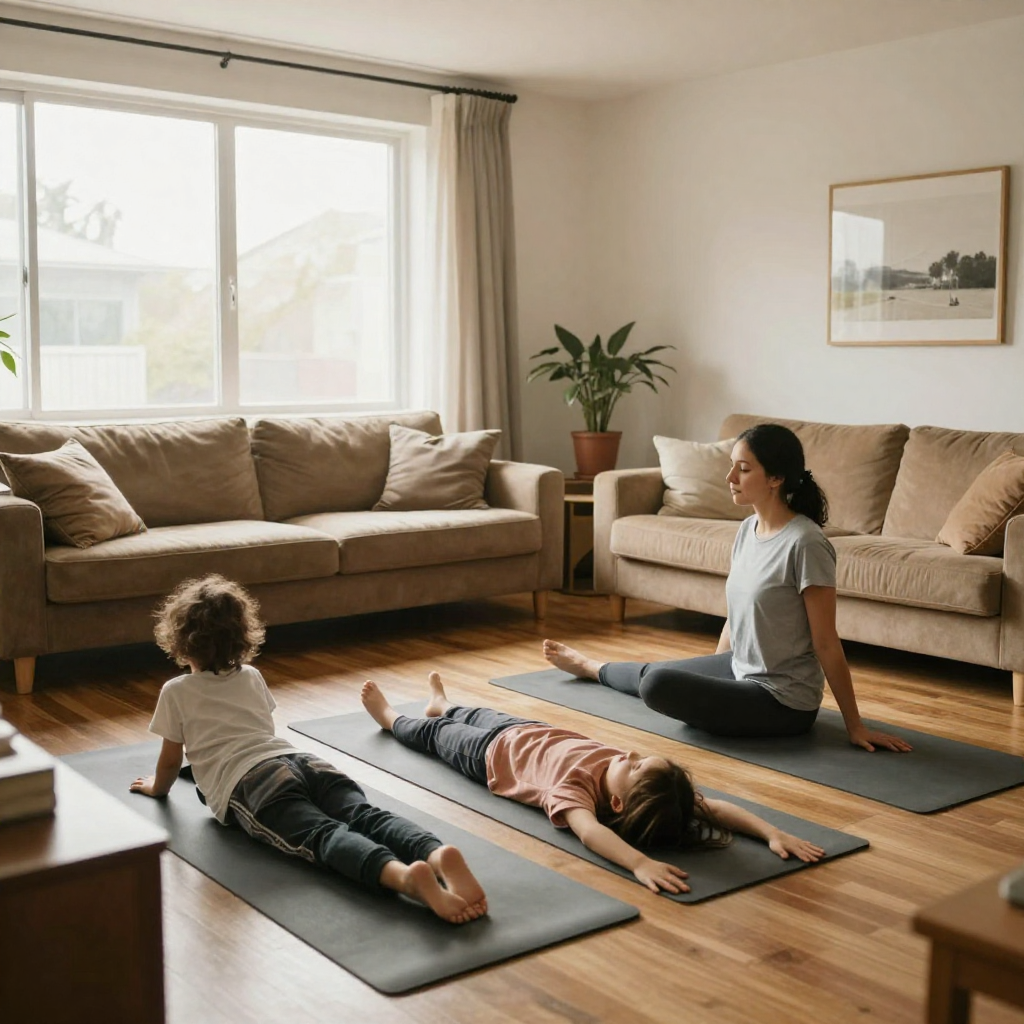
That’s usually when I roll out the mats for us all.
Not for a perfect yoga session. Not for silence. Just five minutes of reset, for the kids, and for me.
Over time, I’ve realised yoga at home with kids isn’t about flexibility or flawless poses. It’s about regulation. Connection. Rhythm. And building a small ritual that quietly steadies everyone, including you.
Here’s what actually makes it work in a real family.
Start With Reality, Not Perfection
If you’re picturing calm music and children moving gracefully in sync… let’s gently lower expectations.
Some days yoga lasts 90 seconds.
Some days one child participates and another builds Lego nearby.
Some days it turns into giggling and collapsing in a heap.
And that’s okay.
Children regulate through movement before they regulate through stillness. For many kids, especially those who are sensory-seeking or neurodivergent, wiggling, balancing, hopping, and pretending are part of the process.
The goal isn’t calm children.
The goal is co-regulation.
When you kneel beside them and breathe slowly, you’re modelling nervous system safety. Slow breathing activates the parasympathetic nervous system, the body’s “you’re safe now” response. Over time, that repetition builds emotional regulation skills far beyond the mat.
Create a Tiny “Calm Corner” (Nothing Fancy Required)
You don’t need a studio.
To make yoga engaging for kids, it’s important to start by creating the right environment. Many parents find it helpful to explore guided family wellness resources and platforms, like the Nebula site, which detail how adjusting your interior space can enhance energy flow and improve mental and spiritual well-being. Exploring these resources can help you add variety to your sessions without having to develop new material every week.
We cleared a small corner near the couch and called it our “calm spot.” One mat each. No toys within reach. That’s it.
Clutter competes for attention. A defined space signals something different is happening here.
A few practical things that genuinely help:
-
One mat (or towel) per child so no one feels crowded
-
A predictable start (even just one deep breath together)
-
A visual timer for younger kids so they can see when it ends
Predictability builds security, especially after big school days filled with instructions and stimulation.
Keep It Short. Always Leave Them Wanting More
For preschoolers, five to ten minutes is plenty.
Primary school kids might manage ten to twenty, but only if it includes movement and imagination.
It’s far better to finish while they’re engaged than to push until someone melts down.
Think of it as a “nervous system snack,” not a full lesson.
Linking it to something you already do helps it stick:
-
After-school snack → yoga reset
-
After sport → stretch and breathe
-
Before bedtime → slow wind-down
When it’s attached to an existing rhythm, it doesn’t become another thing on your mental load list.
Turn Poses Into Stories (This Changes Everything)
Children connect through imagination, not instruction.
Instead of explaining anatomy, try:
-
Tree Pose → “Grow tall like a rainforest tree in the wind.”
-
Downward Dog → “Stretch like a puppy waking up.”
-
Cat–Cow → “Scared cat… happy cow!”
-
Child’s Pose → “Curl into a tiny, sleepy hedgehog.”
We sometimes do “jungle adventure.” Other days it’s “outer space explorers.”
Storytelling engages executive functioning and creativity at the same time, far more effective than correcting posture.
And if they wobble? That’s where resilience lives.
When they see you wobble and laugh instead of criticising yourself, they learn emotional flexibility in real time.
Add Games for High-Energy Days
Stillness isn’t always the answer, especially in homes managing screen fatigue and overstimulation.
Try:
Freeze & Balance — Play music. When it stops, call a pose. Everyone freezes.
Follow the Leader — Let each child choose one pose. Ownership increases participation.
Pose Hunt — Hide small objects around the room. Each one links to a pose.
Children who feel in control are more likely to engage.
And remember, participation might look different for each child. A child who watches today might lead tomorrow.
Don’t Skip the Breathing (But Make It Playful)
Breathing exercises don’t have to be serious.
Try:
-
“Smell the pizza… blow it cool.”
-
Feather breathing (keep it floating in the air).
-
Hand tracing breaths (trace up and down fingers).
Slow, rhythmic breathing supports vagal tone, the body’s ability to shift from stress to safety. That matters for anxious kids. For overwhelmed kids. For tired kids.
Even three slow breaths together can change the emotional temperature of a room.
Focus on Effort, Not Outcome
If your child is giggling in Tree Pose, they’re still building balance.
If they collapse in Child’s Pose and whisper a secret, they’re building trust.
Yoga at home is less about alignment and more about attachment.
Children mirror what they see. When you show up, imperfect, tired, willing, they learn that showing up matters more than doing it perfectly.
Encouraging Positive Behaviour and Participation
The best approach for a parent is to join them on the mat. Children pay closer attention to your actions than to your instructions. If you show enthusiasm and participate actively, even if you’re not as skilled, they’ll recognise that it’s worth their time.
Focus on the effort, not perfection or other stuff. So if the kid is having trouble with Tree Pose and making funny faces and giggling, they’re still working on balance and body awareness. Most importantly, they’re developing the habit of showing up.
Keep in mind that not every session will be great: kids might refuse to practice, make it a game, or want to quit early. But a short, positive experience is better than a longer, frustrating one.
When It Doesn’t Work (Because Sometimes It Won’t)
There will be days someone refuses.
There will be days it becomes chaos.
There will be days you don’t have the energy.
That doesn’t mean it’s failing.
Consistency doesn’t mean daily perfection. It means returning to the mat often enough that it becomes familiar.
Over weeks, those short resets start to weave into family culture. The mat becomes a signal: This is where we breathe. This is where we reconnect.
A Simple 5-Minute Reset to Try Tonight
If you want to start without overthinking it:
-
One animal pose
-
One balance pose
-
Three slow breaths together
-
One giggle
-
One question: “What did you notice?”
That’s it. No pressure. No performance.
The Part They’ll Actually Remember
Years from now, they probably won’t remember whether their heels touched the ground in Downward Dog.
They’ll remember lying next to you.
Breathing in sync.
Laughing when you tipped over.
Feeling safe enough to slow down.
And in a world that moves fast, with screens, noise, and constant stimulation, that small ritual of shared stillness is quietly powerful.
Roll out the mat.
Start small.
Let it be messy.
Five minutes is enough.